Story at a glance:
- The return to the office has happened, but the traditional work week did not return with it.
- Identity-first biometric access connects permissions to people rather than to keys, badges, or other tokens.
- Occupancy insights and retrofit-friendly hardware can help buildings adapt while reducing waste, disruption, and unnecessary resource use.
During a recent visit to a corporate workspace, Maria Coleman watched a property manager open a door with his phone. She assumed the building had adopted mobile access. His explanation proved otherwise: He had wedged his badge between his phone and its case.
The improvised solution made sense. People already pay for purchases, board planes, and unlock cars with phones and smartwatches. Stopping to search for a separate office credential feels increasingly out of step with the rest of their day. “People are absolutely looking for a way to continue with their daily life without having to be interrupted to grab different types of credentials,” says Coleman, business development leader of workspaces at Salto.
Let’s face it; today’s offices can be crowded on peak days, quiet at other times, and more fluid overall. Identity-first access can help them become safer, smarter, and more sustainable.
The return-to-office debate may continue in headlines, but building teams must operate the workplace that exists now—a flexible environment where attendance fluctuates, fewer people have assigned spaces, and employees may use several locations.
The Office is Fuller—and Emptier

Photo courtesy of Salto
CBRE’s 2026 Global Workplace & Occupancy Insights found that average office utilization reached 53%, up from 38% the previous year. Peak utilization, meanwhile, averaged 80%, exceeding typical pre-pandemic levels. The numbers capture the central challenge: An office can feel crowded on Tuesday and nearly vacant on Friday.
“The return to work has happened. It has just happened differently than what people expected,” Coleman says. “People are back in the office. It’s just that the ebb and flow is very different from the traditional Monday through Friday, 8-to-5 work schedule.”
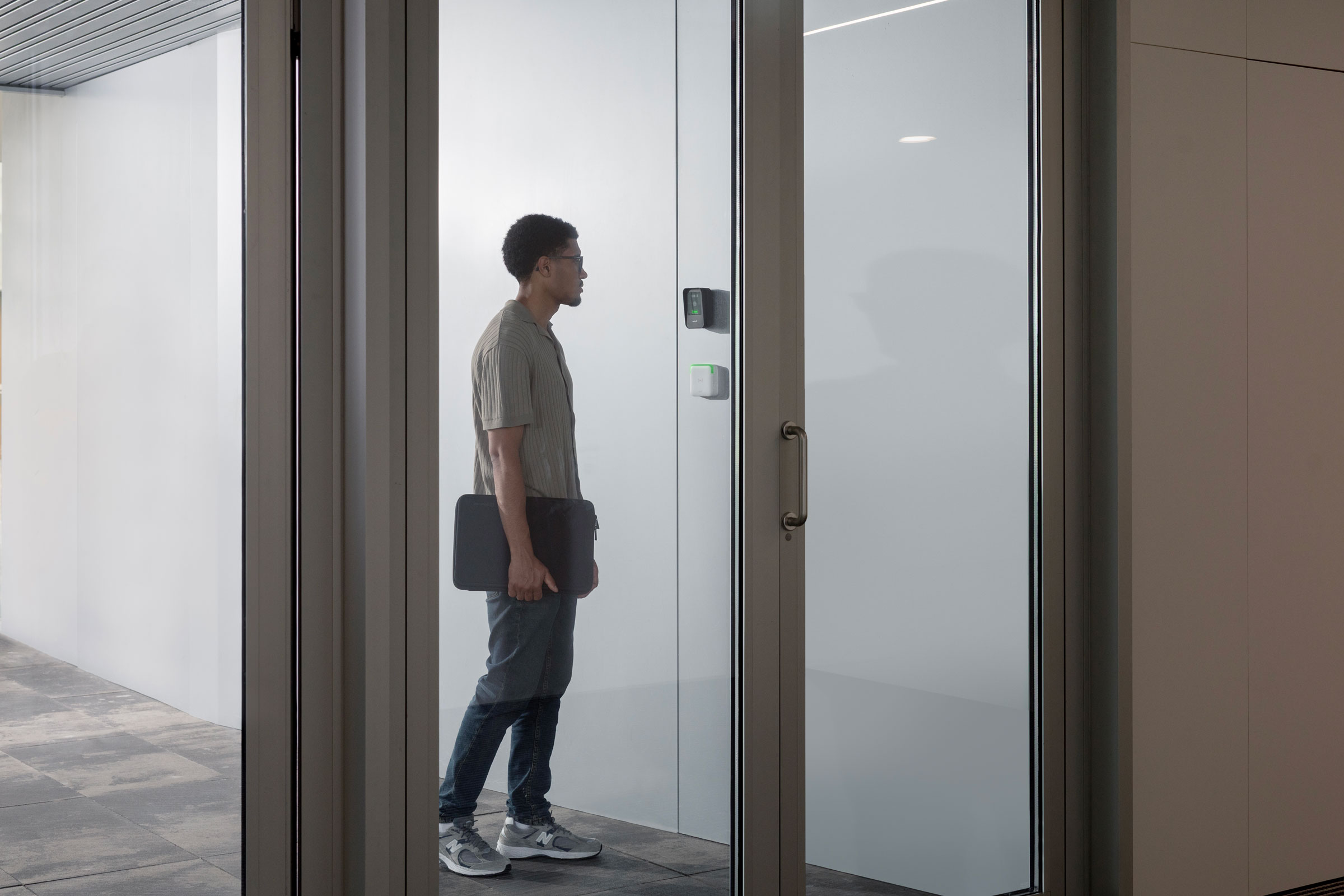
Static access systems were not designed for that fluidity. Modern systems instead begin with identity: who someone is, what role that person holds, and which places that role requires today. A credential may be a card, smartphone, or even the user’s face, but permissions can change easily and instantly from a web-based access management tool in a browser window without having to re-encode a credential or issue a new one.
From Gatekeeping to Orchestration
The shift changes the purpose of access control. It remains a security system, but it can also become part of the workplace experience. “It’s no longer, ‘What are we keeping you from?’” Coleman says. “More than that, what can we help you facilitate? Where can we help remove friction—to the meeting rooms you need to access, the teams you need to visit, or other company offices you need to access?”
When a new hire enters an organization’s human resources system, an identity-management platform can assign access by role and deliver a credential before the first day. Joining a project can open a specific room, while a trip to another office need not require a temporary badge. When employment ends, permissions can be revoked across all locations.
Coleman experienced this firsthand after joining Salto. Her credential opened the Atlanta office and could be used at the company’s Las Vegas and New York locations when she traveled for training. Additional permissions could be activated for a demonstration and later removed.
Vendors and contractors can similarly receive access limited to a contract’s location and duration, closing the gap created when a physical badge is never returned.
Salto IDM connects a person’s identity to physical permissions, interfacing with HR, IT, visitor management, and other enterprise systems. Salto KS provides cloud-based access management, typically for smaller facilities or distributed workplaces with fewer access points, while the on-premises Salto Space uses data-on-card technology to update permissions at offline access points and maintain operation when connectivity is interrupted.
Turning Access into a Sustainability Tool

Photo courtesy of Salto
Digital and biometric credentials eliminate some plastic card waste, but the larger environmental opportunity may come from what access systems reveal about how a building is used. A traditional key cannot report whether a conference room is busy or a floor sits empty.
Combined with booking platforms, sensors, and building-management systems, access records can help align lighting, HVAC, and cleaning with actual use. They may also reveal a need for more collaboration space, fewer workstations, or less square footage. “Before, you couldn’t rely on a key to do that for you,” Coleman says. “It creates an additional resource for those who are managing the property.”
Employees should know what is collected, why it is needed, and how long it will be retained. Coleman says Salto encrypts personally identifiable information and applies consent and opt-out provisions to biometric access. Aggregated information—not individual movement—should guide routine space and energy decisions.
Wireless, battery-powered locks can often be added to existing doors without opening walls, trenching for cable, or replacing door assemblies. That can reduce costs and construction waste while making smart access practical for older offices and adaptive reuse projects. “It allows for flexibility and also allows for retrofitting as needed to save on costs when it comes to development and construction,” Coleman says.
Long equipment life and backward-compatible software are equally important. Adaptability becomes a form of sustainability when buildings can accommodate new ways of working without discarding functional locks or undertaking another major renovation.
Designing Sensible Security
Convenience cannot come at the expense of security, accessibility, privacy, or life safety. An access plan must account for network failures, emergency egress, and users who cannot or do not want to rely on a smartphone or biometrics.
Early collaboration among owners, architects, facility managers, IT professionals, and security specialists is essential. Coleman recommends evaluating compliance, integration, and long-term support alongside upfront price. “It can’t all just be based on cost,” she says.
Sensible security is ultimately less about adding barriers than making a workplace responsive. The best system recognizes that offices will continue to change, sometimes by the day, and certainly over the life of a building. If access infrastructure can evolve with those changes, the workplace can remain secure without becoming rigid and sustainable without becoming obsolete.