Story at a glance:
- Touchless fixtures, new product innovations, and intuitive layouts are shaping user experience in commercial restrooms.
- Integrated sink systems are solving multiple problems in public restrooms while improving aesthetics and efficiency.
- Messy paper towels on the floor and overflowing waste baskets are the top contributing factors leading to perceptions that a restroom is dirty.
As the demands of the built environment continue to evolve, hygiene and design are no longer separate conversations; they’re inseparable drivers of how spaces function and feel. Bathrooms, in particular, are changing, with more private stalls and sleek, efficient hand-washing and drying stations. A recent survey of 4,000 participants in the US, Europe, and Asia captured shifts in public perception and preferences regarding commercial restrooms.
“The number one expectation of everyone was cleanliness, hygiene, and touchless fixtures. Everyone expects a clean restroom experience, and they don’t want to touch anything,” says William J. Gagnon, executive vice president and COO at Excel Dryer and partner at D|13 Group. Gagnon has been with Excel since his father purchased the company in 1997.
We went deeper and asked, ‘What makes a restroom ‘dirty?’ The number one contributing factor to a dirty restroom, no matter who you were or where you lived, was paper towel mess on the floor or overflowing in baskets.
The entire survey group—made up of architects, interior designers, facility managers, restaurant owners, and everyday consumers from the US, Turkey, Germany, and Spain—said a dirty restroom reflects poorly on the business, and 80% said they would not or might not return to a restaurant if they experienced a dirty restroom. “It’s literally a bottom-line issue. If you have a dirty restroom you will lose customers. People will think less of your facility or your brand,” Gagnon says. “That is why we went deeper and asked, ‘What makes a restroom ‘dirty?’ The number one contributing factor to a dirty restroom, no matter who you were or where you lived, was paper towel mess on the floor or overflowing in baskets. Excel products provide the immediate and easy solution.”
Excel Dryer, a leader in hand-drying technology, partnered with MetrixLab to conduct the survey examining what matters most in restrooms, as well as how these perceptions can affect a business, what constitutes a “clean” or “dirty” restroom, and other factors that influence stakeholders’ selection of hand-drying solutions.
Setting a Standard
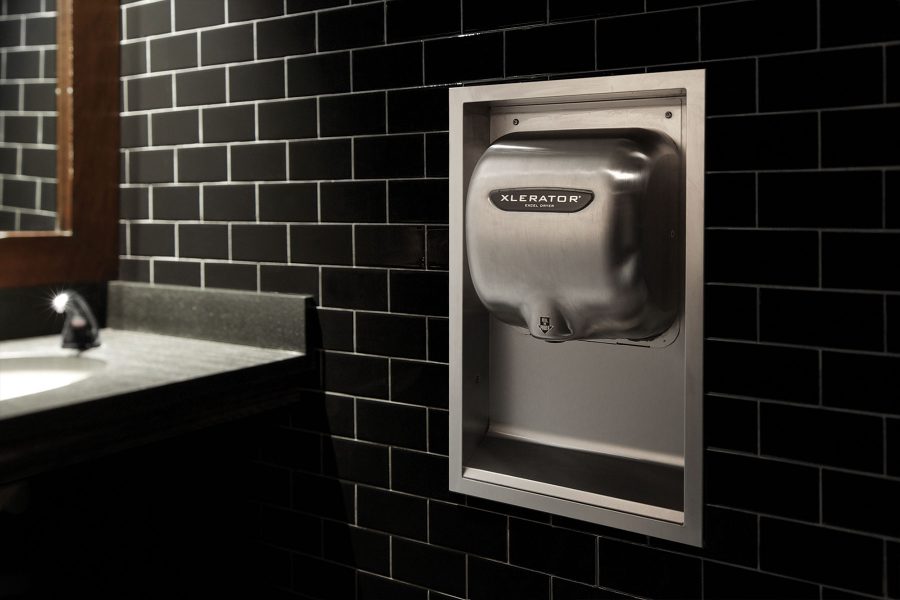
Photo courtesy of Excel Dryer
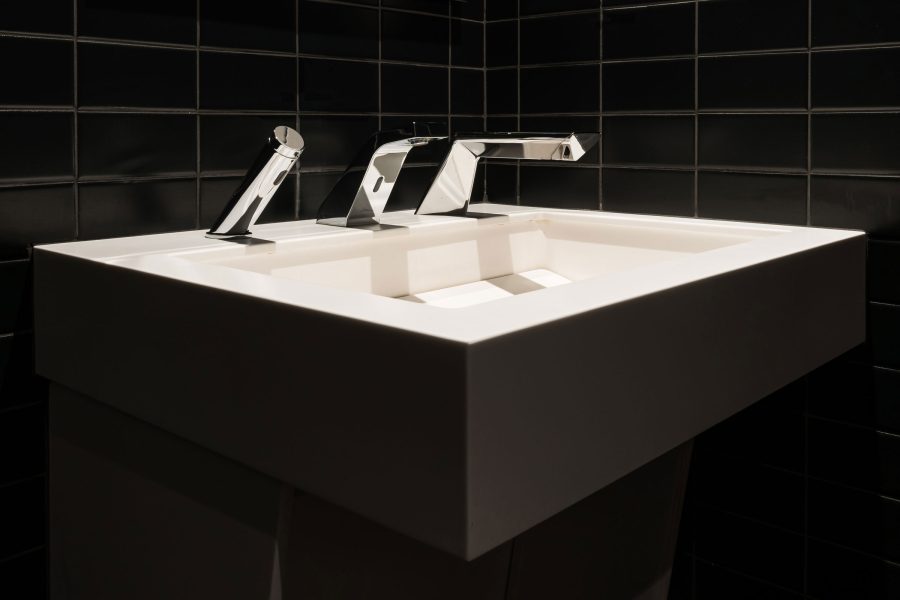
Photo by David Butler II, courtesy of Excel Dryer
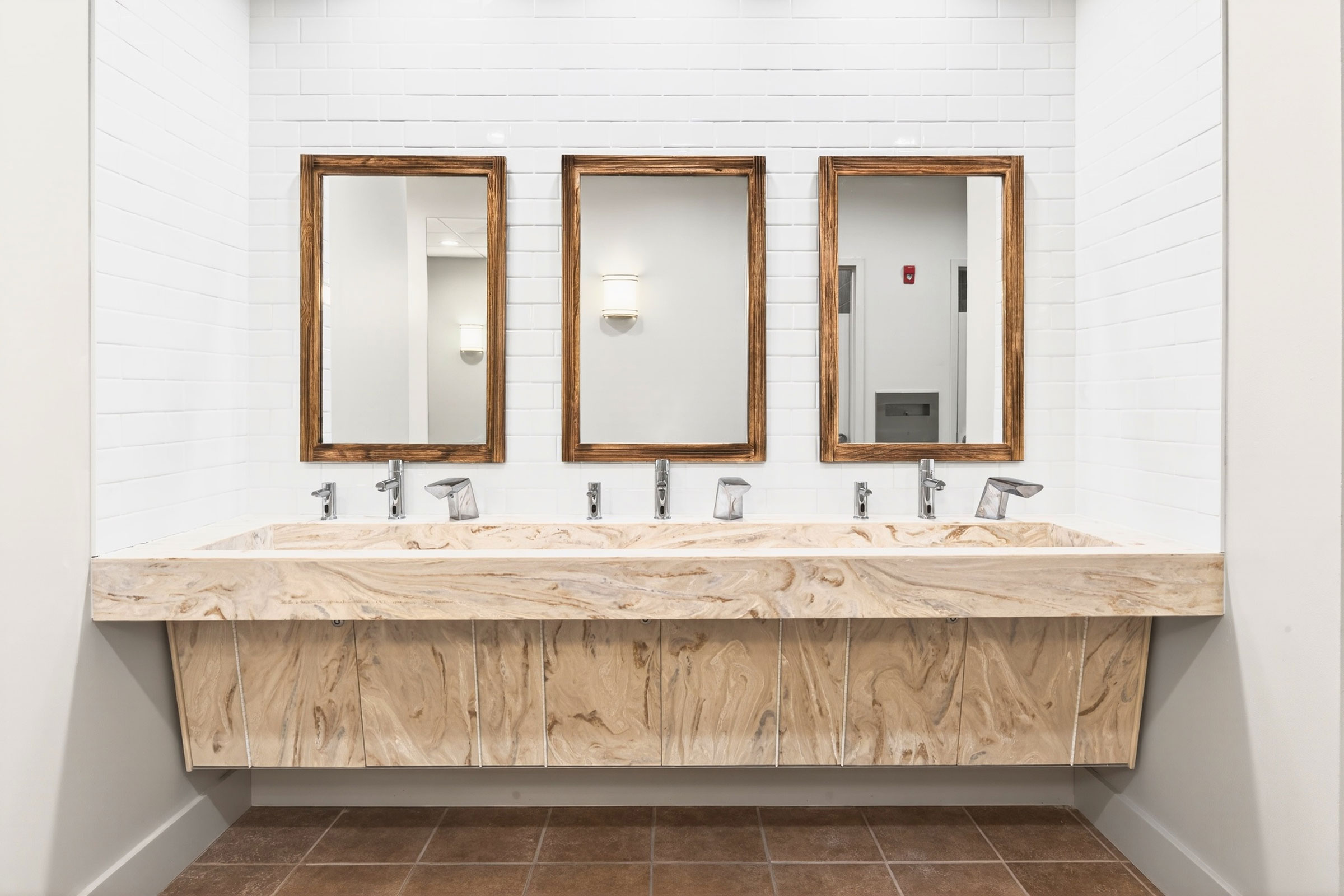
Excel Dryer has gone from its early days, innovating the first high-speed, energy-efficient hand dryer and creating a new product category in the industry, to offering an integrated sink system, where hand dryers mount next to automatic soap and water fixtures for a touchless user experience and improved traffic flow in restrooms, as no one has to wait in line to use a hand dryer.
“The XLERATOR® was really the first major innovation in the commercial electric hand-drying industry and has now become the number one brand specified and sold,” Gagnon says. “It really has grown the hand-drying industry exponentially globally because of how much better these high-efficiency dryers are and how much they save on cost, carbon footprint, energy, waste, labor, and more.”
Integrated systems like the D|13 integrated sink system featuring the XLERATORsync® hand dryer from Excel Dryer are the next evolution in hand-drying, Gagnon says. “We’re now integrating them into full hand hygiene systems that can be custom-designed, beautiful but also functional, supporting human health and wellness and safety, which became much more of a focus during the pandemic.”
Where bathrooms used to be on the bottom of architects’ to-do lists, depending largely on budgets before the pandemic, bathroom design today is discussed early in construction conversations, Gagnon says. “Post-pandemic, the bathroom is now at the top of the list and a priority we need to get right. Trends are toward providing a proper amount of space, with partitions floor-to-ceiling or individual toilet compartments to block airflow and provide privacy and safety. It has changed bathroom design completely.”
While people have largely stopped social distancing and even wearing masks since the pandemic, hand-washing remains top of mind for preventing the spread of germs, Gagnon says. But where education is needed, he says, is around hand-drying. Wet hands are much more likely to spread bacteria than dry hands, according to the National Institutes of Health. The World Health Organization notes that once hands are clean, an individual should dry them thoroughly by using paper towels or a warm air dryer.
Integrated sink systems make hand-drying both easy and intuitive, removing barriers like standing in line and keeping restrooms clean of paper towels or water shaken on the floor. “You walk up to the system, and you can wash, rinse, and dry all in one place without moving. It’s your personal hand hygiene station that you can leave whenever you feel you are done. You’re not bothering anyone else, and your next movement is straight to the exit where it should be. It also looks a lot nicer,” Gagnon says.
Case Study: Tanger Deer Park
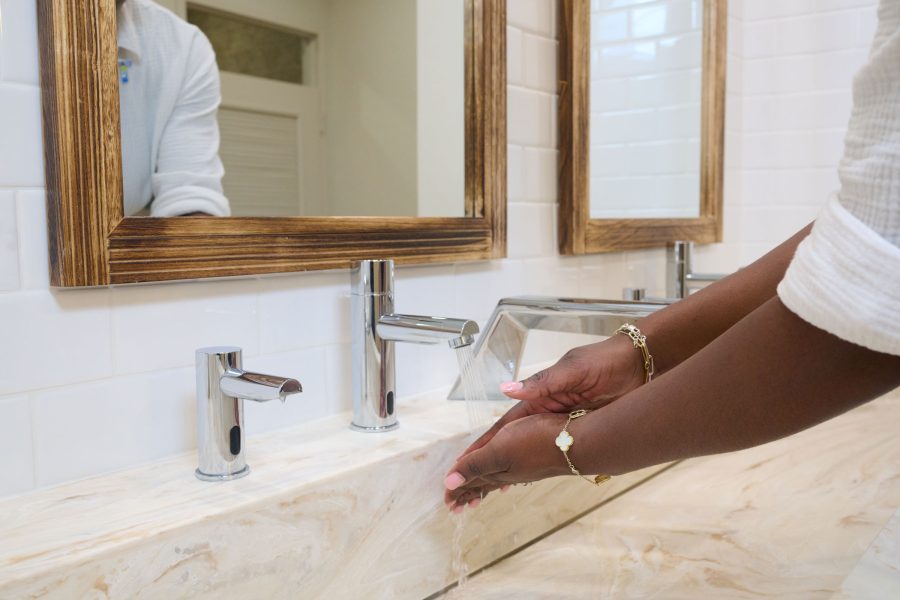
Photo by Benny Migs Photo
But it’s not just new construction where integrated sink systems are showing up. Excel Dryer is also seeing many renovations. In March 2026 Tanger Deer Park in New York unveiled two new D|13 Integrated Sink Systems with XLERATORsync hand dryers, upgrading from having just the wall-mounted XLERATOR hand dryer before. The high-end outlet mall project is a great example of the evolution of solutions Excel Dryer is seeing people turn to most often, Gagnon says.
Tanger Deer Park originally turned to Excel Dryer in 2008 when it moved from paper towels to the XLERATOR hand dryers. Then, during the pandemic, they retrofitted their hand dryers with Excel’s eHEPA® filters, an electrostatic HEPA filtration system tested and proven to filter 99.999% of viruses from the air, according to Excel Dryer.
Commitments to upgrades like these show consumers businesses are paying attention, Gagnon says. “People want visible changes to show, ‘Hey, we’re doing something about it. We care.’ And the feedback from that was excellent.” It also helped Tanger Deer Park become WELL Health-Safety Rated. The 2026 renovation then provided the next level of hygiene and interior design, making the space more modern and user-friendly.
“From a center perspective it’s about creating places where people genuinely enjoy spending time,” says Amaka Muir, marketing director at Tanger Deer Park. “For more than 40 years Tanger has focused on building welcoming, vibrant shopping centers guided by our values of integrity, inclusion, and innovation.”
Wellness and sustainability are core to Tanger Outlet’s mission, and Muir says visitors expect the restrooms there to meet the same high standards as the rest of the center. “They’re clean, safe, inclusive, and efficient, with strong cleaning practices aligned with WELL Health & Safety and LEED principles. The goal is simple: Guests should feel comfortable and cared for every time they use them.”
She says the integrated sink system makes the restroom experience more intuitive, hygienic, and efficient. “It reduces touchpoints, improves cleanliness, and delivers a modern, streamlined look that aligns with the quality guests expect at Tanger.” She says it also helps Tanger meet their long-term goals around energy efficiency, wellness, and water conservation.
Efficiency matters in other ways, too, especially in a high-traffic center like Tanger Deer Park. “The integrated sink system helps manage volume, keeps the space cleaner, and supports a smooth, hygienic flow, even during busy periods,” Muir says, adding that the smart design is right at home with the outlet’s inviting environment.
The Look
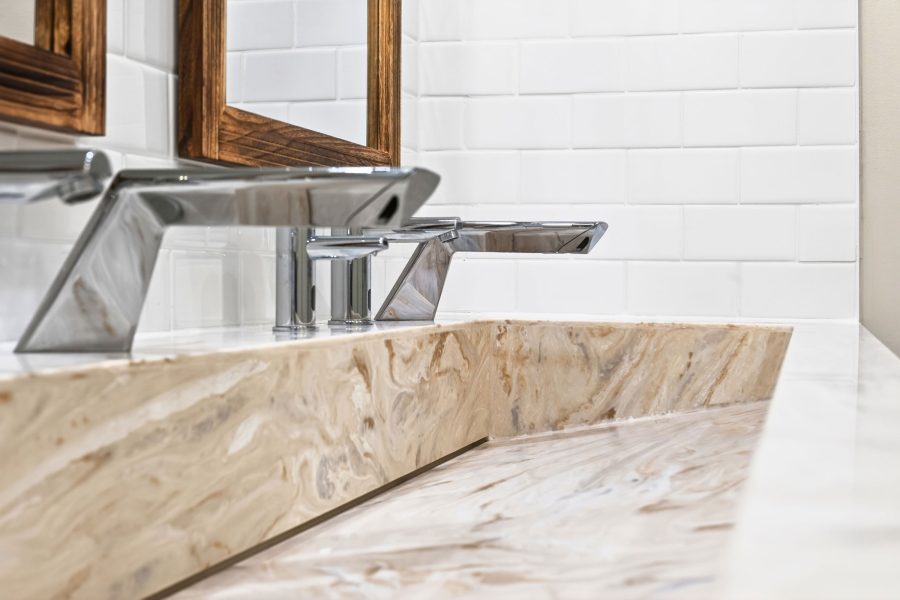
Photo by Benny Migs Photo
Gagnon and the team learned that early XLERATOR hand dryers were sometimes not specified because architects and interior designers didn’t like how they looked. They told him they loved their function and their ability to earn LEED credits, but they felt adding a row of bulky units to a beautiful new restroom hindered their design.
“We were losing a lot because of aesthetics. Even though designers knew the benefits and liked what the product did, they didn’t install it because of how much it affected the design and the aesthetic,” Gagnon says. “Putting a nice, sculpted fixture on the sink next to the faucet and soap makes it blend in; now there’s nothing on the wall.”
He says the integrated sink system fixed the four main issues of wall-mounted dryers—where the water travels, a need for adjustable sound control, air filtration, and aesthetics.
Excel Dryer and D|13 Group products can also be part of a hybrid solution, though, as sometimes you simply need a paper towel. “Sometimes you need paper for other things than drying hands—if you want to wipe your face or you spilled something on your clothes,” Gagnon says.
Hybrid systems can also be installed so teams can design the perfect solution around particular desired fixtures or waste receptacles. D|13 considers itself a design-assist partner for the architect and interior designer community, bringing custom sink solutions to life. “We can do it out of solid surface, quartz, natural stone; they could be made out of anything—a phenolic with a Wilsonart finish, for example,” Gagnon says. “And we don’t make faucets and soap dispensers, but we can put on whatever brand you prefer. It’s all built around the XLERATORsync hand dryer and the optimized sink basin that goes with it. Everything else you can design on your own and fit into any space. There’s no one else on the market who offers that.”
The Future Restroom
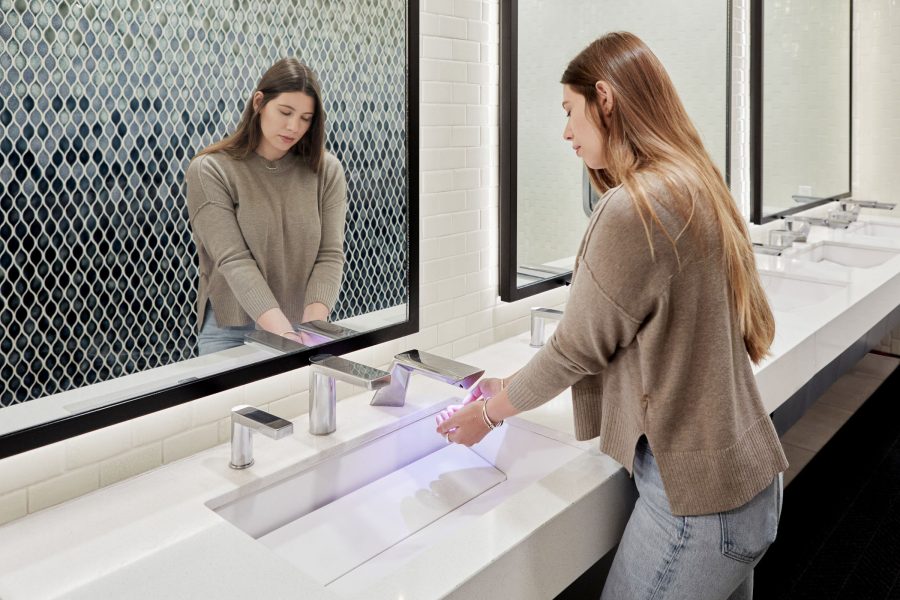
Photo courtesy of Excel Dryer
Gagnon says everything is coming together in future bathroom facilities—literally. “Integrated sink systems are the future of commercial restrooms, period. You’re going to continue to see more companies come out with their own integrated sink systems, and it will become like many other things where you can choose between many more brands and product offerings. There will be unique designs with different features, and you’ll pick the one that best fits your design or the purpose of the type of building. You’re going to see more and more innovation in the integrated systems.”
The key, he says, is to remember that the sink basin or bowl and dryer need to work together to be truly integrated. “You can’t just take a dryer and stick it on a sink you’ve used forever,” he says. “No sink basin from before was designed to accept hundreds of miles per hour of air in it. If you put a dryer on the wrong sink design, you’re going to create a terrible user experience, and it’s going to blow water in your face or on your clothes, or your hair will go flying.”
Integrated sink systems are the future of commercial restrooms, period. You’re going to see more and more innovation in the integrated systems.
As innovation creates new problems, education is paramount, Gagnon says. Well-designed systems are critical. “That’s really where the D|13 system and the XLERATORsync stand out; we worked with a design partner in Gensler to design the XLERATORsync dryer.” Its shape is elongated over the basin because they reversed the airflow inside the fixture to blow down and away from the user. Two air outlets form a triangle where air flows from each outlet, blowing left and right, so both hands can get air at the same time.
“Now it should be a no-brainer that you need to elevate the restroom experience, deliver touchless fixtures, and go with new, beautiful, integrated systems,” Gagnon says. “That’s going to make you stand out, and it’s proven that people are going to remember that. If you don’t, it’s going to be a negative experience.”