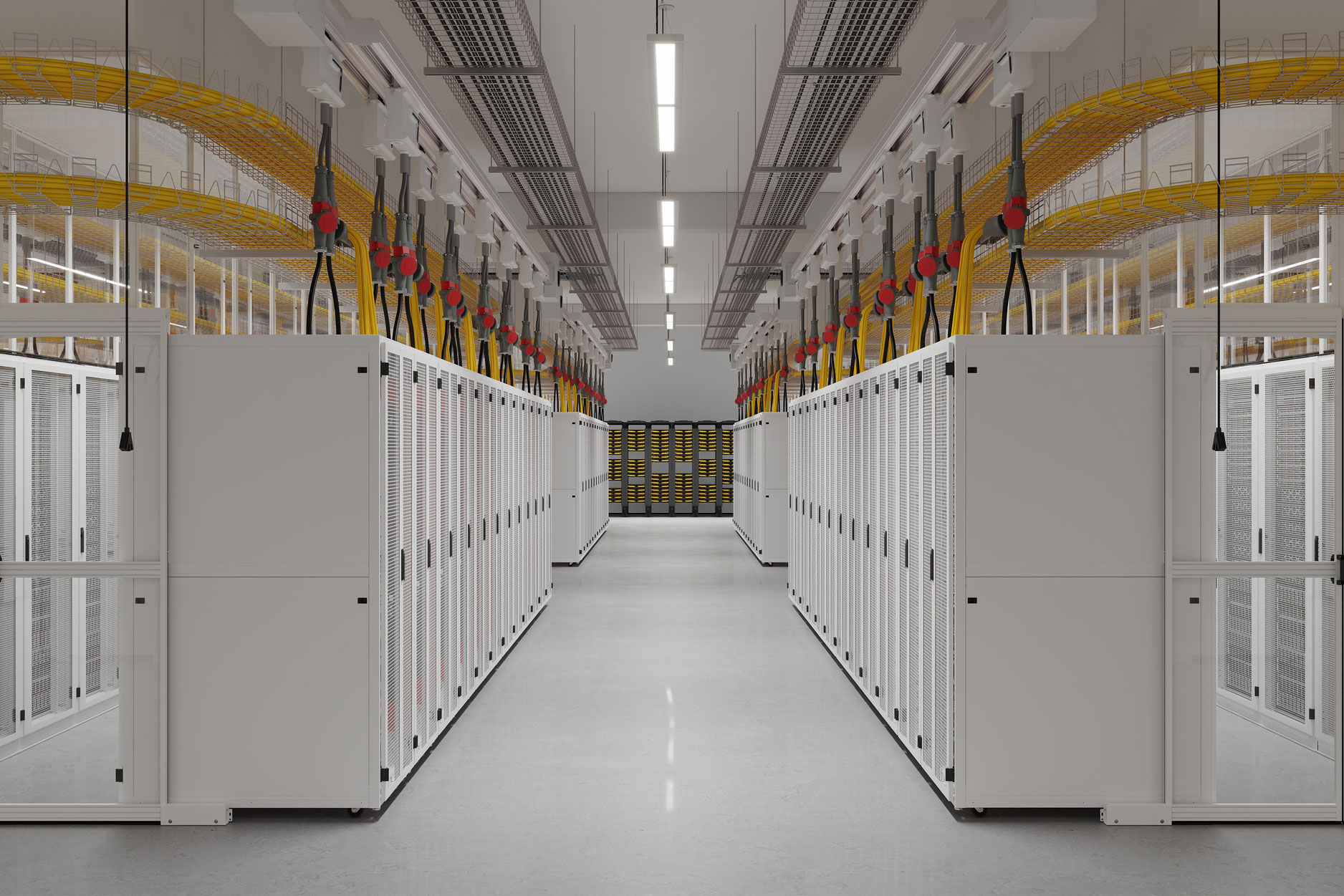
Story at a glance:
- An in-flux of projects and a demand for energy requires buildings that are flexible, versatile, and sustainable.
- Modular solutions will help future data center buildings adapt and evolve to whatever comes next.
- In 2026 US data center demand will rise to 75.8 GW for IT equipment, cooling, lighting and other uses, and further expand to 108 GW in 2028 and 134.4 GW in 2030, according to S&P Global.
The data center industry is building at a pace that would have been unimaginable a decade ago. Driven by AI, cloud computing, and an increasingly digital economy, new facilities are coming online at a breakneck clip—and demand shows no sign of slowing. The International Energy Agency projects that global data center electricity consumption could more than double by 2030. New data from Synergy Research Group shows that the number of large data centers operated by hyperscale providers increased to 1,136 at the end of 2024, having doubled over the last five years.
But with that explosive growth comes critical questions: How do you build an industry at this speed without compromising the environment, straining the grid, or constructing facilities that become obsolete before they pay for themselves? And how can the internal infrastructure and systems that make these complex buildings run be a part of the solution?
A New Playbook for Design
For years data center design followed a predictable formula: build a big box, fill it with servers, cool them down, repeat. The rise of AI has upended that approach. Corgan, a global leader in data center design, has had a front-row seat to the rapid changes in the industry as computing densities increase at a rapid-fire pace.
“We’ve seen this shift to higher densities across the board, and that’s made everybody have to refocus on efficiency—and that’s not just sustainability but electrical efficiency,” says Dan Miller, associate principal and senior project manager at Corgan. “Instead of just running with the same direction we’ve been going, we want to evaluate the process and make sure we’re going to be able to build buildings that last for the entire intended use.”
If we maintain a flexible design and a building we know can accommodate varying uses, it frees us up to lean forward on that infrastructure without the concern that it might become irrelevant in a year.
Where a typical building might target a 50-year lifespan, data centers face technology refresh cycles as short as seven years—all while the shell of the building needs to endure. “The name of the game right now is flexibility,” Miller says. “If we maintain a flexible design and a building we know can accommodate varying uses, it frees us up to lean forward on that infrastructure without the concern that it might become irrelevant in a year.”
Varun Kohli, director of sustainability at Corgan, says that speed-to-market pressure is pulling sustainability conversations forward in the project timeline. “If there’s one thing I really enjoy in data centers, it’s the fact that we get pulled in even before the project starts,” he says. “That analysis and the results actually get multiplied into multiple projects. The benefit of doing the early-on analysis on materiality especially is so much more rewarding and beneficial.”
The Energy Equation
Eric Gimon, a senior fellow at Energy Innovation, a nonpartisan energy and climate policy think tank, argues that the industry’s instinct to build fast at all costs often runs counter to its long-term interests. “What data centers care about the most is being able to access power as quickly as possible,” Gimon says. “And people are used to thinking of sustainability as an extra step that slows things down. But in this case it’s actually something that would give them access to power faster, partly because sustainability often means leaning into efficiency.”
Rather than building new gas plants to power data centers off-grid—an approach limited by hardware scarcity and fuel price volatility—Gimon advocates for co-locating with clean energy parks that combine renewables and battery storage. An RMI report on “power couples” highlights the potential to reuse existing grid interconnection points, pairing them with solar, wind, and battery systems. The risk calculus, Gimon argues, favors clean energy. “If I build a big gas engine farm for a data center and then that data center goes bust, that gas engine farm is worthless,” he says. “Whereas if you put it in clean infrastructure—renewables and batteries—that infrastructure is still useful. It doesn’t consume fuel, so it can be repurposed for something else.”
Building Smarter from the Inside Out
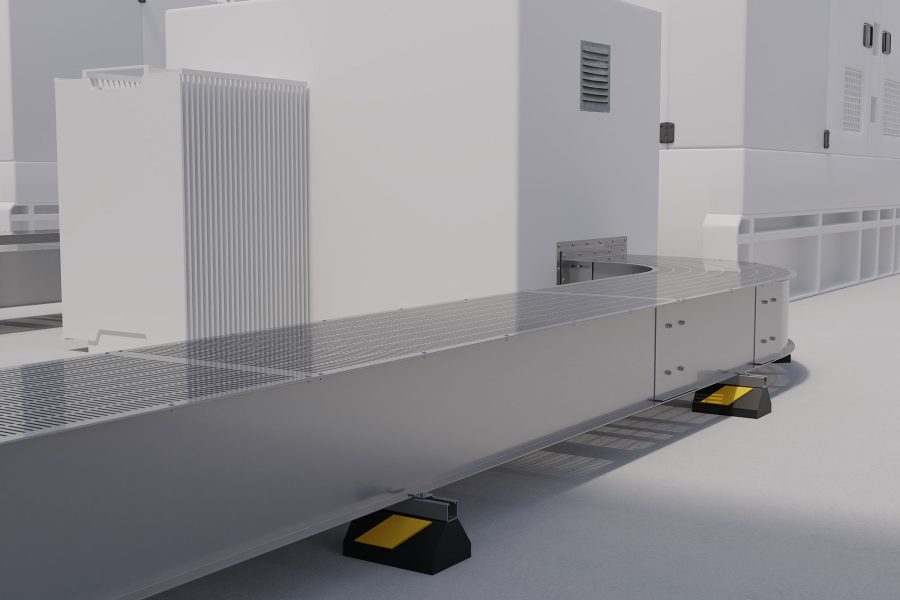
Cablofil Cable Bus is a contractor-friendly modular power pathway you can find with built-in field fabrication flexibility. Photo courtesy of Legrand
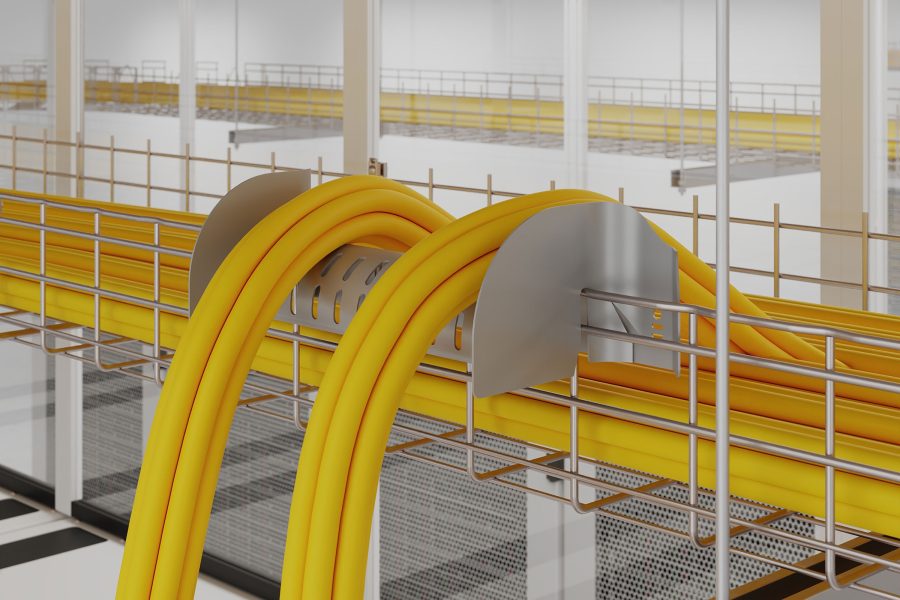
Photo courtesy of Legrand
Some of the most consequential sustainability gains are happening inside the building—in the mechanical and electrical infrastructure that form the operational backbone. Kevin Major, vice president and general manager of Cablofil at Legrand, pushes back on the notion that systems like cable infrastructure are an afterthought. “The infrastructure is not necessarily a supporting element; it’s really the operational backbone for these high-performing data centers,” he says. “We’re not developing solutions for the now. We’re developing solutions for the future.”
Cablofil, one of the most expansive suites of cable management systems and accessories, has invested in products that prioritize adaptability and sustainability. Innovations like Cablofil Cable Bus, a modular power distribution system that routes large electrical conductors through a ventilated cable tray structure, allow for scalable installation and field-adjustable routing in large facilities like data centers. Fully engineered and designed to fit scalable systems, Power Bus Way also minimizes material waste for clients. The company’s wire mesh trays are manufactured with 99% recycled content.
Legrand has also aggressively on-shored manufacturing capacity across North America, positioning new production facilities near areas of anticipated growth to reduce transportation carbon. “We optimize the network as far as trying to reduce carbon based on where it needs to ship to,” Major says. Legrand’s multi-brand distribution network passes logistical efficiencies directly to clients—critical in an industry where, as Major notes, “driving certainty for clients is really the only goal that matters.”
In 2026 US data center demand will rise to 75.8 GW for IT equipment, cooling, lighting and other uses, and further expand to 108 GW in 2028 and 134.4 GW in 2030, according to S&P Global. Miller frames internal infrastructure as a “last mile” challenge. “Once we get inside the box that’s where there’s so much opportunity and risk for change that it’s critical for those systems to be flexible to avoid becoming obsolete,” he says. “Ceiling systems, cable tray systems all need to be flexible enough where layouts can change. That really prevents wasted material.”
The Modular Shift and Embodied Carbon
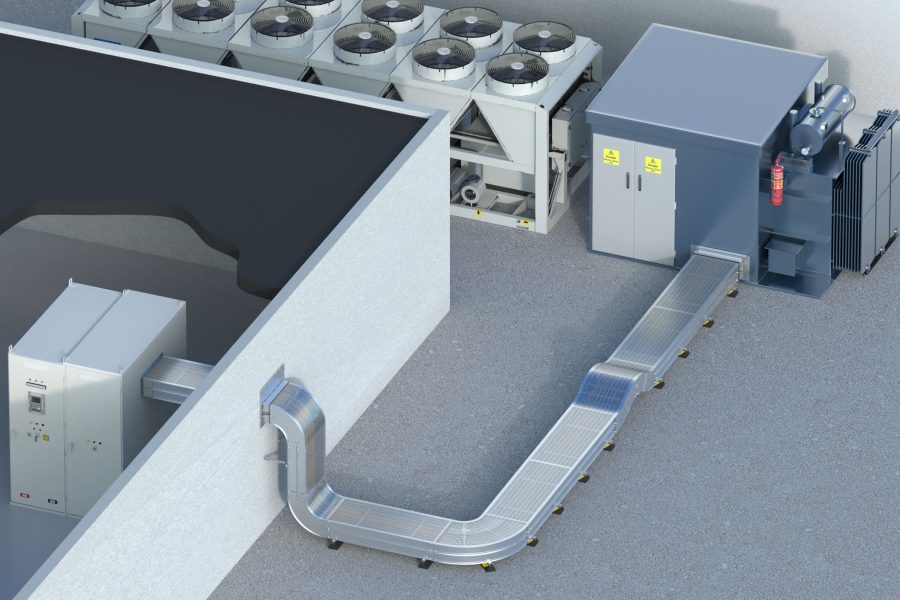
Innovations like Cablofil Cable Bus, a modular power distribution system that routes large electrical conductors through a ventilated cable tray structure, allow for scalable installation and field-adjustable routing in large facilities like data centers. Photo courtesy of Legrand
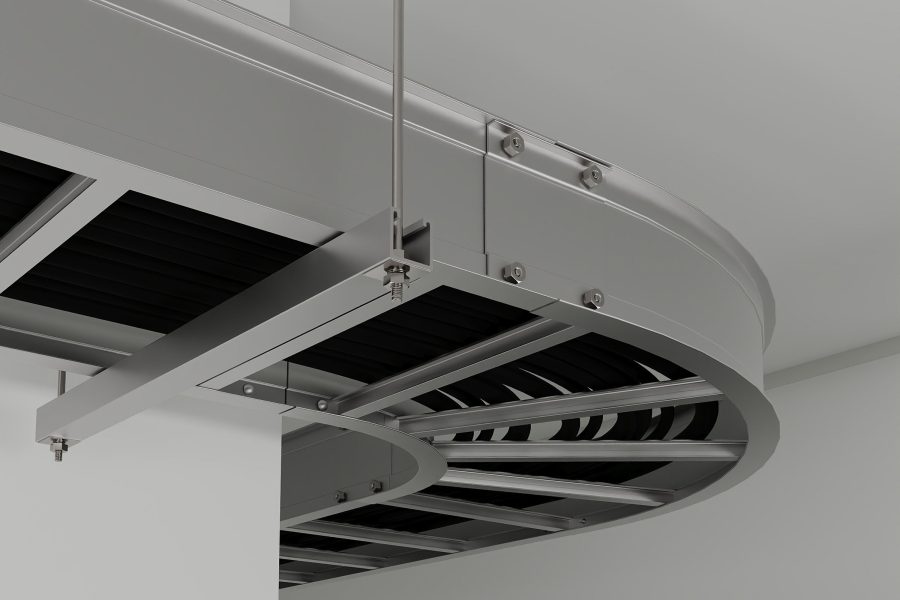
Cablofil takes products that were historically manufactured in set lengths and switches to a modular and adaptive approach. Photo courtesy of Legrand
The move toward modular, offsite manufacturing may be the single biggest shift in how data centers are physically built. “Let’s really call it what it is; it’s the manufacturing of a data center offsite,” Major says. “Now you can deploy lean principles into the actual build, which drives scalability, efficiency, and ultimately getting that data center energized on time.”
Miller sees modularity as a sustainability multiplier. “It allows them to be more efficient with their materials, more efficient with their labor. It’s also a lot safer; there’s a better human cost where you’re letting somebody work in a controlled environment instead of out in the field.”
For infrastructure suppliers like Cablofil, the modular revolution is both an opportunity and an imperative. Products like Cablobend™—versatile cable trays that require zero cutting and can be hand-bent to any angle or stretched to length onsite—are purpose-built for the speed and adaptability that modular construction demands. As prefabricated modules arrive and need to be connected, contractors need cable management systems that can be configured without waste.
“What you’re seeing with Cablofil and others is they’re taking products that were historically manufactured in set lengths and switching to a modular and adaptive approach so you have the flexibility at the last minute to go make adjustments without the risk of being obsolete before the building turns over,” Miller says.
Major sees this shift accelerating. “Imagine in the future a shell that’s built with all kinds of modulars being dropped in and essentially connected,” he says. “That’s here, right in front of us.” As modular units converge on a job site, Cablofil’s wire mesh trays—with their high recycled content and field-adaptable design—are built for exactly that scenario.
Embodied carbon is also emerging as a critical metric precisely because data centers are already so operationally efficient. “The buildings have to be efficient. The mechanical systems are super tuned to reduce energy consumption,” Kohli says. “The piece that gets left over for architects to plan is the materiality, and embodied carbon is obviously the key thing.”
He adds that leading design firms are pushing beyond cradle-to-grave analysis into circularity. “The more we can implement circularity in our material selection, designing for disassembly, I think that could really have a greater impact in the long term.”
Being a Better Neighbor
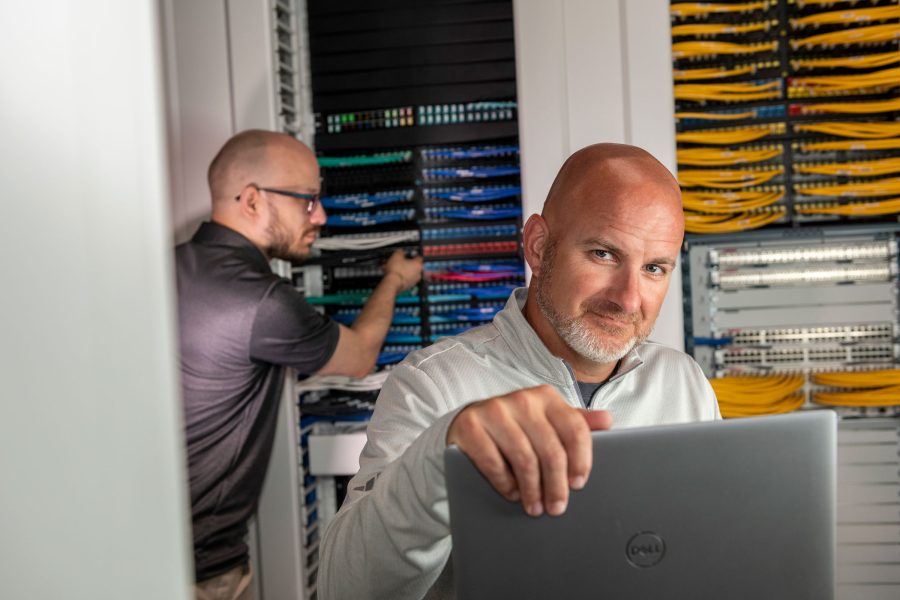
Cable infrastructure is the operational backbone for high-performing data centers, according to Kevin Major, vice president and general manager of Cablofil at Legrand, seen here at the Legrand Experience Center in Connecticut. Photo by Lou Jones Photography
As data centers proliferate across the country, communities hosting them are beginning to push back. “Nobody wants a dirty, noisy neighbor that’s also consuming a lot of water in an area where water is tight,” Gimon says. “If they want to continue building out at scale, they need to acknowledge the constraints of the various communities where they’re building.”
As part of Corgan’s ongoing commitment to responsible resource management, they partnered with a client to engineer advanced cooling systems that require zero water usage during operation. By eliminating the need for water-based cooling, each facility avoids the consumption of approximately 10 million gallons of potable water per megawatt each year. And with each building typically exceeding 40 megawatts, this design saves an estimated 400 million gallons of potable water annually per building—a significant contribution to long-term water conservation, community resilience, and environmental stewardship, according to Corgan.
Miller sees this social license as make-or-break for the industry. “The operators who are being good neighbors and who have proven they’re going to look after these shared resources are the ones who are going to continue to find ways to build,” he says.
Looking Toward the Future
Kohli envisions data centers moving closer to urban centers, potentially adapting existing buildings—like warehouses and underused offices—rather than always building new. “Maybe decentralize and start building data centers within urban centers in existing buildings,” he says. “That allows us to not have to build a whole lot more.”
Miller sees these urban facilities sharing waste heat with surrounding communities. “Find those opportunities to cohabitate, reuse existing facilities, and then find a way to recycle some of the industrial heat that is available.”
For Gimon it comes down to pace versus partnership. “There’s the famous phrase: If you want to travel fast, travel alone. If you want to travel far, travel together,” he says. “Right now they’re very focused on ‘fast and travel alone,’ and I’m a little suspicious about how far that approach will take them.”
Major sees the trend toward flexibility, modular construction, and waste reduction only growing in importance. “The speed in which data centers are expected to be deployed can cause challenges within the supply chain,” he says. “Cablofil embraces this, which is critical so you’re prepared to respond effectively to those potential challenges rather than be the one creating them.”
The data center industry’s future will be built on the decisions being made right now: the materials chosen, the supply chains structured, the energy systems deployed, and the communities engaged. Longevity—for the buildings, for the grid, and for the planet—depends on getting those decisions right.