

Story at a glance:
- More frequent wildfires, warming temperatures, and increased construction near undeveloped vegetation are making it critical for architects to design structures for durability, code compliance, and real-world performance.
- Buildings frequently include ignition-resistant cladding while the rest of the structure is still combustible, even in fire-prone areas.
- Recent advances in chemistry have led to new applications of magnesium oxide (MgO) in construction, enabling ignition resistance without compromising insulation and energy efficiency.
Nearly 78,000 wildfires consumed more than 5 million acres in the US last year, according to the National Interagency Fire Center. Because fire resiliency is an intensifying concern across the country, Headwaters Economics Associate Director Kelly Pohl worked with the USDA Forest Service to develop Wildfire Risk to Communities (the first nationwide searchable map of wildfire risk). “There’s a misconception wildfire risk is just a western US problem, and it’s not,” Pohl says. “This is really widespread.”
Although California is often the state that faces the most frequent wildfires (more than 9,000 in 2025), states like Oklahoma and Florida each endured two of last year’s 40 biggest wildfires (measured by size in acres). Alaska accounted for more than a quarter of these extensive wildfires, followed by Oregon (10%), and Arizona, California, and Nevada (7.5%). More than 1 million acres burned in Alaska, along with more than a half -million in California, more than 300,000 in Oregon and Oklahoma, and about a quarter-million in Nevada, Florida, and Washington.
Between more frequent wildfires, warming temperatures, and increased construction near undeveloped vegetation, it’s especially vital that architects design for durability, code compliance, and real-world performance.
Increasing Demand for Ignition Resistance
Why is fire resiliency a growing concern? Several trends are converging, Pohl says. For one, climate change means more hot, dry days, snowpacks melting earlier, and snow arriving later in the year. As a result, vegetation has more time to grow and fuels like trees, shrubs, and grass have more time to dry out. “There are just more days where fires are possible,” she says.
Buildings also frequently include ignition-resistant cladding while the rest of the structure is still combustible, even in fire-prone areas. Meanwhile more structures are increasingly built in places with greater risk. In fact, the Wildland-Urban Interface (WUI), where human development meets undeveloped vegetation, is the fastest growing land use type in the country, expanding by about 2 millions acres annually. Nearly a third of all houses in the continental US were in WUI areas as of 2020, per the USDA Forest Service.
“People want to live in these beautiful places,” Pohl says. Yet, with more people in these landscapes, human-caused ignitions also increase. An estimated 85% of wildfires in the US are started by people.
Especially in large WUI fires, commercial and industrial buildings are a critical concern. Even when commercial properties are made with noncombustible materials like concrete and steel, they may have greater amounts of different chemicals and higher internal fuel loadings, according to the National Academies of Sciences, Engineering, and Medicine. In addition, precise mappings of commercial and industrial structures, including their fuel loadings and chemicals, are not widely available, which makes it challenging to assess the true extent of risk.
In a wildfire the building’s enclosure is a crucial line of defense against radiant heat exposure and ember deposition. With the DuPont ArmorWall System, exterior walls merge five traditional building enclosure elements, including structural sheathing for direct cladding attachment, ignition resistance, continuous air barrier, water-resistive barrier, and a low-GWP continuous insulation layer.
The ArmorWall System stands out because it functions as an integrated system, not a single-purpose layer.
“The ArmorWall System stands out because it functions as an integrated system, not a single-purpose layer. By combining several enclosure functions into a single exterior wall assembly, the ArmorWall System helps enable design teams to address multiple performance requirements simultaneously,” says Keith Nelson, building science and commercial application leader at DuPont Performance Building Solutions.
“There’s a variety of fairly complex ways of complying with WUI,” he says. “What the ArmorWall System does is cut through that with a single system that can offer compliance for the exterior wall for the enclosure of residential and commercial properties in wildfire zones, especially high-risk wildfire zones.”
The magnesium oxide (MgO) sheathing of the ArmorWall System supports fire-rated assemblies of up to two hours while providing structural performance capable of handling cladding loads with minimal creep. “What makes the ArmorWall System different is that it’s not just adding fire resistance; it’s replacing multiple layers with a single system that carries load, manages air and water, and supports continuous insulation,” Nelson says. “From a builder’s perspective that translates to fewer materials, fewer steps, and a system they can install and build on directly without sacrificing performance.”
Structures in the WUI are especially vulnerable because, unlike in cities, they’re often much farther than mere minutes from the local fire department and response times can vary drastically, according to the Florida Department of Agriculture and Consumer Services. “Contractors want to harden that building and make it as fire-resistant as possible, knowing that help is actually a long way away,” Nelson says.
The composite system also saves contractors time and labor. “You can achieve fire resilience, energy efficiency, and a durable structure all in one component that is a faster install,” he says.
In a 2025 report by Headwaters Economics, Pohl and her team found that building new homes to high wildfire-resistant standards added only 2 to 3% more cost than traditional construction. “A home is a huge investment for most Americans, and they want it to be durable and safe,” Pohl says. “This is not a lot of added cost for that peace of mind.”
Additionally, structures built to more stringent ignition-resistant standards are easier to insure. “A lot of insurance companies are leaving areas of high risk, or premiums are becoming unaffordable,” she says.
Innovation in MgO
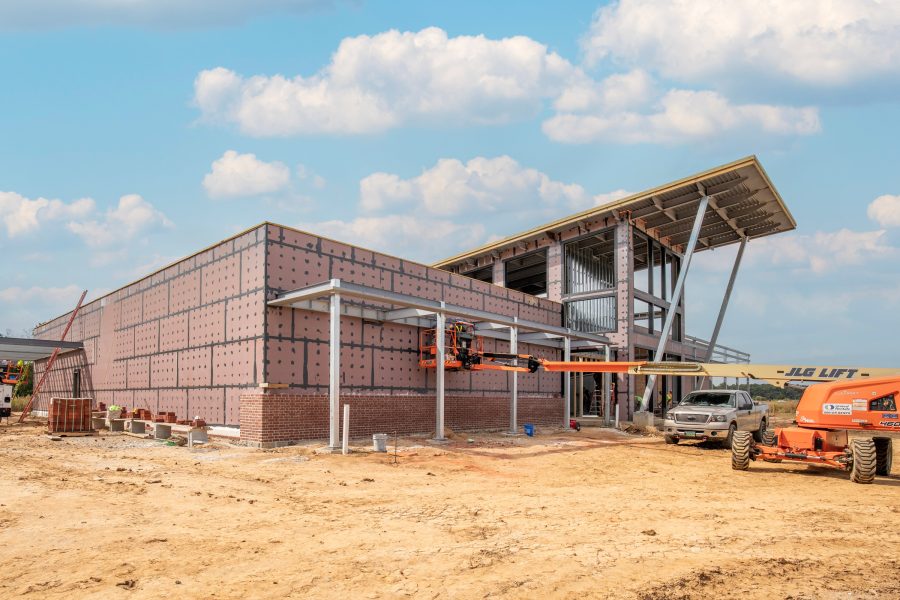
The DuPont ArmorWall System combines magnesium oxide (MgO) sheathing, ultra-low GWP continuous insulation, fire resistance, and air and water barriers into a single exterior wall assembly. Photo courtesy of DuPont
Innovations in building materials can help architects make buildings safer and more ignition-resistant without compromising other essentials like insulation, energy efficiency, and comfort.
Before his current role, Nelson spent nearly two decades as a forensic architect focused on building failures through the lens of fire performance and occupant comfort, plus water and air infiltration. “We looked at buildings that have failed to understand why and fix them,” he says. “How do we make things better? How do we do things differently? What can we do to drive the market to more fire resistance, more resiliency, air and water performance, and occupant comfort?”
Through his work on the ArmorWall System, Nelson says he’s able to keep addressing these questions. “We can’t talk about the ArmorWall System without recognizing that we’re asking an industry that tends to resist change to consider a new way of thinking and see the value of a composite system,” he says.
The MgO sheathing of the ArmorWall System allows builders to attach to nearly any cladding type, including brick and rainscreen assemblies. “It gives the architect and the installer freedom in enclosure design, meaning you’re not having to align joints and cladding attachments with the framing behind it,” Nelson says. “You’re not worried about hitting studs, therefore you’re not missing studs, not backing out fasteners and creating holes in the enclosure.”
Nelson adds that this “decoupling of the cladding attachment from the framing” produces a tighter fit for the insulation and can improve the clear field thermal performance of the building. The polyurethane insulation layer in the ArmorWall System bonds to the MgO sheathing with patented fusion technology, preventing gaps that can occur with products that laminate or glue together materials. This insulation layer delivers an R-value of 6.5 per inch and provides compliance with ASHRAE 90.1 continuous insulation, alongside thermal bridging energy code requirements.
MgO-based cements are one of the oldest building materials and have even been used in historic structures, Nelson says. But the use of MgO in construction has evolved significantly since then, particularly in the past 10 to 15 years, thanks to advances in chemistry, he says.
“We’ve been watching magnesium oxide, cement sheathing, and there have been some challenges in the past,” Nelson says. “But innovations happened in dialing in the chemistry and in developing the quality control mechanisms to ensure we’re getting the highest quality product to address our needs for structural and fire performance.”
While cement and gypsum form through the hydration of a single primary component, MgO requires synergistic effects of two different components, plus water. Historically manufacturers encountered hurdles with quality control ranging from improperly formed cement to excess salts, both of which can reduce strength and increase risk of corrosion. Manufacturing MgO sheathing demands precise mixing of dry and wet components, casting, and curing under controlled conditions. Nelson says recent advances in chemistry have also allowed DuPont to provide quality control and fully address corrosion concerns.
Colorado Code Changes
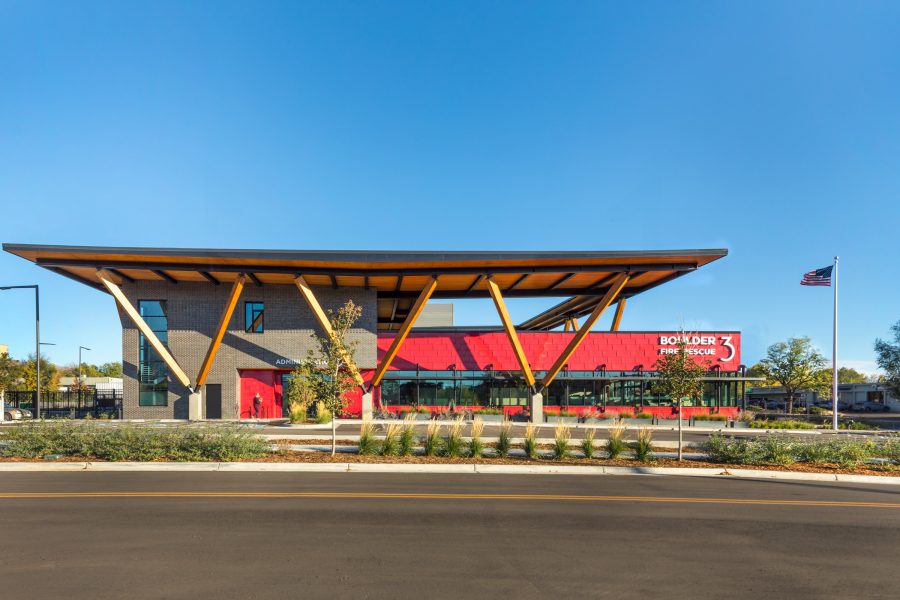
With an ArmorWall System, exterior walls merge five traditional building enclosure elements, including structural sheathing for direct cladding attachment, ignition resistance, continuous air barrier, water-resistive barrier, and a low-GWP continuous insulation layer. Photo courtesy of DuPont
In December 2021 the Marshall Fire in Boulder killed two people and razed more than 1,000 structures, making it the worst fire in the state’s history. Less than two years later Colorado enacted a law that created a Wildfire Resiliency Code Board to establish statewide minimum code for fire-resistant construction in WUI areas.
“All building codes change and morph over time. Sometimes it happens as a reaction to a bad situation,” says Laura Hasburgh, materials research engineer at the Forest Products Laboratory (part of the USDA Forest Service).
Hasburgh says we need to learn from disasters like the Marshall Fire. By the beginning of July 2026 builders in Colorado will have to construct homes in accordance with the new codes published by the state’s Wildfire Resiliency Code Board.
While Colorado has plenty of wildlands, it has lots of high country, too. In Aspen, for example, buildings must be designed with thermal codes in mind, plus the WUI fire codes. In 2023 the City of Aspen updated its thermal codes to require more insulation in an effort to reduce energy consumption and emissions. The city aims to lower emissions 63.4% by 2030 and to zero by 2050, according to Aspen’s Climate Plan. Residential energy use contributes nearly a third of the city’s emissions.
With traditional building materials architects often face a trade-off between ignition resistance and insulation. When progressive changes occur in both thermal and fire codes, like in Aspen, this can pose a new challenge for builders. Nelson says the ArmorWall System can solve this issue by providing continuous insulation and ignition resistance with the same material.
Materials’ Fire Performance Matters
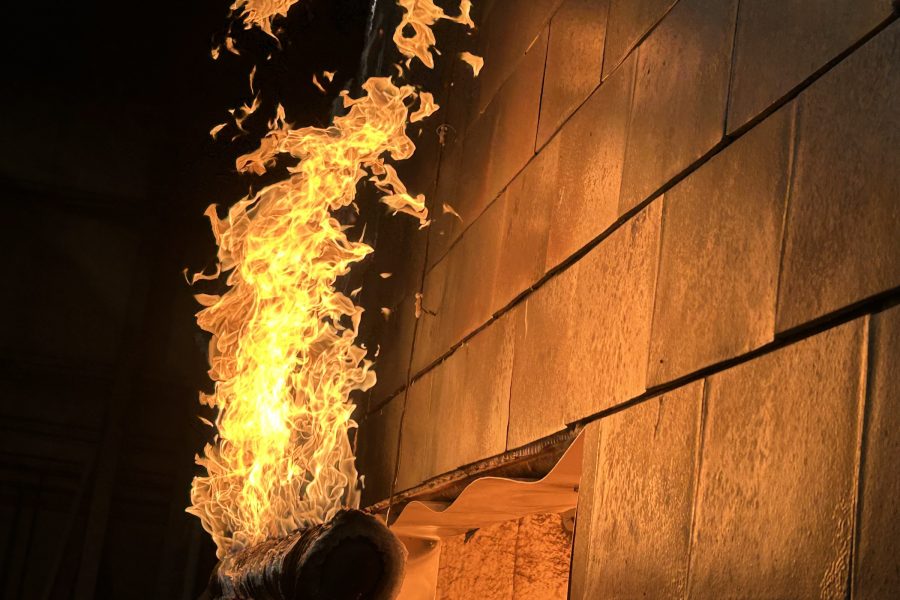
Fire testing of the DuPont ArmorWall System. The system’s MgO sheathing helps support ignition-resistance for residential and commercial construction while also providing structural and thermal performance. Photo courtesy of DuPont
Wildfires cost communities hundreds of billions of dollars every year. Pohl and Hasburgh agree preparing structures for fire before disasters is the most effective way to avoid extensive damage.
In February 2026 Hasburgh published a study evaluating the fire performance of coatings for exterior cedar shingles. Hasburgh and her colleagues found that after weathering, all the coatings were ineffective. “That’s certainly an area where more work is needed,” she says. “I would like to see better options to protect those existing structures, particularly within the wild and urban interface.”
Hasburgh’s team also worked with the US Department of Defense to research ways to thermally modify and treat timber and engineered wood products as well as evaluate their fire performance. She says they wanted to put up small structures around the world that could pop up quickly, adding that the char rate models developed in her research are then used by structural engineers to calculate fire resistance ratings.
Hasburgh says new materials and technologies can increase risk if their impact in a fire isn’t sufficiently tested. At the same time she says not all tests are created equal, and it’s vital to keep in mind how different tests measure different things like flame spread or combustibility. “Not just the building materials but new materials like lithium ion batteries are being put into structures as well,” she says, adding that many factors make it even more important to understand the fire performance of building materials.
Hasburgh says she’s also observed a shift from protecting individual structures to considering community-wide fire strategies, including stricter building codes. Pohl adds that when a building catches fire, it becomes fuel—creating heat, flames, and embers that intensify the danger to other structures in the surrounding area. “One of the things that’s unique about fire, which isn’t true for other hazards like hurricanes and floods, is what you do or don’t do can affect your neighbor’s vulnerability,” she says.
Even though wildfires can feel overwhelming, Pohl says it’s important to remember that after major fires devastated urban areas like Chicago in the late 1800s, building practices changed. “We adapted,” she says, adding that we can now see the evidence of this adaptation everywhere we go, whether it’s smoke detectors, emergency exits, or firewalls.
“Today we’re facing a new type of challenge with this community and wildfire interaction, but we can rise to this challenge. We’ve done it before, and we can do it again,” she says. “Science has come a long way in the last 20 years about how to construct homes to be wildfire-resistant.”

