Story at a glance:
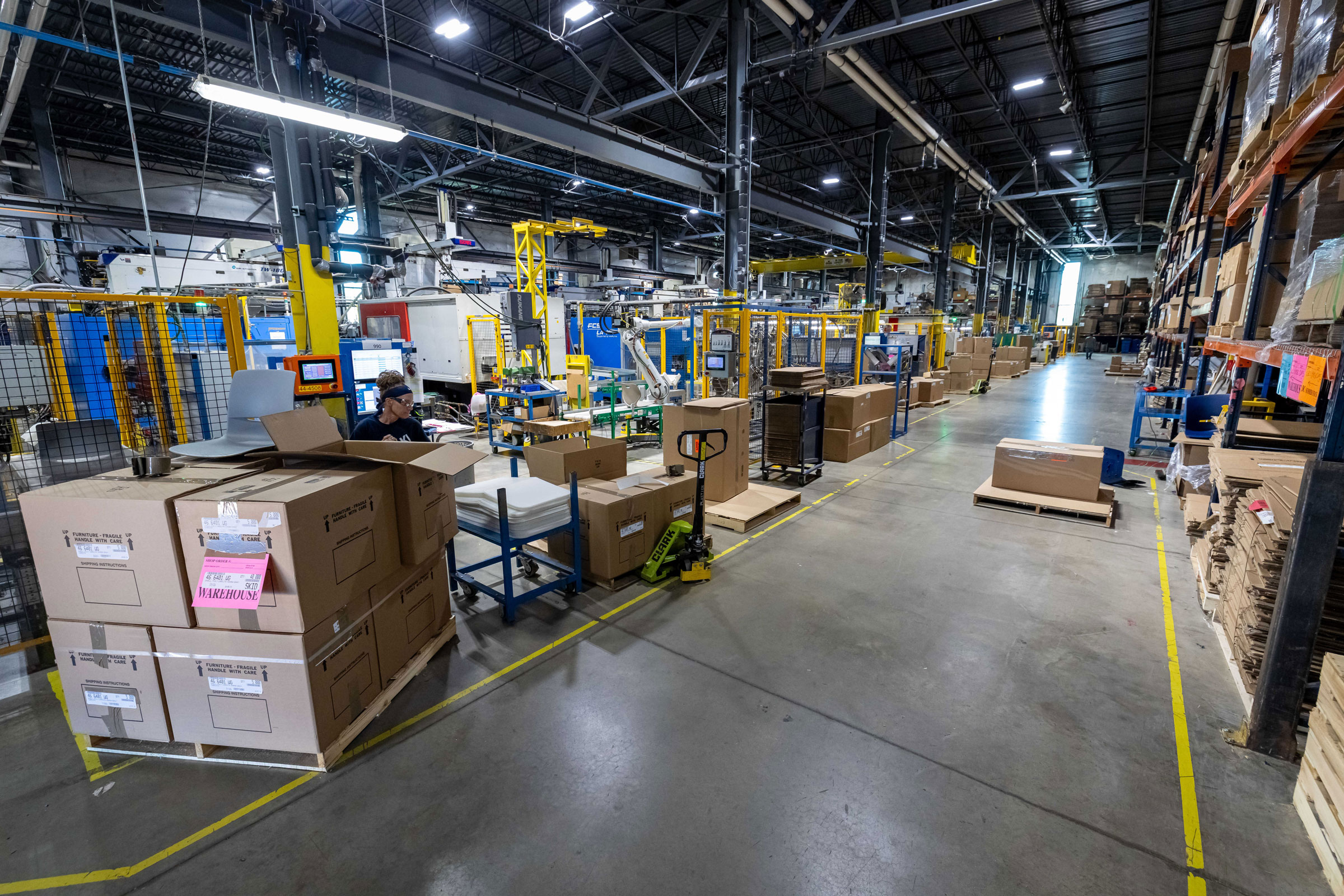
- KI’s 500,000-square-foot plant in Green Bay, Wisconsin, makes as many as 10,000 products a day with more than 45 robots.
- The employee-owned furniture manufacturer develops much of its automation in-house, including the cell that builds its K-12 Cogni chair.
- Every employee is responsible for quality, and the plant builds everything to order, one to three days before it ships.
Just six miles from where the Green Bay Packers play football, KI is manufacturing more wins than you can imagine—with as many as 10,000 products a day made using more than 45 robots in an impressive 500,000-square-foot plant that’s always improving. The employee-owned furniture manufacturer is known for its innovation, with evolving designs like the K-12 Cogni chair (designed for student fidgeters) and the forthcoming Kiaura (due out in 2027), designed to respond to micro-movements and support the body’s natural need for motion.
The saying, “If it ain’t broke, don’t fix it,” doesn’t apply at KI, laughs Tim Heyrman, general manager, overseeing plant manufacturing in Green Bay. “Your competition’s continually getting better, they’re innovating, and we have to be above and beyond the innovation,” says Heyrman, a longtime engineer who still spends time on the floor when he can to stay up-to-date on the latest processes. “We need to get better constantly as employee owners. We don’t work for the company. We work for each other, and part of that is holding ourselves accountable to continuous improvement.”
We need to get better constantly as employee owners. We don’t work for the company. We work for each other.
Summer is KI’s busiest production time, when they add an extra 150 part-time technicians to their already 240 working onsite full-time. An additional 40 KI employees work in the offices adjacent to the plant floor. After each summer season, the team conducts a “lessons learned” with suggestions for how to improve processes and products in the coming years. Following summer 2026 they had a list of more than 200 continuous improvement projects they planned to work on through May 2027. “We constantly do that,” Heyrman says, as a point of pride.
KI underwent two major expansions in the last year and has many new automated manufacturing cells, including new in-house developed technology that came online in summer 2026. Heyrman says having equal employee ownership sets the tone so everyone wants the best for the company, customers, and themselves. “We’ve long been employee-owned. We previously didn’t have a lot of capital investments, so we had to be very strategic in how we invested that capital. By developing our in-house solutions, that was really how we made all this happen,” Heyrman says of their continued growth and success. “We took the time and effort on the manufacturing floor, understanding where we needed to be in the future, starting with the education and development of technicians to support that plan.”
The Evolution of Modern Manufacturing
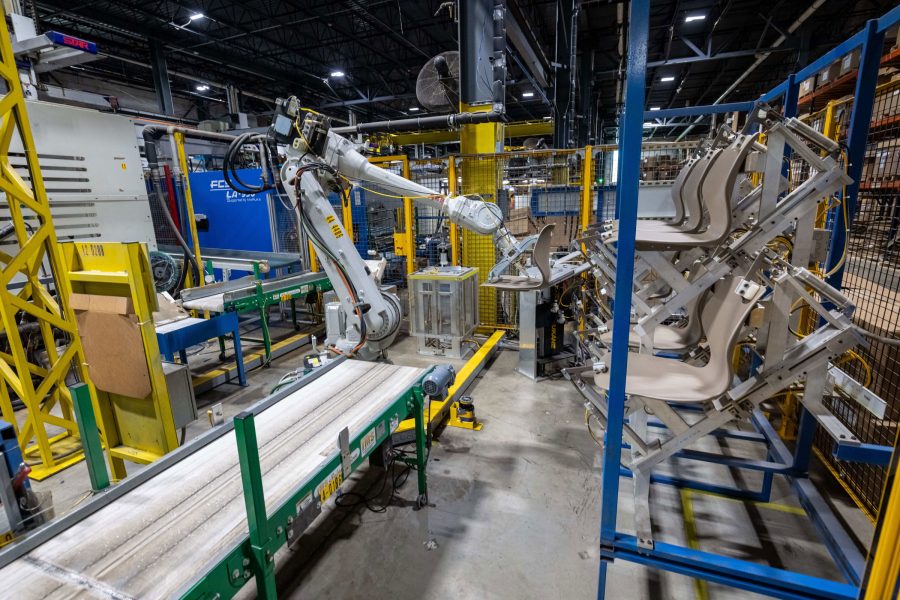
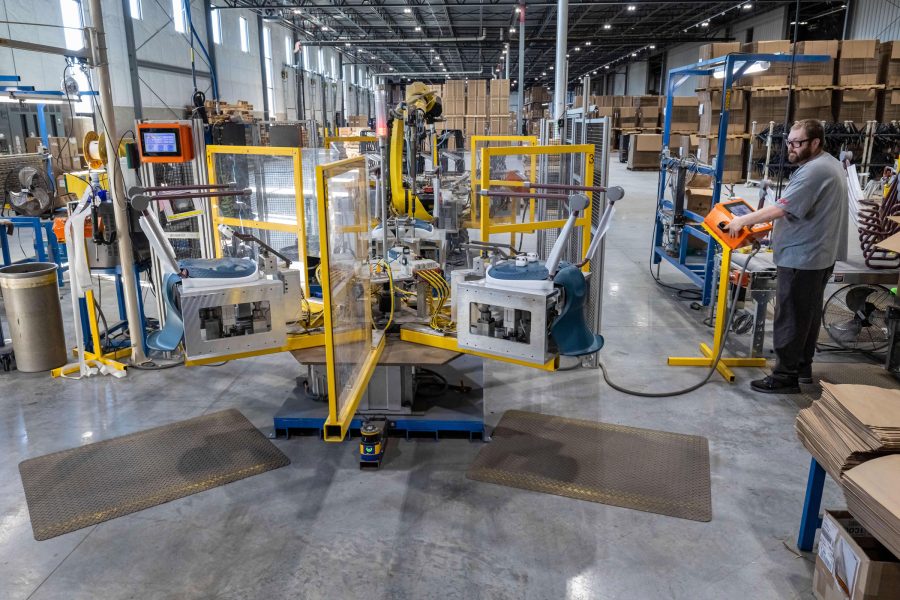
The original plant dates back to 1973. Heyrman himself has seen tremendous change on the factory floor, having been with KI for 27 years and now in his role as GM for more than three years. “We’ve grown quite a bit. Technology used to be a ‘nice to have.’ Now it’s a requirement,” he says.
Long-arm robots, AI cameras, and meticulously spinning automation wheels are among the evolving tech that allows KI to have the highest quality and safety standards while supporting a high volume of output. “It’s about letting robots do what robots do well and letting technicians do what technicians do well,” Heyrman says.
When he started nearly 30 years ago, welding robots were the only high-tech thing on the floor. A human loaded a fixture, the robot welded it, another human moved it, hand-bent it, and loaded the piece again. Now all of that process is automated.
Everyone in the plant is required to be a quality expert; there’s no stand-alone quality department. Every employee is responsible for what they’re working on. “Our employees have the ability, if they feel a process is not safe or the quality is not up to their expectation, to stop a process at any time,” Heyrman says. “They can shut it down, ask for a manager, or, if they have a difference of opinion from the manager, escalate that up the chain.” It’s not uncommon for a process to pause for a quality conversation at least once a week, he says.
Humans assess quality better than robots, Heyrman says, and when it comes to smaller lot sizes or high-frequency color changeovers, technicians do that much better than robots. Automating many parts of the process has allowed KI to put technicians in more expert roles, too.
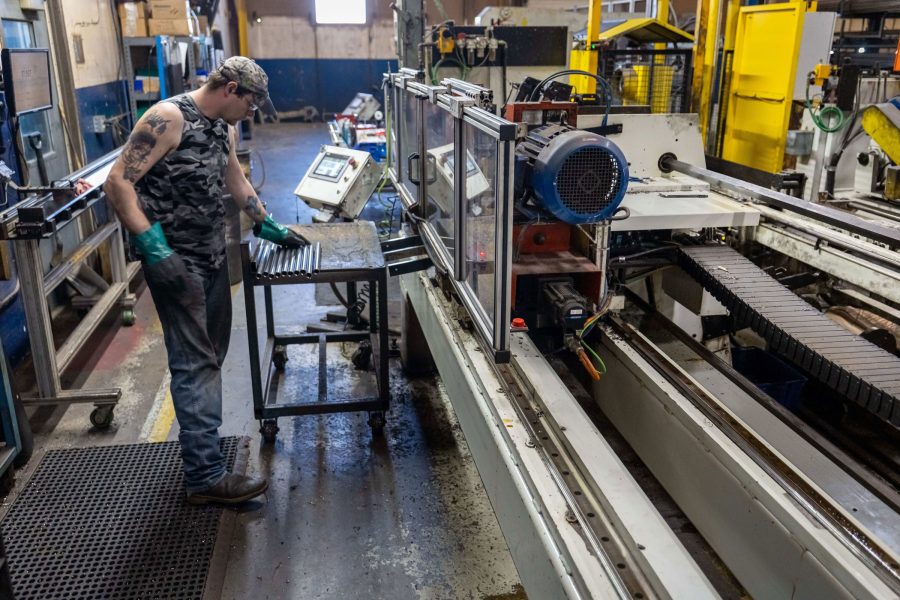
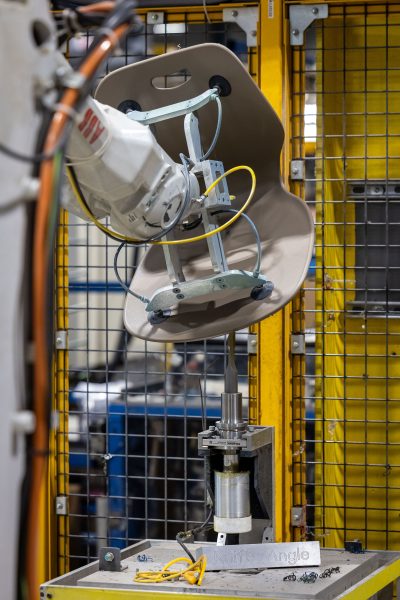
For the frame build, KI robots do everything from cutting their own tubing to bending and welding to finishing with a powder coat or nickel plate. The automated Cogni cell is KI’s most automated fabrication cell and also incorporates automation in injection molding and assembly. “This cell was all designed and developed in-house,” Heyrman says. It’s just one of many powerful examples of KI’s full-time maintenance, automation, and tooling team that’s evolved over the last 20-plus years.
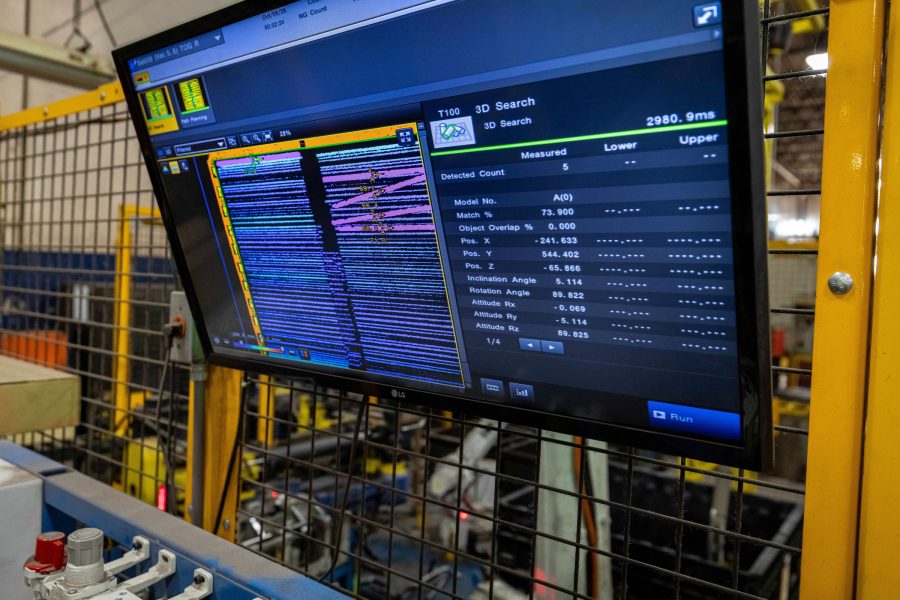
The Cogni cell and robot went live just over a year ago, developed specifically to launch Cogni and meet an increasing volume. The old process would have required human technicians putting the tube in the bender to create the frame. Now a robot repeats a meticulous process alongside four AI cameras that help the robot pick up a specific tube, bend the tube in a precise spot, then closely inspect the part.
By eliminating welding and offering complete automation with Cogni, KI offers a lower cost product with less quality risks, Heyrman says. The Cogni line has already been through two steel specification changes since its introduction in 2025, further delivering on the chair’s movement and flexibility—a must for K-12. Again, Heyrman says, “Continuous improvement is part of our culture.” Employees are incentivized to make suggestions throughout the year, too, as part of a special bonus program. Suggestions can be big or small, implemented or not. “I want idea generators,” Heyrman says.
Without automation, Cogni would require multiple people on the floor for each of five shifts—at least one running a bender, one running a drill machine, and another inspecting. Leaning on technology, KI is able to promote a technician from bender operator to someone specialized in programming and editing. “We’re not only able to allow the robot to do what it does well; we’re able to give a technician better skills and a better, higher paying job.”
This also helps KI meet labor demand, as the labor force has changed tremendously over the last 20 years, Heyrman says. “When I started we’d have an opening for a technician on the floor and have people lined up just to do a skills test to see their mechanical aptitude. That doesn’t happen anymore. We don’t have 40 people applying for one job,” he says. “And getting second or third shift and weekend work is harder and harder. We operate the plant 24-7 in certain areas. We have to implement some automation to be able to survive.”
The Future in 80 Parts
Perhaps what’s most exciting—and at times nerve-racking—inside the plant in fall 2026 is the final planning for Kiaura. When it hits the market in 2027 Q2, it will be KI’s first fully ergonomic chair built in Green Bay. A lot of excitement already exists around Kiaura, built with Cognetic Technology, designed and invented by Aaron DeJule. gb&d briefly tested Kiaura out at Design Days in June. “I find that when people sit in it for the first time, they’re surprised,” Jason Lazarz, national architecture and design manager at KI, said about Kiaura. He compared the experience to the feeling of sitting on a tire swing. “It is using your own movement, your own center of gravity, to support your body.”
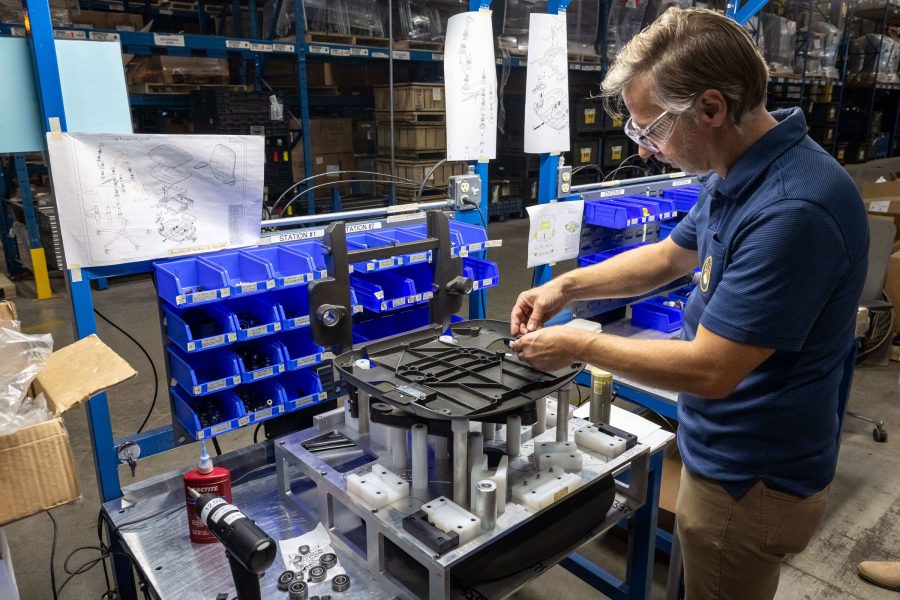
The chair has 80-plus pieces, or 80 potential points of failure, as Heyrman considers it. In October the engineering team had each piece spread out on a table, examining every step closely. “From a manufacturing standpoint a lot of parts make me nervous,” Heyrman says. “We don’t know what we don’t know, so that’s why building things with the engineers here in a very intimate setting, understanding how it goes together, is so important.”
KI’s manufacturing engineer, Russ Hannemann, was recently working with an intern building beta samples to be used in the office. As part of the prototype process they also examined how the chair would perform and meet customer demand and expectation. What could a robot or human potentially miss in the build? “We have a whole team that concentrates on the process: How could we build it wrong? What are the pieces? Could anyone build one?” Heyrman says.
KI was also looking at their next level of assembly automation for Kiaura, including a possible lightbeam system that literally highlights each part going step by step through the build. “How do we intuitively tell somebody the next part?” Heyrman says.
Made When You Need It
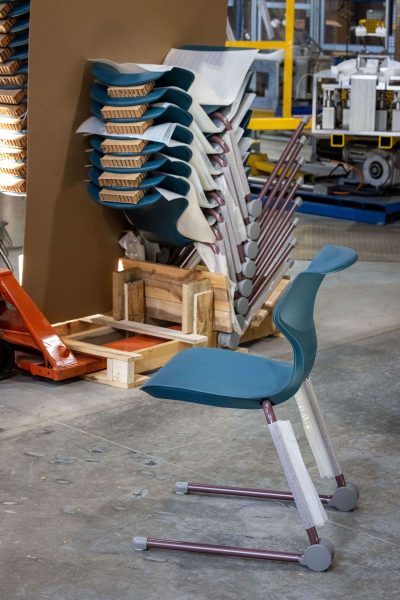
KI does not build to forecast. “We build everything to order,” Heyrman says, citing one or two exceptions.
In general KI builds an order one to three days ahead of the load day. This was a big change from the factory of the past, where inventory may have been made months in advance, only to sit in a warehouse and possibly have an order change. “I don’t want to build inventory and let it sit in a warehouse a month or two before it ships. People can change colors, quantities, things like that. I really want to build to when we actually ship the product,” Heyrman says. As a result KI is increasingly focused on gaining efficiency on the plant floor.
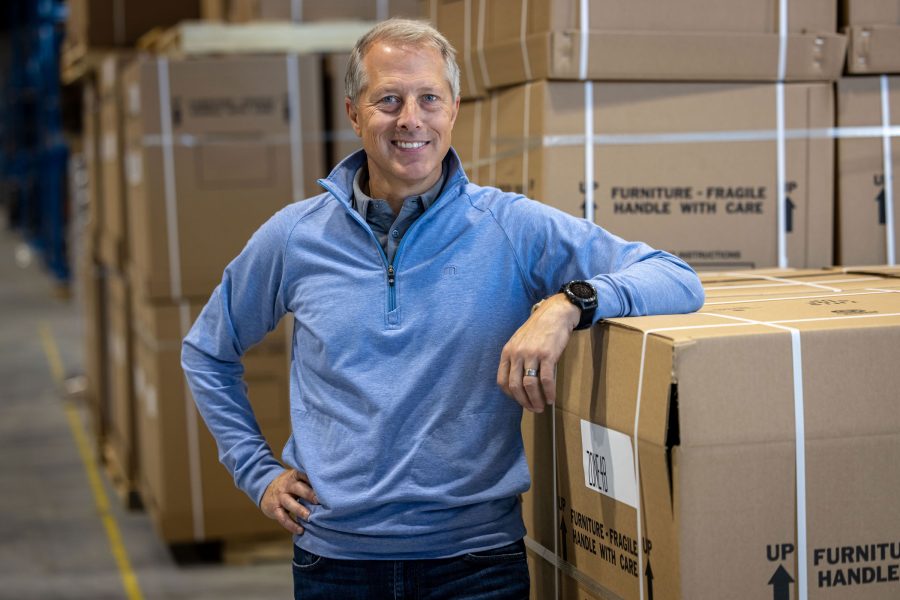
Heyrman also expects to shift the plant from a west to east flow to a north to south flow in the next two years. “That is part of the factory of the future,” he says, adding that the recent expansions allow for future growth. A change like this is just another example of the advantage of being employee owners; they’re not making decisions for today; they’re considering long-term financial health, Heyrman says. “This allows us to have the long-term vision to make us successful for years to come.”