Story at a glance:
- The Keystone Educational Collaborative needed a durable flooring solution that would provide special-needs students with a calm and hygienic environment.
- SofTop RXC, a resinous flooring system originally developed for health care facilities, provided a long-lasting, easy-to-clean flooring solution that dampens sound.
- The system’s impacts on wellness and ergonomics make it a sustainable option for any built environment that sees frequent foot traffic.
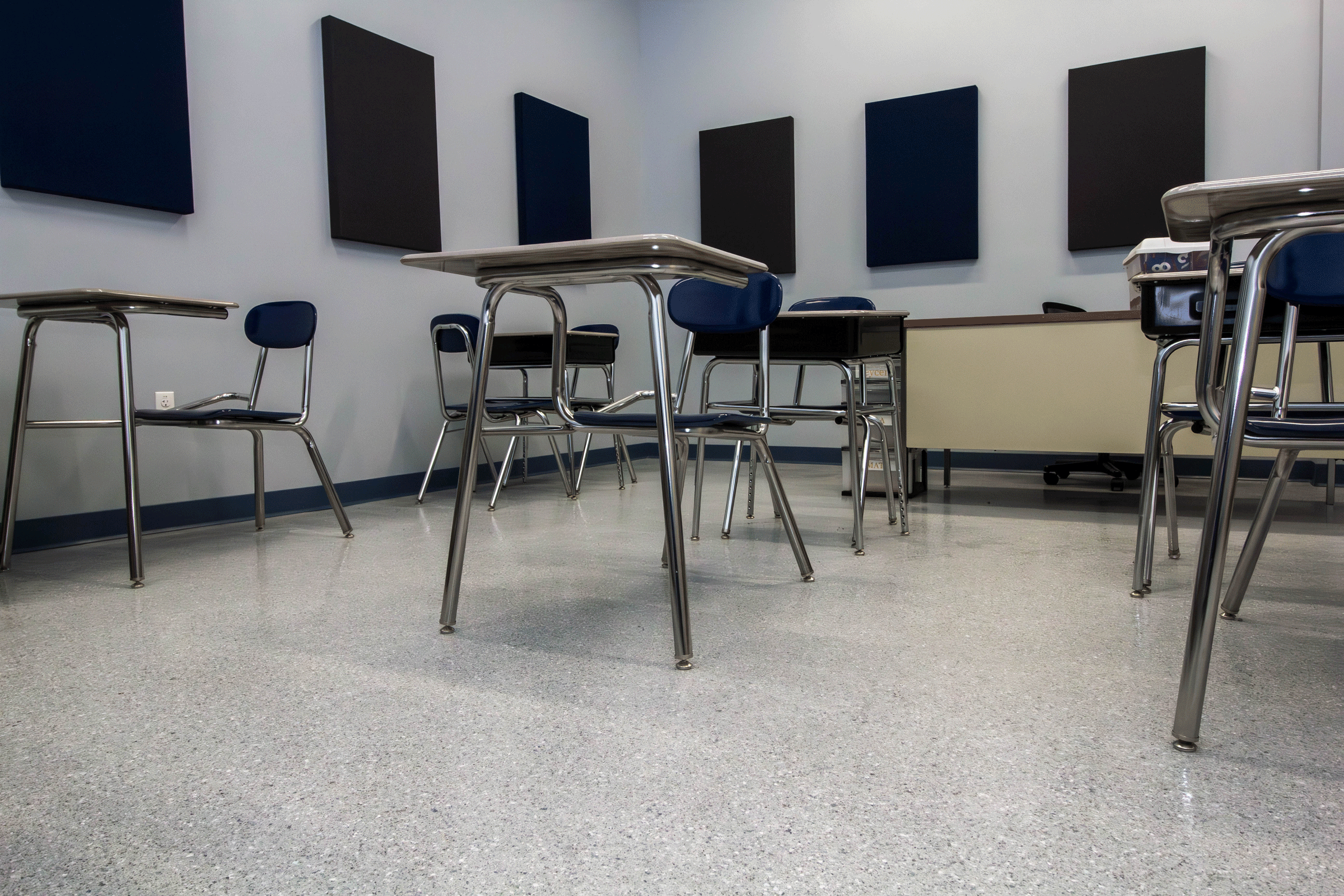
When the Keystone Educational Collaborative—a successful public educational collaborative for students with developmental and behavioral disabilities in Massachusetts—found a new location, it saw an opportunity to create a calm, welcoming space that supports learning.
Formerly a banquet and event venue, Keystone’s new building required renovation before it could host students, though. The school wanted to repurpose a basement storage area to expand the school’s useful space and replace flooring that had become creaky and difficult to maintain throughout the building. “Our primary goal was to create spaces—particularly through thoughtful flooring design—that support the physical comfort, sensory needs, and overall well-being of the special-needs population we serve,” Keystone Executive Director John Demanche said in 2024.
Creating Calm
-
- Photo courtesy of Sherwin-Williams High-Performance Flooring
-
- Photo by Alyssa Chamberlain Photography, courtesy of Sherwin-Williams High-Performance Flooring
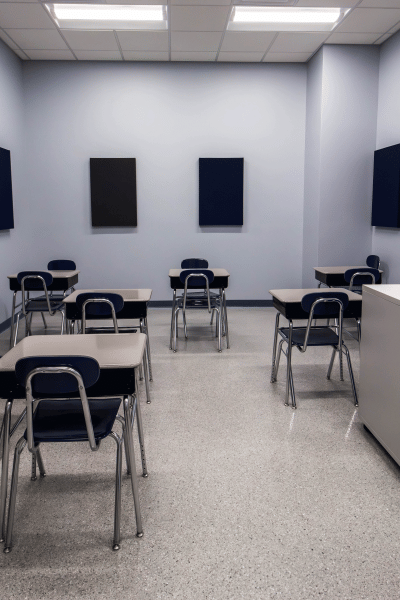
Autism, ADHD, and other disabilities are often marked by sensitivity to sensory information. Up to 70% of children on the spectrum experience adverse reactions to auditory stimuli of a certain tone, pitch, or intensity, or feel overwhelmed by common noises others can tune out. “Thinking about ADHD and autism, we want to cater to those most challenged to eliminate distractions,” says Amanda Lowery, market segment manager for Sherwin-Williams High Performance Flooring. “The sound-deadening effect is huge. Noise can scare children and make them feel uncomfortable.”
As a result Keystone needed a flooring solution that would dampen sound while still being durable, long-lasting, and easy to maintain. Typical options like vinyl composition tile (VCT), luxury vinyl tile (LVT), or rubber floor systems wouldn’t make the cut.
Studio G Architects found a resinous flooring system from Sherwin-Williams High Performance Flooring that checked all of the boxes. Originally designed for health care facilities and clean rooms, SofTop RXC offers ergonomic benefits, sound-dampening capabilities, and a durable, easy-to-maintain finish.
SofTop RXC had already proven itself in operating rooms, offering enough ergonomic “give” underfoot to reduce doctor fatigue while supporting heavy patient beds without damage or indentations. “It offers cleanability and slip resistance while being ergonomic and sound-deadening,” says L.J. Mitchell, business development manager with Sherwin-Williams High Performance Flooring. “It represented a sweet spot that could accommodate all of the needs of the school system.”
Seamless Installation
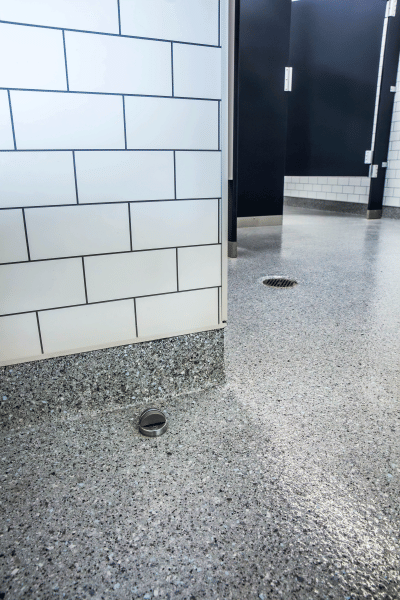
Sherwin-Williams worked with Studio G, general contractor Mill City Construction, and Above All Epoxy to coordinate installation of SofTop RXC in the school’s classrooms, hallways, offices, ramps, bathrooms, and cafeteria. The biggest challenge? The floor needed to seamlessly cover multiple substrates, including concrete and plywood.
After removing the existing sheet vinyl, crews prepared the substrates with a 1/8-inch base coat of Poly-Crete TF Plus and sand to create a bondable surface. In the days that followed, Above All applied self-leveling SofTop RXC, terrazzo-inspired decorative flake, and two coats of Accelera EXT—a fast-curing, UV- and chemical-resistant topcoat—to seal the floors.
The Keystone project was completed in three weeks and ready for occupancy before students returned from winter break, defying the common wisdom that resinous floors add weeks to construction schedules. “A lot of people would hear about something of this scope and say, ‘Oh, that’s at least a month,’ Mitchell says. “But SofTop RXC has a faster cure time.”
The result was a continuous, seamless finish throughout the 17,500-square-foot space. “When you walk the floor now it looks like what it was meant to be—a seamless, flat, smooth surface,” Mitchell says. “You would never know it was a patchwork of different substrates in the beginning.”
Built to Last
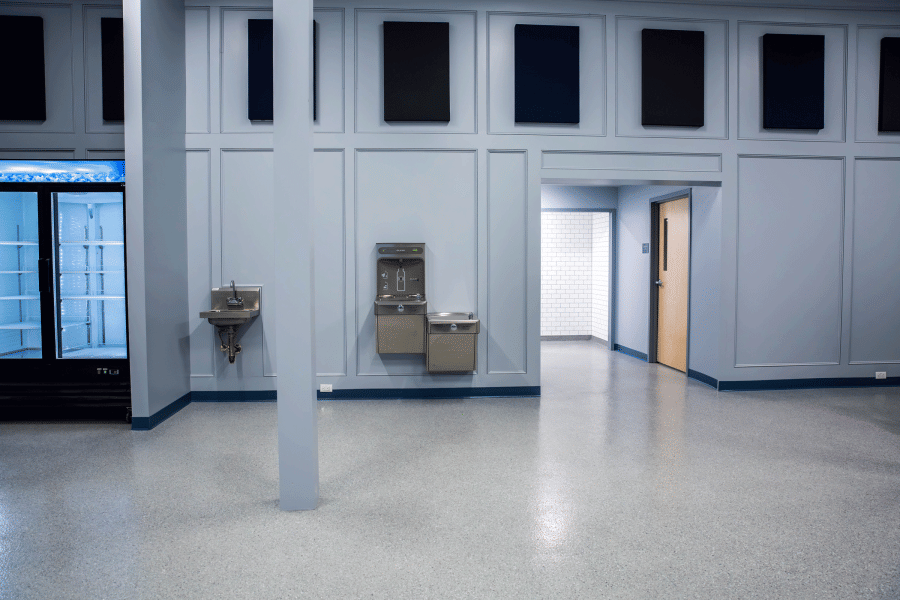
Photo by Alyssa Chamberlain Photography, courtesy of Sherwin-Williams High-Performance Flooring
That seamless application across thresholds, ramps, floor drains, and integrated cove bases allows Keystone’s floors to resist the cracking, edge failure, and water intrusion that affects other flooring systems, making them easy to maintain and long-lasting. “You walk in any school, kitchen, or commercial restaurant, and where you see failures is the seams,” Mitchell says. “Those are the problem areas—grout lines and seams. No one specifies black grout, but grout is porous and harbors dirt and grime. That’s what architects are looking to avoid.
“One of the greatest ways to avoid waste is not having to replace things,” he adds. “With VCT and LVT, tile ‘cupping’ forces you to replace floors every five to seven years. This flooring has a life cycle of 20 to 30 years. Not having to replace the floors represents a 100 to 150% reduction in your carbon footprint.”
SofTop RXC also has low levels of volatile organic compounds (VOCs) thanks to its polyaspartic urethane base. “It’s a low-odor, chemically resistant product,” Mitchell says. “That’s a big win from a sustainability perspective.”
Contributing to Wellness
Wellness is an increasingly important aspect of sustainability, and more designers are going beyond the carbon footprint to consider how design choices affect building inhabitants’ experiences. “Inclusive design is what many larger firms are looking for—spaces that can fit any range of needs,” Lowery says.
Bright colors and sudden transitions might be great for typical classrooms, but they can be jarring to the neurodiverse. At Keystone, variations in SofTop RXC’s decorative flake subtly delineate learning spaces from play areas, keeping tones neutral and free of distractions. “This was designed for hospitals, but it’s applicable to many different situations—education, behavioral health units, anywhere where distractions can hinder someone’s experience,” Lowery says. The system’s lifespan also eliminates the disruption of having to repair tiles and seams frequently, Lowery says.
“When I sit and watch my kids do a play in a school cafeteria, I hear echoes,” she says. “I can’t think; I can’t focus. All of us are neurodivergent to some extent, and we are finding more spaces where SofTop RXC is going to be popular.”
Schools, recreation centers, health clubs, and manufacturing facilities are likely candidates for the resinous flooring solution—anywhere people are on their feet often or for extended periods of time. “It could be used in shopping malls or really, anywhere there are a lot of people and foot traffic,” Mitchell says.
Lowery says the goal is to ultimately better meet the needs of people where they are. “It’s important to understand design elements and the needs of the people in the space, and to create systems that meet those needs, are affordable, and have a long lifespan.”