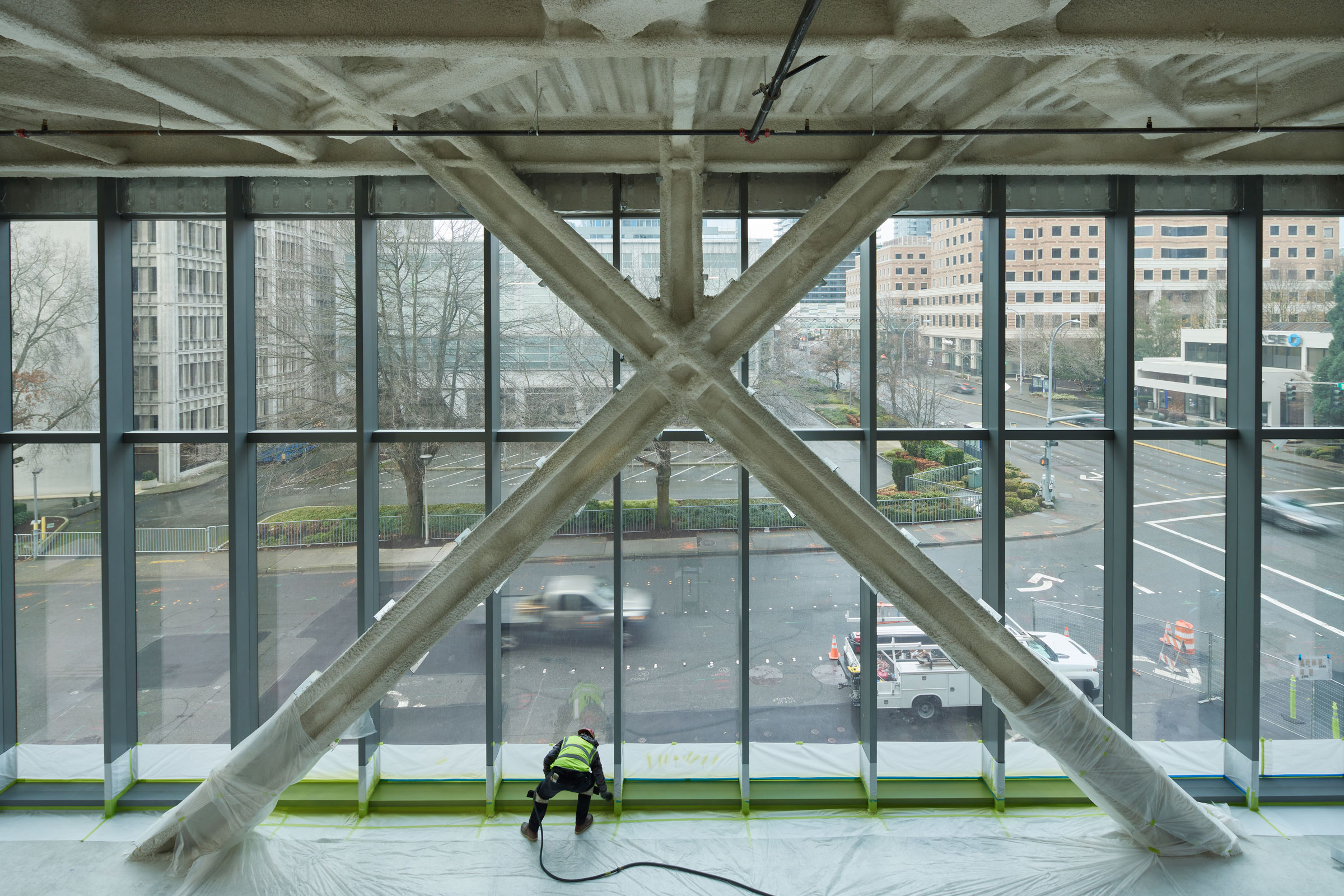
Story at a glance:
- Fire protection is emerging as an overlooked opportunity to support safer, lower-carbon buildings.
- When a project calls for fire protection it represents a unique opportunity to reduce embodied carbon without compromising performance, functionality, or safety.
For decades structural fireproofing has been viewed through a single lens: life safety.
Its role is straightforward but critical—to help maintain the integrity of structural steel during a fire, providing valuable time for occupants to evacuate and first responders to act. It is one of the many building systems that quietly does its job in the background, rarely drawing attention unless something goes wrong. Today, however, the construction industry is asking more of every building material.
As architects, owners, and contractors work to reduce embodied carbon and meet increasingly ambitious sustainability goals, materials once evaluated solely on performance are now being assessed for their environmental impact as well. The result is a broader conversation about how every material category contributes to a building’s carbon footprint, including those that historically were never part of the discussion. Fireproofing is one of them.
A New Question for an Established Product Category
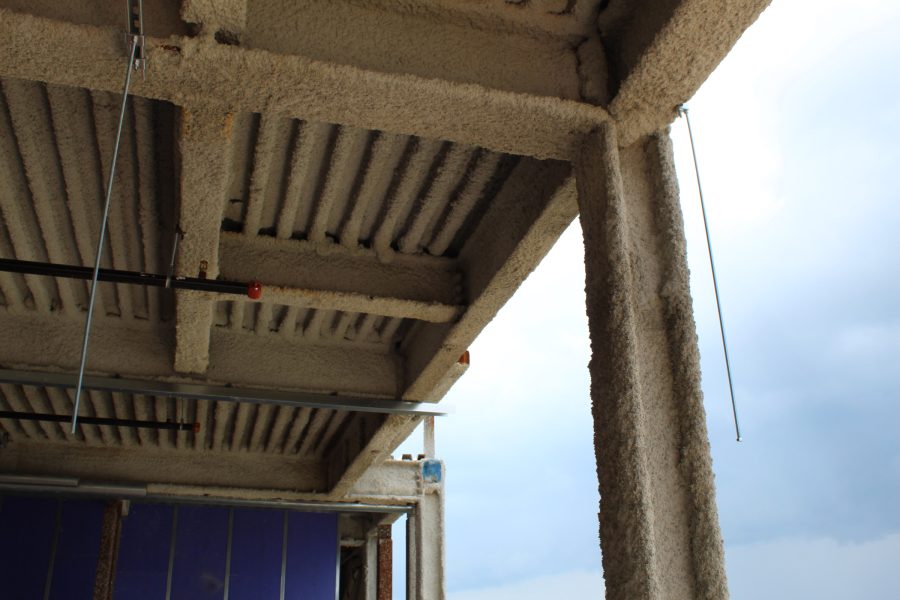
Photo courtesy of GCP
The rise of embodied carbon has changed the way project teams evaluate materials. A decade ago Environmental Product Declarations (EPDs) were often viewed primarily as a pathway to LEED documentation. Today owners and design teams are increasingly using EPDs as decision-making tools. Instead of simply asking whether a product has an EPD, they are asking what the data says and how one product compares to another. That shift is significant.
When code requires steel to be rated, fireproofing is not an optional building material. In steel-framed construction it is required by code to help maintain structural stability during a fire. When a project calls for fire protection it represents a unique opportunity to reduce embodied carbon without compromising performance, functionality, or safety. As the industry looks for practical ways to reduce carbon across every building system, fireproofing deserves greater attention.
Transparency is Driving Better Decisions
EPDs and tools like the Embodied Carbon in Construction Calculator (EC3) have made it easier than ever for project teams to evaluate environmental performance. For fireproofing manufacturers that transparency has elevated conversations beyond compliance and documentation. Today architects and specifiers can compare products using verified environmental data and make informed choices based on measurable outcomes.
This evolution reflects a broader industry trend. Sustainability is no longer about collecting paperwork. It is about understanding the impact of material choices and using data to reduce the overall carbon footprint of buildings. That change is helping move embodied carbon from a sustainability aspiration to a design parameter.
Resilience is Sustainability
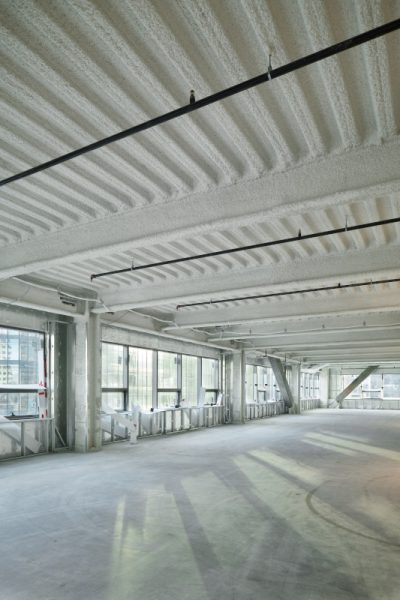
Photo courtesy of GCP
While embodied carbon often dominates sustainability discussions, resilience is equally important. The most sustainable building products are frequently the ones that remain in service for decades without requiring replacement. Durability reduces maintenance, minimizes material consumption, and avoids the environmental impacts associated with repair and reconstruction. Fireproofing is a strong example.
A properly designed and installed cementitious fireproofing system should remain in place and continue performing for the life of the building. In many renovation projects fireproofing installed decades earlier remains bonded, intact, and functional.
That long-term performance contributes to resilient design and aligns with the industry’s growing focus on life cycle thinking rather than simply first costs or initial carbon impacts.
Manufacturing Matters
When discussing embodied carbon it’s easy to focus on ingredients alone. In reality manufacturing decisions often have just as much influence on a product’s environmental footprint. Energy sources, transportation distances, raw material sourcing, and manufacturing processes all affect Global Warming Potential (GWP). As manufacturers work to reduce embodied carbon, many are finding that meaningful improvements can come not only from product formulations but also from how products are made.
This is particularly relevant in cementitious fireproofing, where differences in manufacturing approaches can create measurable differences in environmental performance.
For example, renewable energy sources, regional material sourcing, lower-carbon cement technologies, and transparent environmental reporting can all contribute to reducing a product’s embodied carbon. These behind-the-scenes decisions may not be visible on a jobsite, but they can have a meaningful impact on a project’s overall carbon profile.
GCP’s MONOKOTE Fireproofing provides an example of how manufacturing choices can support sustainability objectives. The product portfolio is supported by Type III EPDs, approximately 70% of production utilizes hydropower-supported manufacturing, materials are sourced locally where practical, and Portland Limestone Cement has been adopted in key formulations to further reduce environmental impact. Together these initiatives demonstrate how manufacturers can make measurable progress in reducing embodied carbon while maintaining the performance, durability, and fire protection standards required by modern construction.
As embodied carbon becomes a greater consideration in material selection, the industry’s focus will continue to expand beyond what products are made from to include how they are manufactured. Both will play an increasingly important role in helping project teams achieve their sustainability goals.
Fireproofing as a Sustainability Opportunity
The fireproofing industry has spent decades focused on improving performance, durability, and code compliance. Increasingly sustainability is becoming another important measure of product performance.
This creates an opportunity for architects, specifiers, and owners to look beyond compliance and consider how a required building system can contribute to broader sustainability goals. Rather than viewing fireproofing solely as a life-safety requirement, project teams can also evaluate how material selection supports embodied carbon reduction objectives.
MONOKOTE Fireproofing illustrates how that evolution is taking place. The results are measurable. In comparative evaluations MONOKOTE cementitious fireproofing has demonstrated approximately 60% lower GWP than sprayed fiber fireproofing technologies, illustrating how material selection within a required building system can contribute to broader embodied carbon reduction goals. This is particularly important as more owners and developers establish project-wide carbon reduction targets and seek opportunities to reduce embodied carbon across every specification section.
These sustainability gains have been achieved while maintaining the performance characteristics that made cementitious fireproofing the dominant technology in the marketplace. Cementitious fireproofing represents approximately 80% of the spray-applied fireproofing market because of its proven track record, consistent in-place performance, durability, and ability to provide a homogeneous protective coating.
As sustainability expectations continue to evolve, fireproofing is becoming more than a life-safety requirement. It is increasingly being recognized as another opportunity to make measurable progress toward lower-carbon buildings without compromising performance, resilience, or occupant safety.
A Real-World Example
These trends are no longer theoretical. They are influencing real-world material selection decisions. At a LEED-certified warehouse development in Joliet, Illinois, IDI Logistics sought to reduce the project’s overall carbon footprint while meeting aggressive sustainability goals. When fireproofing requirements were evaluated for the facility, environmental performance became part of the conversation alongside cost, schedule, and fire protection requirements.
MONOKOTE Fireproofing was ultimately selected because it satisfied the project’s fire protection requirements while aligning with the developer’s broader sustainability objectives, demonstrating how embodied carbon data is increasingly influencing material selection decisions alongside traditional performance criteria.
The project reflects a growing trend across the industry: Owners increasingly want sustainability decisions to be measurable, not merely documented.
Looking Ahead
The future of sustainable construction will require looking beyond traditional high-profile materials and evaluating the entire building. Concrete, steel, insulation, and glazing will continue to receive significant attention, and rightly so. But meaningful carbon reductions will also come from examining smaller, often overlooked material categories and making better choices wherever opportunities exist.
Fireproofing may not be the first product discussed in embodied carbon conversations, but it is becoming an increasingly important one. As owners, architects, and contractors seek practical ways to reduce embodied carbon without sacrificing performance, fireproofing offers something rare—a code-required building system that can simultaneously support life safety, resilience, transparency, and carbon reduction. That is why fireproofing belongs in the embodied carbon conversation.