Story at a glance:
- The central design challenge of The Crimson renovation was to extend the life and utility of the building with only limited demolition and new construction.
- KPMB transformed a former Harvard pressroom into a second newsroom and a flexible workspace fitted with a series of movable tables and chairs.
For decades heavy rolls of newsprint were delivered to a loading dock at the rear of The Harvard Crimson’s offices in Cambridge, Massachusetts. After being unloaded the rolls were hauled into a basement pressroom, where a collection of aging presses printed five editions of the undergraduate student newspaper every week.
Before I decided to become an architect, I studied philosophy as an undergraduate at Harvard and served as an editor of The Crimson. I spent more time in the newspaper’s offices than any other place on campus, including my own dorm rooms. While deep familiarity with an institution’s DNA is an asset for any architect, how The Crimson operates today is markedly different than when I was an editor during the late 2000s. In March 2020 the Covid pandemic halted the presses and prompted the newspaper to embrace a digital-first model, with a weekly print edition produced off-site.
The Challenge
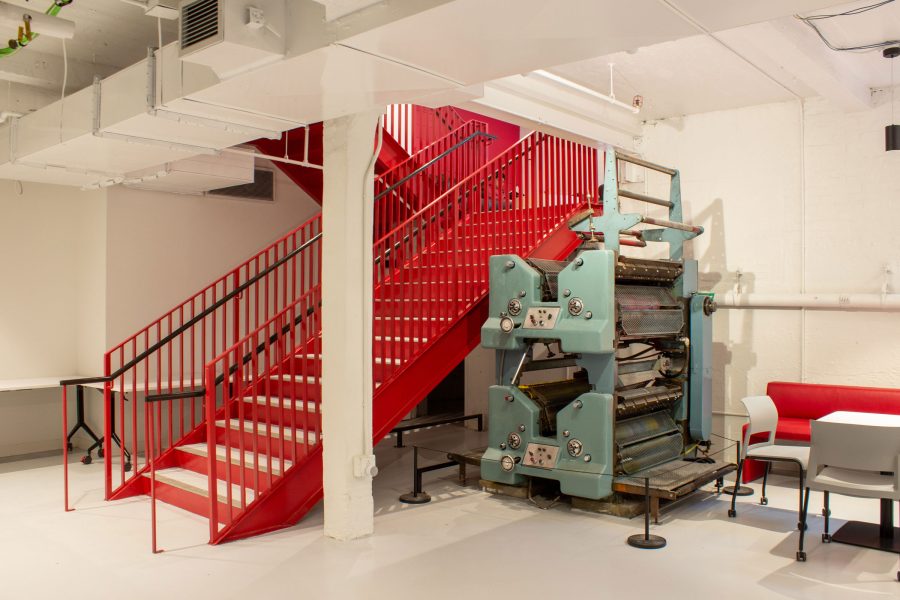
Photo by Merrill Shea, courtesy of KPMB
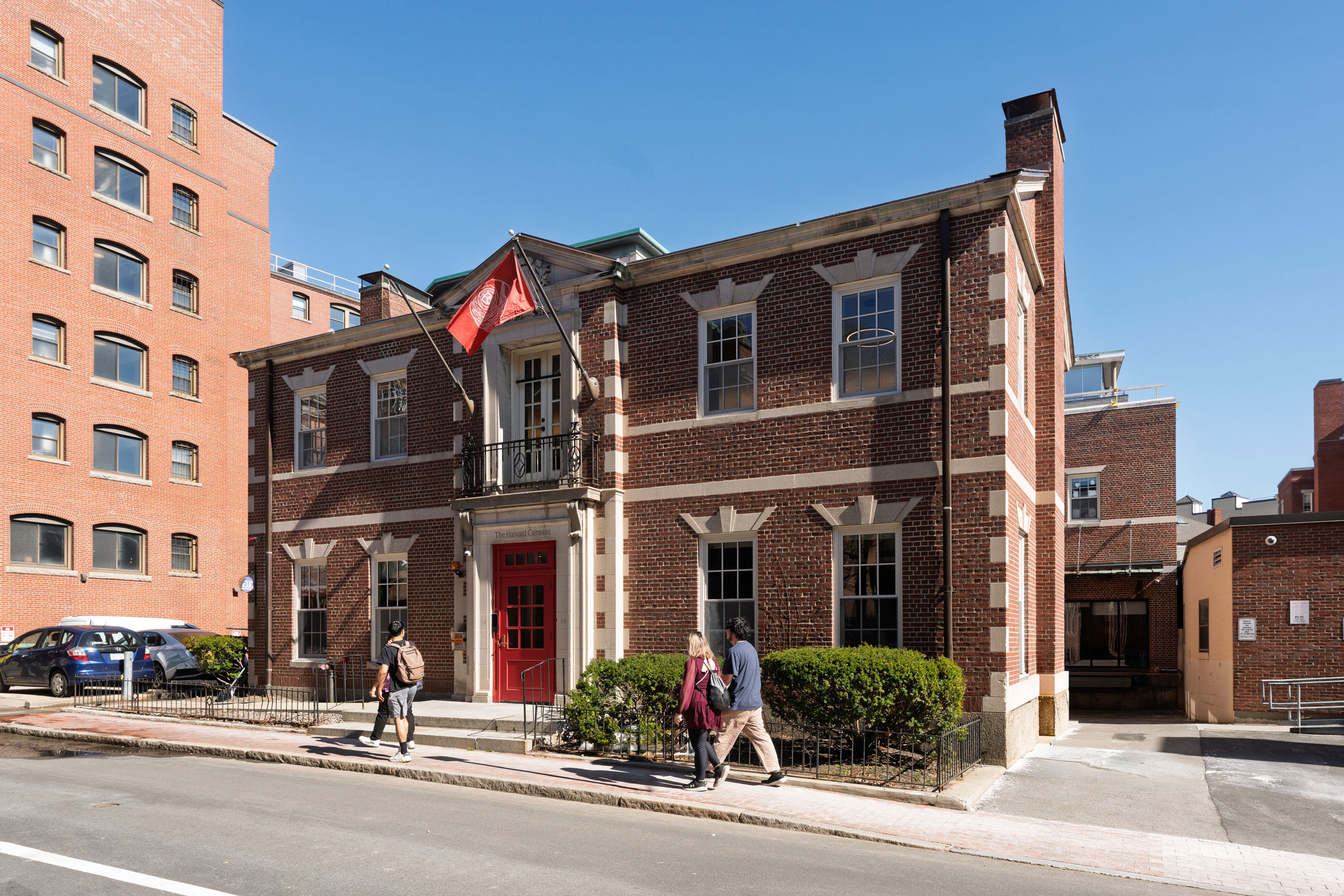
Few industries have been transformed in the digital age more than journalism, and its impacts have inevitably reshaped the physical homes of media outlets. In the case of The Crimson, this change contributed to a profound dislocation between its operations and its headquarters—a red-brick Neo-Georgian structure constructed in 1910 and last updated in 1991. After pivoting toward online news, the already aging building was suddenly constrained by dated infrastructure like printing presses and a warren of basement production spaces that had limited use but consumed significant floor space.
The Renovation
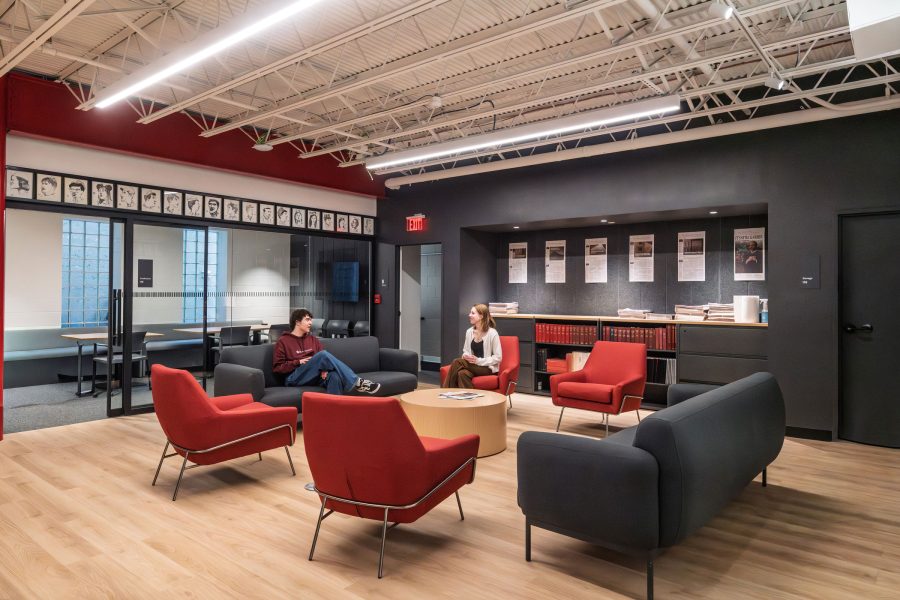
Photo by Merrill Shea, courtesy of KPMB
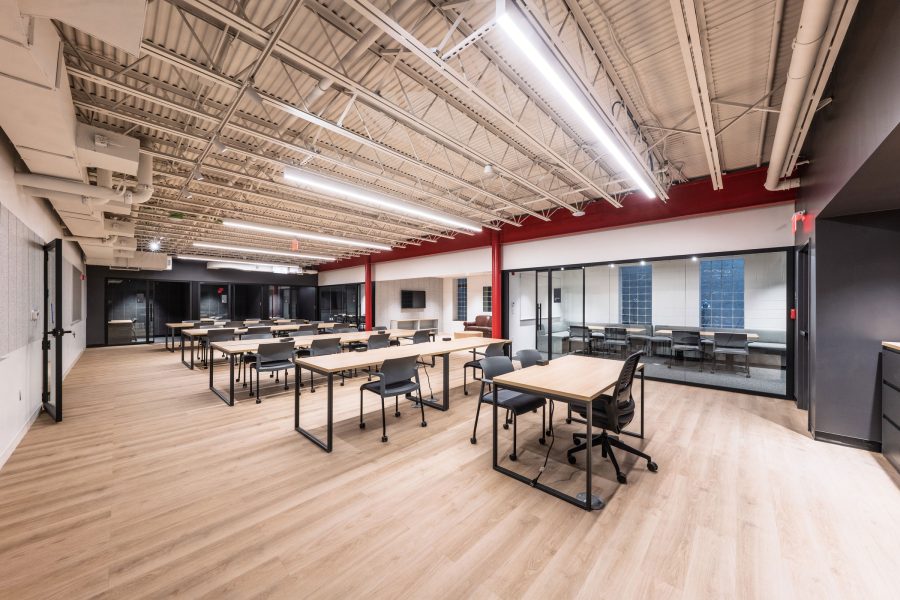
Photo by Merrill Shea, courtesy of KPMB
In 2024 Toronto- and Cambridge-based KPMB began designing a strategic renovation of The Crimson’s home, intended to support the newspaper’s operational evolution, reignite a culture of in-person collaboration, and prepare student journalists for modern professional practice. It was essential that all updates prioritize durability and future adaptability, recognizing that for the not-for-profit entity that owns the building, a renovation is likely to happen only once every few decades.
In architecture it’s often said that the “greenest building is the one that already exists,” and for The Crimson the central design challenge was to extend the life and utility of the building with only limited demolition and new construction. While the renovation entailed upgrades to operational performance—new wood-framed, aluminum-clad windows with vapor barriers to improve envelope efficiency, for example—its focus was primarily on limiting embodied carbon by revitalizing the existing structure. This required reorganizing programs, beginning with the pressroom. Transforming this space not only allowed it to fulfill new and underserved needs but also eased pressures on other areas of the building stemming from a lack of space.
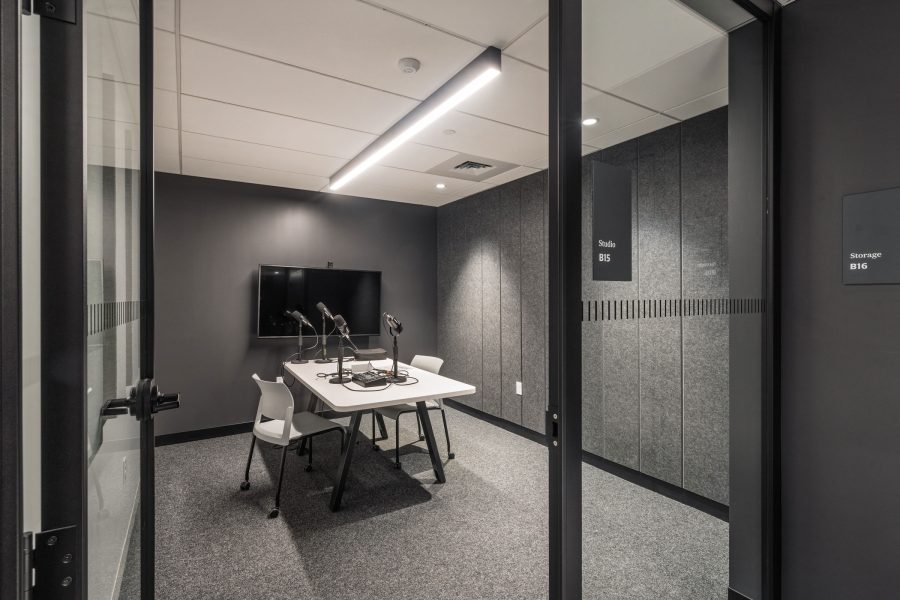
Photo by Merrill Shea, courtesy of KPMB
Today the pressroom has been transformed into a second newsroom and a flexible workspace with a series of movable tables and chairs. It also accommodates large meetings and serves as the building’s de facto events space—a role that, prior to the renovation, had fallen to the historic second-floor boardroom due to a lack of other options. Nearby, a new multimedia suite for podcast and video recording was designed to support The Crimson’s ongoing evolution toward multimedia journalism, alongside a climate-controlled archive and reading room for safely storing past editions and other items from the newspaper’s 150-year history.
On the ground level the main newsroom and a series of private offices were renovated to address key challenges identified by the newspaper’s leadership. These included a lack of natural light and insufficient acoustical privacy—vitally important for preserving the anonymity of journalists’ sources. The client also wanted to create a more inviting workplace and rebuild the in-person collaboration that had frayed since the newspaper’s operations shifted online.
Moving away from a long-established floor plan in which each section of the newspaper occupied its own office, the ground floor was renovated to embrace fluidity—an organizational model for media companies that KPMB first explored nearly a decade earlier when designing The Globe and Mail’s headquarters in Toronto. Doing so enabled new conference spaces along the structure’s perimeter and three private phone booths designed for private calls. Glass dividing walls preserve acoustical privacy, while enabling natural light to filter into the newsroom for the first time. All in all the building enjoys 30% more open work area and 65% more meeting space than before.
For a student-run organization with limited budget, futureproofing was best approached through simplicity. Rather than prescribing the future use of spaces with built-in furniture or technology, we focused on creating simple, raw spaces that could easily be adapted according to shifting needs or macro industry trends. When it came to technology it was essential that systems could be accessed, maintained, and updated without opening the walls. As a result, instead of hardwiring technology into the building, the renovation emphasized the basics, like providing a large number of electrical outlets and fitting conference rooms with TVs with HDMI connections and casting capabilities.
Accessibility & The Future
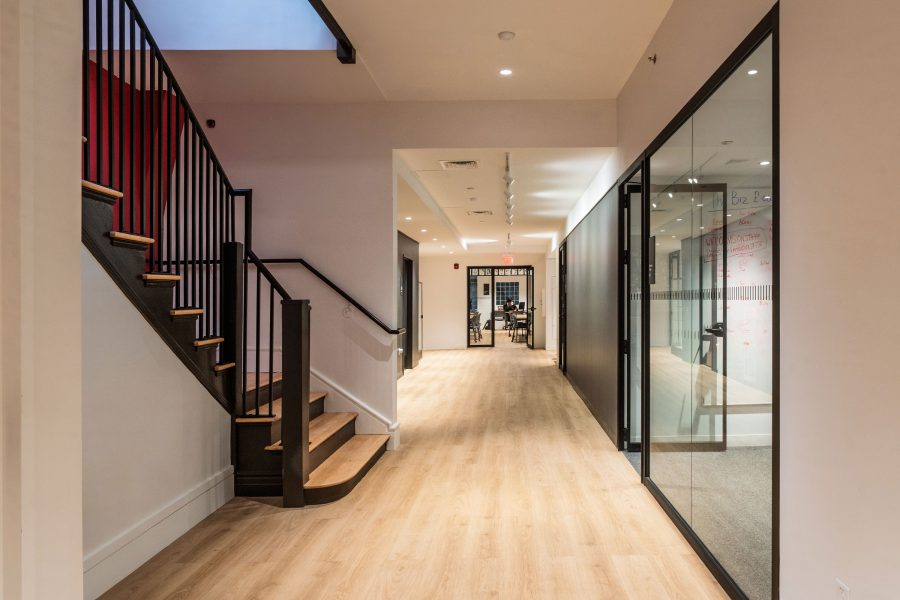
Photo by Merrill Shea, courtesy of KPMB
Improving utility also required enabling better access to the second level, which houses a historic ceremonial meeting space known as the Sanctum. This reading room—which has been refreshed with new lighting, wood paneling, and bookshelves—is fully accessible for the first time in the building’s history thanks to a new 300-square-foot pavilion that encloses part of the rooftop and meets Massachusetts’ Stretch Energy Code. Instead of inserting a second elevator to address this need and consuming valuable floor space and project budget, the pavilion has enabled a continuous barrier-free path of travel from the existing elevator to the Sanctum for small board meetings, alumni gatherings, and focused work.
And what became of the loading dock? The roll-up door has been replaced by a large, glazed opening, and it now serves as the landing for a new communicating stair, outfitted with a few couches and tables for socializing or working on a laptop.
The transformation of utilitarian infrastructure into a flexible, social space is emblematic of the renovation’s broader ambitions to create a welcoming destination for student journalists, and it seems to be working. The Crimson’s leadership say they have already seen a revival of in-person collaboration, with staff increasingly spending time working and socializing in the building since the renovation. Its ultimate success, however, will be measured by how well its spaces adapt to The Crimson’s evolving needs in the decades ahead.
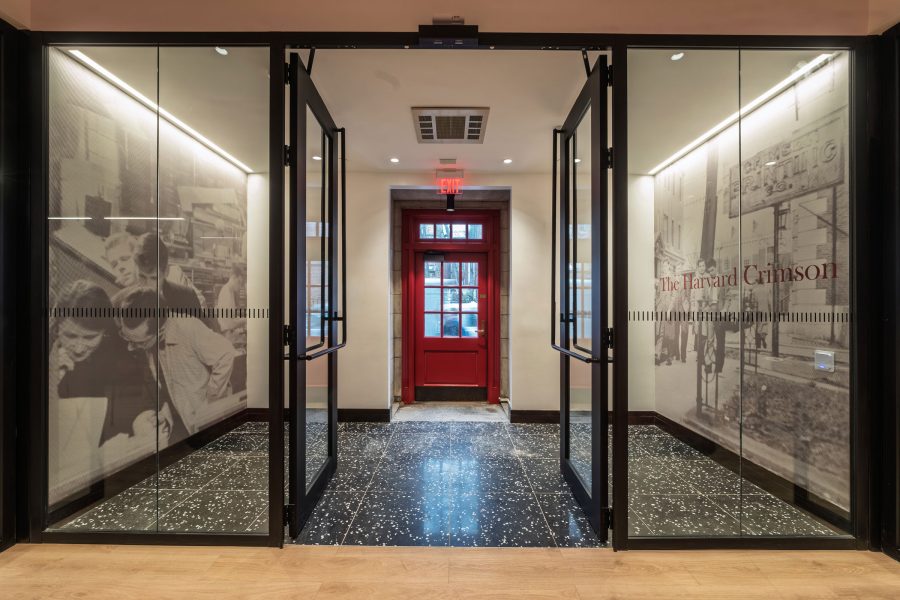
Photo by Merrill Shea, courtesy of KPMB