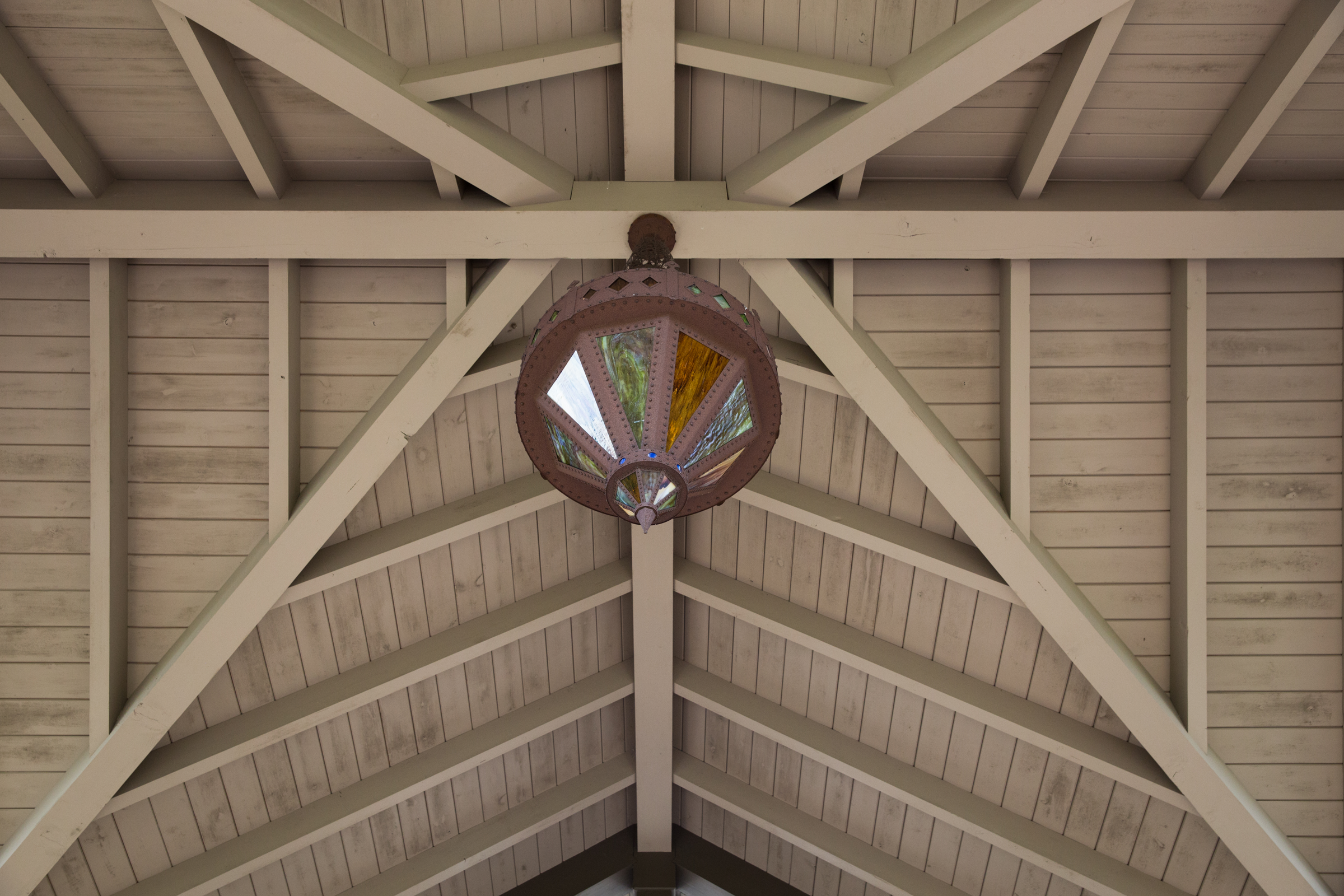
Story at a glance:
- Engineered timber products like glulam and CLT are enabling larger, more resilient structures across a growing range of building types.
- Prefabrication and CNC fabrication allow timber frames to be modeled, manufactured, and assembled with speed and precision.
- As codes evolve and architects gain experience with mass timber, timber is emerging as a viable structural alternative to steel and concrete.
In A Reverence for Wood, writer Eric Sloane reflects on how timber shaped early American life so completely, from tools and shelter to entire systems of building. The material was foundational: adaptable, durable, and essential to how structures were conceived and constructed.
Today that same material is being reevaluated as a driver of some of the most impactful structural innovations in the built environment.
Advances in engineered timber and digital fabrication, particularly CNC (computer numerical control) machining, are expanding what architects can expect from wood. CNC uses computer-controlled tools to cut timber components with high precision.
Connor “CJ” Recarde, design manager at Mid-Atlantic Timberframes, has seen that shift firsthand. With more than 25 years of experience, beginning in his family’s timber framing and millwork business, Recarde now oversees design, leading teams who model timber systems down to joinery and structural connections. “Thirty years ago timber framing was still a fairly niche part of construction,” he says. “Today, with engineered products like glulam and CLT, the possibilities are much broader.”
Building for Longevity
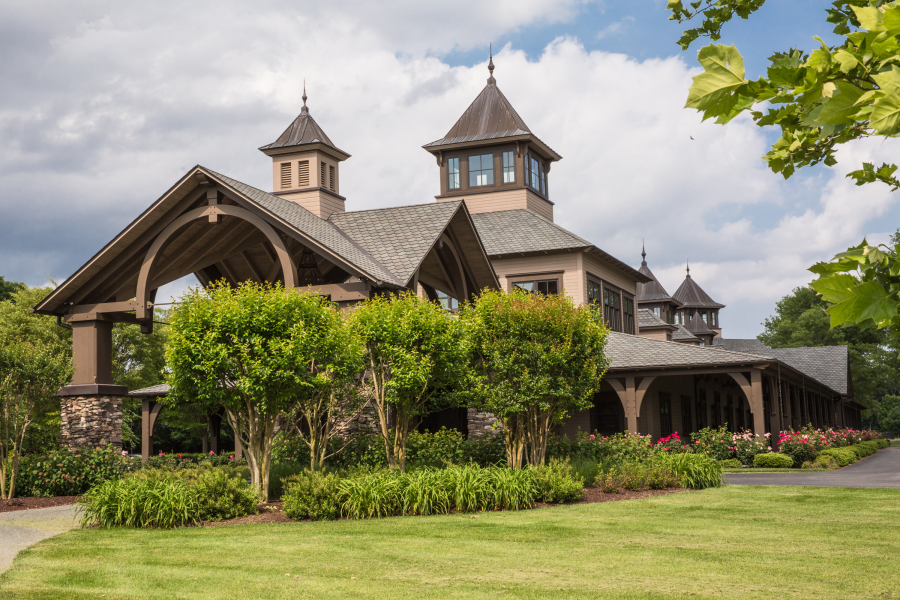
Photo by Jana Bannan Photography, courtesy of Mid-Atlantic Timberframes
At the center of that shift is durability. Timber’s value is no longer just aesthetic. It’s increasingly tied to how buildings perform over time.
Recarde points to projects like Riveredge Farm in Maryland, built in 2008, as examples of timber’s long-term performance. The project incorporates both interior and exterior timber elements that, he says, still look great today.
He also points to timber structures built centuries ago as evidence of the material’s potential longevity. In places like Tibet, he says, timber temples dating back more than 1,000 years remain in use today.
Today that long life cycle performance is paired with a shift in how buildings are delivered. Heavy timber systems are typically fabricated offsite and pre-fit before arriving on the jobsite, allowing for rapid assembly once construction begins and improving overall project delivery. “It’s a quick alternative to conventional framing,” Recarde says. “We installed the Crispus Attucks History & Culture Center in just 13 days.”
Located in York, Pennsylvania, the three-story cultural center includes exhibition space, classrooms, and a performing arts component, supported by a structural system built from cross-laminated timber and glulam.
Defining Structural Resiliency
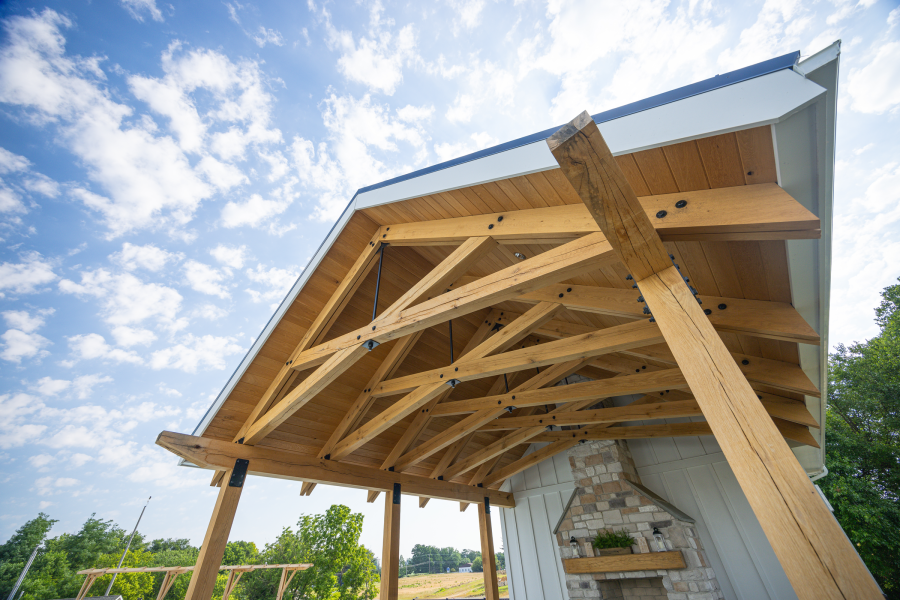
Photo by Jana Bannan Photography, courtesy of Mid-Atlantic Timberframes
As timber systems evolve, so too does the definition of structural resiliency. “We haven’t reached its full potential,” Recarde says. “The National Design Specification and International Building Code continue to push the engineering boundaries of what’s possible for mass timber.” That evolution reflects a broader shift in how timber is understood as an engineered structural system as well as a traditional building material.
Resiliency in heavy timber is tied to both performance and predictability. In fire conditions, large timber members form a protective char layer that slows combustion and helps maintain structural integrity longer than lighter framing systems.
Engineered products like glulam further enhance reliability by bonding layers of graded lumber into consistent, high-strength structural elements. “The laminations allow you to control the material much more carefully,” Recarde says. “You’re creating a more uniform structural element.”
As these systems continue to develop, architects and engineers are gaining confidence in timber’s ability to perform in increasingly complex and dense applications.
A Material That Adapts
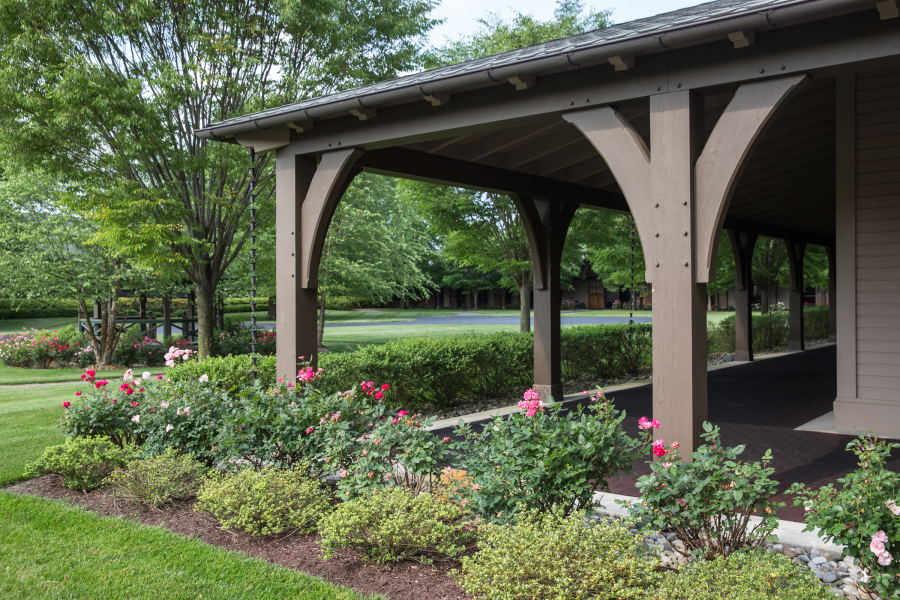
Photo by Jana Bannan Photography, courtesy of Mid-Atlantic Timberframes
Alongside resiliency, versatility is driving timber’s broader adoption.
Because heavy timber frames can span large distances with fewer interior supports, they enable open, flexible spaces across building types. In residential projects that often translates to cathedral ceilings and expansive floor plans. In larger applications it can support civic, recreational, and institutional uses. “Equestrian facilities are a big one,” Recarde says. “You’re dealing with large open spaces, and timber works really well for that.”
Timber is also increasingly part of hybrid systems, working alongside steel and concrete to meet specific structural demands. That flexibility allows architects to use timber as part of a broader structural strategy.
What Architects Need to Know
Timber’s role in design is continuing to evolve. Recent code updates across North America have expanded allowable heights and building types for mass timber construction, making it a more viable option for projects once dominated by steel or concrete. “There’s definitely been a shift,” Recarde says. “Architects and builders are more comfortable working with timber because they’ve seen it perform.”
At the same time, advances in digital modeling and CNC fabrication have made it easier to coordinate structural systems with a high degree of precision. For architects, that shift underscores the importance of engaging timber partners early in the design process, when structural decisions can still shape both performance and form.
Looking Ahead
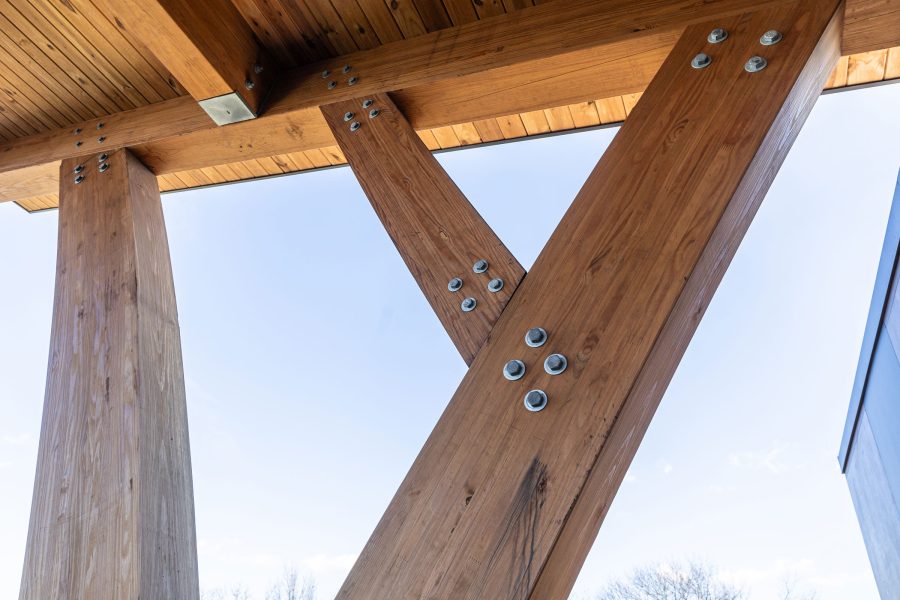
Photo by Jana Bannan Photography, courtesy of Mid-Atlantic Timberframes
As engineered timber continues its rise as a building material, Recarde expects its role in contemporary architecture to expand.
Growing familiarity among architects, continued code development, and advances in fabrication are all contributing to a broader understanding of what timber can achieve as a structural system.
For designers that shift represents an opportunity to rethink material assumptions. Once viewed primarily as strictly a traditional building method, heavy timber is now positioned as a structural system that combines durability, adaptability, and performance for the future.