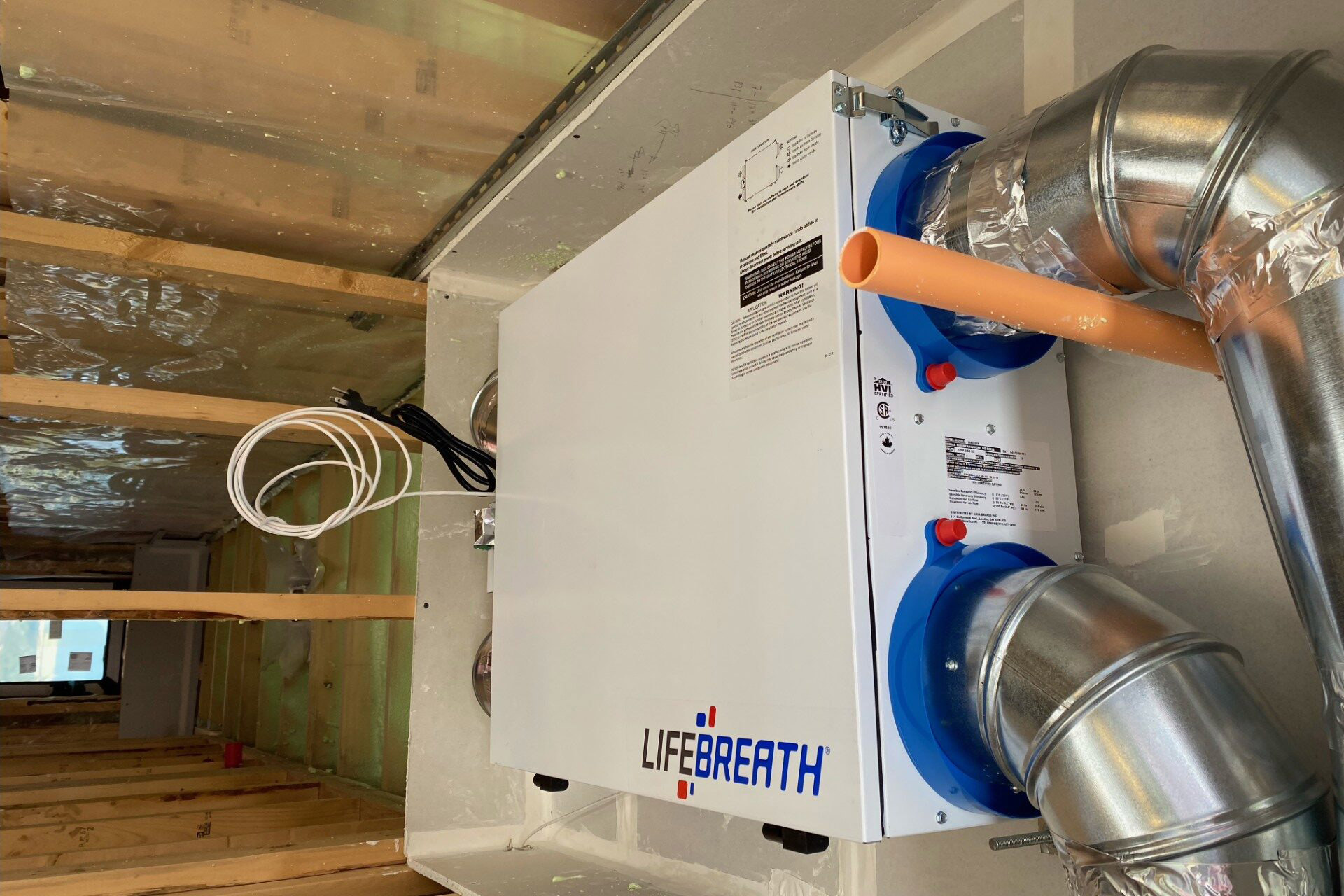
Story at a glance:
- As buildings become tighter and more energy-efficient, ventilation systems are playing a larger role in occupant health, comfort, and long-term building performance.
- Growing concerns around energy costs, increased pollutants, and indoor air quality are driving demand for smarter, more balanced ventilation strategies.
- Evolving codes and performance standards are accelerating adoption of HRVs and ERVs, helping structures reduce energy loss while delivering cleaner, healthier indoor air.
Indoor air quality (IAQ) has become one of the defining conversations shaping the future of building performance. As modern buildings grow tighter, more energy-efficient, and increasingly complex, architects, developers, and engineers are under mounting pressure to deliver spaces that not only conserve energy but actively support occupant health and comfort. In that environment ventilation systems are no longer viewed as background infrastructure; they’ve become central to how high-performing buildings are designed, measured, and experienced.
The shift is especially apparent across residential and multifamily construction, where concerns around humidity, airborne pollutants, allergens, and long-term energy costs continue to intensify. At the same time evolving building codes and standards are pushing projects toward more sophisticated approaches to ventilation and airflow management, forcing the industry to rethink how buildings breathe, how performance is measured, and what occupants now expect from the spaces where they live and work.
Along the way the team at Lifebreath, a flagship brand under Zehnder Group North America and part of the Switzerland-based Zehnder Group, has built its reputation around delivering ventilation systems designed to improve indoor air quality while supporting energy efficiency and long-term building performance. “Over the past 10 to 15 years we’ve gone from building codes treating ventilation as a very small, specific component to recognizing ventilation as essential to both occupant and building health,” says Peter Grinbergs, product manager overseeing ventilation at Zehnder Group North America.
“Today the industry better understands the long-term risks tied to poor ventilation, including condensation and mold buildup across virtually every climate type,” he says. “That’s probably the biggest shift—recognizing ventilation is required not just for safety but for the overall health of both the structure and those inside.”
He says architects and developers increasingly view ventilation and IAQ as ways to distinguish projects in a crowded marketplace. “I’ve worked on projects ranging from senior housing to multifamily buildings where indoor air quality was actively promoted as a feature,” he says. “Building codes are minimum standards. There are many ways to meet code—the least expensive way or the value-added way.”
That shift has become especially apparent in projects tied to sustainability goals and long-term building performance. Grinbergs points to early condominium developments pursuing stronger LEED outcomes, where developers began taking a closer look at how ventilation systems impacted both energy use and occupant safety.
“Traditionally many apartment buildings relied on corridor pressurization systems that pushed air from hallways into individual units through door undercuts” he says. “But significant amounts of conditioned air were often lost through elevator shafts, stairwells, and garbage chutes.”
By moving toward decentralized, in-suite ventilation systems, he says developers were able to target ventilation more efficiently while also improving overall building safety. “Ventilation ended up serving multiple purposes simultaneously. It lowered energy costs while also reducing the risk of smoke entering apartments during a fire.”
Evolving the Discussion
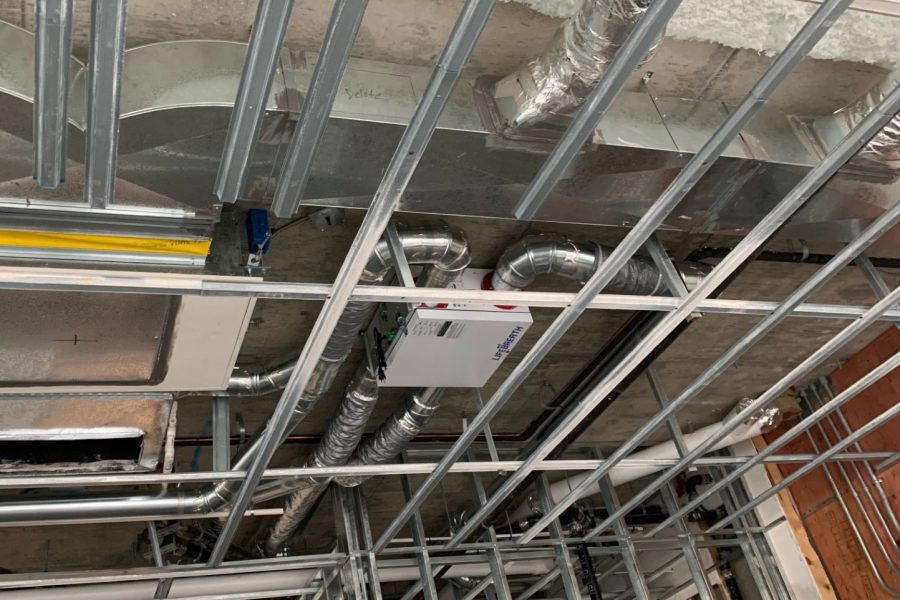
Photo courtesy of Lifebreath
Another major force shaping the IAQ conversation is energy affordability, Grinbergs says. As utility costs continue to rise homeowners and developers alike are paying closer attention to how buildings perform—not just from a comfort standpoint but from a financial one. “That swing is helping drive demand for more efficient ventilation strategies capable of improving IAQ without dramatically increasing energy consumption.”
For companies like Lifebreath, the conversation increasingly centers around Heat Recovery Ventilators (HRVs) and Energy Recovery Ventilators (ERVs)—systems designed to introduce fresh outdoor air into a building while recovering much of the energy that would otherwise be lost through the ventilation process. Historically, Grinbergs says, once building codes required homes have proper ventilation, the simplest solutions involved opening windows or relying on bathroom and kitchen exhaust fans.
“The challenge was the energy penalty that came with exhausting conditioned indoor air and replacing it with outdoor air during extreme temperatures. That’s where HRVs and ERVs began changing the conversation. You don’t need to worry about those energy costs because we can now recover up to eighty percent of the energy you’re exhausting,” he says.
What Lifebreath is seeing in the Energy Code Council discussions in the US is recognition that HRVs and ERVs do reduce ongoing energy costs for homeowners—which makes them a viable long-term financial solution, Grinbergs says.
At the same time, worsening outdoor air quality is reshaping how ventilation systems are designed and discussed. “Wildfires, dust storms, pollution, and airborne particulates are increasingly impacting communities—well beyond traditional high-risk regions. But that’s the amazing synergy we see with balanced ventilation systems.”
In tightly built homes, balanced systems can manage and filter incoming air far more effectively than leaky structures, he says. During wildfire or dust events, that control becomes especially important. “If you have a leaky house, wind pressure actually drives particles into the home,” Grinbergs says. “But with a tightly built home and a balanced ventilation system, you can bring air in through a single controlled point, filter it before it enters the house, and significantly improve IAQ.”
Advanced filtration systems can also help remove odors, volatile organic compounds, and fine particulate matter like PM2.5—associated with smoke and dust events, he says. “These systems really do provide solutions for many of the environmental challenges we’re facing today.”
Measurable Savings
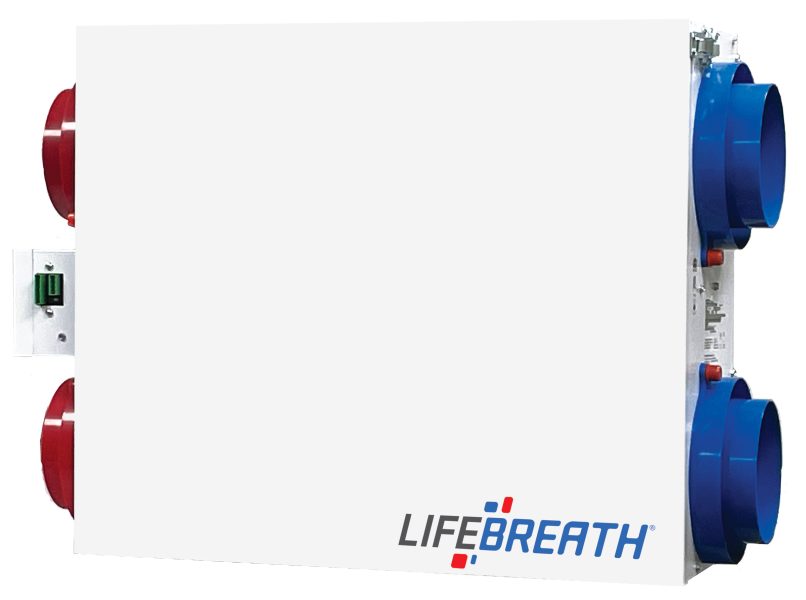
Photo courtesy of Lifebreath
Even as awareness around IAQ continues growing, Grinbergs says misconceptions still influence how many homeowners think about ventilation and air quality. “One of the misconceptions we still have is the idea that if you like the smell of the air, it must be good.”
In reality IAQ issues are often far more complex than what occupants can immediately smell or detect. At the same time many homeowners still assume bringing fresh outdoor air into a home automatically leads to significantly higher heating and cooling costs. “It might be the biggest misconception, but if you look at an ERV it’s designed specifically to reduce those energy costs.”
As codes and consumer expectations continue evolving, Grinbergs says Lifebreath’s core markets today center heavily around mainstream builders and developers, including multifamily and large-scale residential projects. “In Washington, for instance, we’re doing 300-unit apartment buildings. We work with builders doing 1,000-lot spec-home developments.”
That demand spans both the broader Lifebreath product line and Zehnder’s more customized ventilation offerings. Grinbergs describes Zehnder systems as complete IAQ solutions involving ductwork and system design, often geared toward custom homes and specialized applications. Lifebreath solutions, meanwhile, are typically more code-driven and geared toward large-scale residential and multifamily projects where space and efficiency become critical considerations.
“Many states now have what are called stretch codes or enhanced energy codes,” he says. “In Washington, for example, the base code may simply call for ventilation, while the stretch energy code specifically calls for energy recovery ventilation.” That trend is becoming increasingly common across the US, he says, as jurisdictions continue pushing toward higher-performing buildings and more efficient ventilation standards.
Central to that process is the Home Ventilating Institute (HVI), which certifies virtually every major bathroom fan, kitchen exhaust fan, HRV, and ERV system used across North America. Organizations like HVI, who Lifebreath works very closely with, are playing a greater role in helping states and jurisdictions evaluate the long-term performance of balanced ventilation systems through climate-specific energy modeling and operational analysis, Grinbergs says.
Using energy simulations tied to North America’s various climate zones, manufacturers and code officials are increasingly able to demonstrate measurable long-term energy savings tied to HRVs and ERVs, Grinbergs says. “We run energy simulations to demonstrate that there is a legitimate payback for adopting balanced energy recovery ventilation. That data is helping drive broader adoption across states looking to reduce operational costs for homeowners while also lowering overall energy demand and greenhouse gas production.”
Continued Leverage
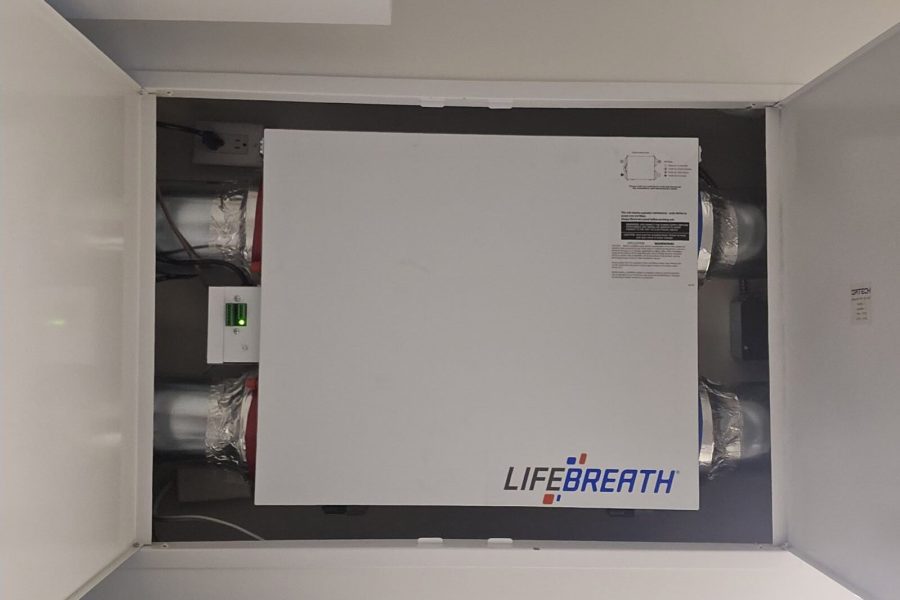
Photo courtesy of Lifebreath
As balanced ventilation systems become more common, performance metrics and energy modeling are also playing a larger role in how products are evaluated and specified.
All major HRV and ERV manufacturers test products to a standard known as C439, which measures overall energy efficiency—essentially how much energy a system can recover compared to how much energy it consumes, Grinbergs says. “When I mention recovering 80% or more of the energy, that’s certified documentation.”
Those standardized metrics allow for direct comparisons across manufacturers while providing critical performance data for energy modelers working on state energy codes, residential energy analysis, and programs like RESNET. “There are really two sides to performance,” he says. “The first is how much heating or cooling energy you recover. The second is the energy required to operate the equipment itself.”
That distinction has pushed the industry toward increasingly efficient motor technologies as manufacturers look to reduce the electrical demand required to operate ventilation systems. “We’re not only recovering large amounts of heating and cooling energy, but we’re also doing it while using the least amount of electrical energy possible.”
Such performance calculations are now directly influencing everything from code development to energy incentives and tax-credit programs tied to residential building performance, Grinbergs says.
Looking ahead, he believes the next major evolution in ventilation technology may have less to do with raw energy recovery and more to do with intelligence, controls, and air management. “Most customers know nothing about their HVAC system other than the control on the wall,” he says. “But that’s changing. The industry is moving toward smarter interfaces, app-based monitoring, and increasingly responsive sensor technology capable of adjusting ventilation rates based on indoor and outdoor conditions in real time.”
While the marketplace is still somewhat resistant to seeing the value of it due to costs, that will change as the cost of controls and interfaces comes down, Grinbergs says.
At the same time, worsening outdoor air quality is reshaping how ventilation systems approach filtration itself. For decades the assumption was simple: Outdoor air was cleaner than indoor air. “We’re at the point now where we don’t want to take polluted outdoor air into our homes and add to it,” Grinbergs says.
As a result filtration is becoming a far more central part of IAQ strategy. Products equipped with HEPA filtration and higher-efficiency filters are increasingly being designed not simply to protect the equipment itself but to actively improve indoor air quality for occupants. “The migration is now away from just protecting and maintaining the product,” he says. “We want to make sure we’re filtering the air for IAQ reasons.”
Long-term growth for Grinbergs inevitably comes back to something far less complicated than technology alone—trust, consistency, and education. “What Lifebreath has done over the years is be very customer-forward,” he says.
Evolving Education
That approach has helped Lifebreath build a strong reputation across North America over the past four decades, particularly among contractors, distributors, and developers navigating increasingly complex ventilation standards and performance expectations.
Already an established market leader in Canada, an emphasis on support and education continues shaping the company’s broader strategy as demand for advanced ventilation systems expands across North America. Earlier this year the company opened the Zehnder Academy in North America—a dedicated training and education space focused on engineers, architects, contractors, and installers working across the ventilation sector. “The goal is to help people better understand how to install ERVs, HRVs, and other ventilation products,” Grinbergs says.
Likewise, Lifebreath has long operated a similar training platform through Lifebreath Academy, which focuses heavily on contractor education and certification.
Ultimately Grinbergs remains confident that as IAQ standards continue evolving, Lifebreath’s DNA—education, technical support, and product performance—positions the company for continued growth. “I think we have a great future,” he says. “We’re excited to expand across the US while continuing to leverage Zehnder’s broader manufacturing and distribution network throughout North America.”