Story at a glance:
- Cardinal Glass manufactures innovative commercial glass inside a 400,000-square-foot facility in Tomah, Wisconsin.
- The team balances high-tech automation with the expert skill and judgment of long-time employees.
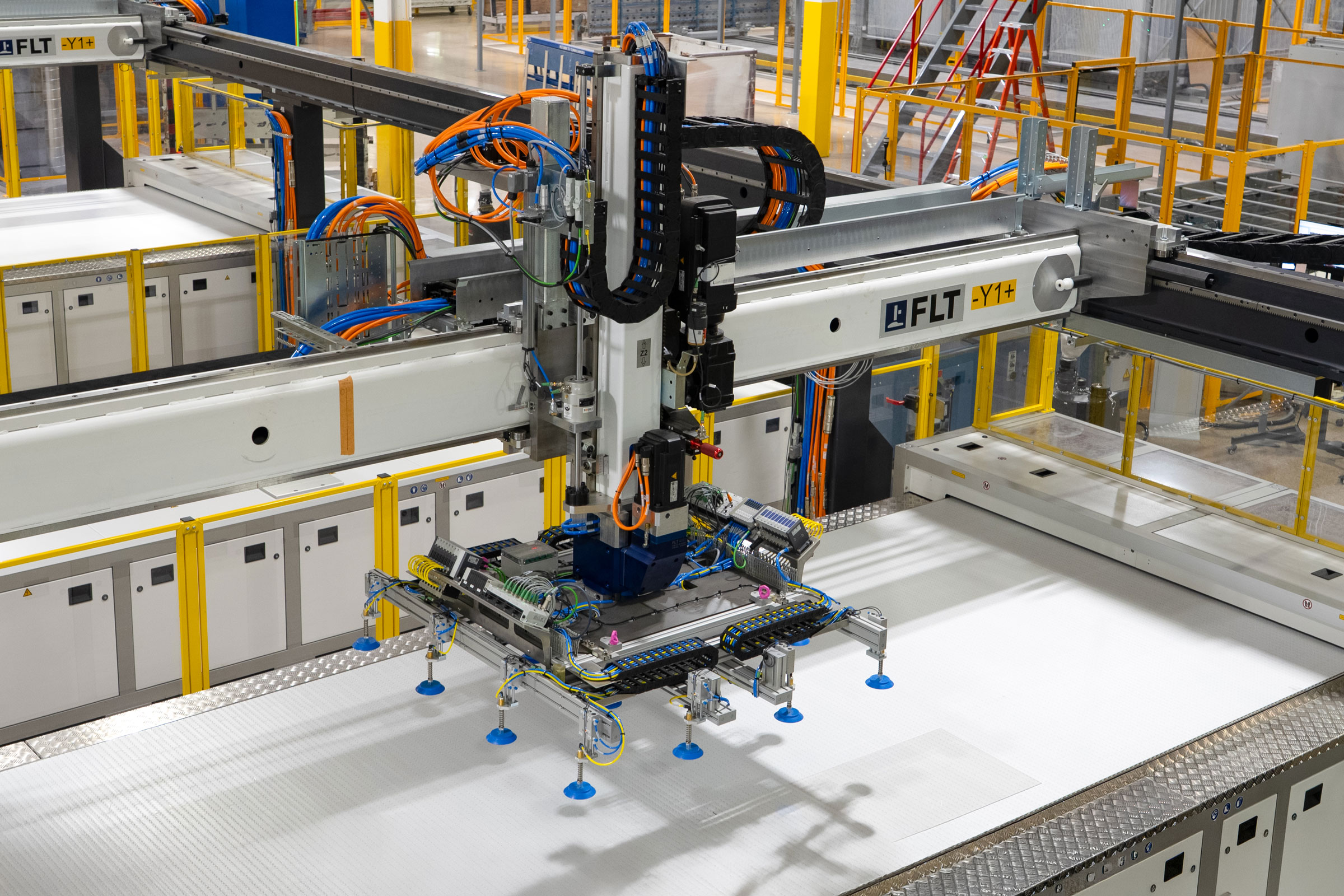
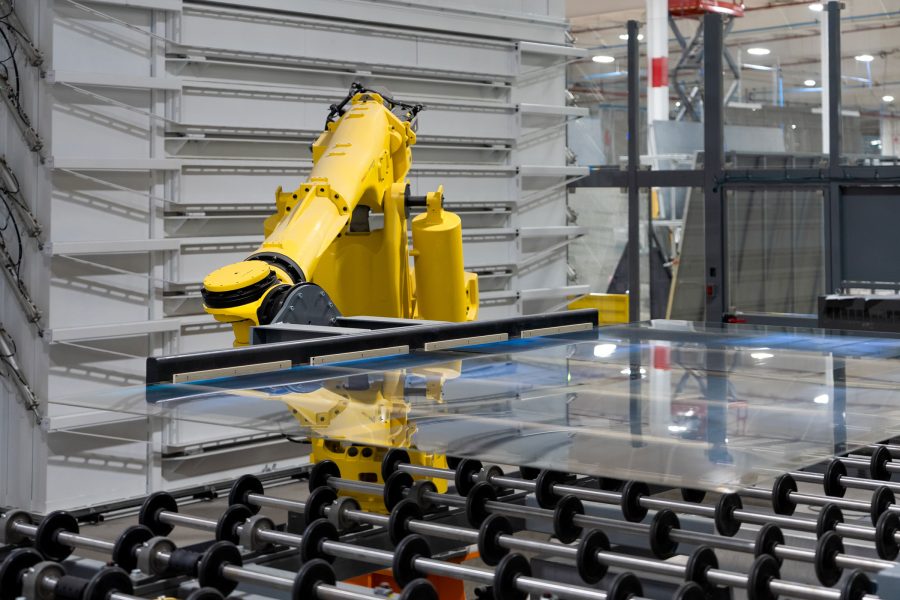
“Don’t touch the glass” takes on new meaning inside a 400,000-square-foot manufacturing facility in Tomah, Wisconsin. Seven towering yellow robots perform seamless choreography as large sheets of pristine glass move from station to station, from giant oven to large black inspection box and beyond.
Each movement inside the facility is measured and precise. The new CLiC line of switchable privacy glass began production in July 2026 and is the result of expertise from many Cardinal Glass plants and divisions together under one roof, including experts in sealants, coatings, insulating glass, and more. The impressive facility also houses countless custom-designed shuttles, numerous inspection stations, and multiple state-of-the-art washers that ultimately produce as many as 1,000 insulating glass units per day, including some powered by CLiC.
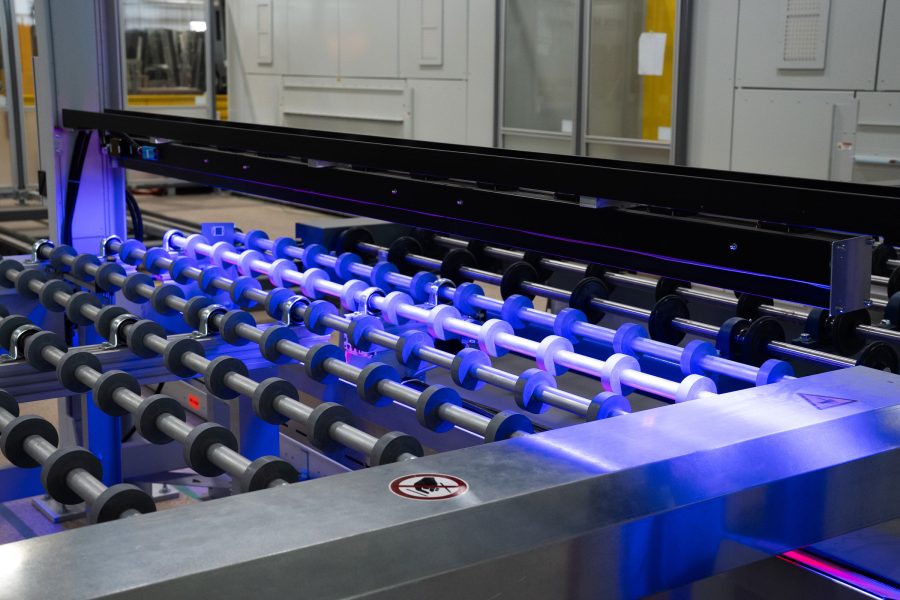
Nearly 150,000 square feet of this facility is dedicated to CLiC, Cardinal’s on-demand privacy glass based on advanced PSCT (Polymer Stabilized Cholesteric Texture) liquid crystal technology that allows users to control the privacy and light transmission in a room with the flip of a switch. This latest innovation can change its appearance between translucent frosted white and transparent with the application of an electrical current.
The Cardinal team expects even more groundbreaking evolution to CLiC in the future—just like the cell phone of decades ago was just a phone and today is a calendar, atlas, radio, camera, and so much more. CLiC could change the way we think of everything from billboards and office signage to the division of spaces and other uses. “Where is CLiC going 10 years from now?” says Pete Whaley, technical sales and marketing manager on the CLiC team at Cardinal Glass.
For now Cardinal is focused on fine-tuning its process, running a tight ship that includes daily troubleshooting for custom orders and refining new machinery and processes. “We really wanted to take more of a quality approach than a quantity approach,” says Aaron Arntson, general manager at Cardinal Glass overseeing CLiC production in Tomah.
Here, no one touches glass, Arntson says. It’s part of a trend in modern manufacturing, one where Cardinal Glass is leading the way. “Manufacturing in general is gravitating toward ‘manufacturing 4.0’ or ‘next-generation manufacturing,’” he says. “There’s less operator intervention in the process. Machines, robots, and conveyors move product through the process, and then your operators are the quality technicians who are evaluating each step in the process. It becomes less about volume and more about the quality of the product. That’s what we did with this entire line.”
The results are increased employee safety and high-quality products—vetted in part by OSHA VPP (Voluntary Protection Programs), an in-depth audit of programs and policies that includes employee interviews. In Tomah’s new addition, Cardinal employees stopped handling glass when the facility’s jumbo line was installed in 2021, Whaley says. “It just wasn’t safe to ask people to handle such large glass. It wasn’t responsible,” he says.
Arntson says the jumbo line was a turning point that allowed Cardinal IG Tomah to dive fully into automation and robots. “Each IG unit could be as big as a full stock sheet of glass and over 1,000 pounds,” he says. “When you think about asking somebody to remove that glass from a rack or put it on the line, you just can’t do that.”
Currently 40 people make up the CLiC team, including engineers, production technicians, and leadership. Now instead of handling heavy product, employees are focused on quality checks. It’s a move that also reduces the chance for human error, as employees are less physically involved in the active processes and more focused on just one of many inspections.
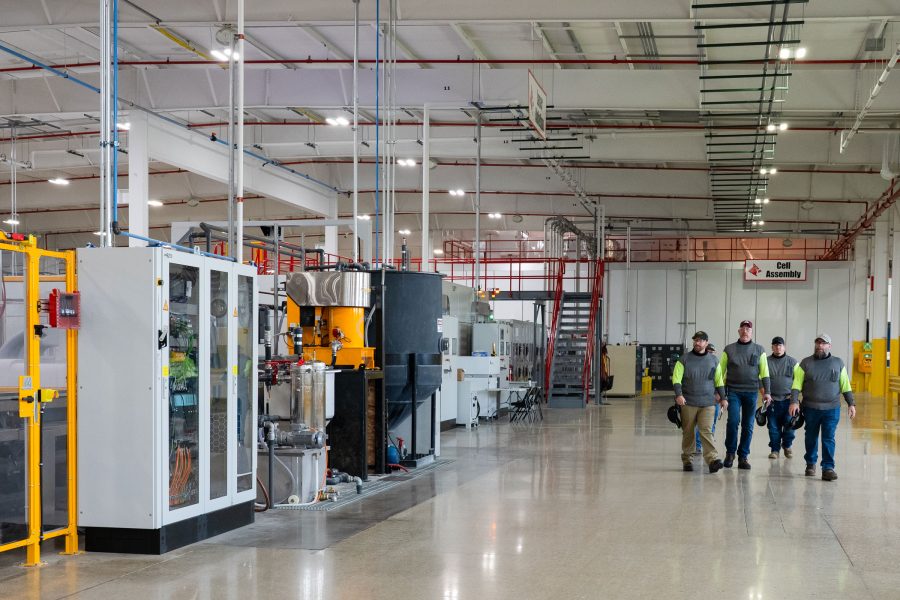
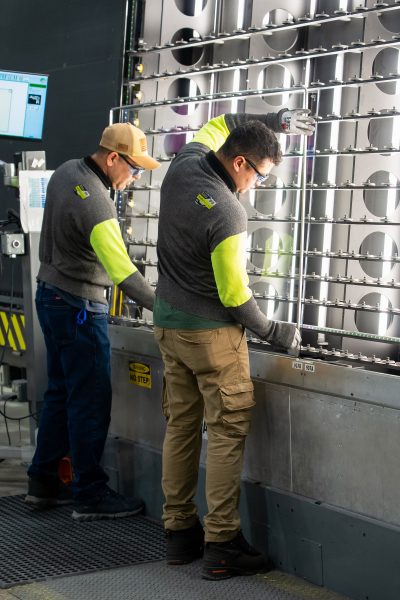
Still, Arntson says human perspective will always be part of the process. “You can automate as much as you want, but there is a lot of value in placing human eyes onto the product,” he says, as three CLiC employees examine a large piece of glass at an inspection station down the line.
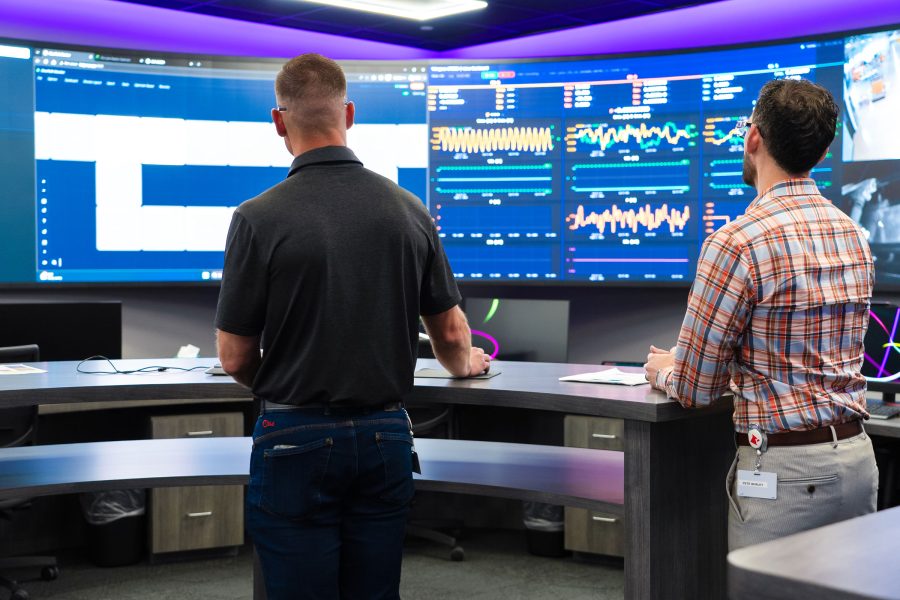
Whaley says the team is also developing what’s essentially a large dictionary of possible issues, with data pulled along every step of the way. This data feeds back to an impressive central command station where the team reviews multiple screens, tracking all aspects of the manufacturing process. “Then we can start to see trends that are developing, like if we notice there’s a consistent defect on each sheet that comes through, that’s something for us to target,” Whaley says.
Cardinal’s processes leave nothing to chance, as they continue to refine each step while pushing the envelope. “If someone asked me, ‘What’s the single biggest challenge?’ I’d say probably meeting our own internal durability and performance goals because we keep pushing,” Whaley says. “Our customers have to trust us and know it’s something they can put their name on. Our glass is going to be super clear; it’s not going to look hazy when you look at it from an angle. To check all these boxes is really hard, but we did it with CLiC.”
Innovation Past, Present, & Future
At the same time Cardinal is developing new products and processes, they’re also developing new industry standards. “When you’re on the forefront doing all these things, it can be hard to figure out how to write the rules,” Whaley says.
About five years ago Cardinal had to come up with an automated way for quality personnel to quickly identify defects on a privacy product—something Whaley says hadn’t been done before. “How do you look at something that’s meant to obscure and make things private and tell if it’s good or bad?” he says. “Then we have the clear mode, which already has some existing standards, but how do you combine the two? Answering questions like that was one of many learning and development processes we went through.”
Cardinal has a long history of innovation, from being the first company in 1982 to mass produce LoĒ coated IG units for the residential window market to being the first to do true four silver layer LoĒ in 2019. Today CLiC is a major focus of their innovation in the pursuit of durability, performance, and aesthetics.
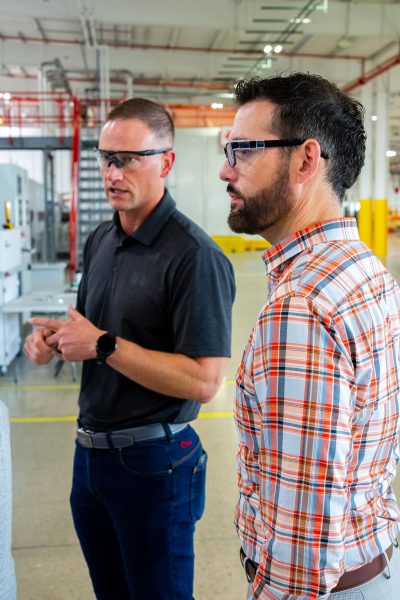
When Cardinal expanded the Tomah facility six years ago they took a lesson from a previous facility, where they continued to expand and would end up needing even more space by the time they finished. In Tomah they decided to expand in every possible direction, so they have the space they’ll need down the road. “We know there’s going to be a future need in some way, shape, or form,” Arntson says. “We’re going to start working on the next generation. We don’t even know 20 years from now where it could be.”
Beyond CLiC, Cardinal also makes insulating glass that is supplied to most major window manufacturers, with less than one-tenth of a percent failure rate over 20 years. “We’ve developed a full test suite for insulating glass durability,” Whaley says. “When we developed CLiC we said this has to make it through that whole process, too. We’re not going to shortchange anything just because it’s a different product type.”

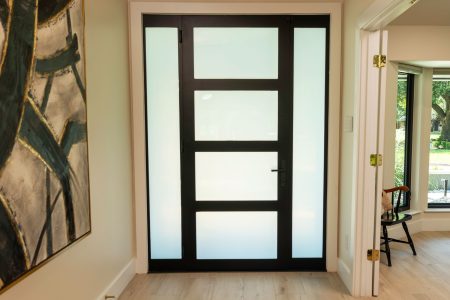
More architects and designers are asking for switchable privacy glass than ever before across varying project types, as they begin to better understand CLiC’s capability and clarity. “It is not just another PDLC solution. It’s not something that’s going to fail in a year. This is different,” Arntson says.
While today’s CLiC is a direct-to-glass film-free construction that’s easy to install, the future of CLiC sees even more opportunity as Cardinal plans to venture into new shapes and uses across windows, doors, and interiors. “We have probably close to 100 different development ideas that are all in the funnel,” Whaley says.
Cardinal’s customers have made them better over the years, too, as their demands help to refine product, Arntson says. That level of innovation only makes the industry at large improve, as competitors race to keep up. “That’s been one of the core tenets of Cardinal from the beginning,” Arntson says, going back to what Cardinal Glass CEO Roger O’Shaughnessy has said. “We want to keep the innovation merry-go-round spinning fast enough that nobody else can jump on.”