

Story at a glance:
- A firewall prevents the spread of fire, but it also influences the daily experience of a building, from sounds to smells to energy efficiency.
- Sound and air quality considerations are especially crucial in townhouses where tenants share walls.
- Tighter insulation means less air leaking through the wall and increased energy efficiency.
When a firewall fails inspection, gaps in insulation are often to blame. Then the contractor has to return to the building and repair the insulation, tacking on additional time and cost.
Greenfiber’s SANCTUARY Two-Hour Firewall, a UL-certified assembly filled with Greenfiber FRM insulation, eliminates the gaps in insulation that can lead to inspection failure. Isac Torres, owner of Battle Born, is a contractor who installed the Greenfiber SANCTUARY product in a Las Vegas townhome project—a net zero-ready development in Las Vegas. For the past six years Torres says Battle Born has been using the SANCTUARY product because of its sound control, air quality, fire performance, energy efficiency, and ease of inspection. “Gaps and voids were a big factor before,” he says. “With this SANCTUARY product on the exterior walls, we were able to solve that.”
Our inspectors love it, our builders love it, and our homeowners love it.
The SANCTUARY Two-Hour Firewall with Greenfiber FRM also simplifies the inspection process, says Greenfiber Technical Director Aaron Davenport. “From an inspection standpoint you can go into a job that has this product installed, look at it with one eyeball, and say, ‘OK, this product has completely filled the cavity. Check, it works.”
Torres says he’s never failed inspection using Greenfiber insulation in his townhouse projects in Las Vegas. “Our inspectors love it, our builders love it, and our homeowners love it,” he says.
The Evolution of Firewalls
Firewalls slow a fire’s spread from one part of a building to another and are a key requirement in modern building codes. Codes mandate builders use firewalls for dividing walls in multifamily and townhome construction.
The Greenfiber FRM insulation is designed for only the SANCTUARY Two-Hour Firewall, U370 assembly. It must be included in building plans from their inception to guarantee code compliance. This assembly is suited for party walls between units, or any wall where two-hour fire rating is required in townhouses and rowhouses. It’s also recommended for multifamily buildings with three or more stories and mixed-use developments.
In the Las Vegas townhouse development, Battle Born specifies the U370 party wall with SANCTUARY in the exterior walls and spray foam in the room deck. Torres says he chose this hybrid system because “the spray foam hits the most inefficient parts of the home, and the cellulose complements it by giving us Grade 1 every single time on the exterior walls, making it easy for inspection.”
Sharing Walls and Nothing More
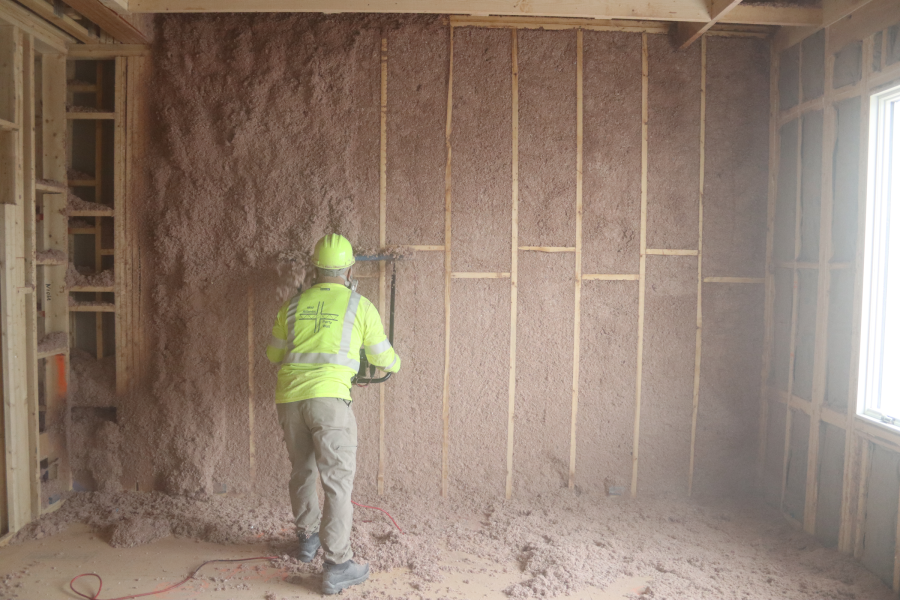
Photo courtesy of Greenfiber
When it comes to the options for firewall materials and assemblies, it’s important to consider performance, sound, and air quality, Davenport says. “You don’t want to hear your neighbor, you don’t want to smell your neighbor, and you sure as heck don’t want to be disrupted by a fire from your neighbor,” he says.
Sound and air quality considerations are especially crucial in townhouses where tenants share walls. The SANCTUARY firewall’s ability to seal gaps thoroughly means sounds and odors can’t pass freely between neighboring units, granting homeowners greater control over their indoor air quality.
For today’s architects it’s not enough to address occupant safety—comfort is key. It’s common for landlords of multifamily properties to deal with noise complaints from residents. People who live in townhouses and multifamily homes don’t want to hear music from a party next door or a play-by-play of their neighbors’ TV shows. The SANCTUARY firewall limits sound power by 60%, and Torres says it significantly improved sound abatement in the Las Vegas townhome project. “We not only use the SANCTUARY on exterior walls, but we also use it on interior walls for sound control from room to room,” he says. “The sound control it gives you has been taken very well by our homeowners.”
For acoustic performance, Greenfiber’s SANCTUARY U370 assembly achieves an STC rating of 60—exceeding Gypsum Area Separation Walls with acoustical batts filling all cavities (STC 56–58) and two-hour double wall assemblies with spray foam (STC 57). Since a 3 dB increase is typically considered noticeable, this difference represents a meaningful acoustic improvement, according to Greenfiber.
Choosing a Firewall System
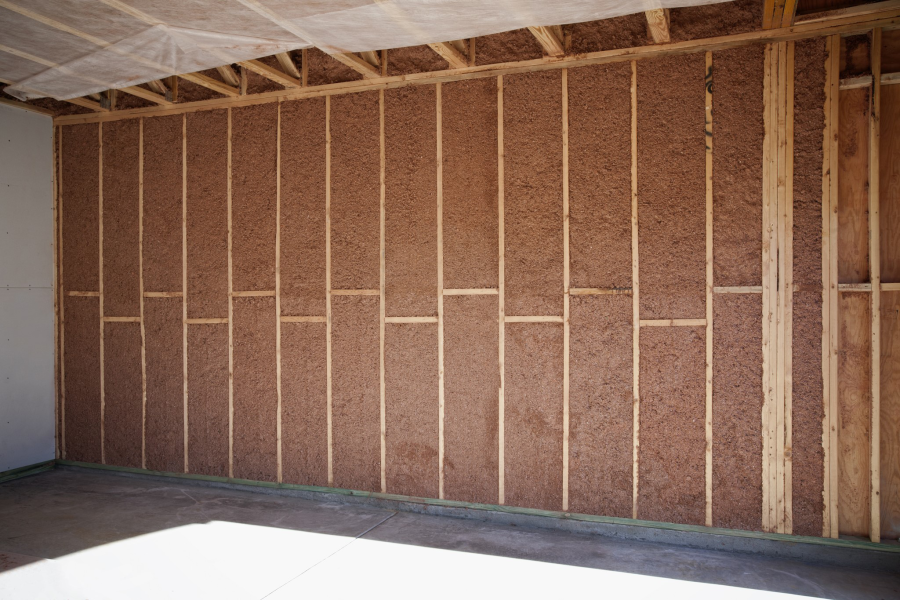
Photo courtesy of Greenfiber
Firewalls sustain structural stability, provide fire resistance, and give anyone in a building during a fire more time to escape. Even when there isn’t a fire, firewalls influence the quality of people’s experiences on a daily basis.
The U370 assembly with Greenfiber FRM insulation addresses multiple issues (fire resistance, sound, air quality, and sustainability) in one step with a single material. For decades the typical approach to installing a firewall has been to combine multiple materials like gypsum board (to achieve fire resistance), fiberglass or mineral wool (for thermal insulation), and staggered studs (to address acoustics). Many builders are still installing firewall assemblies originally designed in the 1970s, which offer patchwork instead of holistic solutions. Combining different products adds cost and coordination challenges, all while increasing the chance of quality control failures.
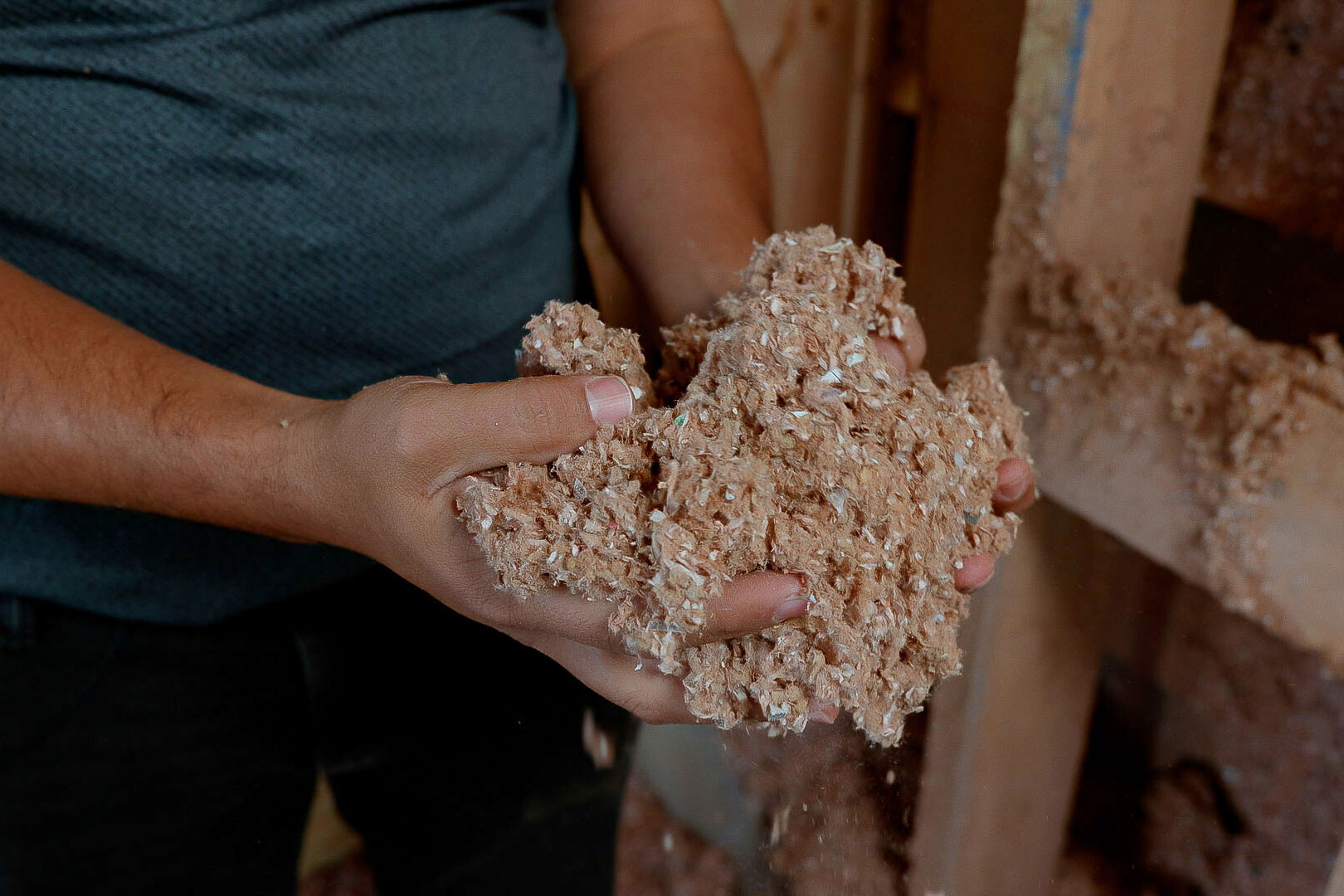
Alternatively, the SANCTUARY Two-Hour Firewall U370 assembly is made of two opposing, offset stud walls. Each wall’s studs are spaced at the standard 16-inch on center. Offset by half, these studs form an 8-inch wall cavity, into which Greenfiber FRM insulation is spray-applied. Torres says the Greenfiber FRM is “very soft and fluffy, but once we apply it to the wall at about a 3.7-pound density per square foot, it becomes very dense.”
When you spray Greenfiber FRM insulation into the wall cavity with a fine mist of water, you activate the dry adhesive. Within 24 hours the insulation material dries out and is bonded to the wall. “Essentially what you’re doing is site-manufacturing paper-mache into a wall cavity,” Davenport says.
Other Types of Firewall Assemblies
Area Separation Walls (ASW) use shaft liner gypsum and fiberglass batt installation, two other common firewall assemblies. The traditional gypsum shaft liner assembly includes a two-inch gypsum core that’s built with two-inch metal H studs in the middle of a framing gap measuring about four inches. The installation takes two to three days (unlike U370’s one-day assembly) and requires firestop detailing.
Some types of insulation can lose structural integrity while producing voids and pathways for heat and smoke. Batt installation involves inserting pre-cut flat pieces of fiber into the wall cavity. This process can lead to gaps and weak points, particularly around electrical boxes and at plumbing penetrations as well as at the top and bottom plate.
Greenfiber experts say that instead of melting when exposed to extreme heat, the treated cellulose fibers undergo the following chemical reaction: At 212 to 400°F the cellulose releases bound water vapor, which subsequently absorbs thermal energy and cools the surrounding area. At 400 to 600°F the borate treatment causes a chemical transformation that prevents combustion, according to Oak Ridge National Laboratory and US Borax. At 600°F and above, the cellulose develops a stable char layer that serves as a vital thermal insulator and looks like a black, dense crust, according to Oak Ridge National Laboratory and US Borax. Under real fire conditions this char layer is crucial because it protects the wall cavity’s density; this helps maintain structural integrity during the fire while starving the fire of the oxygen it needs to spread.
Eco-Benefits of Cellulose
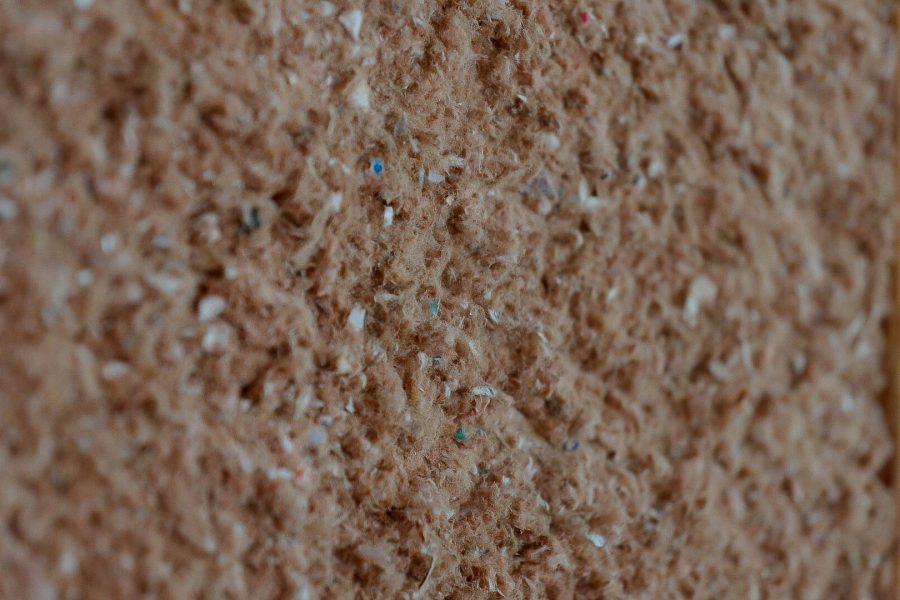
Photo courtesy of Greenfiber
Building materials account for 8% of global CO2 emissions (according to the National Institute of Building Sciences), and insulations are responsible for a significant portion of those emissions.
A report by RMI titled “The Hidden Climate Impact of Residential Construction” found that cradle-to-gate embodied carbon emissions are “highly concentrated in just four categories of materials—concrete, insulation, cladding, and interior surfaces.” Builders for Climate Action conducted a study of 501 homes in Toronto in 2021 where researchers found that insulation made up 26% of total cradle-to-gate embodied carbon emissions.
Unlike conventional batt insulation like fiberglass, cellulose is a carbon-negative, ecofriendly material that’s 85% post-consumer recycled newspaper, cardboard, and paper-based products. Davenport says the other 15% is the fire-retardant (like a boron salt) that also inhibits mold away.
Instead of paper heading to a landfill where it would release more CO2, Greenfiber insulation locks in carbon and diverts an estimated 277,000 tons of paper from landfills each year, Davenport says.
With Greenfiber’s SANCTUARY Two-Hour Firewall, the cellulose is sprayed directly into the wall cavity, filling the entire space completely. As a result the firewall blocks sound, smells, and fire all at once with the same material. When contractors use spray foam for firewalls, they have to shave down the material extensively to fit the wall cavity, and this leads to a lot of waste. “We get to avoid wasting material, all that cutting and throwing away,” Torres says. He says the two-hour firewall solution also makes the process faster and more cost-effective.
Unlike alternative methods, contractors are also able to spray in Greenfiber insulation after the roof goes up. This allows multiple trades to work simultaneously and speeds up the pace of construction, saving time and money. “We are able to do [installations] a lot faster than what we were used to,” Torres says.
Energy Efficiency
In the US buildings consume 40% of total energy use and more than one-third of the country’s carbon emissions. An analysis by ICF Consulting in 2022 found that potential energy savings from better insulation in US residential buildings ranged from 10 to 45%.
Firewalls’ benefits for energy efficiency are especially relevant in places with extremely hot or cold weather. A tight firewall serves as top-notch insulation. For example, a tenant in a sweltering city like Las Vegas (where summer temperatures can regularly reach triple digits) might blast the air conditioner more because the cold air isn’t staying inside the home. In contrast, tighter insulation means less air leaking through the wall, which can naturally reduce energy use.
For the Las Vegas townhome project, Battle Born needed a repeatable way to not only meet code but exceed code for energy efficiency. The townhouse development consumes 55 to 60% less energy than a house built to the 2009 code even without solar panels added to the roof, Davenport says.
Torres says he’s noticed more homeowners are choosing cellulose for insulation in Las Vegas in part because of the benefits for extreme heat. “It has really taken off here,” he says. “It’s great for the weather.”
Davenport adds that, in townhomes, the dividing wall (also called the tenant separation wall) is the “leakiest part of the building.” “Consistently making that part of the dwelling tight has the greatest impact on energy efficiency,” he says.

