Story at a glance:
- When water is everywhere, materials matter. At Shedd Aquarium water, humidity, and sensitive habitats are constant considerations.
- MONOKOTE® Fireproofing was selected for the Chicago renovation of one of the industry’s most challenging environments.
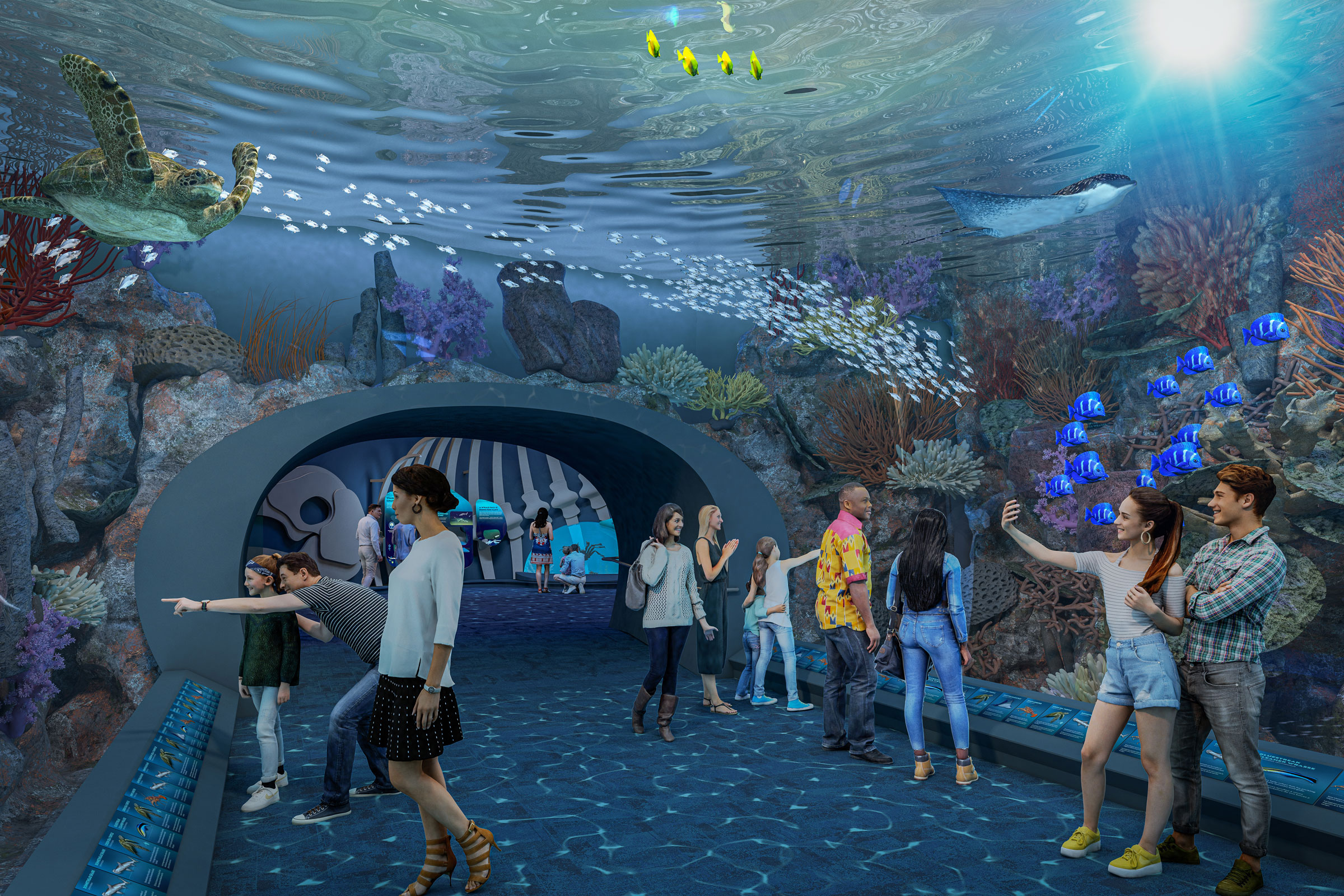
For nearly a century the Shedd Aquarium has stood as one of Chicago’s most iconic institutions, welcoming millions of visitors each year to explore aquatic ecosystems from around the world. As the aquarium approaches its 100th anniversary in 2030, it has launched an ambitious strategic plan known as its Centennial Commitment. Part of this plan includes Experience Evolution, a multi-year initiative designed to modernize the historic facility while enhancing accessibility, visitor experience, and animal care.
The renovation reimagines historic galleries, improves circulation throughout the nearly century-old building, and introduces immersive exhibit environments that bring visitors closer to aquatic life. Because the aquarium sits on a constrained site between downtown Chicago and Lake Michigan, the project focuses on reconfiguring and upgrading the existing footprint rather than expanding outward.
Updated applied structural fire protection is a key part of this transformation, helping safeguard the structure, aquatic life, staff, and millions of annual visitors for decades to come.
Protecting structural steel inside an aquarium, however, requires more than a standard approach to fireproofing. In a facility where water, humidity, and sensitive habitats are constant considerations, materials must perform reliably without introducing risks to the environments surrounding animal exhibits.
The Challenge
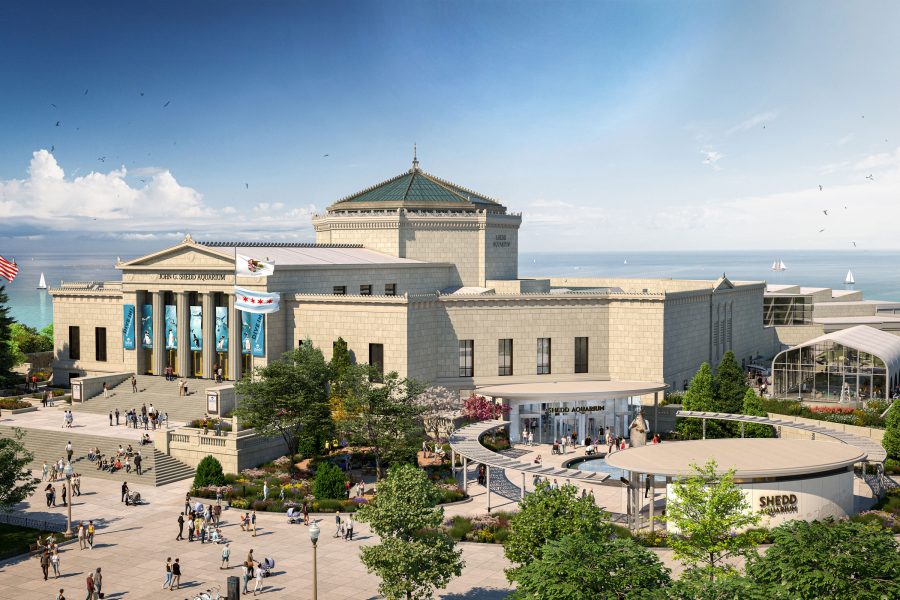
Rendering courtesy of Shedd Aquarium
Aquariums present one of the most demanding spaces in building design, as their constant humidity can accelerate material deterioration. “An aquarium is a challenging environment. Usually you are trying to keep water out of a building—not in this case,” says Lauren Shelton, senior associate at Valerio Dewalt Train architecture firm.
Selecting the right fireproofing system required materials capable of maintaining durability and performance in these moisture-rich conditions while meeting the aquarium’s rigorous safety standards. “The GCP team got involved right in the beginning to educate us on fireproofing that meets our number one priority—the health and well-being of the staff, guests, and animals,” Shelton says. “We wanted to be sure the fireproofing would withstand such a unique environment.”
In a building defined by water, humidity, and sensitive habitats, durability and reliability were critical requirements for the fireproofing system.
The Solution
-
- Photo courtesy of GCP
-
- Photo courtesy of GCP
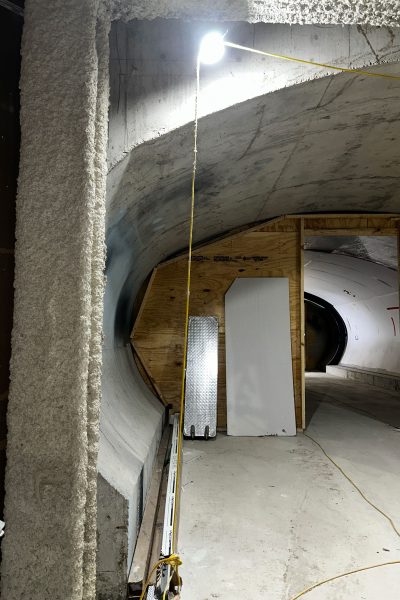
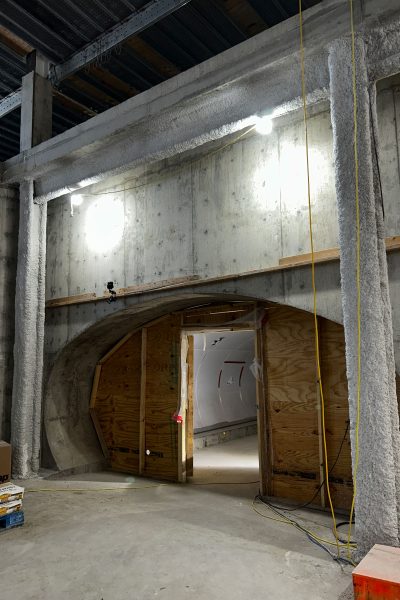
To meet the project’s demanding performance requirements, the team selected GCP’s MONOKOTE® Z-146 spray-applied fire resistive material, a cementitious fireproofing solution designed to protect structural steel by insulating it from high temperatures during a fire event.
To confirm the fireproofing could perform under real aquarium conditions, the Shedd Aquarium facilities team conducted an informal but telling test. “We bought MONOKOTE Z-146, smeared it on a beam, and hung it behind the scenes of our Wild Reef exhibit,” says Bob Wengel, senior vice president of facilities and security at Shedd Aquarium. “That was the closest we could come to simulating the conditions where it would actually be installed.”
The positive results reinforced the team’s confidence that the material could withstand the aquarium’s demanding environment.
MONOKOTE Z-146 forms a lightweight, spray-applied protective layer that helps structural steel maintain its load-bearing capacity during a fire event, providing up to four hours of fire resistance. A Portland Limestone cement-based material applied directly to structural steel, it delivers strong adhesion and long-term durability. Designed for demanding environments, it performs well in areas exposed to moisture and environmental stress while also meeting the needs of sensitive spaces where particle emissions and off-gassing are critical. “We selected MONOKOTE Z-146 because it’s a cementitious product that can hold up to moisture,” Wengel says.
The material’s performance is rooted in its formulation.
“The performance of high-density fireproofing materials comes down to what’s in them,” says John Dalton, technical service engineer – fire protection at GCP. “We use bauxite as a key raw material, which enhances the physical properties of the cement and contributes to long-term durability. Not all materials are formulated this way, and that difference can directly impact performance over time. In demanding environments higher-quality materials are critical and that often comes at a higher cost, but in fireproofing, as in most things in life, you get what you pay for.”
Equally important to the product itself was the early collaboration between the design team and GCP’s fire protection specialists. Bryanna Stewart, commercial territory manager for fire protection at GCP, worked closely with the project team during the design process to ensure the fireproofing strategy aligned with the aquarium’s operating conditions. She collaborated with her colleague Rick Mihevc, business unit director for thermal and acoustic solutions at Saint-Gobain North America, to guide the design team through fireproofing considerations specific to aquarium environments.
“Working with the design team early allowed us to evaluate the aquarium’s unique environment and recommend a fireproofing system that could perform reliably in high-moisture conditions,” Stewart says. “Our goal was to deliver a solution that provides dependable fire protection while supporting the long-term performance of the facility.”
For the architects, that technical partnership provided valuable confidence as the project progressed. “Bryanna and Rick sat down with us and walked through shop drawings and gave us confidence that everything had been specified correctly,” Shelton says. “They armed us with critical knowledge for meetings with installers and others about how the product should be installed and what the UL listings require.”
That collaboration helped ensure the selected system met both safety requirements and long-term performance expectations.
The Results
As the Experience Evolution renovation progresses, MONOKOTE Fireproofing is helping protect the Shedd Aquarium’s historic structure with a solution designed for durability, reliability, and long-term performance.
Performance in a Moisture-Rich Environment
The cementitious composition of MONOKOTE Z-146 provides durable fire protection capable of withstanding the humidity and environmental conditions common in aquarium facilities.
Confidence Through Testing and Expertise
Real-world testing within the aquarium environment, combined with early collaboration between the design team and GCP specialists, helped ensure the right solution was specified and installed with confidence.
Protection for Structure, Visitors, and Aquatic Life
By maintaining its integrity without flaking or deterioration, the MONOKOTE Fireproofing system supports Shedd Aquarium’s commitment to protecting people, habitats, and the animals that depend on them.
Future-Ready Safety for a Historic Institution
As the aquarium approaches its centennial milestone, the renovation is equipping the nearly century-old structure with modern fire protection systems built to perform for decades to come.
In a facility where conditions demand exceptional durability, the reliability of building materials becomes critical to long-term performance.
At Chicago’s Shedd Aquarium, the renovation demonstrates a simple truth: When conditions are demanding, materials matter.