Story at a glance:
- Space to Grow has transformed 41 Chicago schoolyards, with four more under construction, into vibrant outdoor spaces for students during the school day and gathering spaces for the local community outside school hours.
- Design features of the schoolyards add important green infrastructure to Chicago and collectively can absorb approximately 8.8 million gallons of stormwater per rain event in the city.
How can schoolyards be designed to improve student health, well-being, learning, and connection to nature? How can redesigned schoolyards function as green infrastructure to manage stormwater and reduce flooding? How can cities increase access to parks without having to acquire new land for parks? In Chicago, Space to Grow has redesigned 41 schoolyards to date and tackles these questions with a community-led process. In the program’s own words it “transforms Chicago schoolyards into vibrant spaces to play, learn, and be outside.”
The benefits are numerous. Space to Grow schoolyards boost physical activity and wellness, support outdoor learning, reduce neighborhood flooding, connect children with nature, and engage communities with local schools. Students run across new sports fields and search for insects in native gardens. Rainwater trickles into underground reservoirs instead of pooling on seas of asphalt. Community members visit the schoolyards outside of school hours, sitting by school gardens or running on revamped tracks.
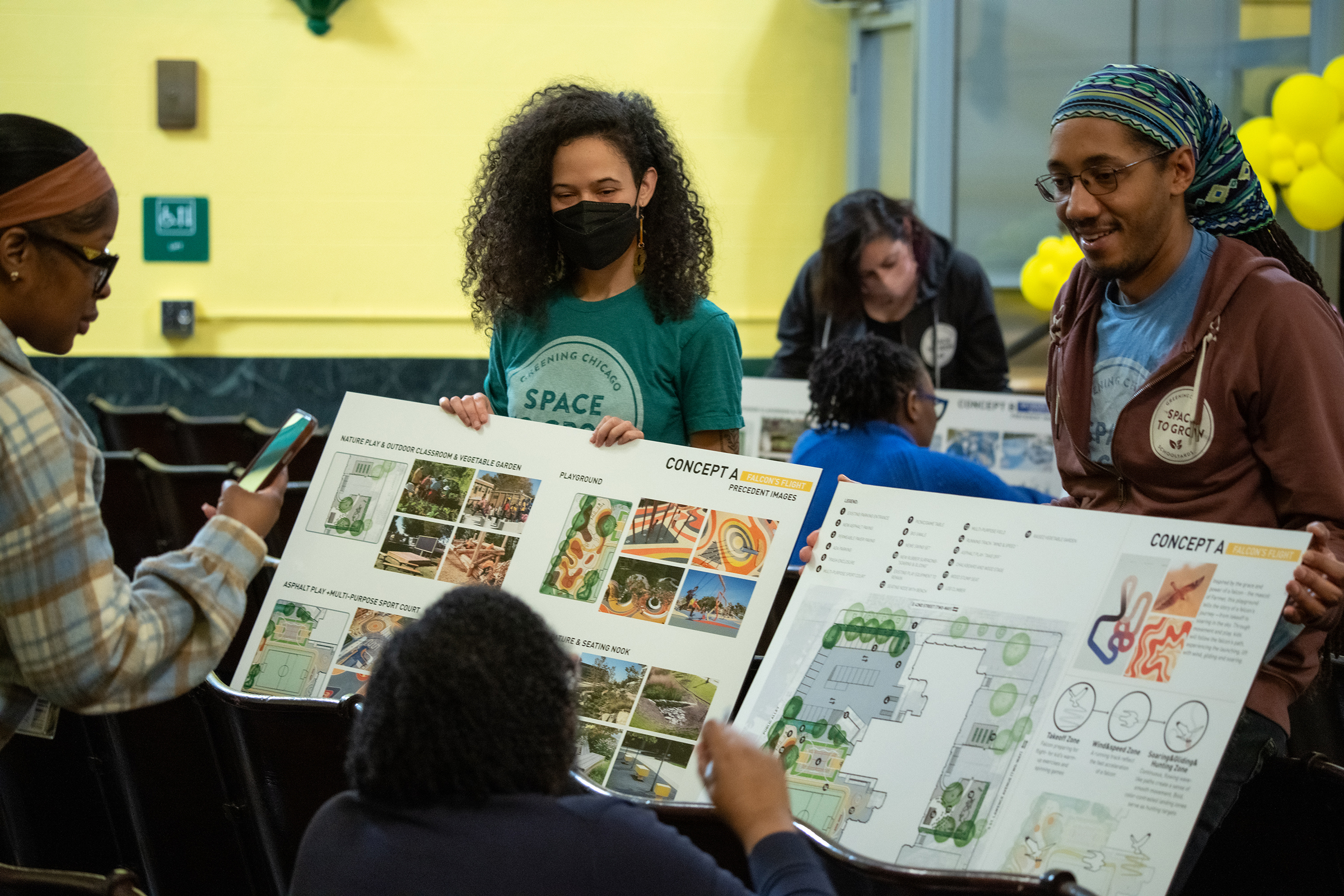
Community members play an integral role in the design of new schoolyards as they know their needs best. Through an iterative process, first with the community and then with the school administration and design teams, plans for the schoolyard take shape. Buy-in from the community also helps maintain the schoolyards long after construction.
With four more schoolyards under construction, Space to Grow continues advancing healthier schoolyards for Chicago students. In fact, Space to Grow has been so successful it has served as a model nationwide, even globally, with delegations visiting from Paris and Rotterdam. Yet this work is only possible because of an innovative collaboration across multiple city departments and multiple nonprofits.
Close Partners
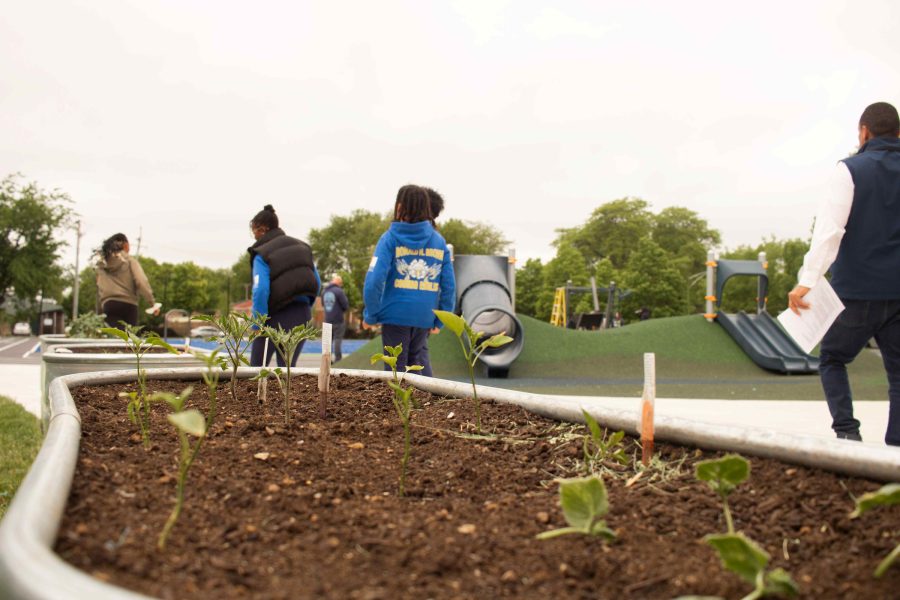
Students walk behind their new garden at Brown Elementary in May 2025. Photo by Hannah Farajpanahi, courtesy of Openlands
Nonprofits Healthy Schools Campaign and Openlands cofounded Space to Grow in 2013 after questions centered on how to create safe play spaces for students to learn and grow. Capital partners Chicago Public Schools (CPS), the Chicago Department of Water Management, the Metropolitan Water Reclamation District of Greater Chicago, and the Chicago Department of Environment fund the effort and provide technical expertise.
Four pilot schoolyards opened in 2014, and with their success the program flourished into what we know today. CPS owns many paved lots at schools across Chicago, providing a real opportunity to reduce flooding while supporting students’ growth. The before and after photos show remarkable transformations, like at Farmer Elementary and Ryder Elementary.
The partnership assembles a strong team by combining the expertise of regional engineering and design firms with the community engagement, education, and environmental expertise of nonprofits, as well as the essential funding and technical expertise of capital partners.
“Healthy Schools Campaign works to make schools healthier places where children can learn and thrive. Space to Grow addresses overlapping environmental health inequities in underinvested neighborhoods, where children are more likely to experience extreme heat, flooding, poor air quality, and limited access to green space. By transforming schoolyards, the program is supporting places where students can be active, learn outdoors, connect with nature, and grow food,” says Emily Zhang, Space to Grow project manager.
“Openlands is a regional conservation organization that has been conserving and protecting land and water since 1963. Within Space to Grow, Openlands provides expertise on community engagement, design, native plants and trees, and connecting teachers and students to the natural elements in their schoolyard,” says Danielle Russell, conservation planning specialist at Openlands.
Engineering and landscape architecture expertise bring the visions of renewed schoolyards to life. At Bradwell Elementary, Site Design Group recognized the connection to the Lake Michigan watershed with a large painting of Lake Michigan and its major cities on the pavement. The design also makes the journey of water visible, helping students understand the water cycle as they follow rainfall from the disconnected downspout through the schoolyard and into the landscape. All pavement on this schoolyard is pitched toward permeable surfaces, resulting in the first closed system Space to Grow schoolyard meaning it accommodates all stormwater onsite.
The results for teachers and students are tangible. “Since the schoolyard transformation with Space to Grow, the students have been very observant about nature,” says Esperanza Baeza, bilingual instruction assistant at Grissom Elementary School. “Before we could only look at the asphalt. Now when I’m outside with the students they want to show me everything they see.” Now the children talk about fireflies, grasshoppers, and spiders.
Green Infrastructure Strategy
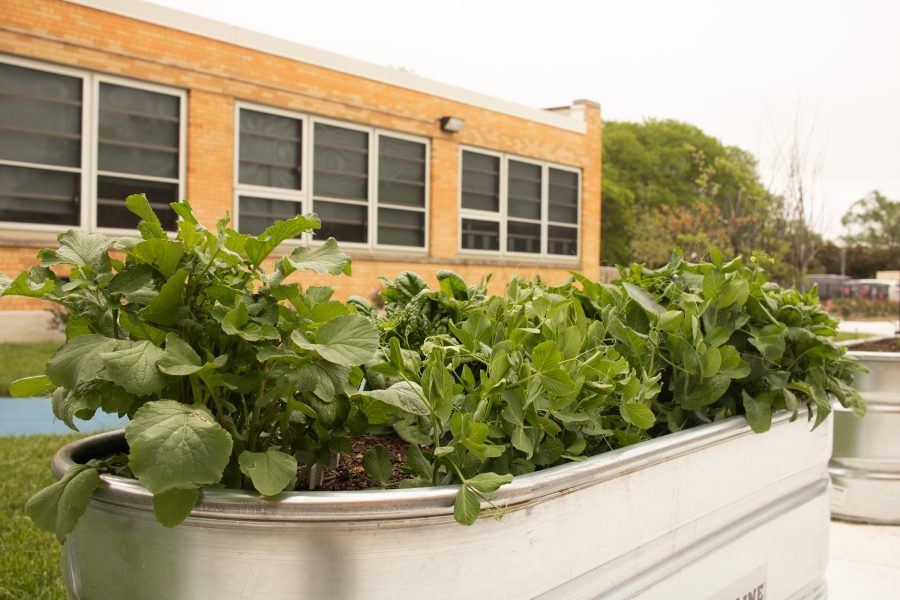
A garden grows at Brown Elementary in May 2025. Photo by Hannah Farajpanahi, courtesy of Openlands
Besides connecting students and local communities to nature, a key focus of Space to Grow is managing stormwater runoff, which has become increasingly pressing with more intense rainfall driven by climate change. Rainfall leads to flooding in Chicago—a key issue for a city of low-lying topography next to Lake Michigan and an estimated 66% of the city covered by impermeable surfaces. The severe and historic storm on July 2, 2023, provides a stark example when rain totals topped 8 inches in parts of the Chicago area.
Green infrastructure designed to absorb water during rainfall aims to make cities more climate resilient. With Space to Grow’s impressive contributions, the program was highlighted in Chicago’s 2026 Green Infrastructure Strategy—the first update to the plan since 2014. The new plan outlines three priorities: cross-agency coordination, long-term maintenance, and equity and community engagement.
Space to Grow’s experience also points to an important reality: Building green infrastructure is only part of the work. These spaces need ongoing care to continue functioning as designed. Healthy Schools Campaign and Openlands co-convene Chicago’s Green Infrastructure Maintenance Working Group, bringing together city and sister agencies and other nonprofit partners to address shared challenges around maintaining green infrastructure.
As of 2026 Space to Grow schoolyards can capture nearly 8.8 million gallons of water per rain event in Chicago, facilitated by about 15 acres of permeable surface added to Chicago’s land area. This includes permeable play surfaces, with underground holding tanks that slowly release water into the ground, as well as nature areas with native plants and trees.
Looking Ahead
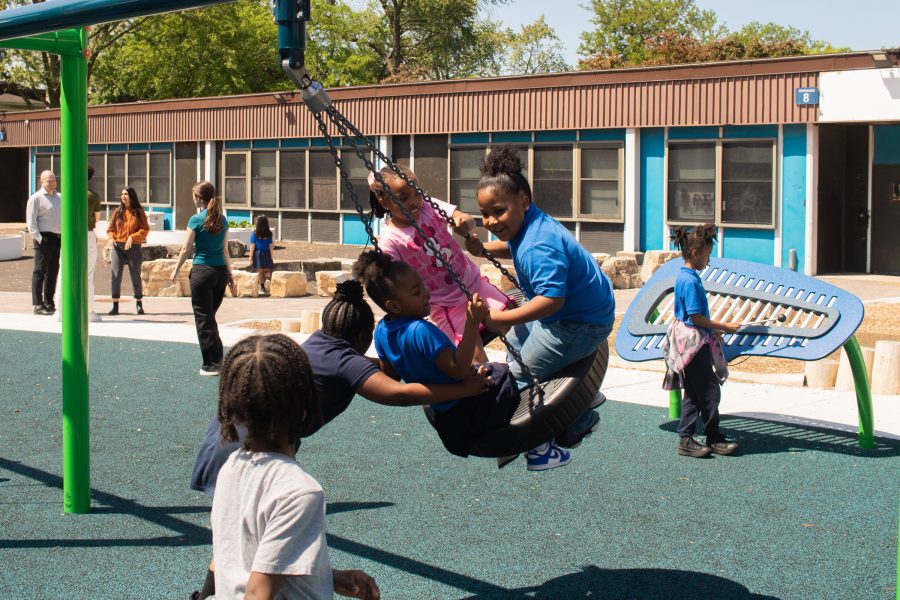
Students enjoy their redesigned schoolyard at Spencer Technology Academy in May 2025. Photo by Hannah Farajpanahi, courtesy of Openlands
Currently four schools are slated to open in late fall 2026. This includes a dual project of George Washington High School on the Southeast Side, the first high school to take part in Space to Grow, and Jane Addams Elementary School. Other schools presently being constructed are Amelia Earhart Elementary in Calumet Heights and Moos Elementary in Humboldt Park.
Many community members and teachers want to know how they can apply for Space to Grow at their school. Space to Grow projects are prioritized in high flood risk areas and assessed with the Chicago Public Schools Equity Index, with eligible schools invited to apply. Applications are evaluated by flood risk, project viability, school’s partnership potential, and equitable access to green space.
Moving forward Space to Grow will continue transforming schoolyards across Chicago. With a steadfast commitment to the communities they serve, Space to Grow founded a community advisory council in 2024. The council ensures community leaders have a voice in future projects while designing climate resilient schoolyards for students’ health and wellness.
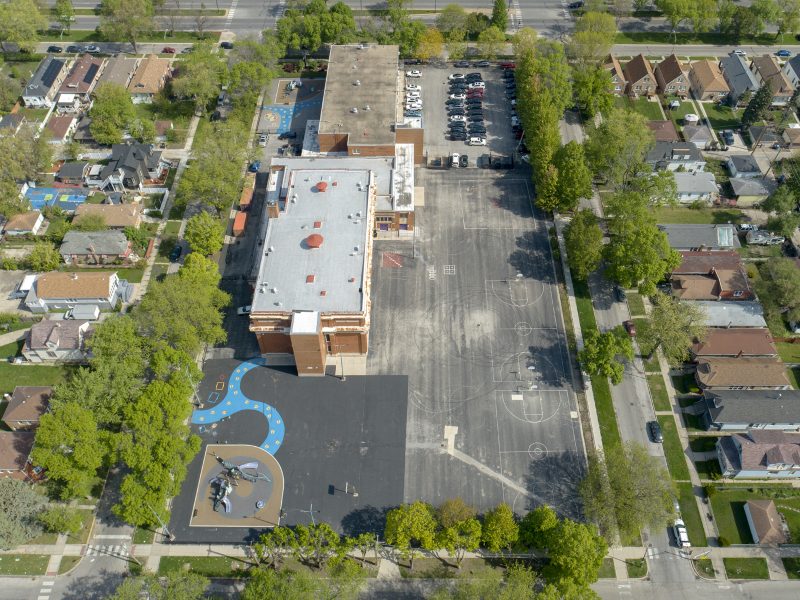
Ryder Elementary is seen here before Space to Grow. Ryder Elementary is seen here after improvements. Photo courtesy of Space to Grow
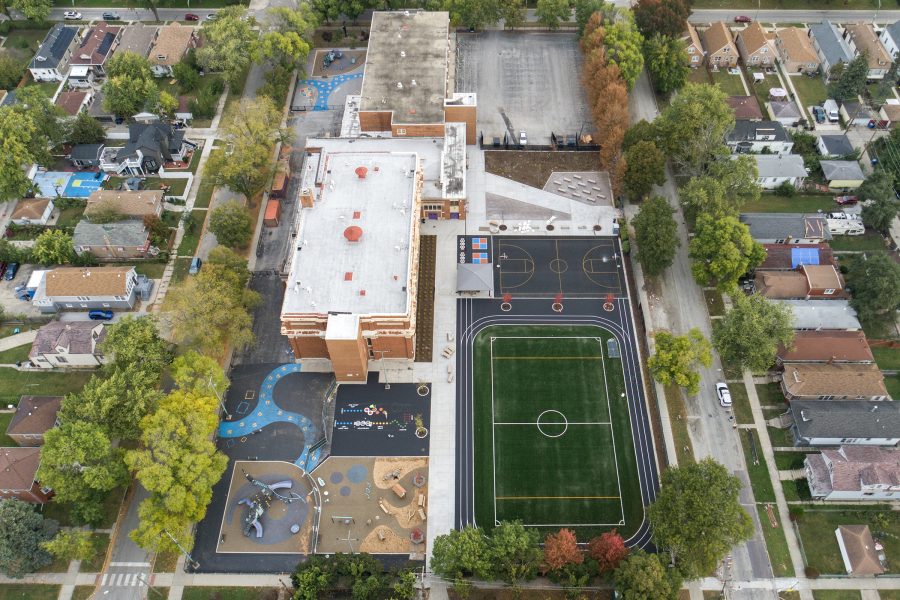
Ryder Elementary is seen here after improvements. Photo courtesy of Space to Grow
s