Story at a glance:
- Moisture management, performance specifications, and material collaboration matter more than ever in low-carbon concrete.
- Protecting durability begins with managing early-age behavior, not avoiding Type IL cement.
The North American concrete industry is in the midst of a material transition. Type IL cement, permitted in standards for decades but now widely adopted, has become a cornerstone of lower-carbon concrete strategies. With its higher limestone content and reduced clinker factor, Type IL cement offers a meaningful reduction in embodied carbon, typically on the order of 10% compared to traditional Type I/II cement.
For designers and specifiers focused on sustainability, this is welcome progress. At the same time, broader adoption of Type IL cement has highlighted the need for thoughtful coordination between material selection, construction practices, and performance expectations, particularly when long-term durability is a project priority.
Same Standards, Different Early-Age Behavior
From a standards perspective Type IL cement is intended to perform similarly to legacy Portland cement and is permitted as a one-for-one replacement. It is not inherently less durable. However, like any blended cement, Type IL can exhibit different early-age behavior depending on limestone quality, fineness of grinding, clinker chemistry, and interactions with supplementary cementitious materials.
These differences most often manifest during placement and finishing rather than in long-term cement chemistry. When early-age behavior is not properly anticipated and managed, surface quality can be affected, creating conditions that may influence durability later in the structure’s life.
For specifiers the key distinction is important: Durability concerns associated with Type IL are not a fundamental material flaw but a downstream consequence of early-age variability if it is not addressed through appropriate mix design, placement control, and finishing practices.
The Role of Early-Set Behavior in Long-Term Durability
Photo iStock, courtesy of Chryso
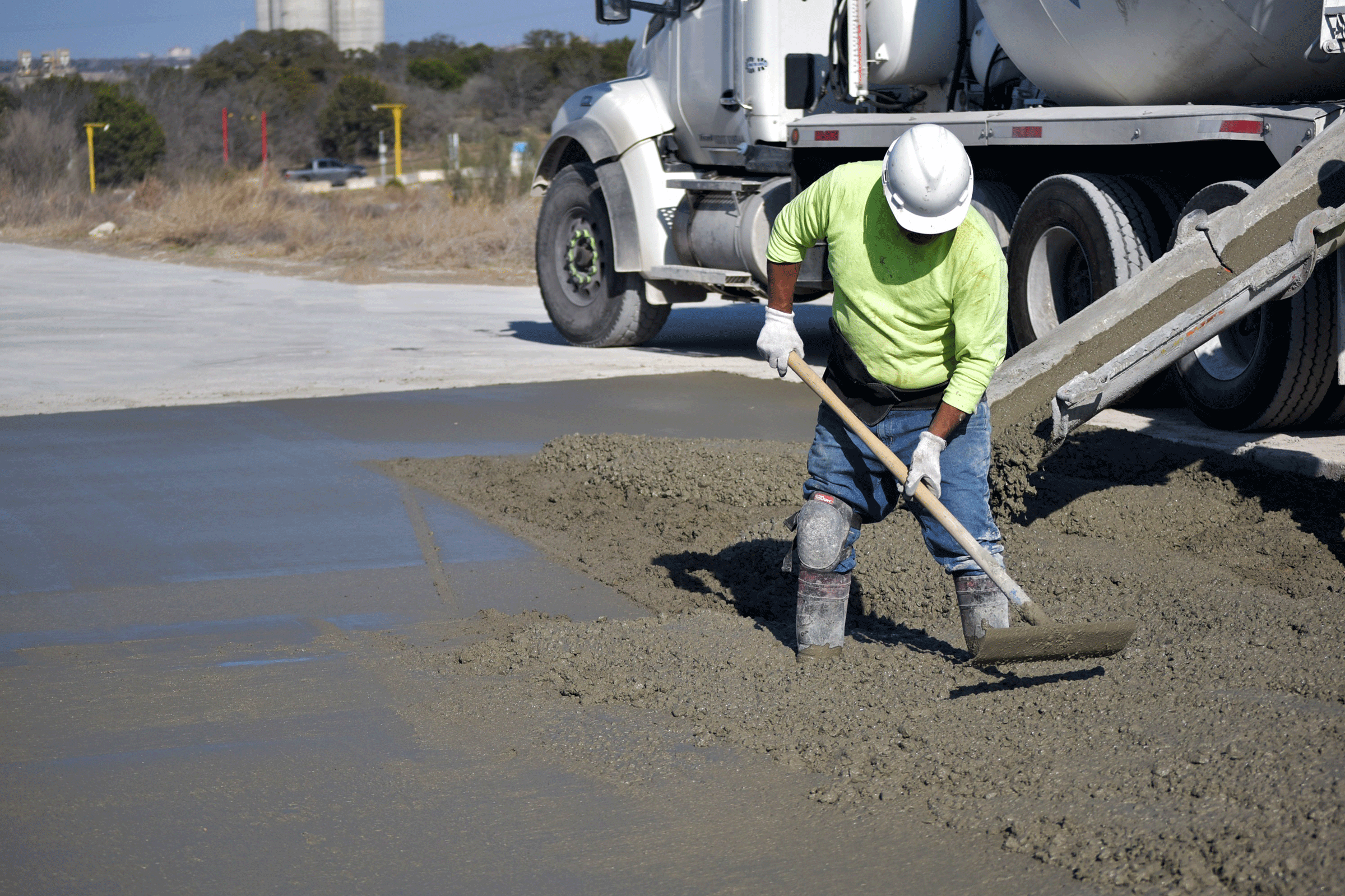
As Type IL cement becomes more widely used, many of the challenges encountered in the field occur during the early stages of concrete placement and finishing. Higher limestone content and finer grinding can influence water demand, setting characteristics, and finishing sensitivity. When these factors are not accounted for, crews may struggle to place and finish concrete within the optimal window.
If excess water is added to improve workability or finishing occurs outside the appropriate time frame, the resulting surface layer may be weaker or more porous. Over time it is these early-age surface deficiencies—not the cement itself—that can contribute to durability concerns like scaling, flaking, or moisture intrusion.
Understanding this cause-and-effect relationship is critical. Protecting durability begins with managing early-age behavior, not avoiding Type IL cement.
Influence of Early‑Age Hydration on Moisture Movement
Moisture remains one of the most significant contributors to concrete deterioration, particularly in exterior applications exposed to freeze-thaw cycling. When water enters the concrete matrix and freezes it expands, creating internal stresses that can lead to cracking, scaling, and surface deterioration over repeated cycles.
In Type IL concrete these risks are not driven by cement chemistry alone but by how early water demand, finishing timing, and surface consolidation are managed. A surface that is overly porous or poorly consolidated provides pathways for moisture ingress later in the structure’s life, increasing vulnerability to environmental exposure.
In this way durability concerns are often the downstream result of early cement hydration variability rather than an inherent limitation of Type IL cement.
The Limits of Topical Protection
Historically topical sealers have been used to reduce water penetration in exterior concrete. These products form a thin surface barrier designed to slow moisture ingress and provide short-term protection.
While effective initially, topical sealers are inherently temporary. UV exposure, abrasion, and weathering gradually degrade their performance, requiring regular reapplication to remain effective.
When maintenance cycles are missed, concrete becomes vulnerable again to moisture intrusion.
From a sustainability and life cycle perspective this reliance on ongoing maintenance matters. Repeated applications increase material use, labor, and long-term cost, and overall durability becomes dependent on continual intervention rather than the inherent resilience of the concrete itself.
Supporting Durable Performance Through a Flexible Toolkit
Because early-age behavior plays such a critical role in long-term performance, producers increasingly rely on a range of complementary strategies to stabilize Type IL concrete and protect surface quality. No single solution addresses every challenge, and effective approaches must be adapted to local materials, exposure conditions, and construction practices.
Workability and finishability enhancing solutions like Chryso’s V-Mar, help crews place and finish Type IL concrete within the appropriate window, reducing the temptation to add water and supporting proper surface consolidation. Other tools may focus on set control, strength development, or moisture management, depending on project-specific risk factors.
This flexible, problem-first approach allows producers to meet durability objectives defined by the specification without resorting to overly prescriptive mix requirements or compromising sustainability goals.
Managing Moisture as a Performance Outcome
In applications where moisture exposure and freeze-thaw cycling are primary durability concerns, some producers incorporate pore-blocking technologies as part of a broader performance strategy. Polymer-based admixtures like Chryso PoreTite 110 work within the concrete matrix to reduce capillary pore connectivity, limiting water absorption without altering fundamental concrete properties like workability, strength development, or finishability.
This approach is not about prescribing a specific product; it is about achieving a defined performance outcome, reduced moisture movement, and improved long-term surface durability. When used appropriately pore-blocking technologies can help mitigate the downstream consequences of early-age variability rather than relying solely on surface treatments applied after construction.
For specifiers this reinforces the value of defining durability objectives clearly while allowing flexibility in how those objectives are achieved.
Defining the Right Performance Outcomes
For specifiers the critical question is not whether Type IL cement can be used successfully but how performance success is defined.
Depending on climate and application, relevant performance outcomes may include:
● Freeze-thaw resistance
● Reduced water absorption or permeability
● Resistance to surface scaling and efflorescence
● Long-term aesthetic performance
● Durability aligned with sustainability and life-cycle goals
When these outcomes are clearly articulated, producers and material experts can collaborate to design solutions that meet both durability and carbon-reduction objectives.
Collaboration as a Solution
Durability in a Type IL world is achieved through collaboration. Early engagement among specifiers, producers, and material specialists allows teams to align performance expectations with real-world materials and construction practices.
By focusing on outcomes rather than prescriptions, designers can support innovation, reduce risk, and help ensure low-carbon concrete systems deliver the long-term performance owners expect.
Type IL cement does not change the importance of durability; it changes how durability is achieved. The question for specifiers is how to define performance clearly enough to allow the industry to deliver durable, sustainable concrete with confidence.
If you’re evaluating how early-age behavior, durability performance, and sustainability intersect on your next project, are your specifications enabling collaboration, or unintentionally limiting it?
Chryso’s technical and sustainability experts work alongside designers and producers to help translate performance objectives into durable, low-carbon concrete solutions.