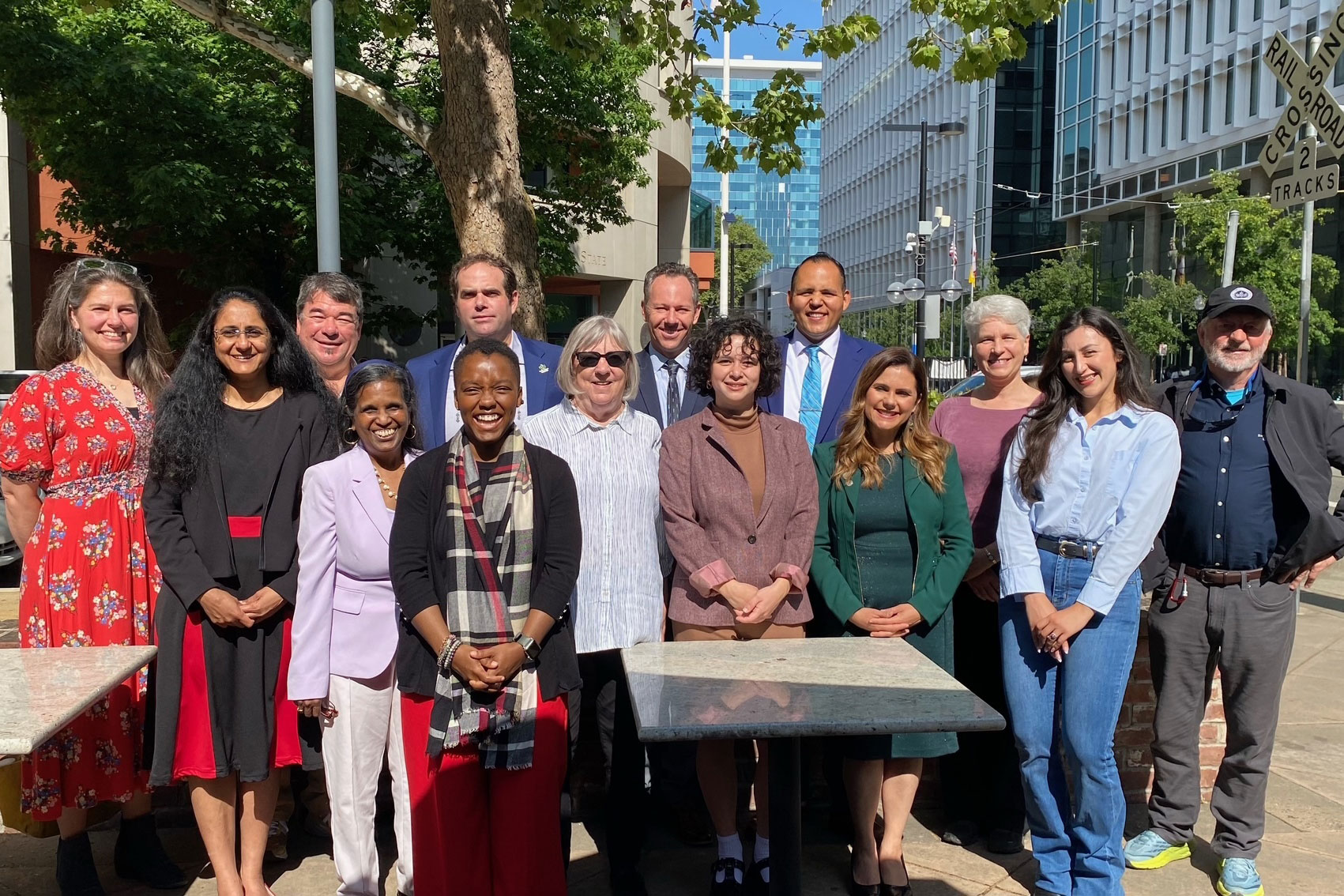
Story at a glance:
- USGBC-CA celebrates National Women’s Month with recognition of women in the green building industry.
- A report from McKinsey & Co. reveals that executive teams with at least 30% women outperform those without gender diversity by double digits.
- A q&a with USGBC-CA leaders on how and why women are paving the way for a more sustainable future.
The theme for Women’s History Month 2026, designated by the National Women’s History Alliance, is “Leading the Change: Women Shaping a Sustainable Future.” This theme celebrates women who are building stronger communities, advancing equity, and developing systems for long-term environmental, economic, and social sustainability.
Traditionally men have been primarily associated with the building industry. But as we celebrate National Women’s Month, we are pleased to find that the green building industry uplifts a large and powerful base of impactful women, and a leading green building organization, USGBC California, mirrors this support.
The nonprofit organization that supports professionals and advocates across all sectors and levels of the built environment and green economy has a woman-dominant staff; a C-suite that is three-fourths women, and a majority-women board that has had a woman chair most of the last dozen years, including currently. The results from a McKinsey & Co. report (more below) show us executive teams with at least 30% women outperform those without gender diversity by double digits.
We hear from three women leaders at USGBC California on why they and women generally are often the movers and shakers in this space:
What do women bring to the movement around sustainability, resilience, and equity?
Melanie Peck, chief programs officer at USGBC California: When we talk about the climate crisis we have to recognize that it’s deeply intertwined with the existing cracks in our social fabric. In the US women often face a double burden, where systemic economic inequality meets a heavy responsibility for caregiving; when a climate emergency hits it’s usually women who have to forgo paid work to keep their families afloat. We see this play out in the data. Take California, for example, where nearly a third of women-led households are “energy-burdened,” meaning a massive chunk of their income goes just to keeping the lights on.
Because women also make up nearly 60% of the elderly population most sensitive to extreme heat, these risks aren’t just theoretical; they are life-and-death.
But the most inspiring part of this story isn’t the vulnerability; it’s the leadership. Women have become the absolute nucleus of environmental justice because they tend to lead through collaboration, trust-building, and a holistic view of how systems work. The results are actually staggering: Research shows companies with gender-diverse boards are 60% more likely to cut their energy consumption, and on a national level, increasing women’s political empowerment leads to a significant double-digit drop in carbon emissions. By reframing “care work” as a vital form of climate resilience, women are moving us past short-term fixes and toward a long-term, equitable vision for the future. They aren’t just participating in the movement; they are the blueprint for how we’re actually going to solve this.
Robyn Eason, senior advisor of policy and advocacy at USGBC California: When we think about our grandmothers, our mothers, our sisters, our aunties, our daughters, and even Mother Earth herself, the through-line connecting them all is that they are nurturers. Women bring an inherent ability to love—to lead with love, to care with love, to inspire with love, to co-create with love, to design with love, to protect with love, and to love fiercely.
This capacity for great attunement with the environment, for designing with dignity, for seeking values-driven community-led solutions, and for centering perspectives and lived experiences often overlooked yield outcomes in the built environment that are multi-faceted and multi-layered. Frequently holding multiple roles in a household (parent, elder caregiver, daily household duty holder, income earner outside the house, etc.), women regularly bring viewpoints from these roles into the intersectional sustainability movement, be it in building design, policymaking, advocacy, community programming, and other pathways for impact.
Carrie Hester, chief development officer at USGBC California: Women are foundational to community engagement, often driving initiatives through volunteering, social networks, and grassroots organizing. Studies show us women are more likely to participate in civic activities. They are crucial for building healthy communities, serving as change agents, and fostering social cohesion. Our sustainability work across industries rely deeply on stakeholder engagement, and women play a critical role.
Why is Workforce Development at the center of so much discussion right now, and how has your path, Melanie, helped you connect all the dots, envisioning pathways, for example?
Peck: At its core workforce development is more than just job training; it is the intentional alignment of human potential with the economic needs of the future. In California we are standing at the intersection of a massive green boom and a rapid technological shift. While sustainability already supports hundreds of thousands of jobs, meeting our 2030 climate mandates requires preparing nearly one million new professionals. This is the single most important investment we can make: creating a future-proof ecosystem of workers who are as adaptable as the technology they manage, from smart grids and predictive analytics to the essential construction trades.
My own path—spanning roles as a teacher, climate disaster volunteer, and apprenticeship leader, to executive positions at Seattle City Light and The Energy Coalition—has taught me that high-level strategy only works when it connects to the individual. Now, as chief program officer at USGBC California, I’ve seen firsthand that everyone deserves the dignity of a family-sustaining career. As an architect of human systems, my goal is to ensure this pipeline is inclusive, especially for those historically sidelined. We aren’t just fixing buildings; we are rebuilding the middle class through the lens of environmental and economic justice. By reframing community care as a form of climate resilience, we aren’t just reacting to the future—we’re leading it.
How does the strategic investment in and integration of workforce development and advocacy-driven policy create a force multiplier effect for USGBC California’s mission?
Peck: At its core our work is about playing the role of the ultimate connector and convener in California’s green transition. By tying workforce development directly to our advocacy, we create a “force multiplier” that turns high-level policy into real-world community wealth. We aren’t just pushing for tougher building standards in a vacuum; we’re simultaneously building the talent bridge through programs like our Green Building Corps, which provides hands-on internships to students and early-career professionals.
A big part of that impact is building capacity for the long term; we aren’t just training individuals; through our California Building Performance Hub we are helping organizations and businesses scale up so they actually have the infrastructure to support and mentor this incoming wave of workers. We also bridge the gap for innovators through our Net Zero Accelerator, ensuring that as new technologies emerge, we have the human systems in place to deploy them. This approach flips the script: instead of climate policy feeling like a regulatory headache, it becomes a shared engine for economic mobility. By bringing together building owners, policymakers, and a diverse, future-proof workforce, we’re making sure the shift to net-zero is a deeply human win that lifts up our entire ecosystem
Robyn, what do you appreciate about Policy as a change agent in this space, in particular, and what got you interested in policy+sustainability?
Eason: Policymaking is not for the faint of heart. It is a potent avenue for change at a broad scale and requires a thoughtful approach that considers the complexities of multiple scenarios all at once. In sustainability, the complexities of policymaking are amplified because of how intertwined and interconnected the sectors are. Policies on energy use in buildings can be impacted by policies on indoor water use. Policies on outdoor water use can be impacted by policies on site design. And on and on. So it takes a massive amount of knowledge and know-how to successfully design and subsequently implement policies that yield intended outcomes.
I became interested in policymaking after working on the project planning and implementation side of the work for many years. During that time I often realized there were so many decisions that were made upstream that impacted what one can or cannot do downstream. This made me really curious about what it could be like to work at the policy level, where I can collaborate with community members, industry experts, knowledge holders, and other leaders to influence what happens in the built environment at a macro scale. The rewarding part about this work are constant lessons being learned, a constant need for policy updates and keeping up with industry trends, and constant need for feedback loops with those implementing the policies. Nothing remains static and if we are lucky, we see the ripple effect of impact over time.
When considering your area of Development, Carrie, what are the most important characteristics women bring to this field, and what is most important to consider about Development in today’s world?
Hester: Women bring a relationship-based transformational approach to development, focusing on trust, transparency, and long-term engagement rather than just transactions. They drive innovation through impact-focused giving and storytelling, often leading in areas like sustainability, social justice, education, and health. This research also tells us women bring high emotional intelligence, empathy, and active listening to donor stewardship—focusing on the donor’s priorities instead of the organization’s. This type of leadership has real results of impact. The results show us executive teams with at least 30% women outperform those without gender diversity by double digits. Women make an impact.
Women are also largely the ones who make the decisions regarding donations. Women are either the sole decision maker or at least an equal partner in charitable decision making in nearly 90% of high-net-worth households. Women also hold a significant and rising share of corporate sustainability leadership roles, with 54 to 63% of sustainability executive positions at large companies held by women. If you’re not yet convinced of the growing philanthropic power of women, female-controlled assets are now projected by McKinsey to nearly double to $34 trillion, representing about 38 percent of total US assets, by 2030. There is a moral and financial case for women in leadership.
More About These Leaders
Peck is a strategic organizational leader dedicated to the intersection of equity, sustainability, and the built environment. As chief program officer for USGBC-CA she oversees the design, delivery, and impact of the organization’s entire program portfolio, ensuring that California’s transition to a sustainable future is both high-impact and human-centric.
With more than 20 years of experience architecting large-scale initiatives and leading with her “people-first” philosophy, Peck specializes in translating complex climate goals into measurable community outcomes. Her deep expertise in program design was honed through senior leadership roles, including serving as director of people and culture at Seattle City Light—one of the nation’s greenest municipal utilities—and as director of workforce, education, and training at The Energy Coalition, where she led statewide environmental and community engagement initiatives.
Eason is a fun-loving, challenge-seeking professional who exists to do the work of a human being embodying empathy, compassion, and love. Her experience incorporates the vast array of systems thinking, strategy, and expertise necessary to nurture human-centered approaches to sustainability through change management and targeted universalism. From 2016 to 2022 she built an award-winning sustainability program for the City of West Hollywood that anchored the intersectional components of the field that helped amplify inclusivity, reciprocity, and equitable outcomes. She held many roles at USGBC and GBCI from 2009 to 2016 including direction of certification activities for LEED for Neighborhood Development, and LEED review execution and quality control responsibilities for the LEED Building Design and Construction Rating system. Eason holds a Bachelor of Science in Architecture and a Bachelor of Civil Engineering from The Catholic University of America in Northeast Washington (DC) and a Master’s in City and Regional Planning from Clemson University in Clemson (SC). She has served in various leadership roles within the American Planning Association, the Urban Sustainability Directors Network, the Urban Land Institute, and co-founded the California BIPOC Sustainability Network.
Hester is a part of the USGBC-CA family as its chief development officer. With more than 20 years of experience in program development and advancement, Hester is passionate about people and the planet. She has served several organizations such as The Y to grow their fundraising and advancement strategy. As a former Starbucks partner, she was a founding chair of Partners for Sustainability LACCAL building the infrastructure to provide education, fellowship, and community opportunities for baristas in sustainability. She received her Bachelor’s of Science in Management and Master’s of Business Administration with a concentration in digital innovation and information systems from Pepperdine Graziadio Business School.
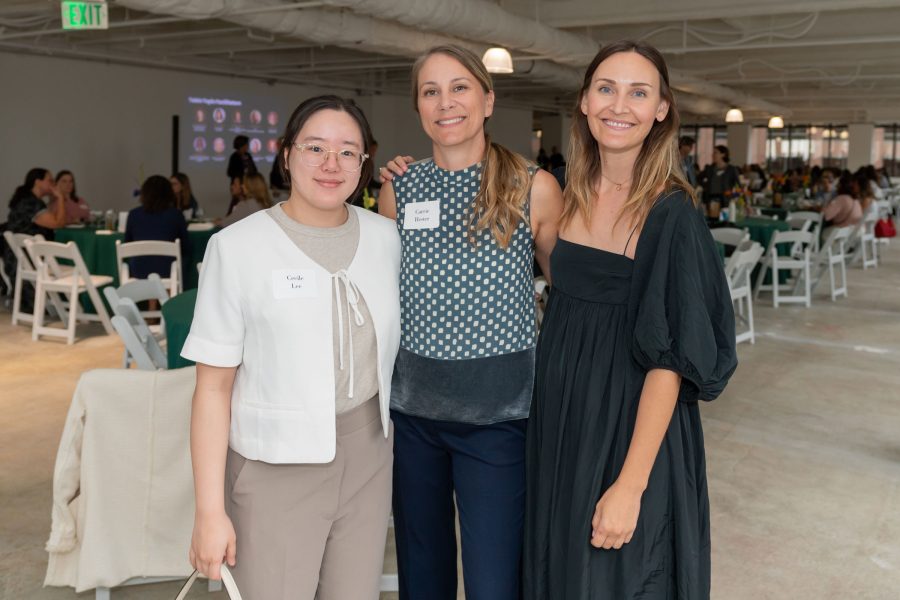
Carrie Hester (center) with USGBC-CA’s Cecile Lee and Kim Krempien, at USGBC-CA’s 23rd Women+ in Green Breakfast 2024. Photo courtesy of USGBC California
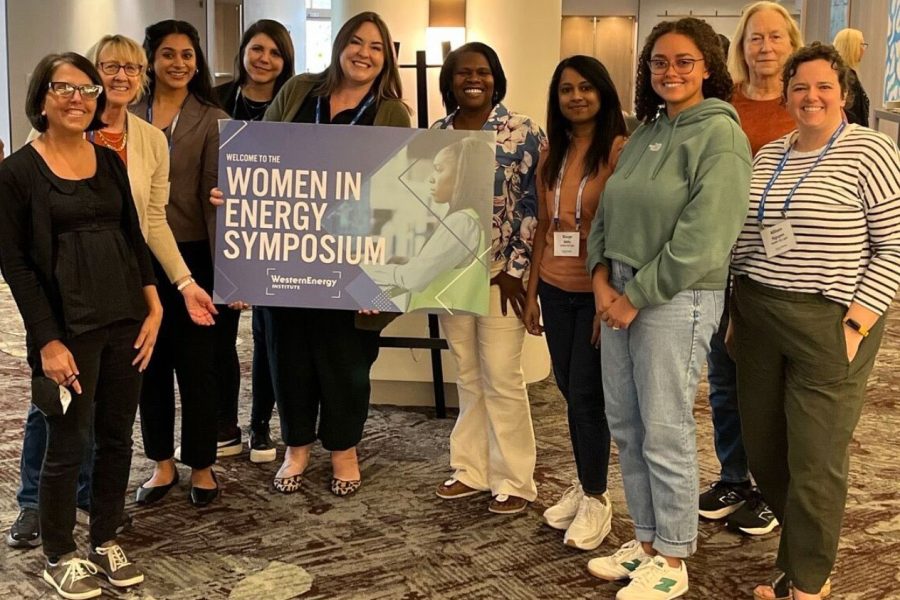
Melanie Peck (fourth from left) attends the 2024 Women in Energy Conference. Photo courtesy of Melanie Peck