Story at a glance:
- USTA celebrates 20 years of its green program with a growing commitment to the environment in 2027.
- The reimagined Louis Armstrong Stadium represents the culmination of the USTA’s 10-year master plan to transform the Billie Jean King National Tennis Center into a world-class, sustainable sports and entertainment venue.
As the United States Tennis Association (USTA) prepares for its 20th anniversary of their green program in 2027, it’s committed not only to getting people excited about the sport; it’s also excited to grow its sustainability program.
Bina Indelicato has worked with the USTA as their LEED and sustainability consultant since 2008. “The inspiration for the USTA’s Green initiatives for the US Open came from Billie Jean King, who wanted to incorporate sustainability into the US Open when the National Tennis Center was renamed the USTA Billie Jean King National Tennis Center.”
The first steps in the sustainability program started in 2008 with recycling plastic bottles. That quickly grew to include composting food waste and enhancing the recycling of cardboard and glass. As the years have gone by, USTA has done everything from add water refilling stations in its facilities to reduce the dependence on single-use plastics to partner with companies like Ralph Lauren for polo shirts made from recycled plastics from the previous US Open. Now they’re looking for new ways to connect with fans while promoting a greener lifestyle, from encouraging people to take public transit to events to choosing plant-forward menu items.
“Sustainability has the greatest impact when many people take small steps, rather than a handful taking big leaps,” she says. “Sports gives us a stage to inspire people to take those small steps towards a greener world.”
In 2025 USTA diverted 100 tons of food waste from the landfill and recycled 133 tons of cardboard, 77 tons of glass, and 10 tons of plastic—enough to fill 22 recycling trucks. They also offset 13 million travel miles of players, officials, employees, and fans over finals weekend by purchasing high-efficiency cookstoves in Africa, which reduce the equivalent carbon emissions. They reduced energy use with LEDs and natural ventilation, protected the night sky with light fixtures that significantly reduce light pollution, and they reused and recycled more than 15,000 tennis balls.
Sustainability in Action
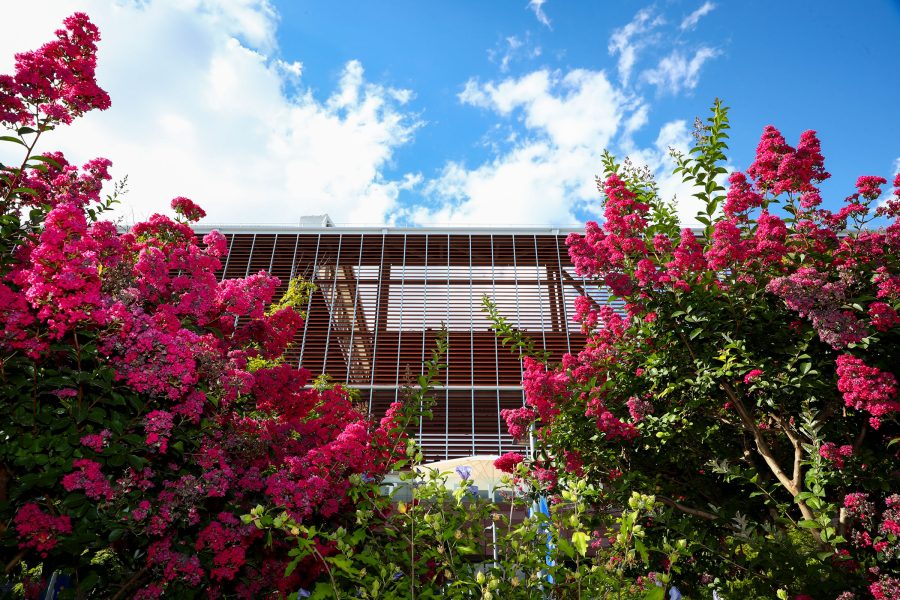
Flowers bring colors to the grounds of the 2024 US Open in Flushing, New York. Photo by David Nemec, courtesy of USTA
The Louis Armstrong Stadium is just one example of how USTA’s approach to sustainability shows up in its buildings. Opened in 2018, it was part of a campus transformation undertaken by the USTA that started five years earlier. “Armstrong Stadium was the last major piece of Phase 1 of the strategic vision plan. This transformation also included a transportation building and a new Grandstand stadium, both of which were LEED-certified,” Indelicato says. “When this transformation started the US Open green initiatives were almost a decade old, so incorporating sustainability into the construction projects seemed like a natural transition.”
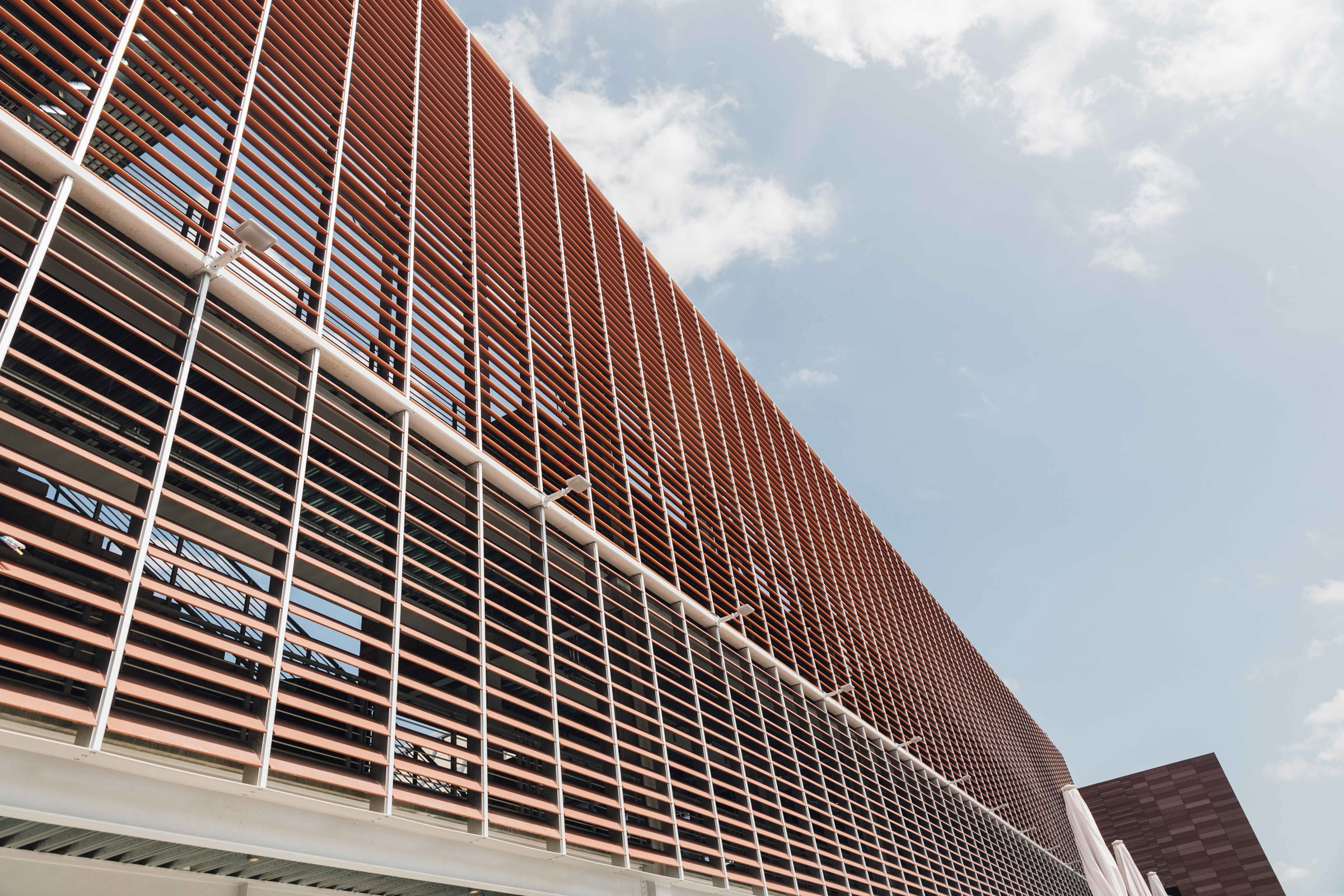
Armstrong was the world’s first naturally ventilated tennis stadium, resulting in using 30% less energy than a standard building. It also uses 40% less water than standard buildings, Indelicato says. Landscaping around Louis Armstrong Stadium is designed to use 55% less water than traditional landscaping, and waste generated onsite Armstrong is recycled and composted to reduce the amount of waste sent to landfills. Current renovations of Arthur Ashe Stadium and the new Player Performance Center (PPC) also employ sustainable design strategies, including a green roof in the PPC, water-efficient fixtures, LED lights, and other sustainable construction materials.
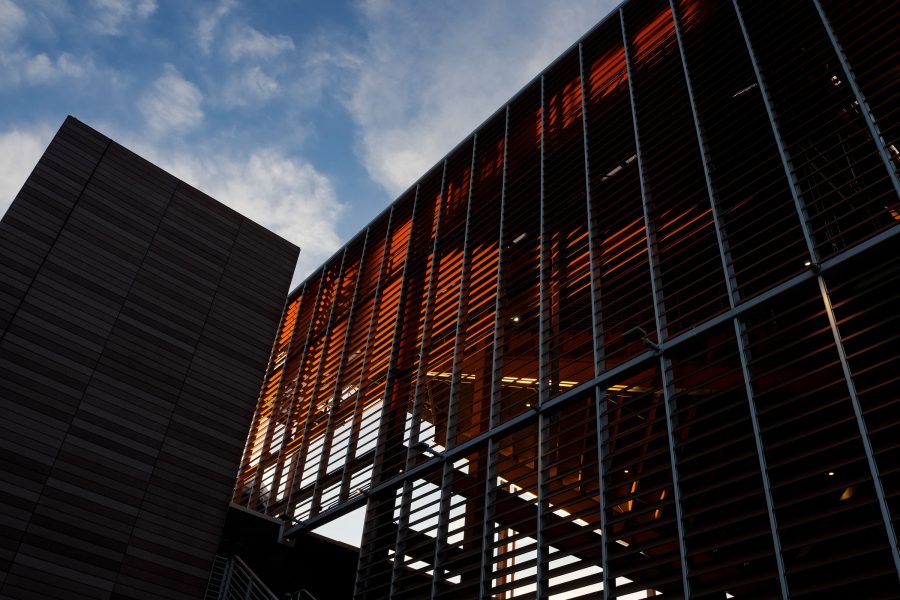
The Louis Armstrong Stadium is seen here at sunset at the 2025 US Open in Flushing, New York. Photo by Jeff Dean, courtesy of USTA
“Being a good neighbor is a year-round commitment for the USTA, as the National Tennis Center remains open to the public throughout the year outside of the US Open,” Indelicato says. “The complexities that present themselves during the US Open are certainly different from those we encounter the rest of the year, so managing the right balance of sustainability initiatives to maintain a positive impact year-round is always something we’re striving toward.”
Originally designed by ROSSETTI, which joined HOK in 2026, the reimagined Louis Armstrong Stadium represents the culmination of the USTA’s 10-year master plan to transform the Billie Jean King National Tennis Center into a world-class sports and entertainment venue. Armstrong, the second-largest stadium on campus, is on the same footprint as the original stadium. It aligns with the USTA’s vision of creating open, daylit environments for tennis matches while offering weather protection when needed.
Since its opening Louis Armstrong Stadium has redefined the US Open experience, earning widespread acclaim for its innovative sustainable design with passive cooling systems, water-efficient fixtures, and resource-conscious landscaping, all helping it earn the stadium LEED Silver.