Story at a glance:
- Architects at Gensler celebrate the lessons learned along the way in pursuing LEED.
- The leading architecture firm took an integrated design approach to a high-performance mass timber project in Texas.
Mention LEED certification, and many people picture scorecards, documentation, and uploaded forms. But the real value of LEED is not found in the paperwork; it is found in the process that pushes project teams to make better decisions from the start.
For the teams who live it daily, LEED becomes a framework for measuring performance, creating accountability, and delivering buildings that are healthier, more efficient, and more resilient.
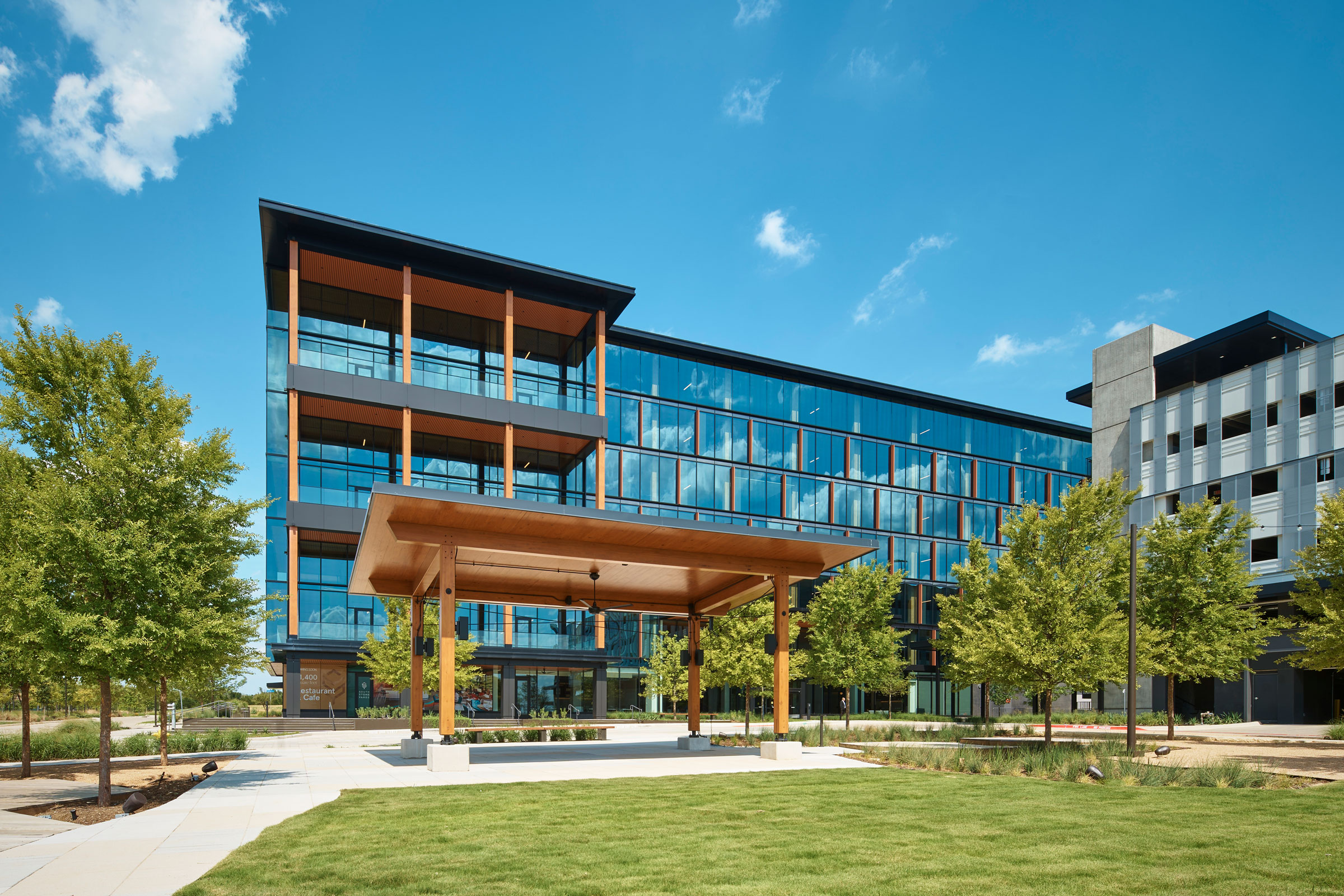
At The Offices at Southstone Yards in Frisco, Texas, LEED certification was never treated as a finish line exercise. It guided decisions from the earliest conversations through project completion, bringing architects, engineers, contractors, commissioning agents, and ownership representatives together around a shared goal: creating a building that would perform better for its occupants, the environment, and the owner.
The project began with familiar objectives—maintain budget and schedule expectations, meet the owner’s operational needs, and deliver a successful commercial development. Yet with Southstone, the project was never intended to be conventional.
As one of the first large-scale mass timber office projects in the US, Southstone Yards offered an opportunity to challenge conventional assumptions about commercial construction. The project team saw the building as more than office space. It was an opportunity to demonstrate how thoughtful design could reduce embodied carbon, create a stronger connection to nature, improve occupant well-being, and highlight a different path forward for sustainable development.
That ambition is where LEED added momentum. The certification process challenged the team to broaden its definition of success. Rather than asking only, “Can we build it?” the team began asking, “Can we build it better?”
Early planning meetings became working sessions focused on performance, resilience, and long-term value. The team evaluated opportunities that might not have surfaced through a traditional project delivery process. They began asking questions that extended beyond traditional project objectives:
- Could energy consumption be reduced without sacrificing occupant comfort?
- Could water usage be minimized while maintaining tenant expectations?
- Could material selections support both design intent and occupant health?
- Could construction practices reduce waste and environmental impact while still supporting project delivery goals?
Those questions became part of the project’s DNA. Throughout design, sustainability was not treated as a separate workstream. It was woven into the project’s larger decision-making process. The design team explored materials not just for aesthetics, durability, and cost but also for environmental impact, recycled content, and contributions to healthy indoor environments. Engineers analyzed building systems with a focus on long-term efficiency, evaluating opportunities to reduce energy consumption and operational costs over the life of the building. Contractors worked closely with the design team to identify practical ways to support sustainability goals during construction.
As the project advanced, collaboration became one of the most valuable outcomes of the certification process. Energy strategies informed architectural decisions. Material selections were evaluated alongside indoor air quality goals. Construction activities were coordinated to protect sustainability strategies developed during design.
The process created shared accountability across disciplines. That accountability continued during construction. Waste diversion efforts, indoor air quality management practices, material tracking, and construction documentation helped translate design intent into measurable outcomes. The contractor played a critical role in ensuring that sustainability goals established during design were implemented in the field.
Southstone Yards also demonstrated how thoughtful design decisions can reduce environmental impact long before materials arrive onsite. The project’s extensive use of prefabricated mass timber assemblies significantly reduced construction waste by minimizing field cutting and material offcuts. Simple strategies like reusing wooden pallets for storage and material transportation further reduced waste during construction.
The building’s biophilic design approach also contributed in unexpected ways. The exposed mass timber structure not only reduces embodied carbon but also creates warm, natural spaces that strengthen occupants’ connection to the materials around them. By exposing mass timber and reducing reliance on traditional commercial finished materials like acoustic ceiling tiles, wall panel systems, and carpet tiles throughout much of the building, the project reduced both material consumption and the packaging waste typically associated with those products. Sustainability was not achieved through a single innovation but through hundreds of deliberate decisions, contributing to a lower-impact outcome.
The project’s journey culminated in commissioning—one of the most important and often overlooked aspects of LEED certification. Commissioning provided independent verification that building systems operated as intended. Equipment was reviewed, tested, and optimized; design assumptions were validated; and operational issues were identified before occupancy. This process helped bridge the gap between design intent and actual building performance.
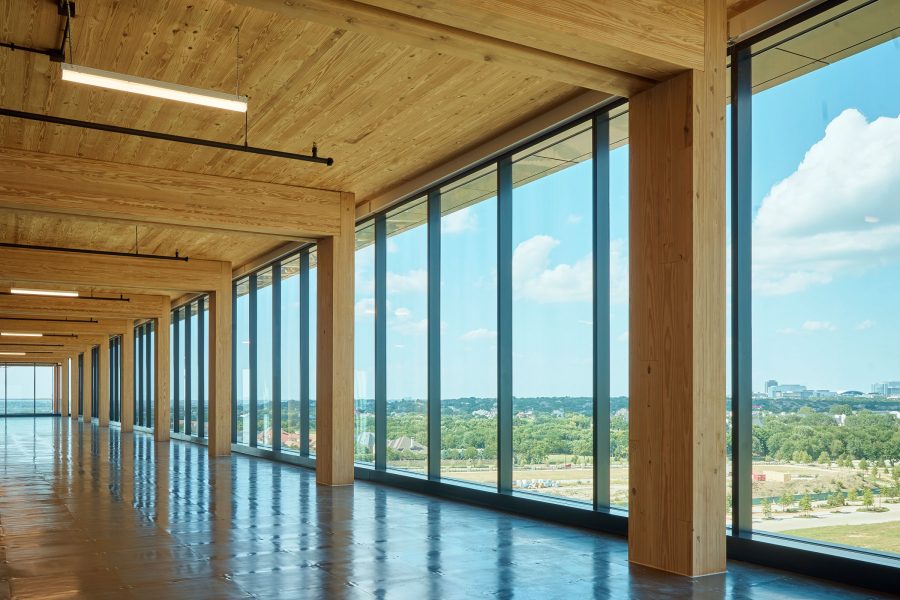
Photo by Ryan Conway, courtesy of Gensler
By the time Southstone Yards achieved LEED, the certification represented far more than compliance with a rating system. It reflected hundreds of decisions, dozens of collaborative discussions, technical analyses, field observations, performance reviews, and a shared commitment to deliver a building that performed at a higher level.
Most people see the certification plaque. What they do not see are the energy modeling sessions, the material evaluations, coordination meetings, construction practices, and commissioning reviews that made it possible. Those moments are where the real value of LEED is created. The impact of those decisions extended beyond the design and construction process, translating into measurable outcomes that continue to deliver value long after project completion.
Southstone Yards achieved LEED v4 BD+C: Core and Shell Gold Certification and One-Star Fitwel Multi-Tenant Base Building Certification, recognizing both the project’s environmental performance and its commitment to occupant health and well-being. Compared to a baseline building, the project achieved a 13.6% improvement in energy performance and a 43.46% reduction in indoor potable water use. Its mass timber structural system delivered significant embodied carbon benefits, contributing to a 23% reduction in global warming potential and approximately 34% carbon savings compared to an equivalent concrete structure.
These outcomes demonstrate that the project’s sustainability goals were not theoretical aspirations. They became measurable improvements that will continue delivering environmental, operational, and occupant benefits throughout the life of the building.
Together these outcomes demonstrate a fundamental truth about LEED certification: The plaque is not the achievement. The achievement is the journey required to earn it.
Documentation gives that journey credibility. It turns good intentions into verified results, proving that energy, water, material, and carbon strategies were not simply promised but achieved.
LEED creates a framework for measuring what matters most in a building: energy use, water consumption, material impacts, indoor environmental quality, occupant well-being, and long-term performance. By measuring those factors project teams can manage them, improve them, and deliver better outcomes.
LEED’s greatest contribution is not measurement alone. It is the collaboration, accountability, and innovation that measurement makes possible. Projects like Southstone Yards demonstrate that the real value of LEED is not found in a scorecard or a plaque but in the decisions made along the way: Engineers evaluating better-performing systems, contractors reducing waste, architects selecting healthier materials, and owners investing in long-term value.