Story at a glance:
- A Norwegian company proves that even the design of a simple bench can affect people’s behaviors.
- Designers and architects point to a growing need for furniture that brings people together.
- Vestre designs have been proven to hold up for decades, with durable, sustainable materials and styles people love.
Picture a bench. Perhaps it’s a linear piece of wood and steel. Maybe one person is sitting on one side, and another person is on the other. It’s unlikely that anyone will sit in the middle, personal space being at a premium in many places.
On many benches in the US, you couldn’t sit in the middle if you wanted to, as dividers that double as uncomfortable armrests deter people from lying down or staying too long. But what if a piece of outdoor furniture could bring people together?
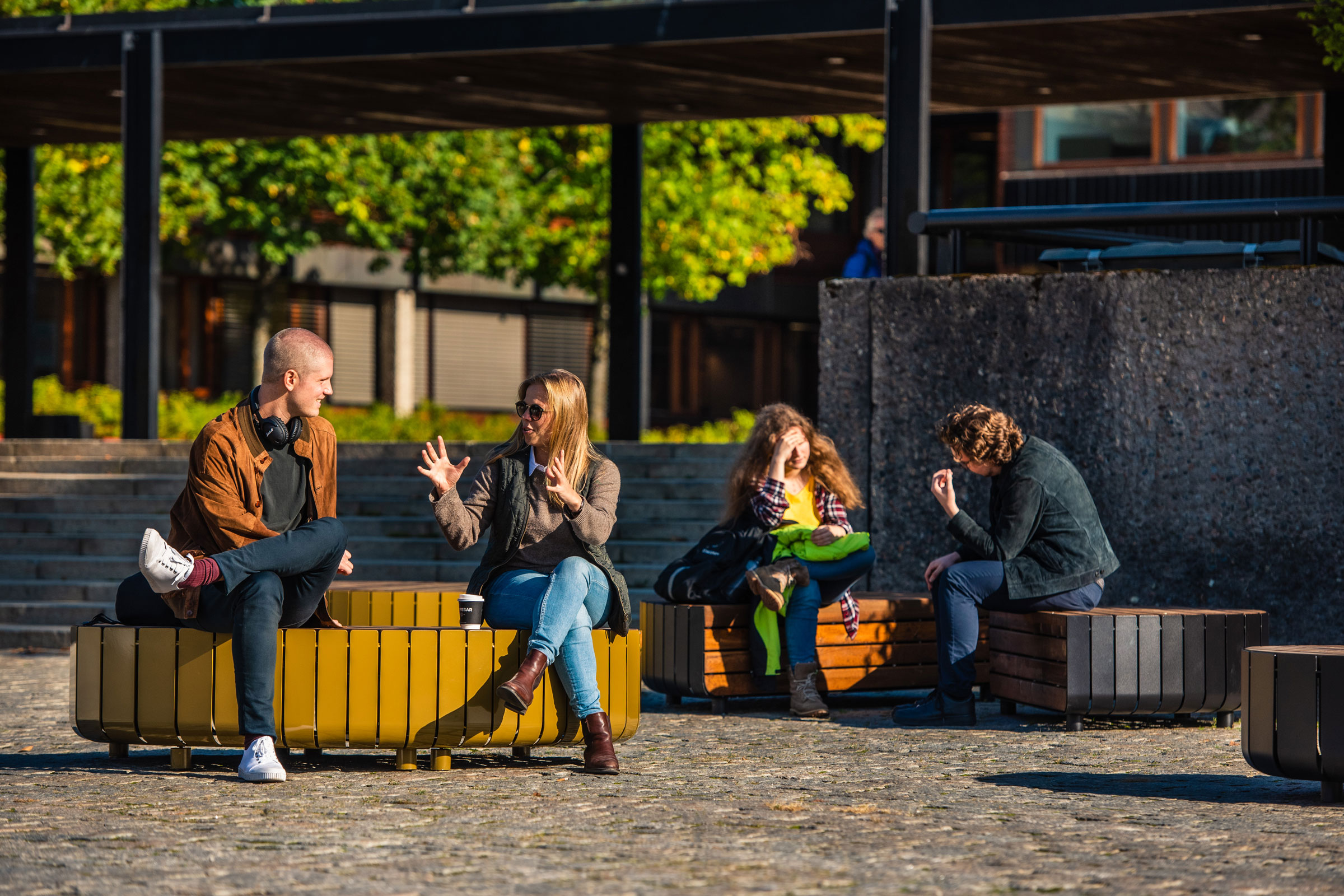
“We started playing with shape, and we started to see how shape can help people behave differently, maybe even sit a bit closer,” says Kristoffer Vestre, chairman at Vestre, the Norwegian, family-run company that dates back to 1947. The business has become known for its outside-the-box designs that encourage everything from interaction to a sense of playfulness in public spaces.
Kristoffer says designing for connection feels more important now than ever. “There are a lot of people living in big cities. A lot of people live alone. There’s loneliness and other challenges that come with that. For a lot of people the park is their backyard. It’s the space where they can go and feel part of something bigger in terms of the human aspect.”
And why does a bench have to be linear at all? “If you have a circle you can sit a bit closer because you don’t have direct line of sight to the person next to you. Maybe you sit back to back. If you sit closer you can also have more people sitting around one bench and be more comfortable and maybe strike up a conversation.”
The Study of Spaces
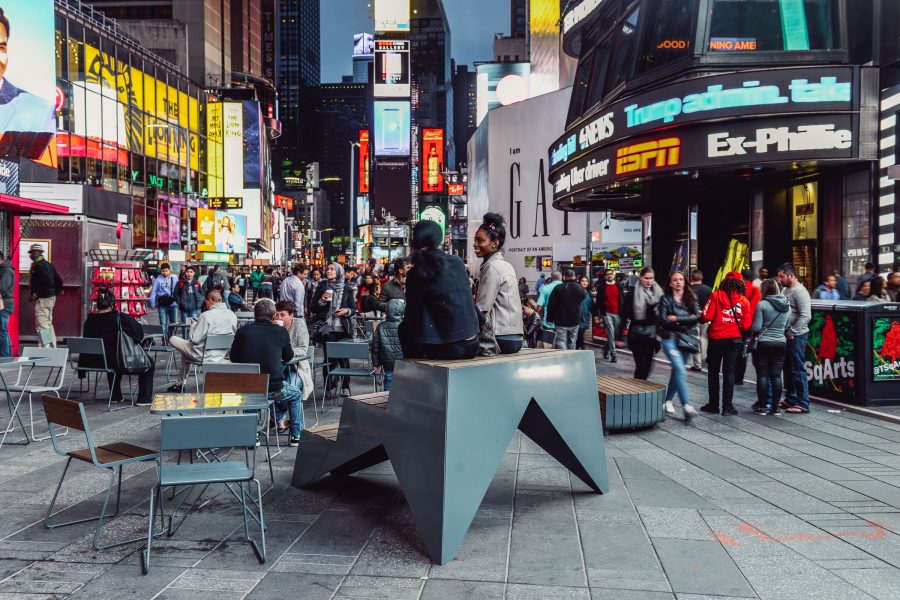
STOOP has been very popular in places like Times Square. “I joke that it’s the most Instagrammed bench in the world,” says Kristoffer Vestre. “People love to walk up to the top step and have their photo taken.” Photo courtesy of Vestre
Vestre has been particularly interested in proxemics, or the study of how people use and experience physical space during social interactions, including experimenting with mock-ups and prototypes as part of product development. One example of a popular innovative product is STOOP, designed by Julien De Smedt. “It’s a whole new way of thinking about a bench because it’s almost like a mini amphitheater,” Kristoffer says.
STOOP has been very popular in places like Times Square. “I joke that it’s the most Instagrammed bench in the world,” Kristoffer says. “People love to walk up to the top step and have their photo taken. I’ve seen whole families sitting and having lunch on that bench. Kids play hide-and-seek underneath it. It was very different from anything we had done before, but we made a bet. We said, ‘Let’s put it out there and see how people respond.’ And people responded.”
STOOP’s shape means an urban auditorium can be created using several benches, with each bench being able to accommodate up to nine people. The Stoop Mini bench is a smaller version and works as a playful social meeting place based on the universal idea of using steps as seating.
Furniture’s Role in Placemaking
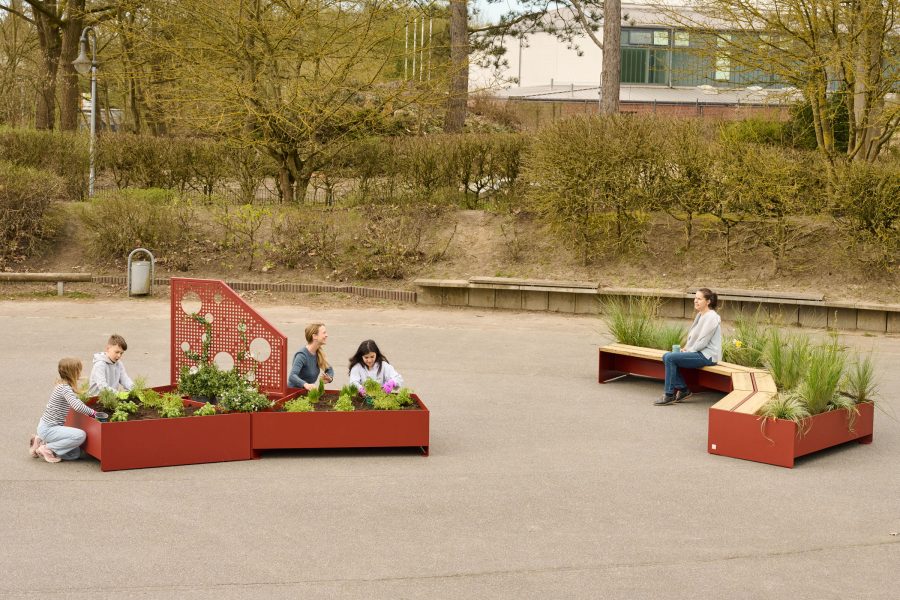
Launched in 2025, UNITY is a modular bench system that is inviting and inclusive. The design breaks up the frequent flatness of urban spaces and brings in nature and movement with interesting geometry, seating, and planters. Photo by Félix L. Salazar, courtesy of Vestre
“The need for places like this is bigger than ever,” echoes Viktoria Millentrup, project lead on The Plus, Vestre’s manufacturing plant designed by Bjarke Ingels Group. The plant opened in 2022 in Magnor, Norway, a town of less than 1,000 people.
Millentrup was feeling burnt out with architecture when BIG asked if she’d work on a very special project—a factory in the forest. It was too good to pass up. “I was intrigued, like, ‘OK, a factory in the middle of the forest is not something you usually see,” she says.
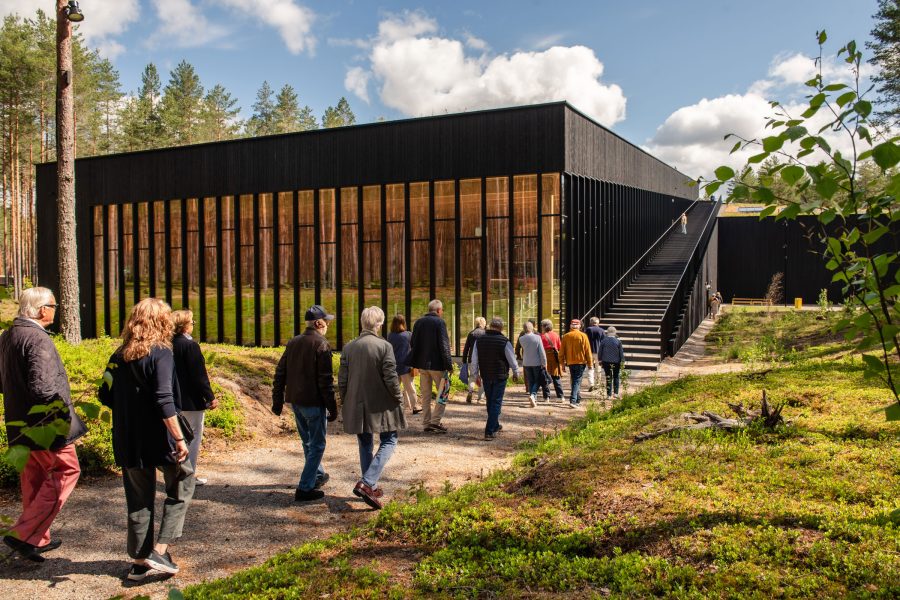
The Plus is a strong example of “When you do something, do it well,” says Kristoffer Vestre, chairman. “The Plus is so much more than a factory, and that is also why we have so many people visiting it. We want more people to come and be inspired. We want them to see that if we can do this in Norway, it could be done many places in the world.” Photo by Nicolas Tourrenc, courtesy of Vestre
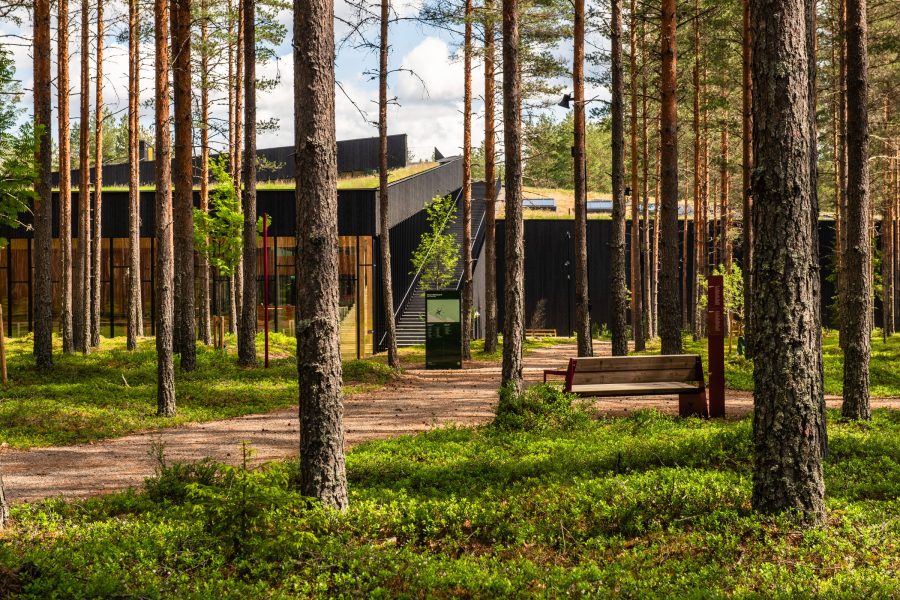
In rural Norway Vestre manufactures engaging site furniture against a forest backdrop that both employees and the public are invIted to enjoy. Photo by Nicolas Tourrenc, courtesy of Vestre
The Plus is indeed a bustling factory, but it’s also part of a 300-acre park in a remote area. It invites people to come and walk its trails or picnic on its roof. You’ll find Vestre’s furniture on the roof terrace, in a central courtyard designed as an urban plaza, and along paths that lead you across the forest. “They get so many visitors. So many people take it as a break on the way from Sweden to Norway,” Millentrup says. “They charge their car, have an ice cream on top of the rooftop, and just hang out. Even the community in Magnor where this factory is uses it for their school reunions or their sport courses. It’s very nice to see.”
With AI, fake news, social media, and floods of unfiltered information, it is necessary that we meet in person again and talk to each other.
Often architects don’t even want to work on factory designs, Millentrup says, but when BIG saw what Vestre wanted to do, they were in. “The trees come as close as possible to the facade, making the people who work in the factory feel like they’re standing in the forest.” Everything had to be accessible; there would be no fences. The property would be open around the clock for anyone to explore. “Just like the Norwegian ‘Allemannsretten,’ or the right to roam for everybody, people should be allowed to wander around the property, to be curious about what is happening inside the factory,” she says.
Millentrup says having spaces and solutions like these is critical, as many people find it more difficult to communicate in real life. “We need open, social meeting places that are free, where people can sit down and meet each other,” she says. “With AI, fake news, social media, and floods of unfiltered information, it is necessary that we meet in person again and talk to each other.”
Kristoffer says site furniture is one part of creating these social meeting places. Most of the company’s work is in the public arena—parks, schools, and public plazas, for instance. “Our role is to help create a sense of public belonging in those spaces,” he says.
Solutions that Stimulate
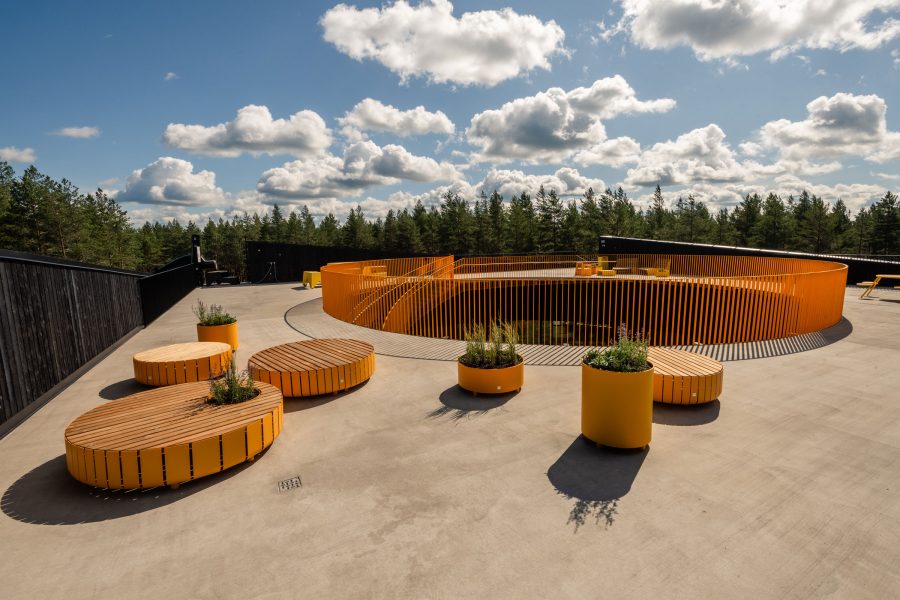
STRIPES is a modular system with rectangular and circular benches that can stand alone or be combined. Photo by Nicolas Tourrenc, courtesy of Vestre
Like STOOP, Vestre’s STRIPES, designed by Lars Tornøe, is another piece of site furniture that inspires multiple uses. The modular furniture system with rectangular and circular benches can be used on its own or in combinations; some people use it as a small stage. “It can be a half-moon or two semi-circles put together, or you can make it look like a butterfly. The way you can play with shape and how that impacts how people interact with the furniture is really interesting to see,” Kristoffer says.
Vestre works with external designers, including those who don’t typically design furniture, to achieve some of their creative output. “We have an in-house product development team that does research and studies, but for product design we work exclusively with independent designers who come up with these ideas, and we love that,” Kristoffer says. “By not doing design in-house we believe we can draw from a much wider pool. We get ideas we would never have come up with ourselves.”
Launched in summer 2025, UNITY is a modular bench system that is both inviting and inclusive. Developed in collaboration with landscape architect Nikolai Soyka and his agency schöne aussichten landschaftsarchitektur (sala), UNITY breaks up the frequent flatness of urban spaces and brings in both nature and movement with interesting geometry, seating, and planters.
JUNE—designed by Espen Voll, Tore Borgersen, and Michael Olofsson—is another 2025 launch. The fresh take on the classic park bench was designed for adaptability and longevity. Instead of doing something that’s already been done, the designers made it feel familiar without fading into the background. “The idea with JUNE was, ‘How can we make a bench that fits into a public park, a historic university, or other spaces where something more traditional is needed, but still make that relevant to 2026 and beyond?”
JUNE builds on the tradition of the classic bench by adding modular capabilities and colorful armrests. Designers have the freedom to build a much longer bench or design for a back-to-back option. It was also designed to easily replace parts, in keeping with the company’s commitment to circular design.
Who is Vestre?
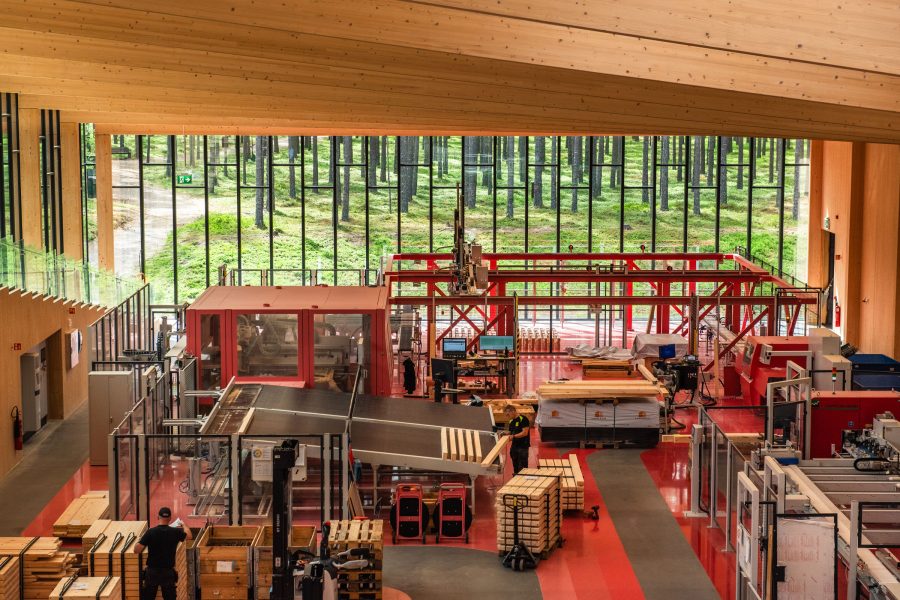
When BIG started on the project, no factory had achieved BREEAM. They had no examples. “We had to be the first, and that came with a lot of demands,” says Viktoria Millentrup, project lead on The Plus, Vestre’s manufacturing plant designed by Bjarke Ingels Group. The project achieved BREEAM Outstanding, the highest rating in the BREEAM sustainability assessment framework. Large window facades required the team to carefully balance daylight inside with energy consumption. Photo by Nicolas Tourrenc, courtesy of Vestre
Johs Vestre, Kristoffer Vestre’s grandfather, founded the company on the Norwegian west coast of Haugesund, an area with a population of less than 50,000 people, in 1947. Post-war Europe was bustling, and Johs showed a lot of initiative and strong mechanical skills. What started as a mechanical workshop evolved when the city gardener asked if Johs could make park benches for the new city hall. He did, and they’re still being used today.
My grandfather said, ‘When you do something, do it well.’
“My grandfather said, ‘When you do something, do it well.’ I remember that from my childhood,” Kristoffer says. It’s a mantra that continues to be the through line of the company, from quality furniture to the factory itself and how employees are treated.
Sustainability is inherent, given the company’s foundation in Norway. “In the 1940s and ’50s in Norway, sustainability wasn’t a topic. It wasn’t like people said, ‘We do sustainable furniture.’” Norway has access to 100% hydropower, local wood, and local steel. “We use all local materials,” Kristoffer says.
In the early ’80s Vestre introduced profit sharing with its workers. “There’s a sustainable way of thinking and running a business that has been there from the beginning, but it has become even more evident as we have expanded into our latest factory, The Plus, which is now the world’s most sustainable furniture factory,” he says.
Circular Design Strategies
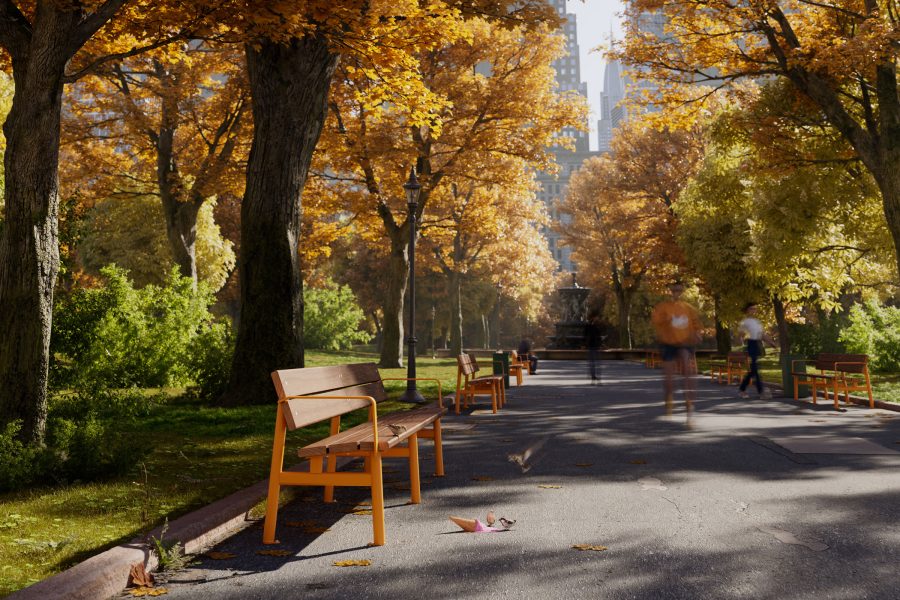
JUNE is a new spin on the classic bench, designed for adaptability and longevity with abundant color choices. Photo by Vincent Laine, courtesy of Vestre
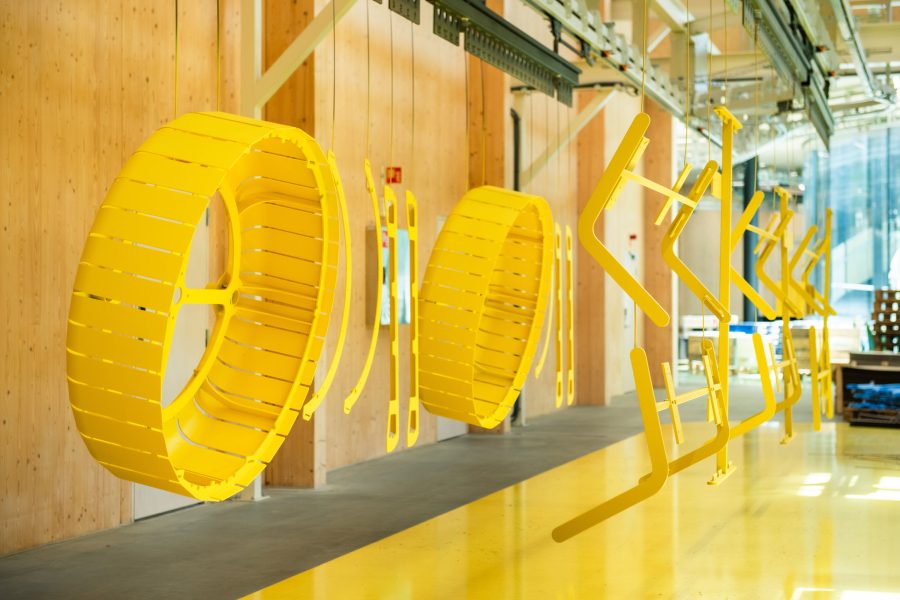
Colorful site furniture is manufactured inside a Vestre manufacturing facility full of natural light. Photo by Nicolas Tourrenc, courtesy of Vestre
While the materials making Vestre furniture largely haven’t changed—“We still make benches out of steel and wood”—the types of steel and wood are improving, Kristoffer says. “We have access to very good, sustainable wood in the Nordics.” They use a lot of Scandinavian pine, which he says is denser than American pine, and they have high-quality steel next door in Sweden. “Sweden is a big steel producer with a lower carbon footprint. That’s where we see the biggest innovation now,” he says.
In particular he points to Swedish steel fabricator SSAB as someone who’s shaking up the industry. Their SSAB Zero steel is the first commercial steel of its kind, using recycled steel and fossil-free energy to achieve virtually zero fossil carbon emissions. “We have started using it with some products,” Kristoffer says. “That’s a game-changer in minimizing our carbon footprint. The steel is currently more expensive due to limited production, but costs are expected to come down as demand increases and production scales.”
Vestre will continue to focus on using a higher degree of recycled steel in its products, Kristoffer says. Relying on wood and steel also contributes to the longevity of their furniture. “If we can have a bench that lasts for 80 years, that’s a sustainable bench by definition.” Vestre is also known for experimenting with ocean plastic and other composite materials.
The company is working to make product maintenance easier, too. For years they’ve had a program in place that makes spare parts available for all of its products throughout history, even if it’s a decades-old bench no longer in production. “Even if we take the product out of our catalog, we will still supply spare parts. We’re committed to that forever.”
That’s one way to extend a product’s life, Kristoffer says. In the US Vestre is piloting a program in LA in which they maintain their furniture on a site if it needs touchup paint, replacement parts, or other maintenance. The program already exists in Oslo and Stockholm. Vestre is also piloting a takeback program, repurposing their old site furniture if it is no longer needed at a particular place.
Millentrup recalls when Vestre first introduced their vision to BIG, saying that, as a company, Vestre’s goal was to create arenas for everyday democracy. “That might be a bold statement, but without these social meeting places, where can we gather in person to communicate freely, discuss and exchange views? Where else would we find those spaces?”
In its simplest form, she says a bench is an invitation to take a break. “To enjoy the surroundings and perhaps the company of someone else who takes the seat next to you. A bench is the first step to an open conversation, and we are in desperate need for this right now.”