Story at a glance:
- The Wellness Architecture + Design Initiative (WADI) is one of more than 30 initiatives supported by the Global Wellness Institute, a nonprofit organization dedicated to research, education, and leadership in the global wellness movement.
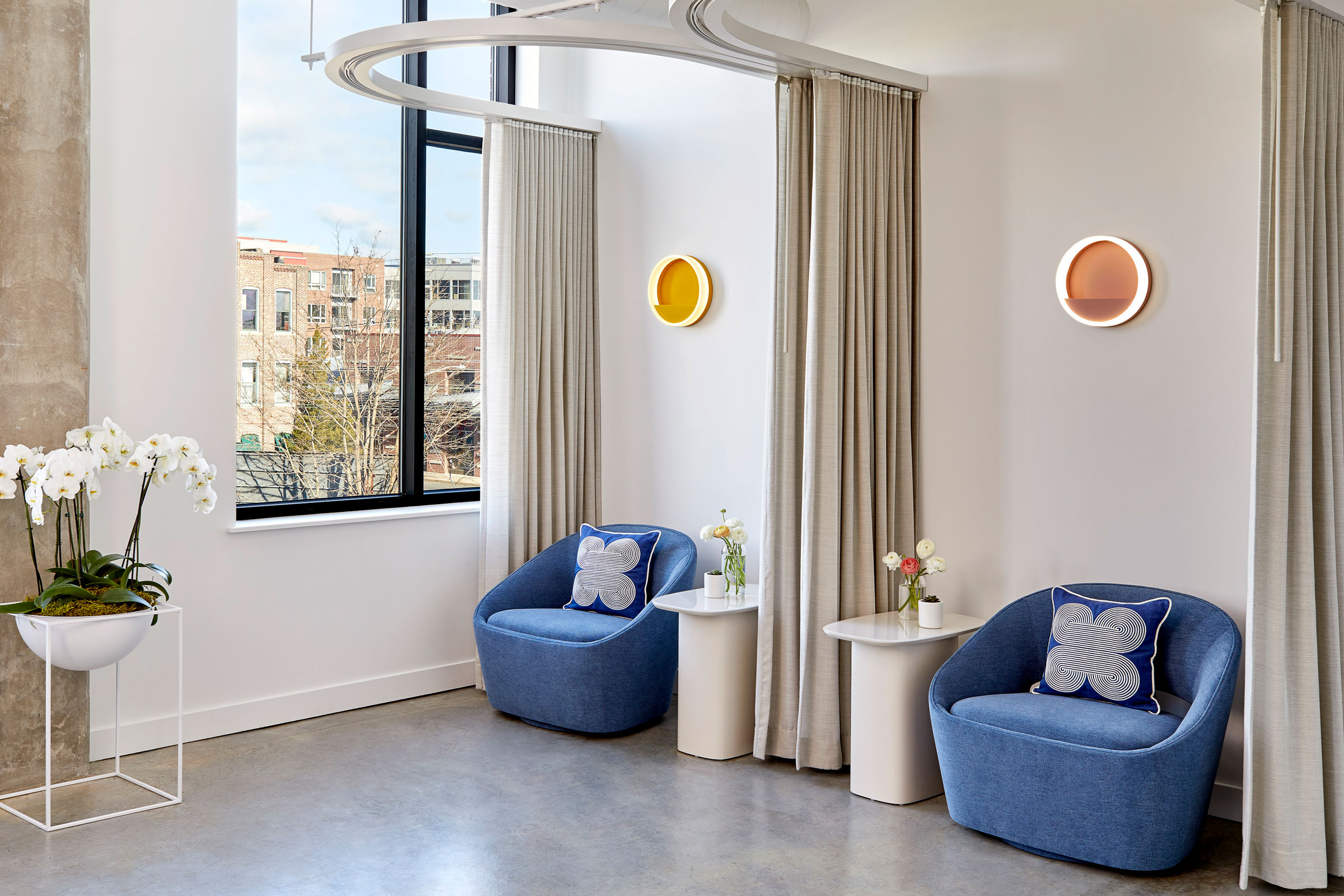
- RHG A+D designed Red Rabbit Spa in Red Bank, New Jersey, as a retreat within the rhythm of a lively downtown, wit natural, responsibly sourced materials.
After a lifetime of observing and studying how spaces and places make us feel and how they can support or harm our well-being, I was led to a career in architecture, design, and experiential art.
We rarely question the spaces we inhabit, yet they are shaping us every moment. Over time I became increasingly concerned that, in prioritizing economic outcomes, we had begun to leave both the human experience and the natural environment behind. That realization led me to search for a community of like-minded professionals because I believe there is power in numbers and that together we can create meaningful change.
I often compare the trajectory of architecture to that of the food industry. We began with a built environment that grew organically from the natural world, using materials from the earth, and guided by an understanding of the spiritual and emotional qualities of design. These principles supported a life rooted in community, care, and artistry. Over time, however, innovation introduced synthetic materials and harmful chemicals into our environment, impacting both the land and all living beings. In many ways our industrial age reduced architecture to an intellectual exercise, disconnected from its deeper purpose.
The Wellness Architecture + Design Initiative (WADI) is one of more than 30 initiatives supported by the Global Wellness Institute (GWI), a nonprofit organization dedicated to research, education, and leadership in the global wellness movement. WADI is a collective of architects, designers, researchers, and developers united by a shared mission: to raise awareness and provide actionable pathways for implementing an interdisciplinary wellness design approach. This approach supports health, sustainability, economic vitality, and spiritual well-being across both existing and future environments.
In 2024 the group produced a white paper, accessible to all, that outlines these pathways and advances the conversation around wellness architecture and design.
As an industry we are only beginning to fully explore the role of neuroaesthetics and the broader impact of our built environment on human health and experience. Throughout my tenure we have worked to expand these conversations, not only among our peers, but also with end users. In 2025 we hosted a series of fireside chats on topics like Electromagnetic Fields as Environmental Pollutants, Living Well with AI, and The Spirituality of Design.
The GWI is a nonprofit 501(c)(3) dedicated to empowering wellness worldwide through research, education, and collaboration. Across its six pillars—Research, Initiatives, Geography of Wellness, Wellness Evidence, The Wellness Moonshot, and BBC StoryWorks—GWI provides free, authoritative resources that unite industries and drive meaningful, positive change.
At its core this work is about education and awareness, helping others understand how the built environment profoundly impacts human health and the health of our planet across mind, body, and spirit.
For me this work is both professional and deeply personal. It is about returning to a way of building and living that honors connection: to ourselves, to one another, and to the natural world. It is about expanding the conversation so wellness is no longer a niche consideration but a foundational principle.
Case Study: Red Rabbit Spa, Red Bank, NJ
-
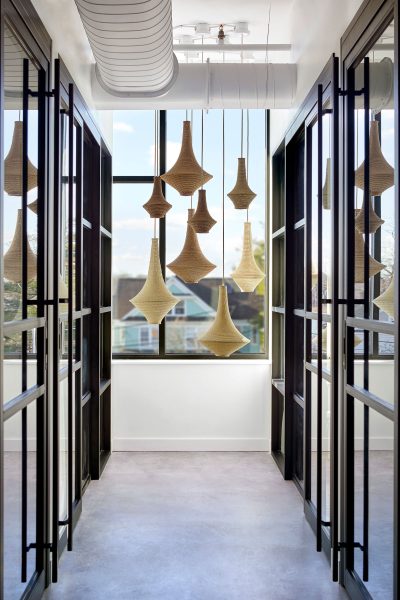
- The design incorporates soft, diffused light and natural materials. Photo courtesy of RHG A+D
-
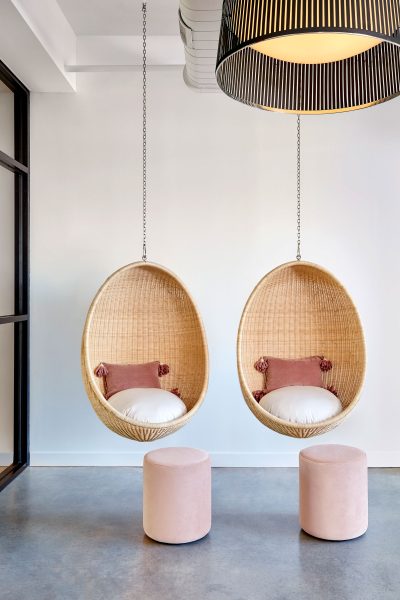
- RHG A+D designed Red Rabbit Spa in Red Bank, New Jersey. Photo courtesy of RHG A+D
At Red Rabbit Spa in Red Bank, New Jersey, our work explores the quiet power of the spaces and environments we choose, where wellness and sustainability are felt as much as they are seen. Designed as a retreat within the rhythm of a lively downtown, the space invites a subtle but immediate exhale. A palette of natural, responsibly sourced materials, diffused light, and soft tonal contrasts creates an environment that feels both grounded and restorative.
Rather than announcing itself, the design reveals itself through feeling: a slowed pace, a softened edge, a heightened awareness of the body in space. Circulation is intuitive, transitions are seamless, and each room carries a sense of intimacy and intention. Thoughtful material choices and a restrained approach to finishes reflect a belief that sustainability is not about addition but about clarity—doing less, with greater purpose.
Informed by our wellness principles, the project is less about any single gesture and more about the cumulative effect—how light, texture, and proportion come together to support restoration. At Red Rabbit wellness is embedded in the experience of the space itself, creating an environment that feels both deeply personal and quietly enduring.
About the Architect
Rachael H. Grochowski is a visionary architect, designer, and thought leader with 30 years of experience and recognized for her philosophy that Design is Spiritual™.
Grochowski’s work focuses on creating environments that foster well-being, balance and community, transcending aesthetics to cultivate calm, interconnectedness, and a profound sense of belonging.
As the founder of RHG Architecture + Design, Grochowski leads a team dedicated to creating respectful, inclusive spaces through thoughtful craftsmanship and sustainable practices, all rooted in her experience with various wisdom traditions. Her diverse portfolio spans residential, commercial, hospitality, wellness and spiritual projects, all of which reflect her commitment to intentional design and an approach informed by her experiences as a world traveler, yoga practitioner, and student of history and nature.
In addition to her design practice, Grochowski is an active public speaker, a Global Wellness Institute Ambassador, and serves on the GWI Architecture + Design committee advocating for the integration of wellness into design. Prior to founding her firm in 2004 she honed her skills at prestigious design studios Tihany Design and S. Russell Groves in New York, designing luxury hotels, restaurants and wellness-focused spaces.