Story at a glance:
- Different buildings have different demands when it comes to below-grade waterproofing, but geotechnical reports will tell teams exactly what they need.
- The most important thing to remember about below-grade waterproofing is the critical need to get it right. Repairs are complicated and costly.
Below-grade waterproofing is critical to most commercial buildings, but understanding precisely what is needed takes careful consideration, as needs can vary widely from project to project. “It depends so much on the actual building you’re working on, the soil condition, the design of the building, and the assets you want to protect,” says Lisa Semling, segment product manager at GCP, part of Saint Gobain.
Semling has been working with Saint Gobain for eight years, focused on the world of building envelopes for more than two. The building envelope segment encompasses air and vapor barriers, horizontal deck waterproofing, below-grade waterproofing, and injection routes.
We recently caught up with Semling to better understand below-grade waterproofing as well as learn about today’s top innovations, from PREPUFE and PREPRUFE SCS Plus to the 6Sides+ System and more. This is that conversation.
How do below-grade waterproofing needs depend on building type?
Every commercial building has a need, but commercial building is a broad term. It could be entertainment, hospitality, or now we’re talking a lot about data centers. Hospitals always have waterproofing needs, and mixed-use buildings, both residential and commercial. Waterproofing is critical, for instance, in tunnels, shafts, and stations. Airports also have big waterproofing needs. In terms of industry, you’ll find below-grade needs pretty much everywhere.
How does below-grade waterproofing work as a system?
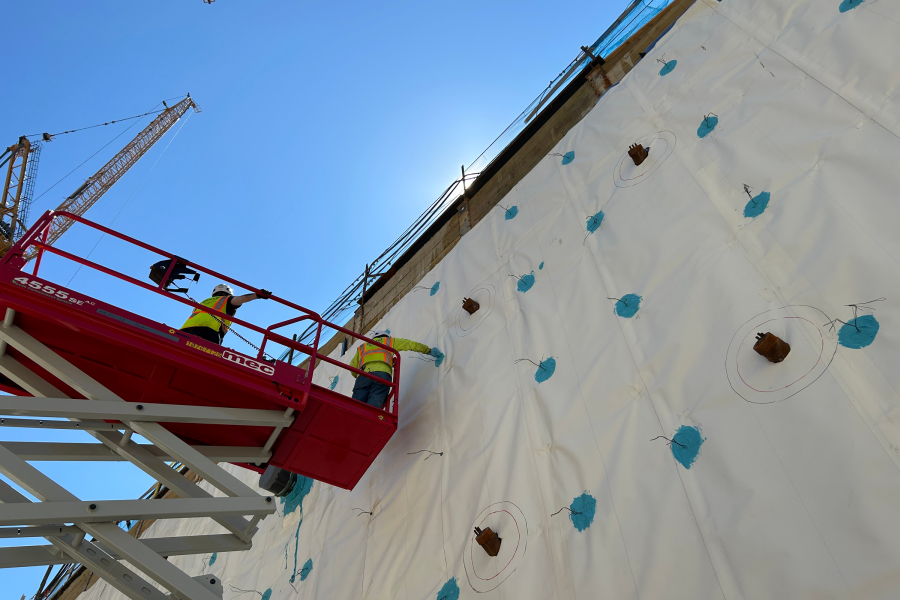
Photo courtesy of GCP
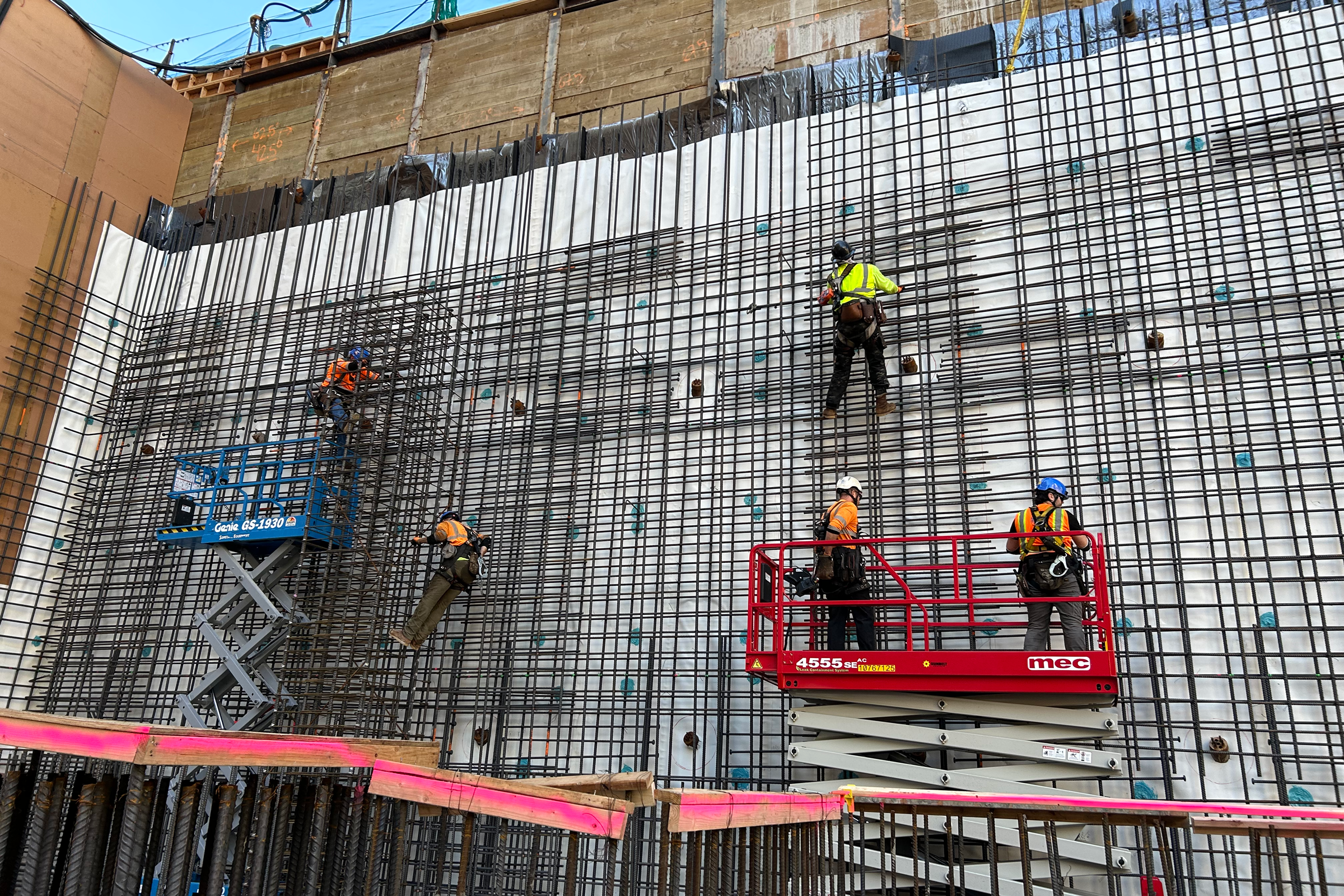
There’s one main element, which is a membrane, but it really works as a system. We usually talk about pre-applied and post-applied membranes. Pre-applied membranes are going to come before your concrete pour. So imagine you’ve just excavated the soil. The pre-applied membrane needs to be there before your concrete because once you pour your concrete on that membrane, your concrete is going to bond to that membrane.
Then you have the post-applied membranes, which are applied on poured concrete once it’s cured. Usually you have an adhesive bond. It’s a very tacky adhesive bond that’s going to hold that membrane in place against your concrete once already poured—before you backfill, because, again, we’re below-ground.
It’s usually a combination of both those types of membranes in every industry in every type of building.
How has below-grade waterproofing evolved to meet needs?
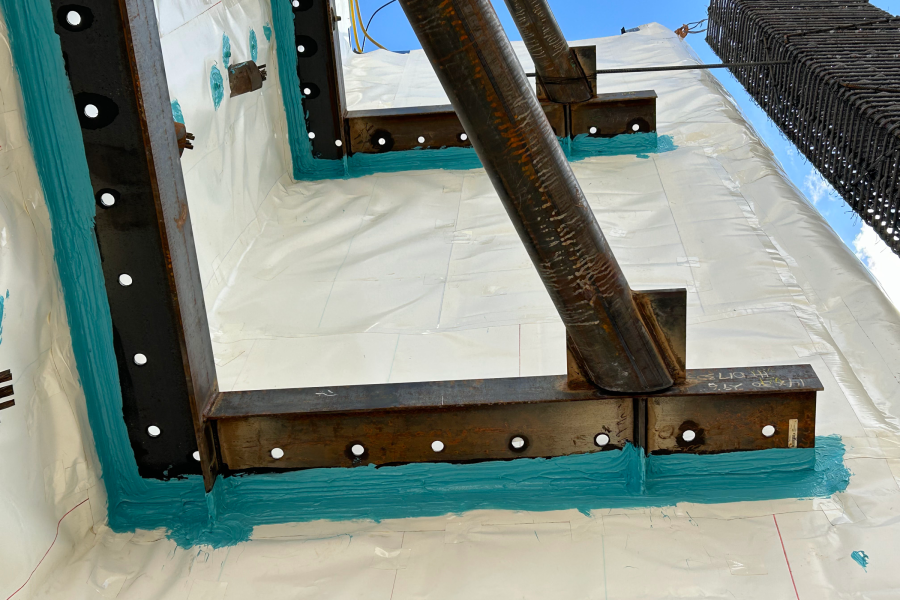
Photo courtesy of GCP
Every project is different, but when you start designing a new building you should heavily rely on your geotechnical report. That’s going to tell you a couple of really interesting things—one being the type of soil, because that affects the waterproofing solution you’re going to want to choose at the end of the day. Another element is going to be the hydrostatic pressure you’re exposed to. It’s going to give you the water table, and the deeper you are in that water table, the higher the hydrostatic pressure you’re exposed to is going to be. This is really fundamental in determining your level of risk on the jobsite.
GCP has a very good, high-end solution. That is our PREPRUFE product. We have a product for every type of risk condition. We also launched a product called SWELLPRUFE, which is for those situations where the hydrostatic pressure is lower, but you still want to waterproof your building with a robust solution while having some element of cost efficiency. With lower hydrostatic pressure, you can afford to use this because your risk is lower.
Soil contaminants are another thing that will influence your waterproofing system. You have to make sure your membrane will not be degraded by what’s in the soil. Also if you have a high concentration of methane, radon, things like that, you want to make sure you have a membrane that’s not only going to act as a water membrane but also a vapor barrier.
What’s behind the shift toward a demand for waterproofing membranes that also act as vapor barriers?
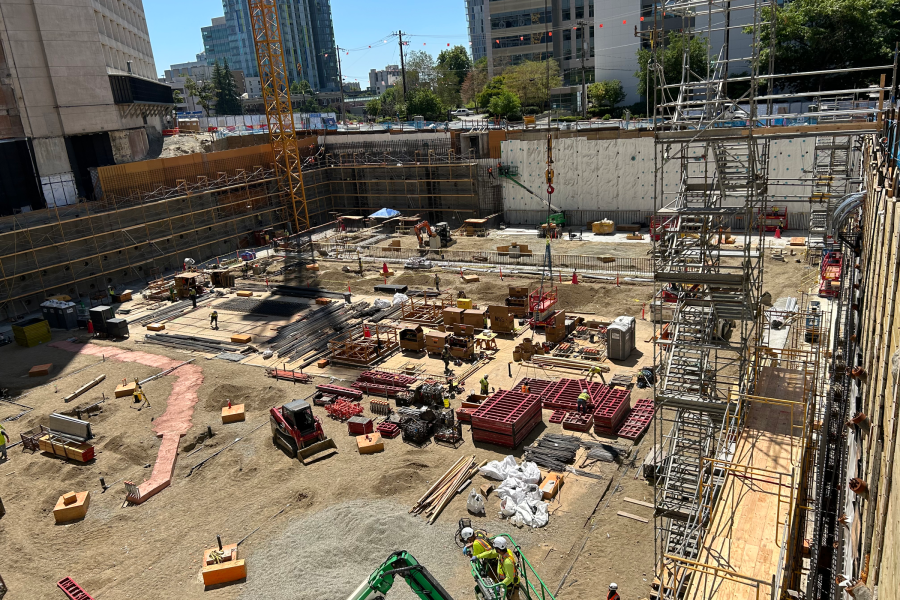
Photo courtesy of GCP
That shift toward wanting a solution that’s not only a waterproofing product but also is both chemically resistant and a gas barrier is something we’ve been seeing a lot more these past few years. I can see two main explanations. First we’ve been hearing, and rightfully so, increased concerns about indoor air quality and safety of inhabitants. Yes we’re talking about below grade, but gasses are going to rise at some point, and once air is inside the building, it’s going to circulate.
The other reason is that we’re using more and more brownfields. It’s hard to find a piece of land in a great location where you want to build a new commercial complex where there’s never been any building before. If there was a plant there before, you could have all sorts of contaminants in your soil. The fact that we’re repurposing lands plus the increased concerns about air quality are two of the main drivers here.
What other demands are being made of waterproofing?
The market still wants solutions that have a proven robustness, but they want the solutions to be easier and faster to install. Labor is an issue in a lot of areas, and costs linked to those. I think data centers are a good example. They’re trying to fast-track those projects so much. Easier and faster to install has been a trend in every industry, and we’re no exception.
There’s also this shift toward wanting a complete system. Here we’re talking about below grade, but I would extend this to the whole building enclosure system because architects at the end of the day want peace of mind that everything’s going to work well together.
In terms of technical support, we feel it’s very important, even more than before, for our customers to get that one-stop shop type of support. Those are definitely trends I don’t think are going to go away anytime soon.
How does GCP, as part of Saint-Gobain, think about providing the “complete system?”
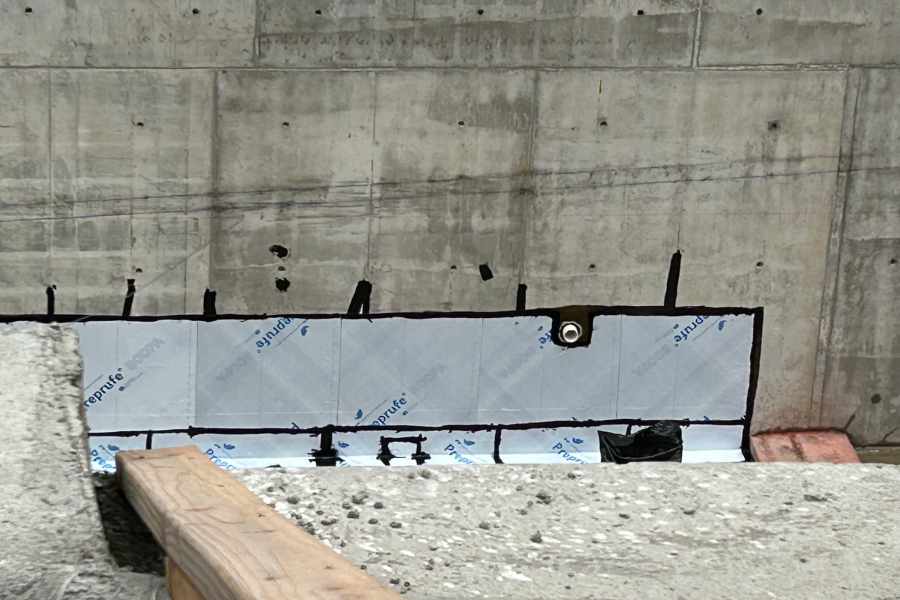
Photo courtesy of GCP
We’ve been positioning ourselves for awhile as a full system solution provider, so for us it’s a natural shift. We’ve been thinking in terms of systems, but we’re pushing that even further. Last year we launched the 6Sides+ System. This is really our building envelope program, tying the six sides of the building together and making sure it’s all wrapped up properly without any weak point in the system. We’re focusing a lot on the ties between the different solutions we offer, focusing a lot on the details. That’s where you really see the technical expertise shining through. We have product backed by R&D, a strong track record, and we continue to innovate, but our technical support is really something that distinguishes us today in the field.
In terms of the overall system, with Chryso, our Saint-Gobain branch doing concrete admixtures, we’re trying to go even further in understanding how the foundation of a building really works. Your waterproofing system is going to work in tandem with your concrete. These are two sides of the same coin when you think about it because if your concrete is not qualitative enough, for instance, there’s a chance it’s going to affect the proper adhesion of the membrane. We’ve been trying to take a position as an education partner for customers and tying that concrete quality to the waterproofing quality and really thinking again about foundation as a system and not a bunch of isolated products you try to make work together.
How was the 6Sides+ System used for the Providence Swedish North Tower health care project in Seattle?
Our below-grade membrane, PREPUFE, was the basis of design for this project because of our longstanding relationship with the architect and the waterproofing consultants; they’ve always specified PREPUFE for this type of project. Initially the design for the air and vapor barrier part of the project was not a GCP solution, but our technical and our sales teams did a great job explaining all the advantages of having one supplier and manufacturer for both, relating to the peace of mind we talked about and to make sure you have a system that is fully appropriate and compatible.
Health care is one of those fields where you don’t want to take unnecessary risks.
Health care is one of those fields where you don’t want to take unnecessary risks. Once your hospital is done, you don’t want to have to go back and do costly fixes that could potentially affect the usage of the building. I do think they appreciated that one-stop shop support.
What are the biggest challenges today surrounding below-grade waterproofing?
The biggest thing you need to understand about deep foundation waterproofing is that once it’s done, repairs aren’t impossible, but they’re going to be really complicated and costly. Honestly, there’s one chance to do it right.
Leaks can happen for a variety of reasons, even with the best waterproofing system. If it’s a small leak it’s OK; you’ll find a way to fix it. But when your job is leaking from everywhere it’s really messy and you have to go back every two weeks to grout because you can’t find the actual point where it’s coming from if it seems to be coming from everywhere. You’re going to spend almost the whole life cycle of the building trying to find the source.
With GCP and PREPUFE, we’ve been waterproofing buildings for more than 50 years. PREPUFE, our flagship product for high-risk solutions, has really led the charge in waterproofing for more than 25 years for pre-applied waterproofing. We have an international track record, and because of how many jobs we’ve waterproofed we have experienced so many situations and have that knowledge for how to best help our customers design the right systems and execute the applications.
What are some of the most innovative solutions available now?
When it comes to faster, easier installs, there’s PREPRUFE Liquid Flashing. It’s innovative because it bonds to concrete. As of today we’re the only ones doing that.
How that works is you have a pipe penetration, so you’re going to cut your PREPRUFE membrane to make room for that pipe penetration, and you’re going to apply your PREPRUFE membrane over that pipe penetration. But now you have gaps, and water could pass through that area between the PREPRUFE membrane and the pipe and you’d lose that continuity. Traditionally, you’d have to do what we call a three-course layer application. You’d have your membrane, then you’d have a liquid membrane, but that liquid membrane does not bond to concrete, so then you have to go with the PREPRUFE membrane, cutting a patch above that liquid membrane and then tape everything. Then it’ll nicely hold together and that system will be perfectly fine and bond to concrete, but that’s a lot of steps.
Alternatively, with PREPRUFE Liquid Flashing, you mix the liquid solution and apply it over your pipe penetrations, and you’re done. You don’t need to do any patch. You don’t need any tape. It’s really easy. It’s about four times faster, but on top of that it also reduces the chance for human error. There’s really no way you can do that wrong. Every contractor who has tried this solution does not want to go back to the old way.
We also launched PREPRUFE SCS Plus, a shotcrete-related solution last year. Shotcrete is another way of doing concrete we’ve been seeing a lot for the past 10 years on the West Coast. It’s not cast-in-place concrete. You pump your concrete in the rebar and are basically doing a substrate wall; you’re doing that layer by layer. People like it because it’s fast, but your concrete is different, and that’s one place where we see poor consolidation. You need a specific waterproofing system to counterbalance that. So sure it’s faster, but it brings a whole new set of challenges.
As waterproofers, I will say we don’t love shotcrete, but if you have to use it, make sure you use a waterproofing system that’s designed for shotcrete. That’s what PREPRUFE SCS Plus is. You have that membrane that bonds to concrete, but you have dual protection because while you’re installing, you’re also installing a grouting system at the same time. Once the concrete is cured you’re going to inject that grouting system and that’s going to solidify everything nicely with your membrane. It’s a very specific application case, but in that niche market it’s a great innovation in terms of making sure we can correctly waterproof shotcrete at the jobsite, which has been an issue forever.
Then there’s SWELLPRUFE, our most recent innovation I previously mentioned for projects with lower hydrostatic pressure. This is a market that’s traditionally using a bentonite type of membrane. This is another type of technology. It’s not an HDPE or thermoplastic type of membrane; it’s a membrane based on the bentonite. Bentonite is hydrophilic so it’s going to swell when in contact with water. The whole idea is that with the bentonite swelling and your membrane placed against your concrete, it’s going to stop that water from reaching the concrete. Our product has bentonite in its composition, so you’re still going to see that swelling, and yes that swelling is going to seal any puncture you would have in your membrane and reduce water from going up, but also it fully bonds to concrete the way our PREUPRUFE membrane does. It’s a different adhesive, but it’s the same idea.
So when you pour your concrete the membrane is going to fully adhere to that concrete, which is not the case of traditional bentonite membranes that only rely on the bentonite as a waterproofing component. All of our membranes have a rubberized asphalt layer that bonds to concrete, and then we have the bentonite below that, facing the earth where the water comes from. That bentonite is going to once again slow the water and seal any crack, while our actual waterproofing layer that’s bonding to concrete is going to keep your concrete dry.
It may be that because this is a lower-risk market, the area hasn’t seen much innovation recently. We were excited to introduce a solution that’s both really robust and at a great price point for the value it delivers.
What else should architects and specifiers know?
It’s a game of minimizing risk and trying to mitigate challenges, and no project is the same. Technical expertise and track record is key—knowing you’re working with someone who has had that experience and knows what could go wrong or go right, and knowing what works in each situation. That, on top of having a great product backed by testing and R&D, is really what you’re looking for here.