Story at a glance:
- The Arctic is warming quickly and the ecosystems that have supported human life for millennia are shifting faster than many models, codes, and procurement systems were built to understand.
- The Arctic is warming at roughly three times the global average. Permafrost that has structurally underpinned roads, buildings, runways, and communities is thawing, and coastlines are eroding.
- Many projects being proposed across the North are resource-intensive. They may create economic benefits, but they will likely also alter landscapes, watersheds, migration patterns, and permafrost systems in significant ways.
Canada has earmarked more than $40 billion in infrastructure investments in their Northern Territories—a land that is more susceptible to climate change than most, and more dynamic and uncertain than our current infrastructure strategies can handle.
There are countless examples of major projects failing due to climate change across many geographies, but what is happening in Canada might be the most important opportunity to adjust our approach and learn to be led by the land and the people who have been dancing with it the longest.
The economic opportunity in the North is obvious—new infrastructure, new partnerships, new capital, new access. These are opportunities for Indigenous communities that have often been left at the margins of national development. But what interests me most is not the scale of opportunity; it is the scale of risk.
The Arctic is warming at roughly three times the global average. Permafrost that has structurally underpinned roads, buildings, runways, and communities is thawing. Coastlines are eroding. Ice conditions are changing. Ecosystems that have supported human life for millennia are shifting faster than many of our models, codes, and procurement systems were built to understand.
Static infrastructure in a dynamic environment has a high potential for disruption. This makes Canada’s North more than a development frontier. It is a test of whether we can bring our best thinking to one of the most complex design conditions on Earth—not just more engineering, but better questions and genuine inclusion of diverse perspectives.
At this year’s First Nations Major Project Coalition Conference in Toronto, the theme was “Seven Generations,” a teaching shared across many North American Indigenous Nations and often understood as the responsibility to make decisions today with the seventh generation in mind. In the context of major projects that can easily become a conversation about long-term economic participation: equity, jobs, ownership, procurement, and revenue, ensuring future generations benefit from the economic output of projects built today. All of that matters.
But if Seven Generations only means passing down wealth, I believe we have misunderstood the assignment. The deeper responsibility is to pass down the ecological conditions that make wealth, culture, health, and continuity possible in the first place.
Can regenerative building and economic returns be genuinely compatible? Can industrial ambition and Indigenous ways of knowing shape one another without either being reduced in the process?
Many of the projects being proposed across the North are large, linear, industrial, and resource-intensive. They may create enormous economic benefits, but they will likely also alter landscapes, watersheds, migration patterns, permafrost systems, and community relationships to land in ways that last far longer than a project pro forma.
So the real question is not whether Indigenous communities can benefit from major projects. The harder question is whether major projects can be shaped by Indigenous knowledge deeply enough that economic benefit does not come at the cost of ecological integrity.
Can regenerative building and economic returns be genuinely compatible? Can industrial ambition and Indigenous ways of knowing shape one another without either being reduced in the process?
Regenerative design has become a popular phrase in architecture and planning. Its popularity suggests that many conventional approaches were optimized for extraction, efficiency, and control rather than reciprocity, resilience, and long-term ecological health. In the North that logic becomes expensive quickly.
Roughly half of Canada’s winter roads could become unusable within the next 30 years, according to the Canadian Climate Institute. In Alaska federal assessments document significant and growing infrastructure losses from the same cause. Roads, runways, and building foundations are already experiencing damage from permafrost thaw. We are all already struggling to design in the Northern environment, and climate change will only make that more challenging.
This is where I see regenerative design, in many ways, as a de-risking strategy. To contribute to a place we have to know it intimately—its histories, hydrology, soils, freeze-thaw cycles, species relationships, seasonal changes, cultural meaning, and its likely future trajectory. This is where I believe biomimicry offers a practical bridge between industry and Indigenous.
Biomimicry—a field formalized by American ecologist Janine Benyus—is often introduced through familiar stories: Velcro inspired by burrs, linear infrastructure planning inspired by slime mould, or the Shinkansen train nose inspired by the kingfisher’s beak. These examples show how nature can inspire more efficient, elegant, and sustainable design solutions. The deeper value of biomimicry, though, is not imitation. It is perception.
It asks us to see the natural world not as a warehouse of resources but as a library of strategies refined over 3.8 billion years of testing. A forest is not simply a collection of trees. It is a network of solar-powered towers moving water hundreds of feet without pumps, creating materials at ambient temperature and pressure, cycling nutrients without waste, building soil, cooling air, managing carbon, and supporting countless forms of life in relationship.
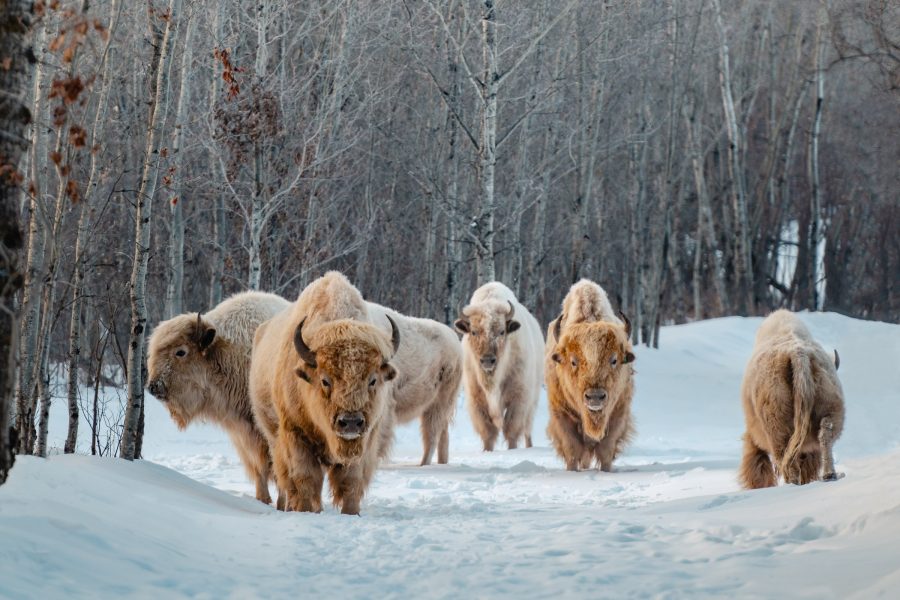
Through that lens nature stops being the thing infrastructure must overcome. It becomes a guide. And this is where biomimicry begins to overlap with something much older.
Both Seven Generations and biomimicry begin with the same premise: Decisions should be informed by timescales longer than a quarterly report, election cycle, or project schedule.
My friend Jean Becker, an Inuk Elder, once told me, “We have been doing biomimicry for thousands of years.” That realization changed how I practice. Think about snowshoes inspired by the wide feet of Arctic hares, igloos informed by the insulating properties of snow, and travel routes shaped by ice, animal movement, weather, and memory. These are sophisticated, place-based technologies developed through generations of observation and feedback. It is a lens for how to relate to place, observe deeply, and learn from it.
If we are serious about building in the North in a way that serves the Seven Generations, this Indigenous perspective cannot be treated as a cultural layer added after the engineering is done. It has to help shape the brief.
The Living Story is one tool I use in my work that is shaped through relationships with Indigenous knowledge to bridge biomimicry to major projects. As part of this we ask a before a site is touched: What does this land naturally want to do? What will it support? What will it permit? What might it inspire?
It is a process that uniquely integrates ecological analysis, biomimicry, systems thinking, and Indigenous ways of knowing to understand a place’s trajectory before we alter it. The goal is not simply to identify what a project might damage. It is to understand what the landscape is already doing well, where it is providing essential ecological services and engineering functions, where it is vulnerable, and how design can work with those patterns rather than against them.
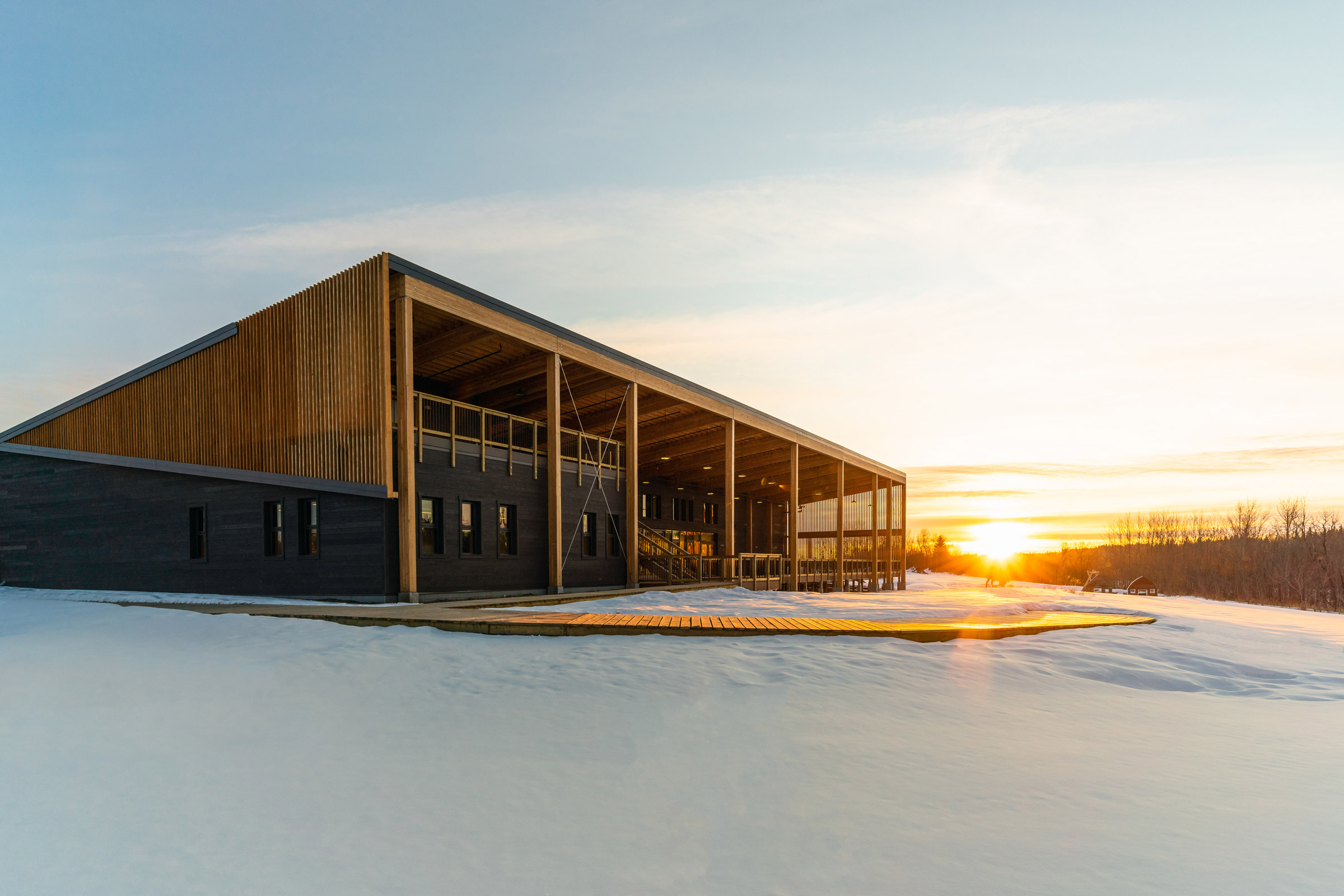
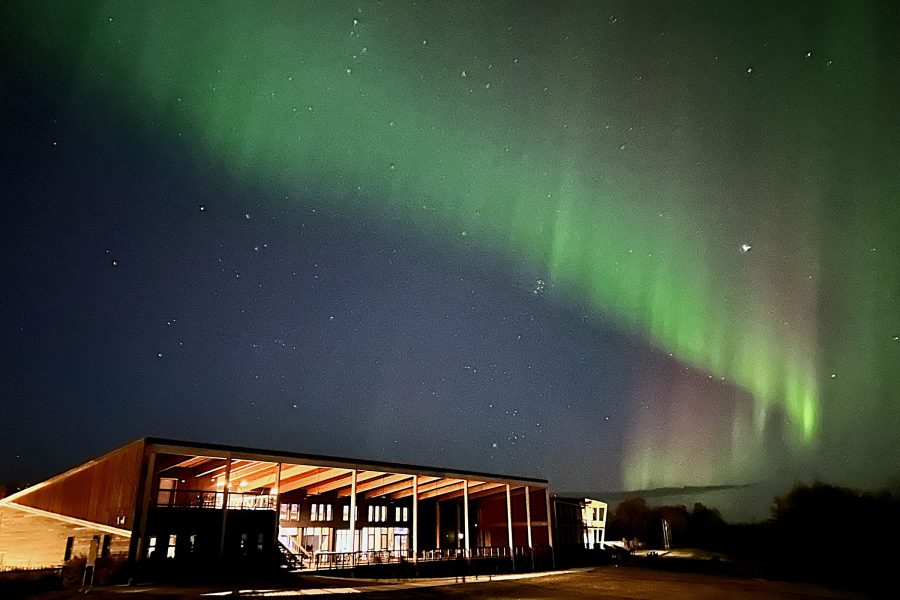
At Métis Crossing in Alberta, this kind of thinking helped identify that a planned road alignment could disrupt ecological relationships in the surrounding boreal landscape and increase flood risk by altering overland flow. The road moved. The project improved. Across the border in Alaska communities like Newtok and Shishmaref are already relocating as permafrost and sea ice conditions change beneath them. The infrastructure decisions being made there are not a separate conversation from this one. They are the same conversation. That is the opportunity in the North.
The intent is not to commercialize Indigenous knowledge nor to reject industry nor to pretend major infrastructure can happen without tradeoffs. It is to build a shared language strong enough to hold economic ambition and ecological responsibility at the same time.
Seven Generations cannot be reduced to a longer financial horizon. It is a design challenge. It asks whether the systems we build today will leave future generations with more capacity, not less, and more resilience, ecological function, cultural continuity, and options. The North does not need infrastructure that merely survives. It needs infrastructure that understands where it is and can contribute to all life.
Before we build the North we need a shared language—one that can speak in capital growth and caribou routes, procurement opportunities and permafrost dynamics, jobs and watersheds, seven generations of economic opportunity and seven generations of regenerative ecology.
That is not about compromise. That is about better design.