Story at a glance:
- Most building designs aim to move rainfall away as quickly as possible, but is that the best solution?
- A sustainability leader experiences rainwater harvesting from a new perspective after a leak at her family business.
- Thoughtful design can allow one decision to solve several problems at once.
Every building is designed to manage water. The question is whether it simply moves rain away or puts it to work.
That distinction had never occurred to me until more than a decade ago, when my family found ourselves facing what seemed like an ordinary plumbing repair at our automotive repair shop in Newport News, Virginia. We had discovered a leak that needed to be fixed, and like any small business, we were looking for the most practical solution. Rather than simply replacing the plumbing, we began asking a question that ultimately changed the way I think about buildings altogether: Could the thousands of gallons of rain falling on our roof each year become part of the solution?
At first it seemed like an unusual idea. Most of us have been conditioned to think of rainfall as something to move away from buildings as quickly as possible. Roofs shed it. Gutters collect it. Storm drains carry it away. Entire developments are carefully engineered around the assumption that rain is a problem to manage rather than a resource to consider. The numbers tell a different story.
A single inch of rain falling on a 1,000-square-foot roof produces more than 620 gallons of water. Scale that to the roof of a school, warehouse, hospital, shopping center, or data center, and the amount quickly reaches thousands or even tens of thousands of gallons from a single storm. Despite that, most buildings are designed to discard nearly all of it before spending significant energy and expense pumping treated drinking water back to the very same site. That realization stopped me in my tracks.
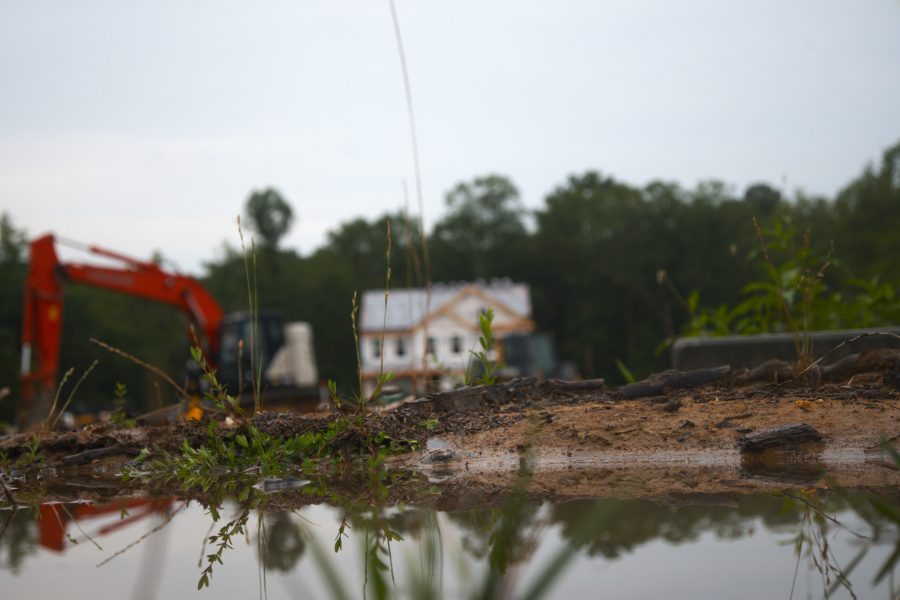
Photo courtesy of S4SSWF
It wasn’t simply because of the amount of water. It was because I had never questioned the design philosophy behind it. We routinely devote enormous attention to structural engineering, energy efficiency, accessibility, fire protection, communications, and life safety, yet water is often treated as little more than a utility connection and a drainage problem. Somewhere along the way we’ve accepted the idea that one of our most valuable natural resources should leave a property as quickly as possible.
Somewhere along the way we’ve accepted the idea that one of our most valuable natural resources should leave a property as quickly as possible.
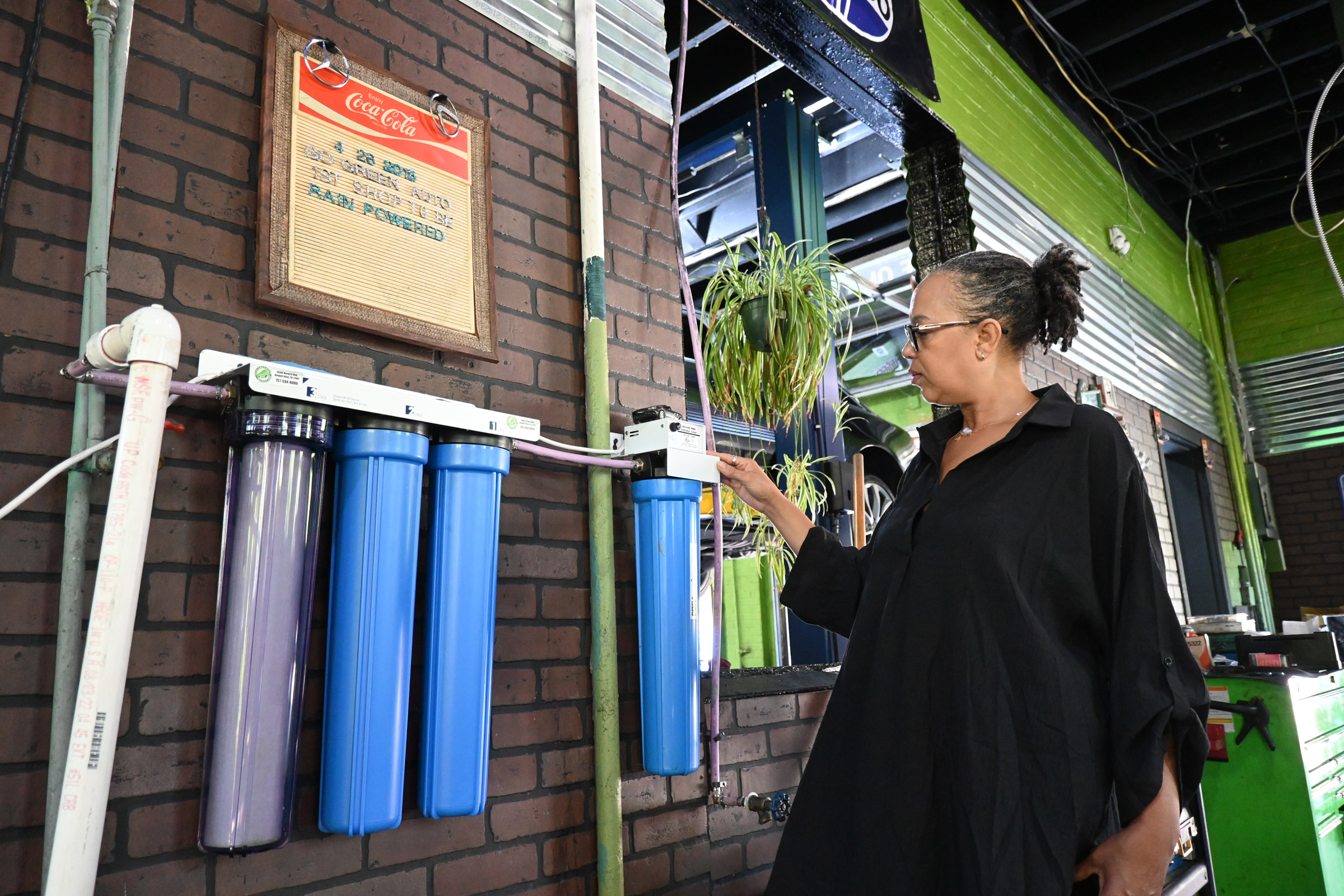
When my family installed our rainwater harvesting system we weren’t trying to make a statement about sustainable design. We were trying to solve a plumbing problem in a way that reflected the values our business had embraced for years. Go Green Auto Care had always believed that if there was a practical opportunity to operate more responsibly, it was worth exploring. What surprised me wasn’t the technology; it was what the technology taught me.
Rainwater harvesting wasn’t simply about collecting water. It became a lesson in how design shapes the relationship between people and natural resources. Every gallon captured in a cistern is a gallon that doesn’t immediately become stormwater runoff. Every gallon used for an appropriate non-potable purpose is a gallon of treated drinking water that didn’t need to be used instead. Capturing rain where it falls can reduce runoff, lessen localized flooding, help protect downstream waterways, and add resilience during drought or service disruptions. None of those benefits exists in isolation. Together they illustrate how thoughtful design can allow one decision to solve several problems at once.
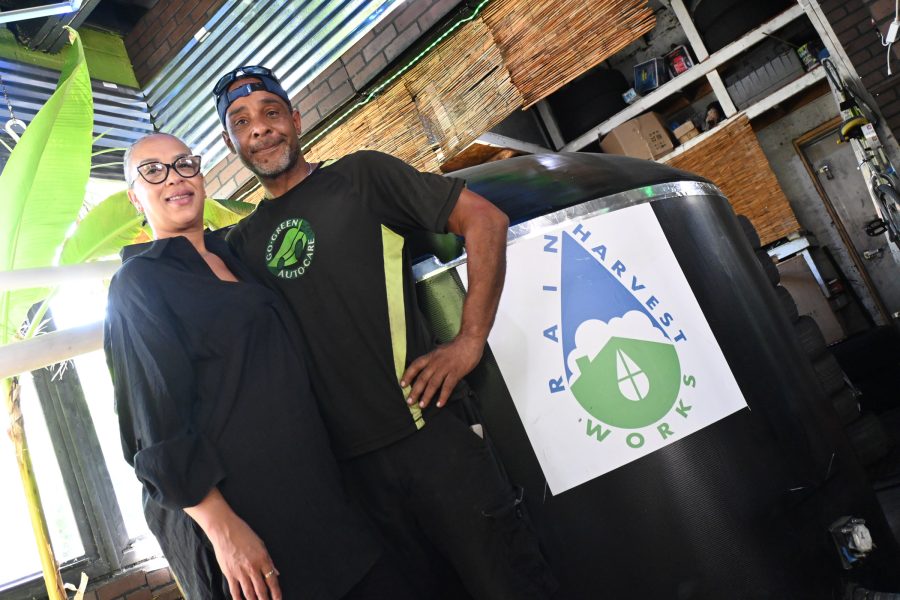
Photo courtesy of S4SSWF
As customers, engineers, architects, students, reporters, and public officials began asking about the system, I noticed something unexpected. Nearly everyone asked the same questions: You can actually use rainwater? Is that legal? Is it safe? Why don’t more buildings do this?
The last question stayed with me. Virginia now has one of the nation’s most comprehensive regulatory frameworks for engineered rainwater harvesting systems, allowing properly designed systems to serve a variety of non-potable and, under specific standards, even potable applications. Yet many people, including design professionals, are surprised to learn that the pathway already exists.
That realization convinced me that the greatest opportunity wasn’t simply building another rainwater harvesting system. It was changing the conversation about how we design buildings in the first place.
Those conversations eventually led me into graduate studies in environmental science and policy. They also inspired the creation of the Society for a Secure and Sustainable Water Future (S4SSWF), a nonprofit dedicated to advancing practical, science-based approaches to water resilience. But more than anything else, they fundamentally changed the way I see the built environment. Today when I walk across a university campus or through a commercial district, I still notice the architecture. I just notice the roofs first, because every roof tells a water story.
The more I learned, the more I realized our family’s experience wasn’t unique. What was unusual was that we had begun looking at a building through the lens of water. Graduate school gave me the opportunity to explore that idea more deeply. As I studied environmental planning, water resources, geographic information systems, environmental data analytics, and sustainable design, I found myself revisiting our rainwater harvesting system in my mind. What had started as a practical plumbing solution suddenly fit into a much larger picture—stormwater, groundwater, flood resilience, urban heat, water quality, The Chesapeake Bay. At first they seemed like separate disciplines. But over time I realized they were all connected by the same question: What role should water play in the design of our communities?
Today I no longer see a roof simply as protection from the weather. I see one of the largest untapped water assets on almost every property. Parking lots, sidewalks, and other impervious surfaces tell a similar story. Every design decision influences whether rainfall infiltrates the landscape, becomes polluted stormwater runoff, is temporarily stored, or is captured and put to beneficial use. In other words, every building is already making water decisions. The only question is whether those decisions are intentional.
For decades sustainable design has encouraged us to think differently about energy. Architects carefully orient buildings to maximize daylight. Engineers specify high-performance insulation, efficient HVAC systems, and renewable energy technologies. Owners routinely evaluate long-term operating costs alongside construction costs because they recognize that thoughtful design continues paying dividends for decades. Water deserves that same level of consideration.
Instead of treating rainfall as something to remove as quickly as possible, what happens when we begin asking how it might contribute to a building’s performance? The answers are surprisingly practical.
Rainwater harvesting can reduce demand on potable water supplies by providing an alternative source for appropriate non-potable uses like irrigation, toilet flushing, cooling applications, and equipment washing. Capturing water where it falls also slows stormwater runoff, helping reduce localized flooding, erosion, and the transport of pollutants into nearby streams and rivers. During periods of drought or temporary service interruptions, stored rainwater can provide an additional layer of resilience that simply doesn’t exist when every drop must arrive through a municipal pipe.
None of these benefits should be viewed in isolation. That’s one of the most important lessons I have learned. Good design rarely solves only one problem. A thoughtfully placed window provides daylight while reducing energy use. Trees cool neighborhoods while improving air quality and reducing stormwater runoff. Likewise, a well-designed rainwater harvesting system isn’t simply a storage tank. It becomes part of an integrated strategy that supports water conservation, stormwater management, operational resilience, and environmental stewardship simultaneously.
That’s the beauty of good design. One thoughtful decision can accomplish several objectives at once. Perhaps that’s why I find myself thinking differently whenever I visit a new building. I still admire architecture, craftsmanship, and engineering, but I also find myself asking questions I never would have considered 10 years ago: Where does the rain go? Could this roof be doing more? Was water part of the conversation before construction began?
Those aren’t criticisms. They’re opportunities. The truth is, every building already harvests rain. Some simply choose to use it.