Story at a glance:
- Modern health care furniture can be a key part of supporting health care teams, ultimately leading to better care.
- Furniture can support staff ergonomics through safer transfers, better access, easier cleaning, and flexibility.
- La-Z-Boy Healthcare | Knú Comfort designs mobile and vertical lifting recliners, sleep products, and public-area furniture to support caregivers, families, and patients.
It’s midmorning, and a single nurse has already helped one patient sit up, repositioned another in bed, transferred someone from bed to chair, moved equipment, cleaned spills, protected a patient’s privacy and dignity, and tried not to strain their own back.
A wheel locks up. A chair won’t go high enough. A patient is too weak to stand and too heavy to move alone. A surface is too awkward to clean properly. Every choice requires vigilance.
Adam Stemle, president of La-Z-Boy Healthcare | Knú Comfort, says some of that burden has to be solved through design. “You need to have things built into your design so your staff isn’t taking the brunt of that physical strain day in and day out.”
OSHA identifies patient handling and movement as a significant musculoskeletal-injury risk for health care workers. In 2021 US hospitals recorded 6.1 nonfatal work-related injuries for every 100 full-time employees, according to a 2024 review, while nursing and residential-aged care workers recorded 7.3.
This is the less flashy side of furniture and room design: how a space etches itself into the people who pass through it. Burnout is emotional, yes. But it is also muscular, skeletal, neurological, and lasting.
Design for Real People Delivering Care
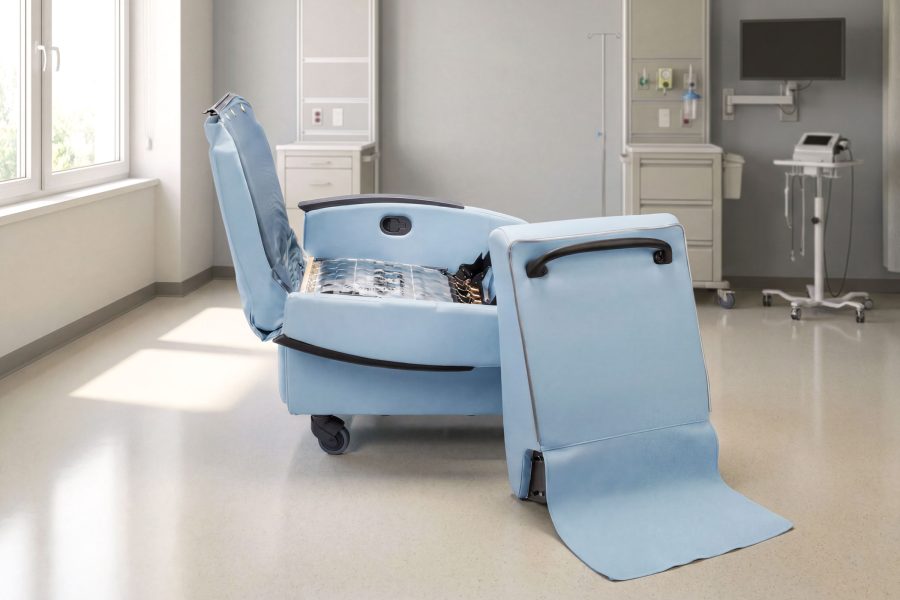
Photo courtesy of La-Z-Boy Healthcare | Knú Comfort
For Neil Abrams, medical planner with SmithGroup, staff experience is now an essential part of health care planning. “From a staff perspective we’re thinking about: How can we best mitigate burnout? That’s been a big issue,” he says. “We look for efficiencies in their everyday routines, how space can be planned to increase efficiencies and reduce the burden that they may have.”
That burden shows up in small ways—reaching, bending, bracing, twisting. The best patient room doesn’t erase work, but it can stop making the work injure the very people caring for those who are themselves vulnerable.
Caterina Hutchinson, interior design principal with SmithGroup, says health care design has to consider patients, families, visitors, providers, and staff at the same time. “We’re not just designing for patients. We’re also designing for their families, we’re designing for visitors, and we’re designing for the providers and their staff members,” she says.
A recliner is not only a place to sit. It’s something staff move, clean, position, repair, or use to help during a transfer. A sleeper sofa is not only for family comfort. It must open easily, fit the room, and avoid becoming another obstacle in a space that already requires a choreographed dance to move around in.
Use Furniture to Reduce Strain
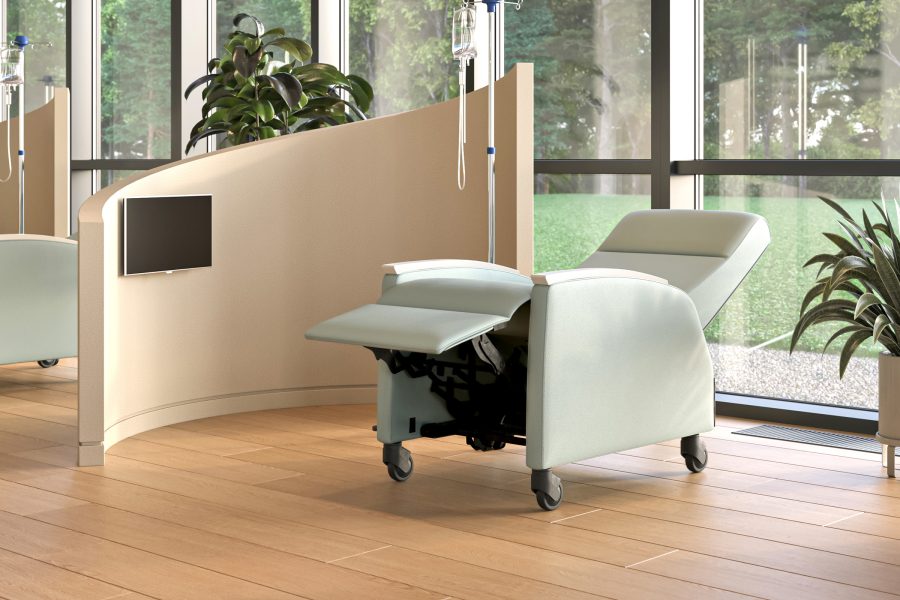
Photo courtesy of La-Z-Boy Healthcare | Knú Comfort
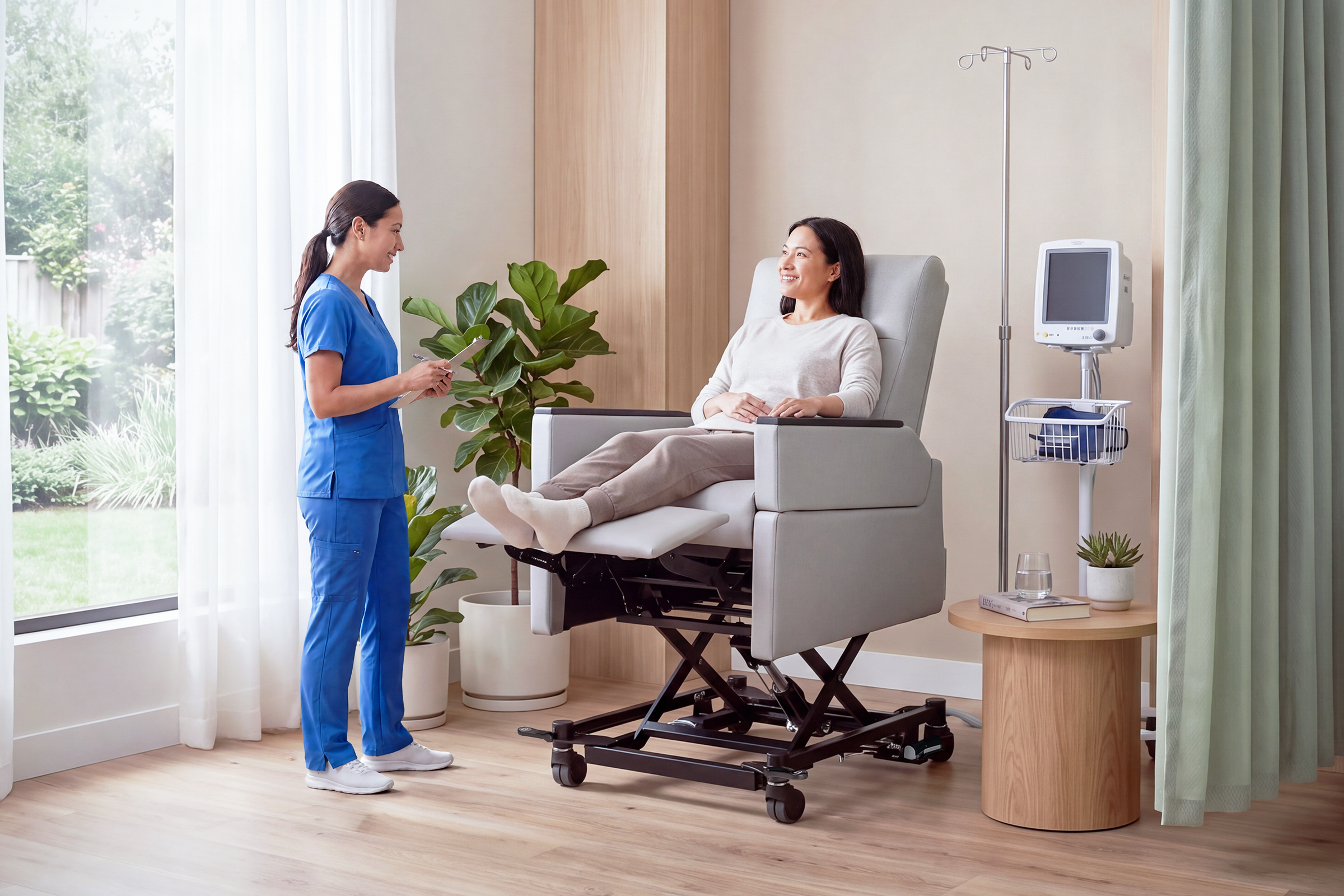
Health care furniture must be designed for bodies in nearly constant motion. La-Z-Boy Healthcare | Knú Comfort’s Durable Exam Lift Series, for example, can function as a recliner, flatbed sleep surface, and treatment or exam space, raising to exam height so caregivers can work more ergonomically. Instead of asking staff to bend and twist, the furniture can rise to the occasion.
Recent product development points in the same direction. The Durable Power Series brings zero gravity positioning and wand-controlled adjustment to health care recliners, supporting pressure relief and easier repositioning, while Raio Lounge, available summer 2026, extends a focus on durable, high-performance seating into public and guest spaces.
Casters, seat heights, lift compatibility, drop-down arms, swing-away arms, and accessible components are not just design details for the brochure. They can make all the difference.
Stemle says health care furniture also has to be flexible enough for the unexpected. “You could buy it for one thing this year, and three years down the line that facility may move it to an infusion center out of a patient room,” he says.
Cleaning As Part of Caregiver Design
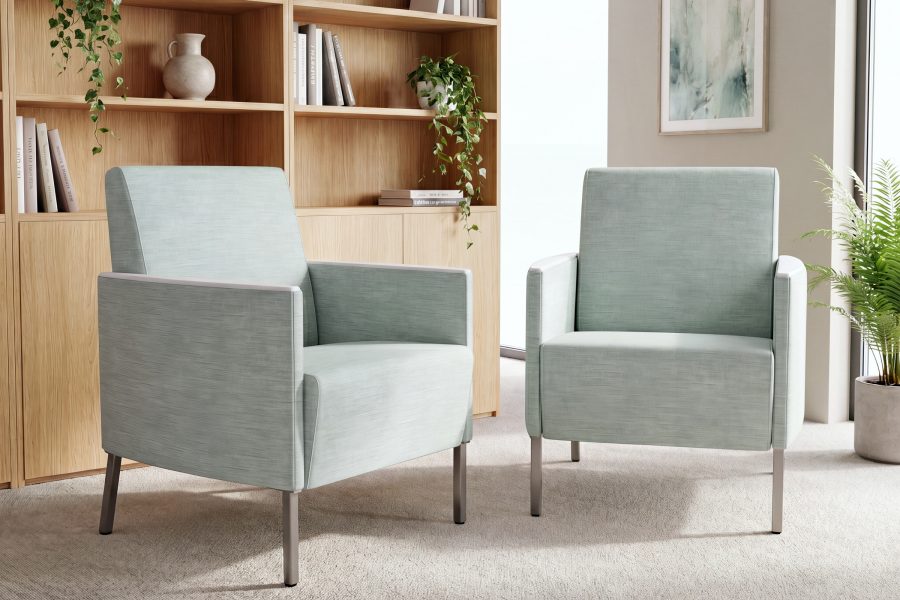
Photo courtesy of La-Z-Boy Healthcare | Knú Comfort
Cleanability is often framed as infection control, and it is. But it is also caregiver design. Someone has to clean the chair after the spill, the IV leak, the messy meal, the overnight stay—all that is part of being human. If furniture makes that work harder, the strain lands on a care team member. “You have to have a product that’s going to be, first and foremost, cleanable,” Stemle says.
For La-Z-Boy Healthcare | Knú Comfort, that includes designing furniture with accessible parts and fewer hidden areas where fluids and debris can collect. “Our recliner backs come off. No tools required,” Stemle says. “You also have a seat that lifts up and out, so you can get in and clean everything.”
In a health care setting furniture is used, moved, cleaned, adjusted, and sometimes damaged. That’s why Stemle says you also have to have “field replaceable components.” A chair that can stay in service becomes an asset simply because staff no longer have to think about it.
Care will never be effortless. But the room and the tools within it can stop sucking energy and adding strain. Movement, positioning, cleaning, and transfers can become safer, smoother, less punishing. And when caregivers are better supported, patients feel it too—in the calmer spaces, the extra minute of attention, and the hands that have the strength and support to care.