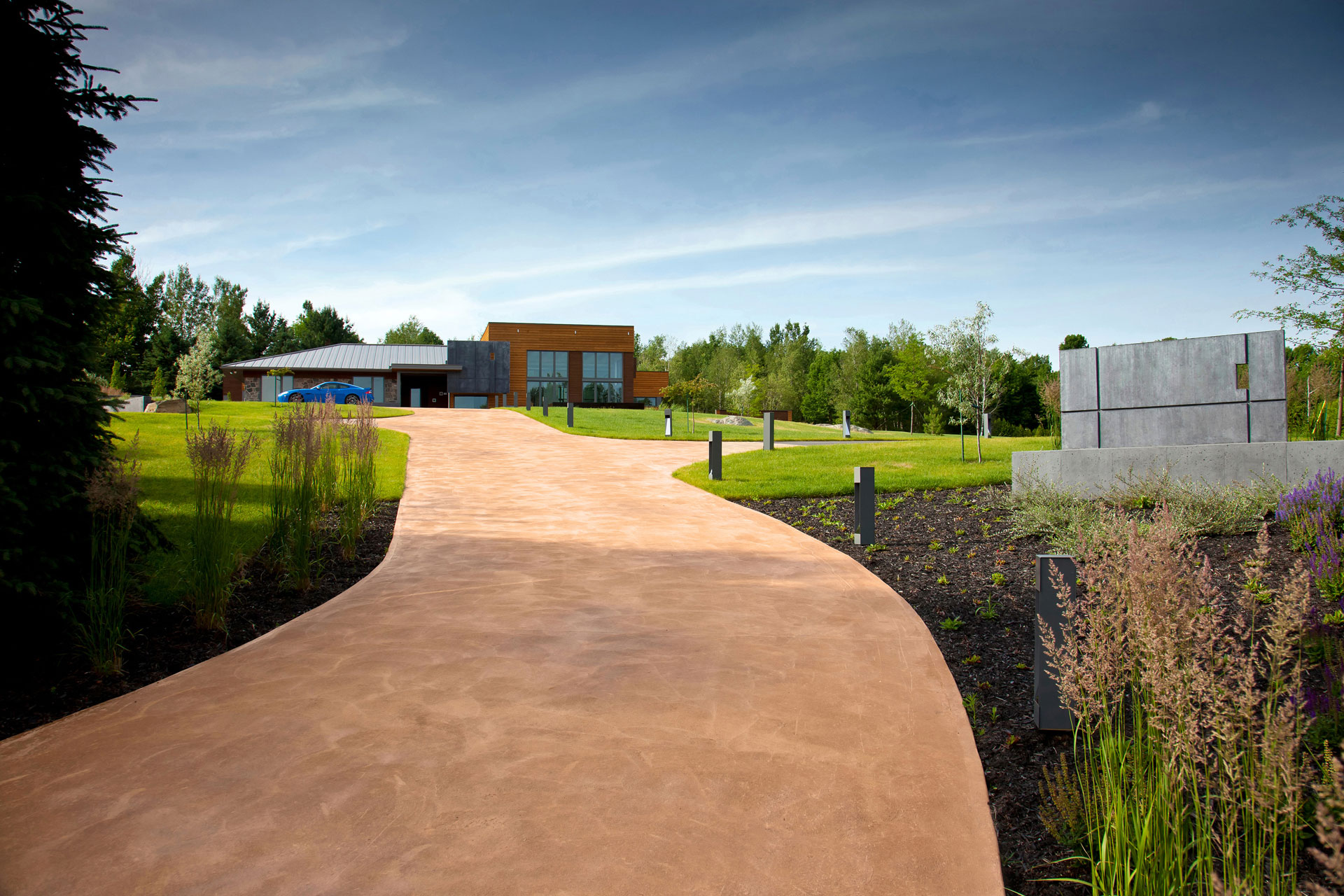
Story at a glance:
- Decorative concrete is a term used to define concrete that is treated with special pigments, textures, finishes, and performance enhancers to ensure both aesthetic appeal and long-term performance.
- These products are used for both architectural and commercial purposes, including residential applications like floors, walls, facades, precast, pavements, and other spaces, where the user desires a concrete product with aesthetic appeal and sufficient functionality.
- Decorative concrete enables the user to attain uniform color, high-quality appearance, and good workability of the concrete product, all of which are achieved with the use of special pigments, admixtures, and finishers.
Mark Langen has been working with concrete since 1980, exploring everything from the needs of shotcrete to the growing world of specialty concrete. For anyone thinking concrete is one thing, he can assure you—concrete can be almost anything.
As western region manager at Interstar Materials, a Saint-Gobain Construction Chemicals company and a sister company of Chryso, Langen has seen decorative concrete be used everywhere from the finest hotels to tourist streets in major cities. We recently caught up with Langen, as well as another concrete expert Christopher Roumie, Chryso North America product manager, to explore the types of decorative concrete and their endless possibilities.
What is decorative concrete?
Mark Langen: Decorative concrete is concrete that is different in aesthetics, different in appearance, and different in texture. It’s used to enhance projects—houses, major hotels, malls, things of that nature—to break up the mundane, standard gray concrete you might think of.
There’s no end to what can be done with decorative concrete really. I’ve seen some incredible things done with it. At the end of the day it can accent something, or it can be a focal point. It could be visually very attractive and still be concrete—still very functional, and it can last for a long time.
Christopher Roumie: Decorative concrete can combine aesthetics and performance. It’s a versatile way of bringing the architect’s vision to life. Colors, texture, patterns—all of that helps conveying vision, story, place, etc, whatever the design grammar needs to be, while also ensuring durability.
How have you seen demand for decorative concrete evolve?
ML: With homes, for example, it can add value because of the curb appeal. To do a driveway in a normal home you can increase the aesthetic of the house quite easily. In a lot of cases, when people start to do the cost comparisons, they find out they could do a color driveway or an exposed aggregate driveway—one of the nicer decorative concrete finishes you could use for a reasonable cost.
When people see the possibilities that are available their imaginations can start to run wild. A lot of municipalities and cities use decorative concrete to enhance the downtown core. Some amazing things are done with colored concrete in parks and even decorative concrete crosswalks. There are cities that will use more color or texture to identify features within their cities. The sky is the limit.
I’ve seen a huge uptick over the last 25 years in decorative concrete. I think why it’s increased so much is that contractors are more comfortable providing it, and owners and architects see the possibilities.
CR: Decorative concrete has come a long way over the years. As any industry evolves many different products and techniques are incorporated into its progression, and the decorative concrete industry is no different. From the use of fizzy sodas or petroleum-based products as the first surface retarders for exposed aggregate concrete to an industry leading brand like Chryso Top-Cast, Chryso and Interstar are always innovating ways to make concrete better, more visually appealing and more environmentally friendly.
As part of Saint-Gobain, our business aligns with the group’s commitment to achieving net-zero carbon emissions by 2050 and to promoting the emergence of a low-carbon economy in the countries where it operates. This involves all aspects of the entire building, and decorative solutions remain basic to those goals. The first thing you see isn’t a net zero building; it’s a visually appealing building that happens to be net zero.
Different markets have different demands, but generally, approximately 3% of all ready-mix concrete is treated as decorative. In some geographies that number is even higher, for example, in the Pacific Southwest. Decorative concrete is everywhere. This is expected to grow over the years as owners and developers are looking for their project to stand out from the others, and one of the easiest ways to do that is through the use of decorative concrete.
What are some of the most interesting architectural uses you’ve seen?
ML: In Calgary there is an underpass under one of the main roads that simulates a river using decorative concrete. They simulated this river and trout in different colors; they’re hanging on the wall as you drive by. It uses a number of different colors. They did that many years ago, and it still looks spectacular.
Some architects have specified decorative concrete for skate parks. We’ve had architects want to specify it for water parks, using colored concrete or some exposed aggregate, maybe some stained concrete. That’s the nice thing about concrete; you can use a bold color, a color of stain, or there are colored sealers or you can stamp different patterns in it. You can even give it an antique quality. Whatever people dream, we can figure out how to do it with concrete.
Some hotels have done precast panels that hang on the side of the hotel utilizing colors, stamped concrete or different textures. In Arizona, for example, all of their bridges are more of the natural color to blend in with the natural rock in the area. A project earlier last year was the first integrally colored bridge in Scottsdale using a concrete color. Combined with those projects are walkways and bicycle bridges, driveways and parks.
Concrete is so versatile in other ways. There was a TV series called “The Last of Us” that was filmed partly in Western Canada. The production people requested a walled city that the characters entered. They made a whole facade out of concrete to look old, appearing it had been through a war. That was all basically using color and stain and other special effects. It was an incredible undertaking.
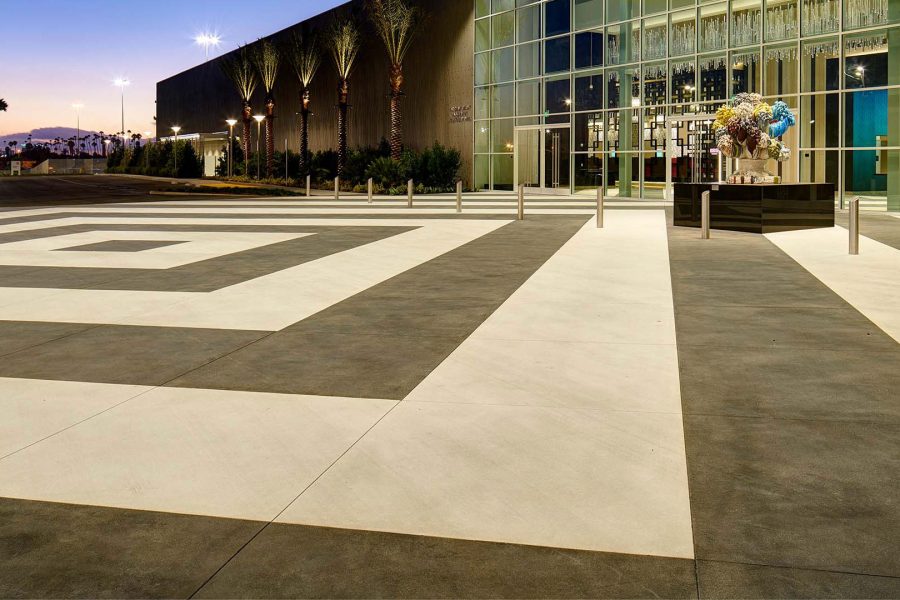
Photo courtesy of Chryso
Where can decorative concrete be used?
CR: Anywhere concrete is used, decorative concrete can be used. We see this every day in ready-mix concrete, for all kinds of projects: residential, commercial, industrial, and even infrastructure. In the precast concrete market especially, decorative concrete is used for building facades, bridge elements, and even structures that you aren’t even aware of, such as modular precast restroom facilities in public spaces.
Decorative concrete is very prevalent, often blending into the background of our everyday lives. If you need high visibility in high passage zones (i.e. schools and public places), concrete offers visibility, aesthetics, recognition, and the resistance you need. If you need wayfinding, decorative concrete can help you guide where to go. If you are working on infrastructure, you can make it more interesting than just gray concrete and make it part of the existing landscape in a more intentional way.
What else should architects know about decorative concrete?
ML: Concrete is a natural product. It’s rock, sand, cement, and water. You mix it up, and the result is concrete. From there, if you want it to be colored, if you want it to be stamped, you can change it. The thing is, sometimes people aren’t aware that, because it’s natural, there are variations in it, just like a marble countertop. Sometimes people tend to think that decorative concrete, like colored concrete, should look like it’s painted. It is a natural product, and that’s what enhances the beauty of it. Concrete countertops, concrete floors and the variation is what gives it its appeal. But sometimes people don’t like that.
The one thing I would recommend is that architects learn a little bit more about concrete. Something we run into regularly in the industry is that when you supply concrete, there are certain procedures that have to take place. Concrete doesn’t cure in five minutes. You have to get the moisture out of it, concrete fully cures in 28 days. In some projects they would put up the walls and they’ll want to do a decorative concrete floor, but they never scheduled how it’s going to be done and everyone’s in a big rush. Yes, you can make it cure a little bit faster with admixtures, but depending on what the decorative concrete is and the location, it needs to be approached properly.
It is a natural product, and that’s what enhances the beauty of it.
I would encourage architects to get better educated. We have a lot of people who are very experienced, and we do different concrete schools for our customers in different areas. If someone calls and says, “Do you have a specification for colored concrete?” We do have that, and we’ll give them the procedures for how to do that. We also have an architectural guide we’ve developed that explains what they need to do, what they can’t do, and so forth. Sometimes architects will go online and they’ll cut and paste some irreputable information. If architects want an accurate specification, we give them the procedures for how to do that. When you do the proper planning the job is far more successful.
Because we’re also an admixture company, I should note that there are different admixtures that have to be used throughout the country. For example, in the northern United States and Canada you have to use a product to protect it from freeze and thaw. In Arizona that’s different. There are different admixtures that can be used throughout the country to enhance the job, and sometimes architects just need a little bit more information.
And decorative concrete is not only popular in North America, but it’s all over the world. We see a lot of decorative concrete in the Caribbean and Mexico and even throughout South America.
CR: Decorative concrete can be as unique as your vision, so if you want to do something different, or special, or truly add curb appeal, using decorative concrete is one of the most impactful ways to do so.
Secondly, there are contractors who place decorative concrete for a living, so speak with those professionals and work with them for your project. They’ll appreciate the upfront collaboration and advise you on how something can or can’t be done, and they could even suggest a different and better way. These professionals work with decorative concrete all day; they know the materials.
And finally, when color is not specified for a project, the concrete’s color has already been decided for you: gray. Nothing wrong with gray concrete, but would that walkway or drive lane or facade have a different look or appeal if it had some vibrancy to it? Gray concrete is everywhere, and your project should have something other than just plain gray. Color shouldn’t be an afterthought but part of the vision.
What are Chryso’s decorative concrete solutions?
CR: Chryso has many solutions to produce decorative concrete. One example is integral pigments through our sister company, Interstar. These products can create a multitude of colors for any project. Earth tones are very popular, but we also see how white, blues, greens, purples, and lots of other different aspects of the color spectrum can also be incorporated integrally through the concrete matrix.
Additionally, Chryso’s line of surface retarders for fresh concrete called Chryso Top-Cast, when applied, prevents the set of the topmost layer of mortar on the concrete surface. Various depths of etch can be used to expose the stone and sand in the concrete matrix, creating a unique appearance for any project.
What are the challenges of decorative concrete?
CR: Concrete is one of the most widely used building materials ever developed, and if properly proportioned, mixed, placed, finished, and cured properly, it can last longer than any other building material out there. That said, decorative concrete is no different. The only additional step is to ensure everyone’s expectations are met for the final visual that’s expected. The selected company, products, and finishing techniques for a project need to be used during pre-placement approval or on a mockup panel. Having an approved sample onsite that everyone agrees to is going to be representative of the final finish and appearance, it is a crucial step that often gets missed but is easily remedied.
What is the future of decorative concrete?
ML: There will always be decorative concrete. Consider new neighborhoods being constructed or new shopping centers. They want it to look good so a lot of times they will incorporate decorative concrete. A lot of the big-box stores, for example, have colored concrete. Walmart, Lowe’s, and Target all have incorporated decorative concrete into their overall themes, whether it be as concrete panels on the outside of the walls or on the floor for better aesthetic appeal. It enhances the experience when people go into those places, so they don’t feel like they’re going into a parking garage. Many of these companies spend a lot of money to design the interior of their stores. They want a floor that is maintenance-free, nice to look at, safe, and easy to clean. Concrete does that very well.
In the last 25 years decorative concrete has never decreased in volume. The technology to do decorative concrete has improved. Some of the products we’ve developed in the company have improved. If you talk about stamped concrete, for example, you can do some very, very nice things with it. You can make it look like wooden slats; you can do flagstone. And in the colored concrete medium, there are also paving stones and retaining walls. When you start to look at the possibilities, you can do a retaining wall, and even a sidewalk to match your house or building. There are a lot of things you can do with a little bit of imagination.