Story at a glance:
- The built environment faces uncertainty as federal climate policy shifts, but experts say progress is still within reach.
- Many builders and designers, like JCJ Architecture, are forward-thinking and will continue to advocate for better, healthier buildings.
- As technology improves, states and clients will continue to see ROI in sustainable practices and invest in the future.
On February 12, 2026, the EPA completed the single largest deregulatory action in US history. It rescinded the 2009 greenhouse gas endangerment finding, essentially undermining the EPA’s own ability under the Clean Air Act to set emissions standards for industries that release greenhouse gases—from motor vehicles to power plants to the built environment.
This means—on a practical level—standards, expectations, and, crucially, incentives that have fueled sustainable innovations for decades may be unraveling. And although states, cities, and counties have sued the EPA since the action was published, architecture, engineering, and construction industries also have an opportunity to act even in this new environment of instability, says Eric Haggstrom, director of sustainability at JCJ Architecture. That action? Hold firm. Look to the future.
“Just in the last five years or so we kind of reached the top of the hill, and that ball has started rolling down the hill on its own,” Haggstrom says. “The industry really started to move with us, and there’s some really positive signs that that is continuing—that the ball is going to continue to roll in that direction.”
The 2009 finding the current administration is now dissolving was meant to protect life—grounding what science had been saying for years in policy that recognized greenhouse gases as more than just emissions but as a threat to public health. This can all be traced back to an early-2000s court case. The state of Massachusetts took on the EPA after the agency refused to see the need to regulate greenhouse gas emissions, despite the harm they were already doing to, especially, coastal communities facing erosion and loss of land.
“The Supreme Court ruled in favor of Massachusetts, basically saying that greenhouse gases qualify as a pollutant—that the science behind climate change is definitive enough that we can say that greenhouse gases present a threat to livelihoods and people’s quality of life. And in 2009 the endangerment finding identified which specific greenhouse gases they were going to target,” Haggstrom says.
So what happens when the regulatory rug is pulled out from under decades of work toward more sustainable practices in the built environment? “My biggest concern with turning this back is that we don’t fully understand the impact. We’re in the early stages of seeing where that impact can be, but it introduces an enormous amount of uncertainty on the federal level.”
It all comes down to money, rules, and behavior. Without the federal regulation, incentives and funding in the form of federal grants tied to reducing emissions and tax credits for things like solar and geothermal could dry up. The AEC industry might initially struggle moving forward with projects designed to work within the former standards around emissions limits and building performance. And, longer term, companies may be less motivated to invest in new technology aimed at reducing greenhouse gases, slowing research and development for years.
“For us in the built environment, that slowing of technology and that technological development is a real problem for our clients who are looking at these systems from a return on investment perspective,” Haggstrom says. “Buildings are a very complex machine that require a lot of different technological components across a lot of different industries. So when something like this happens that affects a really broad section of the market, it has a trickle-down effect on what we can achieve in our designs.”
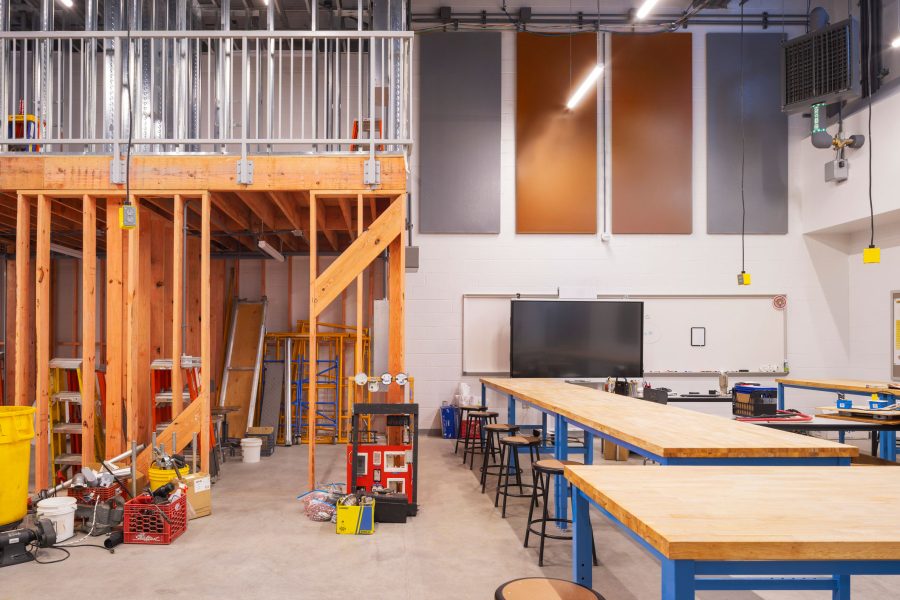
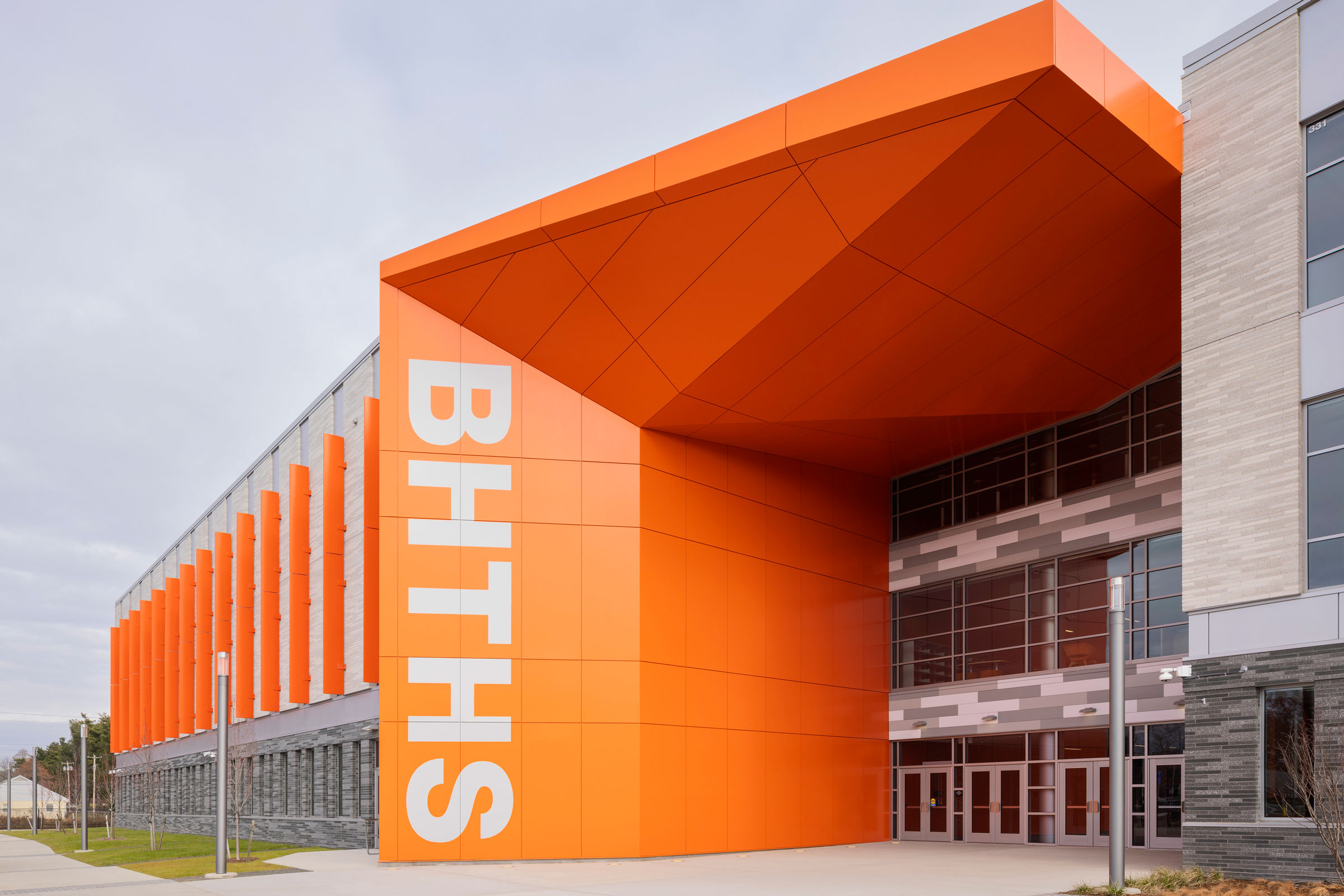
The once-aging Bullard-Havens Technical High School is now a healthy, energy-efficient environment for more than 800 students in 13 technical programs. Photo by Craig Moreau, courtesy of JCJ Architecture
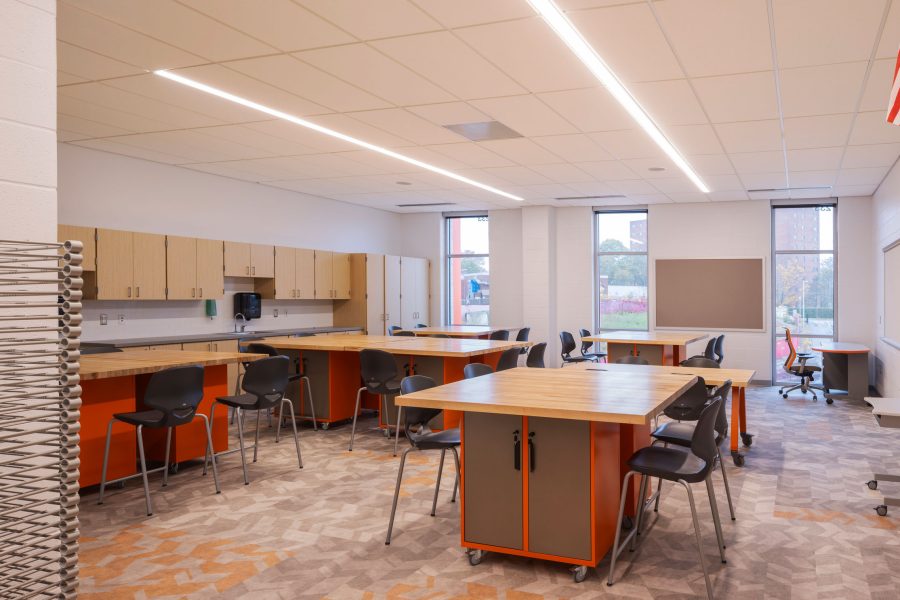
Construction on the new facilities at Bullard-Havens Technical High School started before the federal government began the process of dismantling regulations around greenhouse gas emissions, but rather than giving up on those best practices, the state of Connecticut has been doubling down, according to JCJ Architecture. Photo by Craig Moreau, courtesy of JCJ Architecture
But many firms, like JCJ Architecture, are moving forward despite the shaky ground and helping clients position themselves for the future. What does that look like? Take Bullard-Havens Technical High School in Bridgeport, Connecticut. This once-aging educational facility, part of the Connecticut Technical Education and Career System, worked with JCJ to bring its learning environment into the modern era not only to meet standards but also to provide a healthy, energy-efficient environment for the more than 800 students within its 13 technical programs.
Construction on the new facilities started before the federal government began the process of dismantling the regulations around greenhouse gas emissions, but rather than giving up on those best practices, the state of Connecticut has been doubling down. They’ve launched initiatives statewide that work to, according to Connecticut’s 2023 Sustainability Performance Plan, “advance environmental leadership and cost savings for taxpayers by reducing greenhouse gas emissions and other sustainability objectives in buildings and vehicles, water use, and waste disposal.”
And the Bullard project is just one of many the state is now bolstering. With its integrated 241-well geothermal ground source heat pump system providing close to 90% of the building’s heating and cooling needs while incorporating a no on-site fossil fuel combustion approach for building systems, Bullard is a study in how the future might look.
In short, this is a state-supported, grant-enabled modern and high-performance space designed for healthy, efficient use for decades to come. It’s proof that, even without federal support, forward-thinking designers and builders don’t need to wait for the dust to settle to choose a clean path to the future. “I don’t think we will see things like LEED or the concepts of net-zero energy or things like that disappear. I think we’re going to continue to see that market expand. I think we are going to continue seeing positive direction. We just may see the pace slow down,” Haggstrom says. “There are a lot of heartening things coming out of areas where you wouldn’t expect it.”
He points to Texas’ record investments in solar energy in 2025, when support at the federal level was already dwindling, as one example. “When you see a sign like that, you see the industry is really starting to pick up momentum on its own. These things are becoming more cost-effective. They’re becoming able to be implemented at scale,” he says. “My hope is that we continue to see the same pace of innovation. If that continues, the right choices become the most cost-effective choices. And once the right choice is the most cost-effective choice, then it becomes universally adopted.”