Story at a glance:
- Education is needed around the capabilities of Hollow Structural Sections, or HSS.
- Bull Moose Tube’s HSS can meet building owners’ green building requirements, as evident in its EPDs.
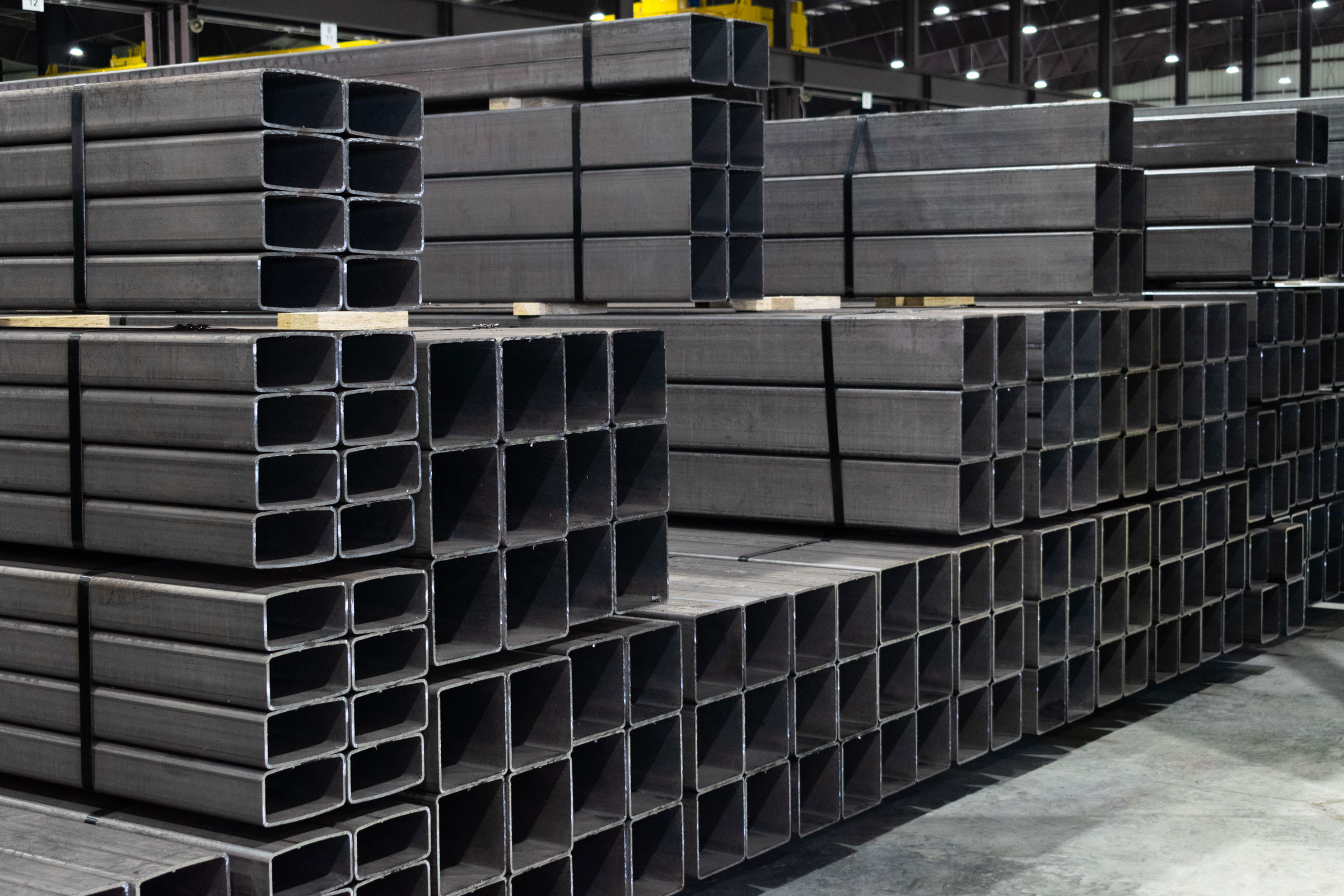
The 16th edition of AISC’s Steel Construction Manual includes 2,432 pages about structural steel. The manual is the quintessential reference guide for structural engineers, providing steel-strength calculations, general design considerations, bracing and truss connections, the latest codes and standards, and so much more. Since 1998 these manuals also have included information about Hollow Structural Sections, or HSS—a high-strength welded steel tubing that is available in square, rectangular, and round shapes as well as a variety of sizes—for architecture and engineering projects.
Despite its availability in the marketplace since the 1950s and its acceptance in steel construction manuals by the end of the last century, HSS often is overlooked for wide-flange sections, which have been a fundamental component of modern commercial construction.
“Schools are still teaching from the same textbooks from 20 and 30 years ago, and the curriculum is heavy on wide flange,” says Richard Morales, manager of field application engineering for Bull Moose Tube, a manufacturer of steel tube and pipe, including HSS, sprinkler pipe, mechanical tubing, and pipe piling. “Unfortunately there aren’t many schools that are up-to-speed on HSS.”
Because HSS is not typically taught in engineering and architecture schools, HSS manufacturers have had to enlighten designers about the product’s benefits for design and construction. Morales says designers’ eyes widen when he shares Bull Moose Tube’s HSS’ attributes: superior strength to weight ratio (up to 110 KSI), speed to market, sustainability and lower costs. In today’s economic environment these advantages make HSS worth considering for any construction project.
HSS Speed to Market and Sustainability
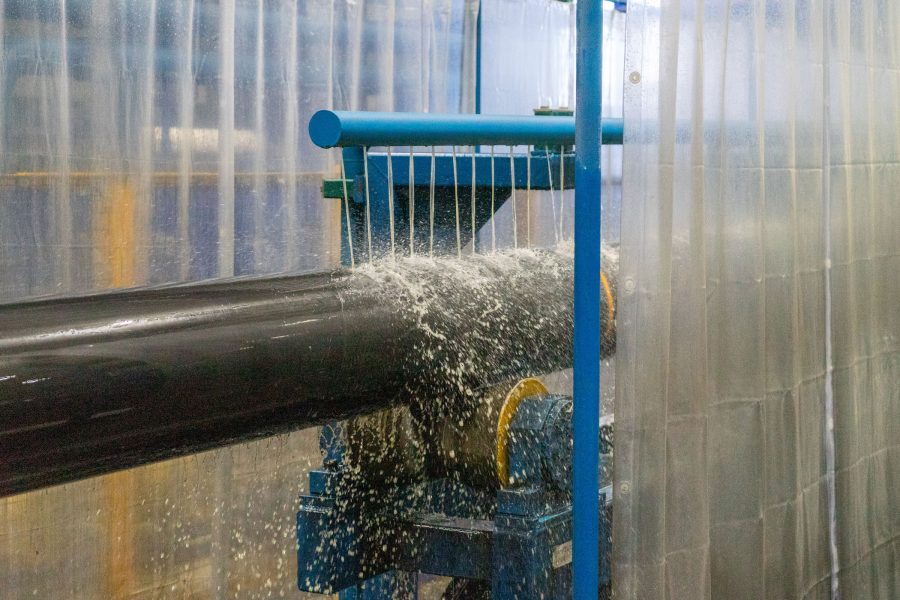
Photo courtesy of Bull Moose Tube
Established in 1962 with headquarters in St. Louis, Bull Moose Tube has seven manufacturing facilities across the US, with recurring production schedules that enable the company to meet a wide range of customer requirements with dependable lead times. As a member of the Steel Tube Institute (STI), Bull Moose Tube’s products are included in STI’s HSS Production Capability Tool, in which users enter the size and material grade to find producers of the HSS they are seeking. (STI also is a valuable resource to project teams interested in using HSS. In addition to HSS design manuals and technical expertise, the organization provides a document to assist in determining which HSS ASTM specification applies to projects.)
“We have sizes we regularly run and sizes we can fit into our schedule,” says Nate Carruthers, Bull Moose Tube’s director of business strategy & marketing. “We generally have rolling schedules where we’ll produce a size every four to six weeks.” Morales adds that wide-flange sections’ lead times currently are into Q4 and even 2027, but Bull Moose Tube can meet much quicker timelines. “If a building already has been designed with wide-flange columns, that’s a very easy fix,” he says. “There’s likely an equivalent HSS that can handle the load, speed up the build, and provide some weight savings as well.”
Among its manufacturing locations, Bull Moose Tube’s Sinton, Texas, facility, which came online in 2023, is its largest—producing 350,000 tons of steel pipe and tubing per year—and most environmentally friendly. Located on the same campus as Steel Dynamics’ Flat Roll Group, from which Bull Moose Tube receives its steel coil, the Sinton plant boasts the lowest global-warming potential (GWP) in the industry at 1.06 metric tons of CO2e per metric ton of tubing. “The largest part of our carbon footprint—90% or more—is the coil we buy,” Carruthers says. “But transportation from Steel Dynamics’ plant to our plant is minimal, so we really don’t have the transportation emissions part of the equation either.”
In addition, Steel Dynamics utilizes electric arc furnaces, or EAFs, to produce its steel coil, which reduces the carbon footprint compared to legacy basic oxygen furnaces (BOFs). BOFs make steel with extracted raw materials and fossil fuels while EAFs melt scrap metal at extremely high temperatures using high-power electric arcs. An independent study conducted by CRU Group found that steel produced by US EAF steelmakers has a carbon intensity approximately 75% lower than steel made by BOF steelmakers. “Sustainability is a major reality for many companies; everybody is thinking about and asking for EPDs, and Bull Moose Tube is very proactive when it comes to sustainability,” Morales says.
To continue providing the most up-to-date third-party data to engineers, architects, owners and other customers whose projects have specific green-building requirements, Bull Moose Tube continually updates its EPDs and is undergoing the process now. “We need to show we can meet aggressive private-sector sustainability goals, like those of data centers,” Morales says. “I recently attended a trade show in which a presenter from Amazon said a data center loses multimillions of dollars each day it doesn’t go online. We don’t want steel to be part of that delay, and HSS offers speed to market and the demanding global warming potential (GWP) values that data centers require.”
Morales adds that mission-critical data-center construction finally has placed a spotlight on HSS because the tech giants building them are seeking a permanent structural asset. “When you use recycled HSS you aren’t losing quality, strength, or utility; it’s still as strong as it was before it was recycled,” Morales says. “Data center owners want products that optimize the total life cycle of their buildings.”
A Holistic Approach
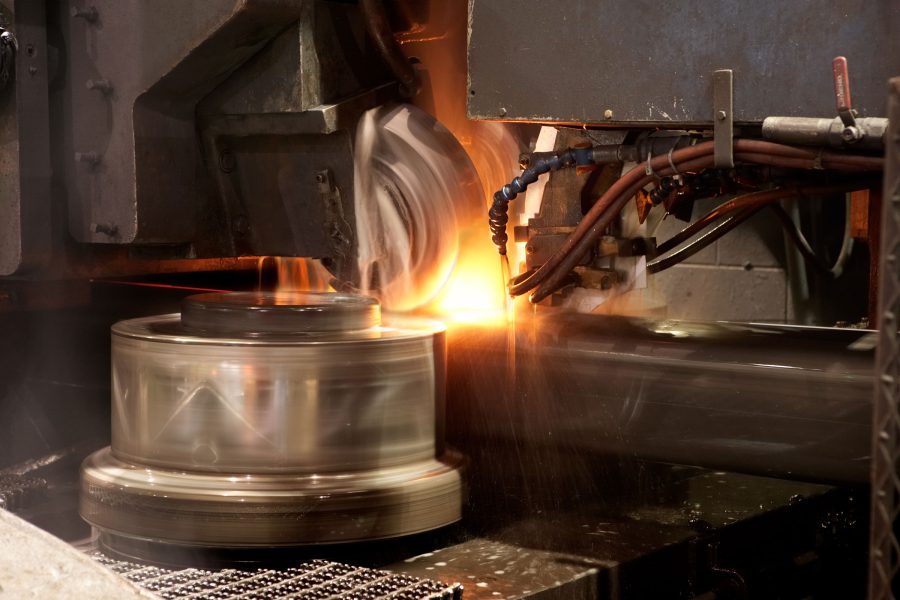
Photo courtesy of Bull Moose Tube
Morales and Carruthers encourage design teams to think about structural steel as part of a holistic system that influences everything in a building—from foundation loads and spatial flexibility to architectural systems and speed of assembly. Ultimately specifying HSS can result in a high-strength building that meets sustainability goals and tight budgets and construction timelines. “When I’m at a trade show and only have a few seconds to share the benefits of HSS with an attendee, I say it’s stronger steel that is lighter, cheaper, and will arrive onsite faster than wide flange,” Morales says. “Plus, if you choose Bull Moose Tube HSS, you’re going to have EPDs that show the lowest GWP values in the country.”
Bull Moose Tube digs more into sustainability and how low-embodied-carbon steel drives decarbonization at gbdmgazine.com in September.