Story at a glance:
- A private residence in Washington blends ski lodge aesthetics and modern, Japanese precision for a cozy and connected living space.
- Balancing light and protection from the sun and the snow was a major challenge of this design, while giving the house a warm and cozy feeling.
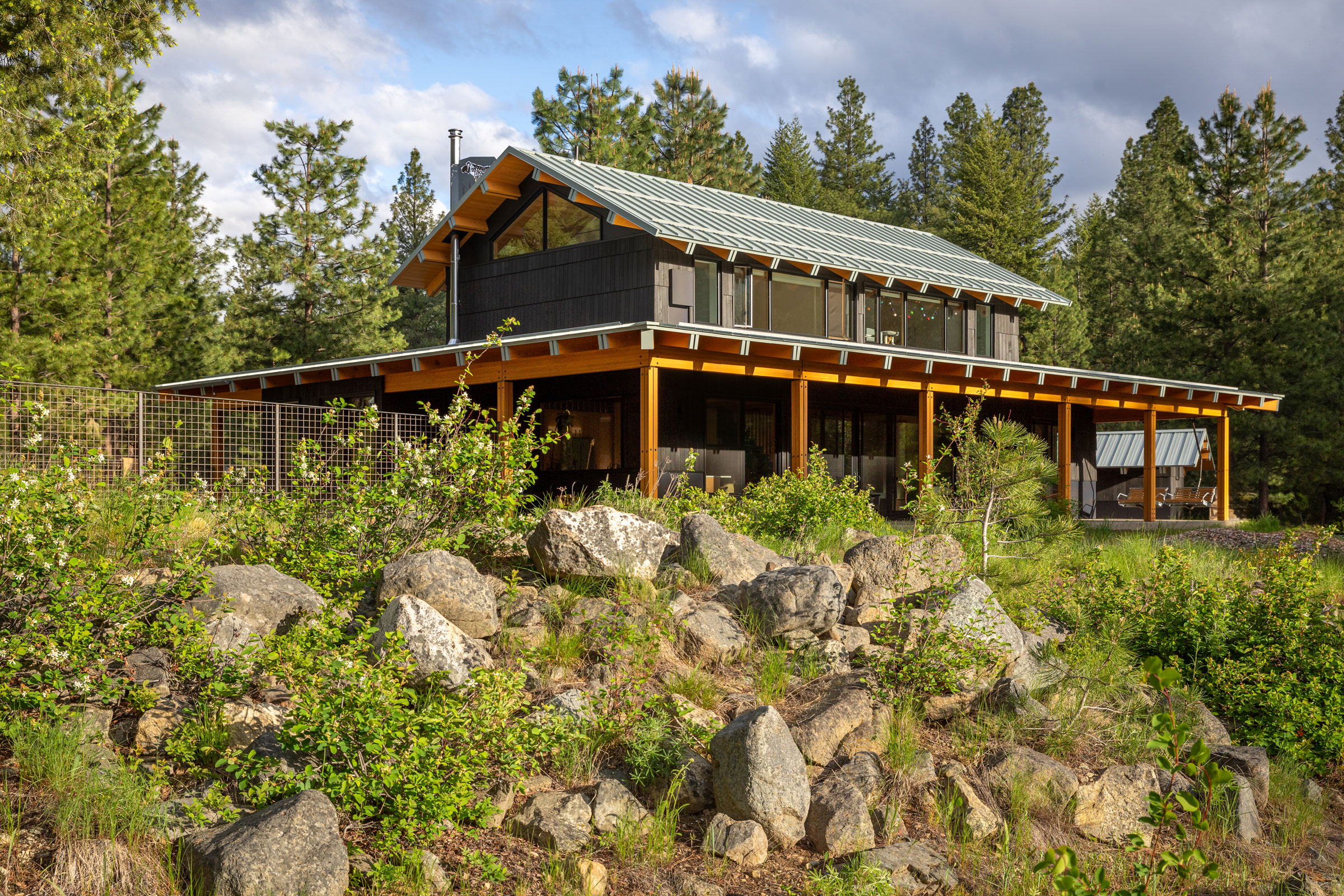
Tucked into Washington’s Methow Valley, on the dry side of the Cascade Mountains, Pointing Dog is a private residence with a whole lot of character. Laced with personal touches and covered nearly top to bottom in wood, Johnston Architects designed the relatively small, two-story house to merge ski lodge style and Japanese craftsmanship in one cozy and connected home.
A Remote Respite
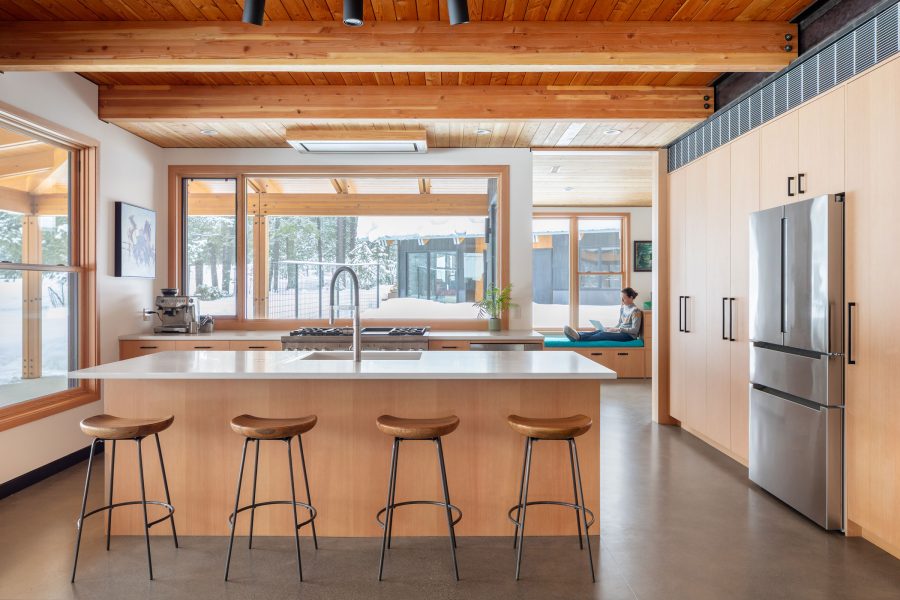
A heat pump from Mitsubishi Electric and airtight windows by Sierra Pacific help ensure the home stays cozy during winter. Photo by Benj Drummond, courtesy of Johnston Architects
The core intention of the home is care: for its occupants, for the land on which it sits, and for the larger community of Methow Valley, a place where everyone knows their neighbors. “There are no chain stores, there’s not even one stoplight in the valley. It’s very quiet and incredibly beautiful,” says architect Mary Johnston, partner at Johnston Architects.
A land trust in the valley has established conservation and agricultural easements across thousands of acres of land to preserve the rural peacefulness of the region. This includes much of the Pointing Dog property, which spans from the river, across a field, and up to Highway 20, with the easements almost outlining the building site.
Being in such a remote location posed its own unique challenges relating to climate, wildlife, and accessibility. Trees close to the house had to be removed or limbed up high to ensure defensible space in case of wildfire. A gravel drive creates a firebreak around the house. Heat pumps, radiant flooring, and a wood stove provide reliable heat through the winter, while a two-story layout allows for more energy efficiency and a smaller building footprint on treasured land.
“The homeowners are a small family, they have one child, and they wanted to be close together so we kind of shrunk it down. It’s not a very big house. The great room is generous because that’s where they spend most of their time, all together. The auxiliary rooms, offices, and bedrooms are quite small,” Johnston says.
Mixed Influences
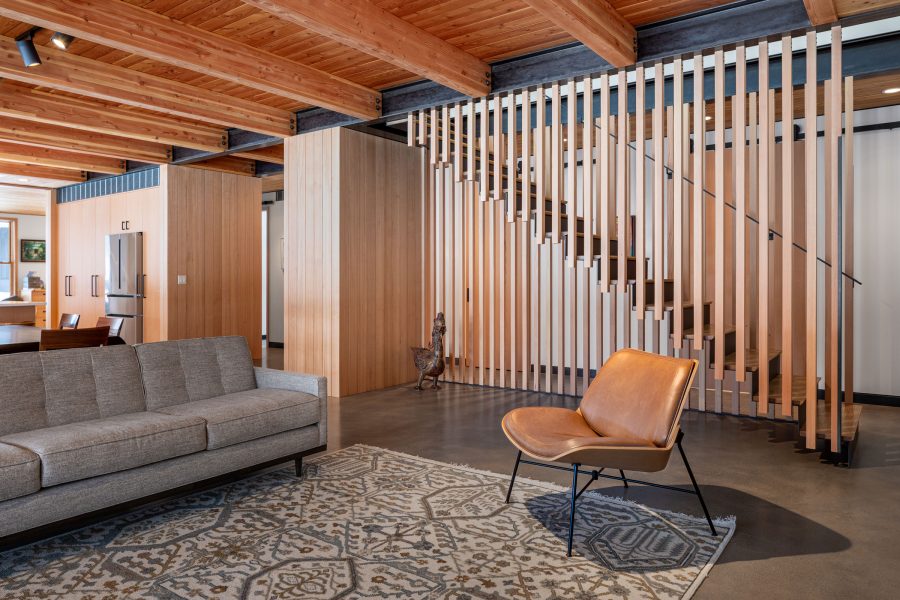
Ski lodge style meets Japanese attention to detail thanks to the masterful joinery of the Pointing Dog contractor’s team. “They really are great craftsmen, and they took the assignment seriously,” says Mary Johnston, partner at Johnston Architects. Photo by Benj Drummond, courtesy of Johnston Architects
The homeowners approached their future abode with separate aesthetic preferences: Jennifer, from Jackson, Wyoming, gravitates toward more traditional American forms, reminiscent of the cozy shelter of ski lodges. But Brian wanted something modern, infusing Japanese architecture and its simplicity, its attention to precise joinery and beautiful wood details.
A Kengo Kuma design at the Portland Japanese Garden Cultural Village inspired the solution. “It has these beautiful hipped roof structures, very traditional in form but very modern in detail,” Johnston says. The team decided to translate the idea to the home’s covered exterior. “You can extend those hips out to form verandas. We opened up the gable ends upstairs to bring light down into the parts of the upstairs. And then we modified those details to work in heavy snow country.”
Of course, the two aesthetics have a very obvious common ground—wood. “One of the homeowners’ first ideas was to reuse barn wood for the interior surfaces,” Johnston recalls. Between the difficulty of finding old barn wood in still usable condition and the resources required to bring that reclaimed barnwood from distant locations—usually the East Coast—the idea was thrown out. Instead, FSC-certified wood was used throughout the home’s warm, wooden interior.
Light and the Elements
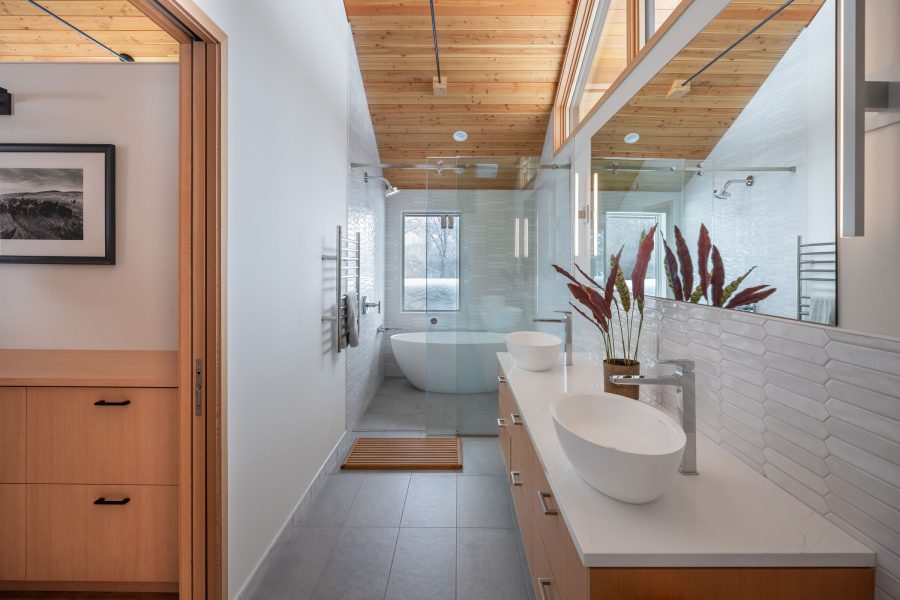
Sleek and modern details like the bathroom’s WOW Gradient crayon tiles in greige top of auxiliary spaces in the home. Photo by Benj Drummond, courtesy of Johnston Architects
Johnston’s main goal from the start was to work with the site to make the house as protected as possible without shutting out the light. With Highway 20 directly to the south, a stand of Ponderosa pines the only buffer, maximizing southern exposure was out of the question.
But with hot, sunny summers, it ended up being alright. “That was a good thing that we could face the main windows of the house in a northeasterly direction. We avoid a lot of heat gain,” Johnston says. The choice also allows for maximum indoor-outdoor enjoyment, with a huge veranda nearly as large as the main floor living area that is usable year-round.
The open northeastern side also stays sunny in the winter, thanks to light reflected from the snow outside.
A Home Full of Character
-
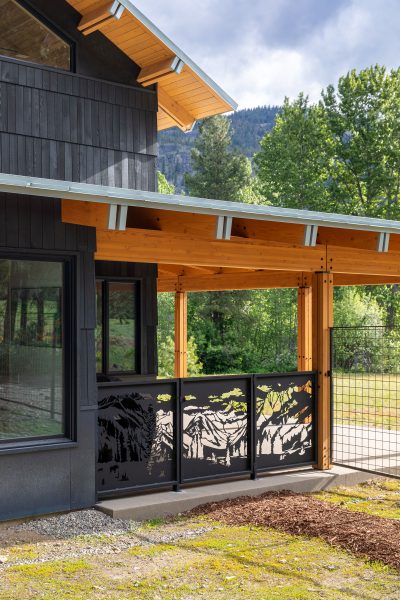
- The family’s dogs necessitated a fenced yard to reduce the danger of wildlife attacks. Expert metalworkers incorporated scenes from around the valley, allowing the fence to connect with the landscape rather than shut it out. Photo by Benj Drummond, courtesy of Johnston Architects
-
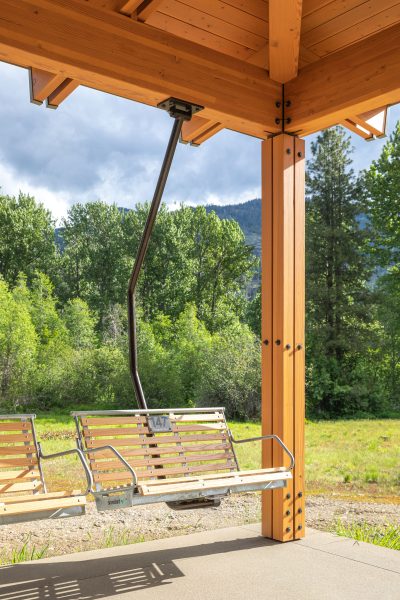
- An old ski lift gets new life as a porch swing at Pointing Dog. Photo by Benj Drummond, courtesy of Johnston Architects
Throughout the home personal touches from the homeowners give the property distinct character. Even the name, “Pointing Dog,” is a nod to the homeowners’ previous cabin, which they nicknamed Pointing Dog Ranger Station in reference to the family pets: German Shorthaired Pointers. One beloved dog, Ruger, became an emblem of the home, his silhouette visible in the metalworking of the snow splitter on the rooftop.
Objects and souvenirs collected from the homeowners’ travels around the world also found dedicated space in the home. Intricate doors from Southeast Asia slide to reveal closets. The architects engineered steel-lined niches at the entrances to house Nepalese prayer wheels, which are spun to release blessings. “It’s a real marker for the house and adds another element of character,” Johnston says.
Johnston points to homeowner Jennifer’s office as a favorite space of the home. As a former pastry chef Jennifer had specific ideas about what she wanted in a kitchen, including workspace. Her office is a nook right off the kitchen with a desk, wood stove, and window seat overlooking the yard where the dogs roam. “That room typifies the themes and the feeling of the house: We’re all together. We can have our own private niche, but we can see each other, and we feel connected.”
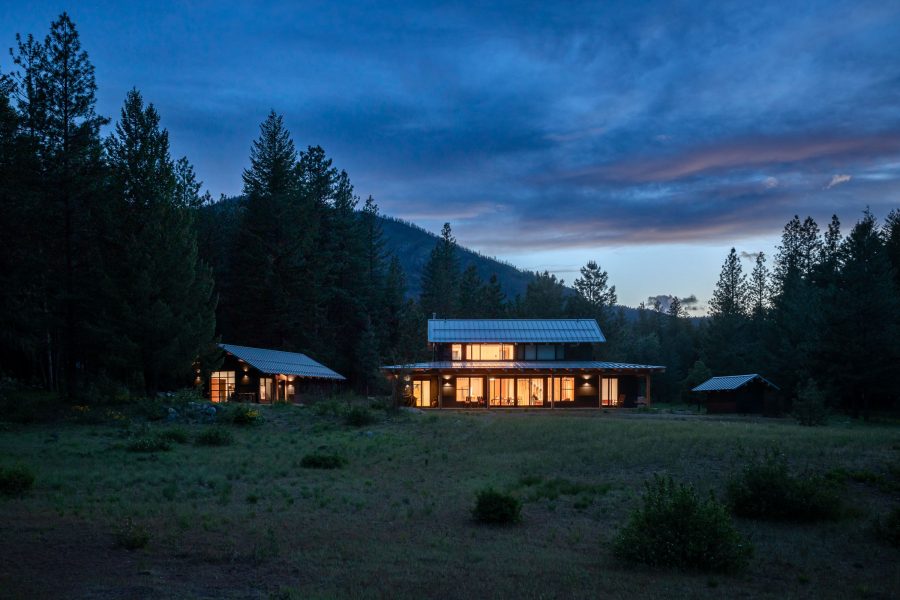
“They are conservation-minded. Most of the property is an easement, so it always will stay the same. The house has a smaller footprint. It’s a dark color, so it blends into the landscape. All of that fits into that ethos of caring for each other and caring for the land,” says Mary Johnston, partner at Johnston Architects. Photo by Benj Drummond, courtesy of Johnston Architects