Story at a glance:
- A Wells Fargo project in Texas shows the benefits of going net-positive.
- Corgan combined high-performance architecture with operational discipline and a nature-forward employee experience in this design.
- Net zero should be the default goal for projects, aiming for net-positive where conditions allow.
Wells Fargo’s recently opened campus in Irving, Texas, has the distinction of being the largest net-positive commercial campus in the United States. With 850,000 square feet across two, 10-story office towers and a parking garage, the project is an example of what is possible for the future of commercial architecture.
During the design process Wells Fargo’s goal shifted from net zero to net-positive, prompting a fresh review of envelope performance, plug loads, occupancy assumptions, and renewable capacity. The resulting campus pairs high-performance architecture with operational discipline and a nature-forward employee experience.
Location, Location, Location
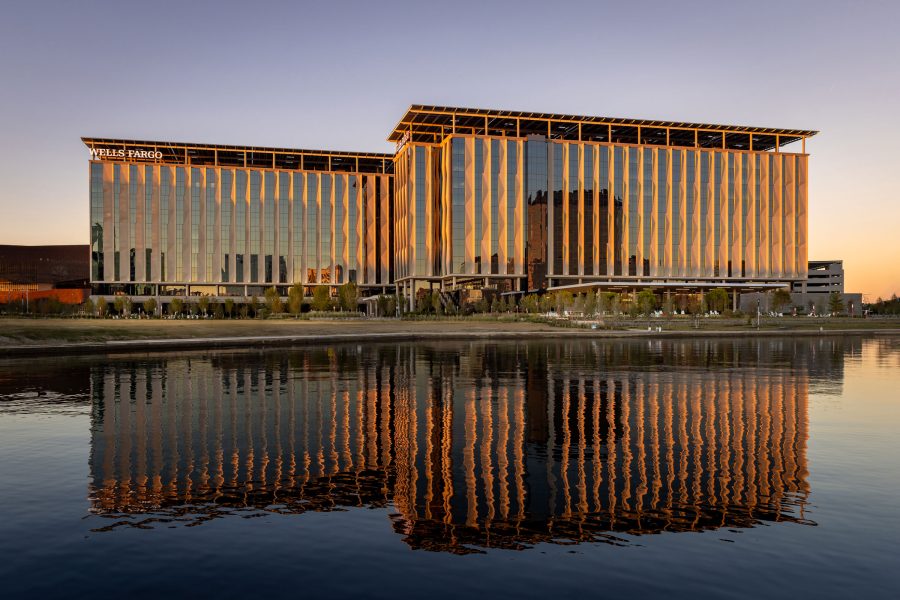
Photo courtesy of Corgan
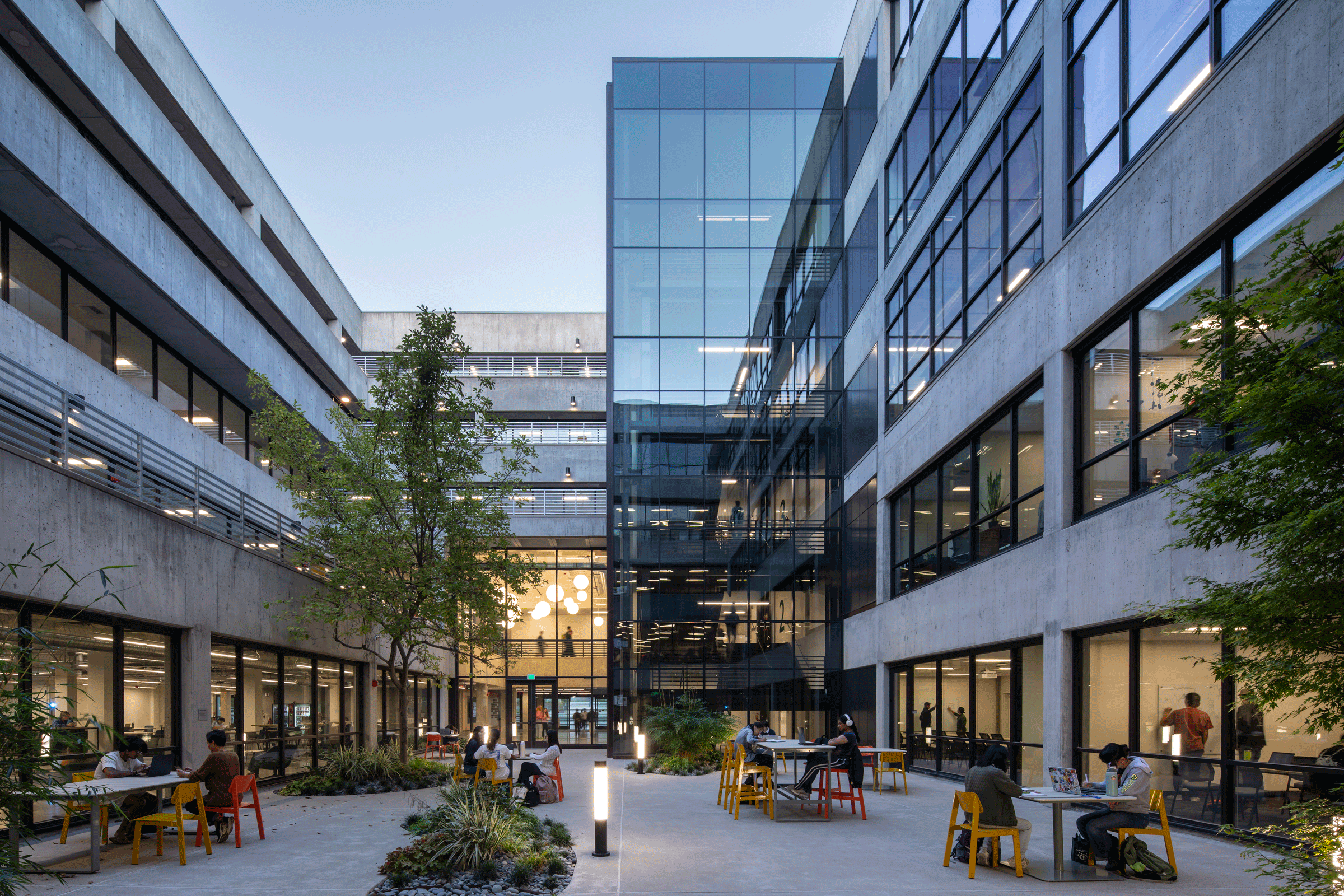
Location was one of the campus’ first sustainability levers. Situated next to the man-made Lake Carolyn and within the Las Colinas district, the project benefits from existing density and access to public transit, reducing pressure to treat the campus as an isolated, car-only destination.
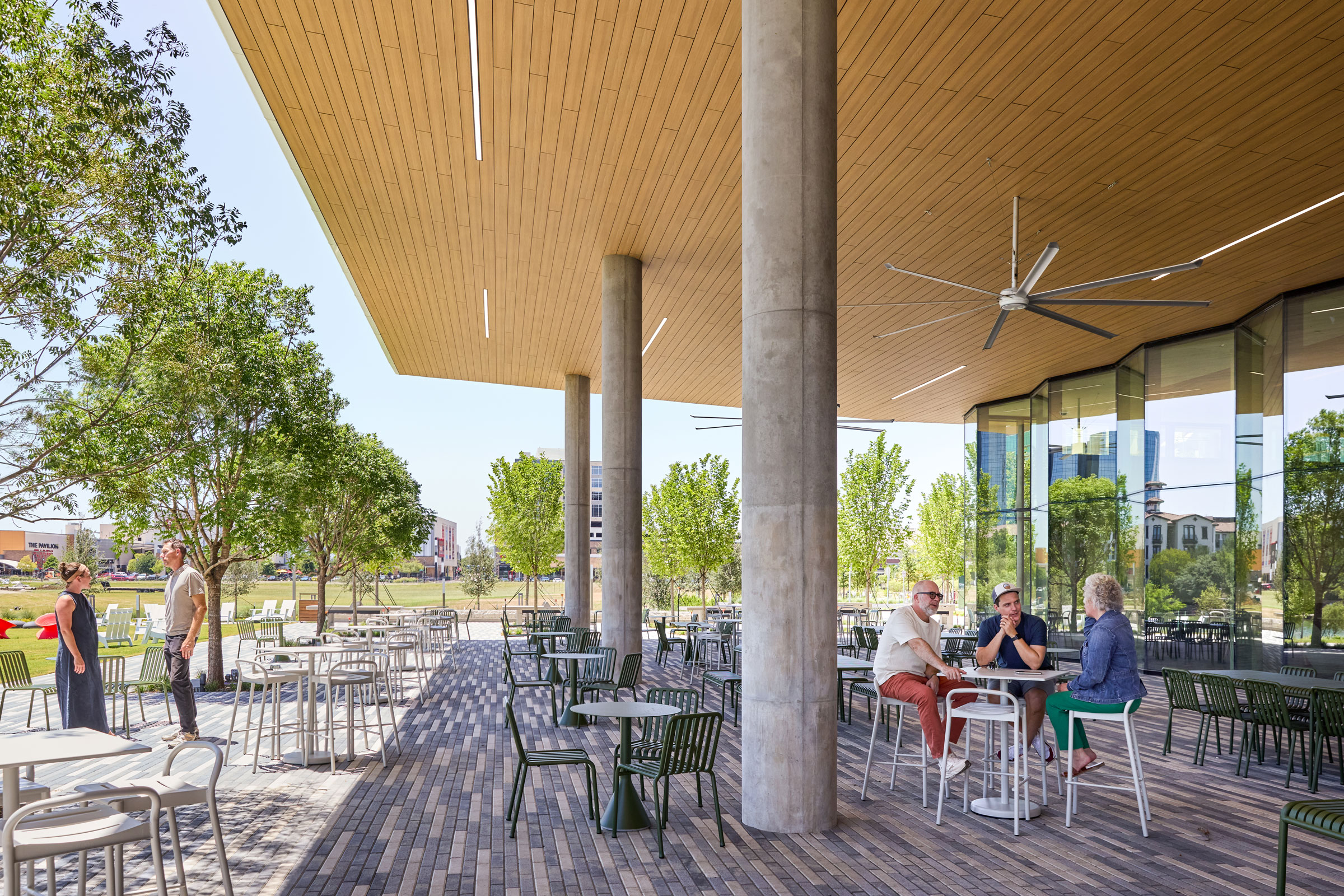
On site, the plan concentrates parking in a six-level garage and uses an open-air skybridge to connect daily arrivals to the towers. Green space covers more than one-third of the site, which helps reduce the heat island effect. This limits surface paving, preserves land for greenery and outdoor amenities, and improves the walk from curb to desk.
We also designed the landscaping with sustainability in mind: shaded paths, planted gathering areas and native, low-water greenery support stormwater management and encourage walking and outdoor breaks.
A Balancing Act
-
- Photo courtesy of Corgan
-
- Photo courtesy of Corgan
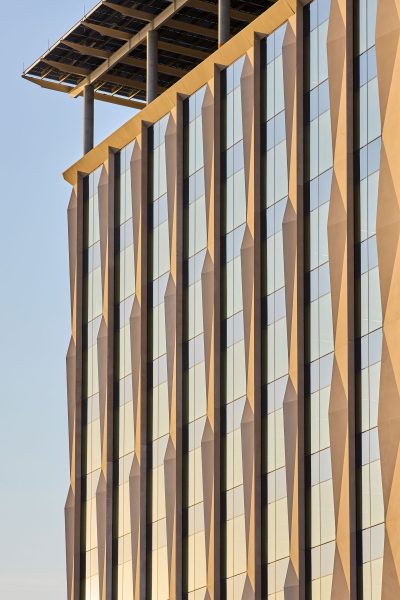
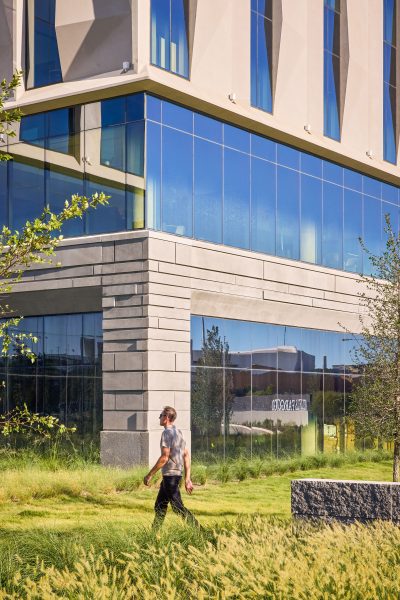
In Texas, the challenge is managing a lot of sunlight and high temperatures for a good part of the year, which impacts heat gain and higher cooling loads. We used solar and energy modeling to compare how building orientation would affect performance and to guide the ratio of glazing to concrete facade. Long, narrow floor plates of about 40,000 square feet push daylight deeper into work areas, reducing the need for electric lighting.
To keep daylight without the heat penalty, the envelope balances about 60% glazing with 40% insulated precast concrete panels. A key feature is electrochromic, or dynamic, glazing that automatically changes tint based on sun conditions. In intense sun, the glass darkens to cut solar heat gain while preserving views; in lower-light conditions, it becomes clearer to increase daylighting.
Our modeling showed strong spatial daylight autonomy (sDA): On lower floors more than 70% of the floor plate gets enough natural light to eliminate the need for artificial light for a significant portion of the year, while upper floors hit between 50% and 55% sDA.
Check Your Schedule
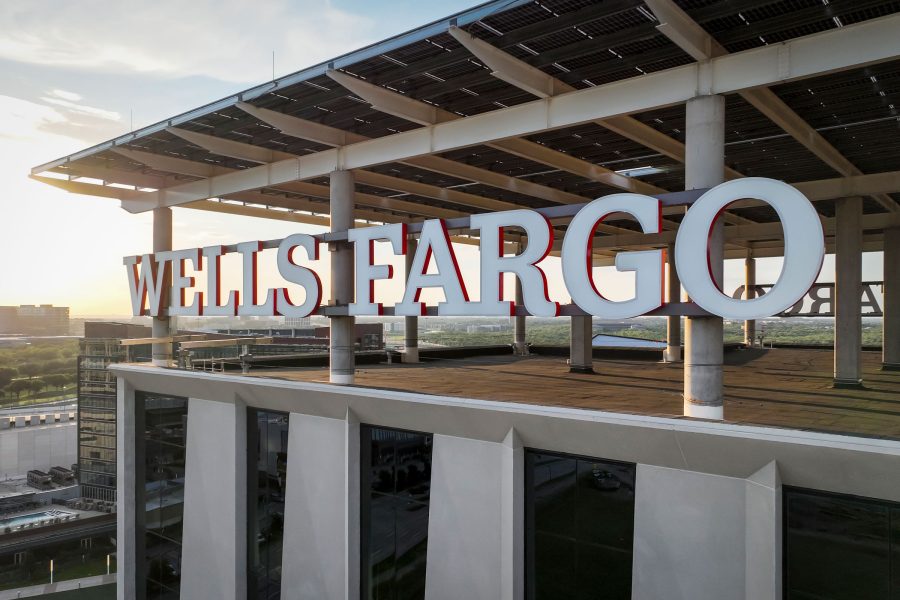
Photo courtesy of Corgan
Of all variables, the operating schedule has the largest impact on energy use. When the goal shifted from net zero to net-positive, the team revisited the scheduling that drives annual energy use: plug loads from computers and equipment, high-load areas like kitchens, and how much space truly needs conditioning after hours.
Early scenarios kept multiple floors running around the clock, requiring lighting, ventilation, cooling and equipment to stay on 24/7—a costly approach in a cooling-dominated climate. Working with Wells Fargo we consolidated occupancy so only one floor remains occupied 24/7, reducing the amount of continuously conditioned space without compromising business operations. Those schedule choices were coordinated with additional efficiency measures, including high-performance lighting, outside air units that support HVAC efficiency and indoor air quality, and a hybrid mechanical system.
Power Up
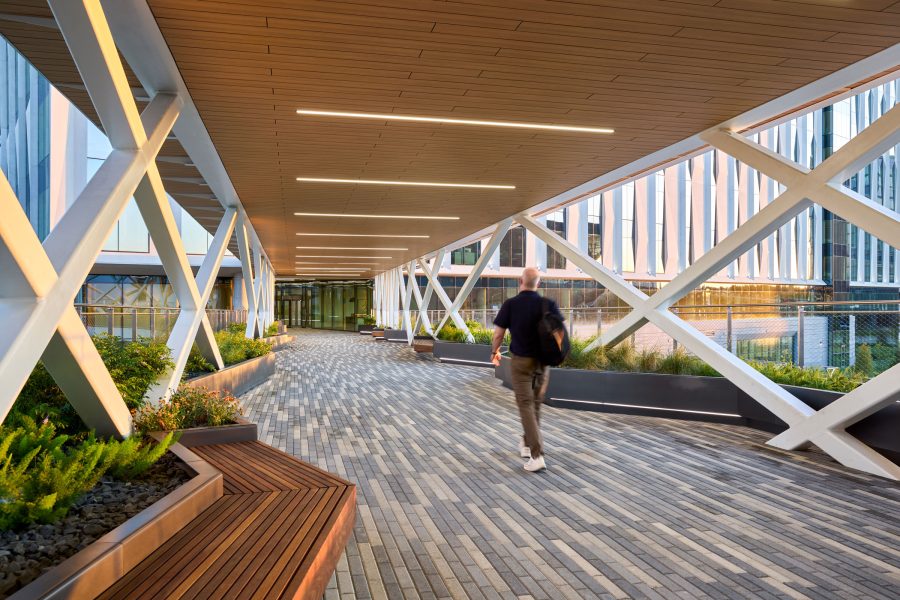
Photo courtesy of Corgan
After reducing energy demand as much as possible we began maximizing energy generation to close the gap. Our design has more than 360,000 square feet of photovoltaic panels across the office roofs and the parking structure, a choice that turns a needed piece of infrastructure into a power plant while adding shade to parked cars.
The team’s shift in ambition from net zero to net-positive sharpened our focus on usable panel area, pushing us to prioritize large, continuous arrays and avoid rooftop obstructions where possible. This was achieved by lifting the panels 20 feet off the office roofs and 10 feet off the garage so the panels do not intersect with rooftop machinery. The solar panels are projected to produce about 5% more electricity than the campus uses each year.
Reduce, Reuse, Recycle
Net-positive goals often focus on electricity, but water performance is part of the overall strategy. By pairing low-flow plumbing fixtures with gray water reuse, we reduced potable water demand while maintaining a high-quality workplace experience. Proximity to Lake Carolyn means lake water can support irrigation across the landscaping, which is designed with native, low-water plantings. Together these measures cut overall water use by 58 to 60% compared with a baseline office development.
Beyond conservation, our approach improves resilience by diversifying water sources for irrigation and other non-potable uses. It also reinforces the campus’ local, nature-based identity: The lake is not just used for its views but as part of the site’s operations.
Walk the Walk
The Wells Fargo campus also uses its architecture and design to make sustainability legible, reinforcing its net-positive performance through a daily experience of daylight, nature, and comfort. The open-air sky bridge, framed by angled structure, wood soffits, and integrated planters, turns the walk from the garage to the office into a route with fresh air and nature views.
In the lobby and large café, large windows and skylights extend that connection, and design details that reference water and organic forms reinforce the link to Lake Carolyn. Natural light and a walkable campus as well as outdoor gathering areas support wellness, but they also complement the energy strategy. Daylit interiors reduce lighting demand, and prominent, walkable circulation can encourage stair use instead of defaulting to elevators for short trips. By incorporating biophilia and sustainability into spaces people enjoy using, rather than limiting it to back-of-house equipment, the campus helps align organizational values with day-to-day behavior.
A Replicable Playbook
The Wells Fargo campus shows that net-positive results are attainable at scale. It’s not easy, but it is simple. First, ruthlessly reduce demand through design and a realistic operating plan, then match it with renewable energy generation. With a high-performance envelope, disciplined scheduling and photovoltaics scaled across roofs and the parking structure, the campus is projected to produce more electricity than it uses each year without sacrificing the employee experience or business needs.
As cities face higher temperatures and added strain on power grids, projects like this point to a clear direction for new development: Net zero should be the default, and net-positive should be the goal where conditions allow.