Story at a glance:
- Western Memorial is about 10 to 15% smaller footprint compared to similar facilities in Canada.
- Western Memorial features the largest geothermal system in a Canadian health care facility.
- Smith + Andersen is behind the geothermal system that extends 600 feet below hospital grounds. Aside from diesel backup generators required by code for emergency power, the hospital operates without fossil fuels for day-to-day energy use.
When I first flew into Corner Brook to begin work on Western Memorial Regional Hospital, I was struck by how different it felt from the urban centers where we often practice. Newfoundland’s west coast—Canada’s other west coast—is rugged and understated. While not the Rockies, there are mountains that rise gently around the harbor.
This hospital isn’t just a community facility. It serves an enormous swath of western Newfoundland. Corner Brook is a tight-knit population but with a catchment area stretching 185 miles up and down the coast.
Unlike many health care projects across the country, it wasn’t driven by explosive growth. The existing infrastructure was simply too old and inefficient to sustain modern care. The community wasn’t asking for something flashy. People needed a health care facility that was dependable, durable, and responsible.
Designing Under a Different Model
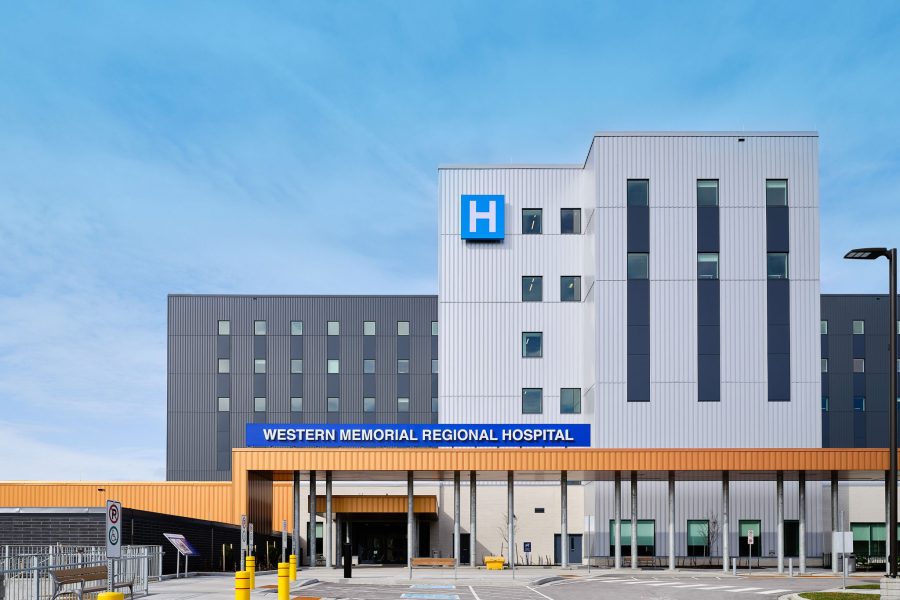
Photo by A Frame and Julian Parkinson, courtesy of Parkin
Western Memorial was delivered as a design-build-finance-maintain (DBFM) project. That procurement model fundamentally shaped the sustainability conversation for WMRH.
In a DBFM structure the team doesn’t just design and build the hospital; we are collectively responsible for maintaining it for 30 years. That long-term facilities management component changes decision-making. Suddenly operational efficiency isn’t theoretical; it’s contractual.
Some sustainability decisions likely would not have been made under a capital-only model (one-time funding). The most significant example is the geothermal system. Geothermal adds considerable upfront cost. But when the same team is maintaining and operating the facility for three decades, the business case shifts. The financing partner, Plenary, conducted detailed energy modeling and life cycle cost analyses and identified an estimated 17- to 18-year payback. Over a 30-year maintenance term, that becomes a strategic investment rather than a luxury.
Today Western Memorial features the largest geothermal system in a Canadian health care facility. Smith + Andersen is behind the system that extends 600 feet below hospital grounds, providing heating and cooling for the facility with the balance of the facility serviced via Newfoundland’s hydroelectric power grid. Aside from diesel backup generators required by code for emergency power, the hospital operates without fossil fuels for day-to-day energy use.
As architects we didn’t design the geothermal mechanics, but it was quite the experience to coordinate site planning and interior mechanical distribution to support it. Interestingly, geothermal also reduced some interior mechanical footprint compared to conventional boiler and chiller systems, which helped us keep the building to a more compact design.
Efficiency as a Design Ethic
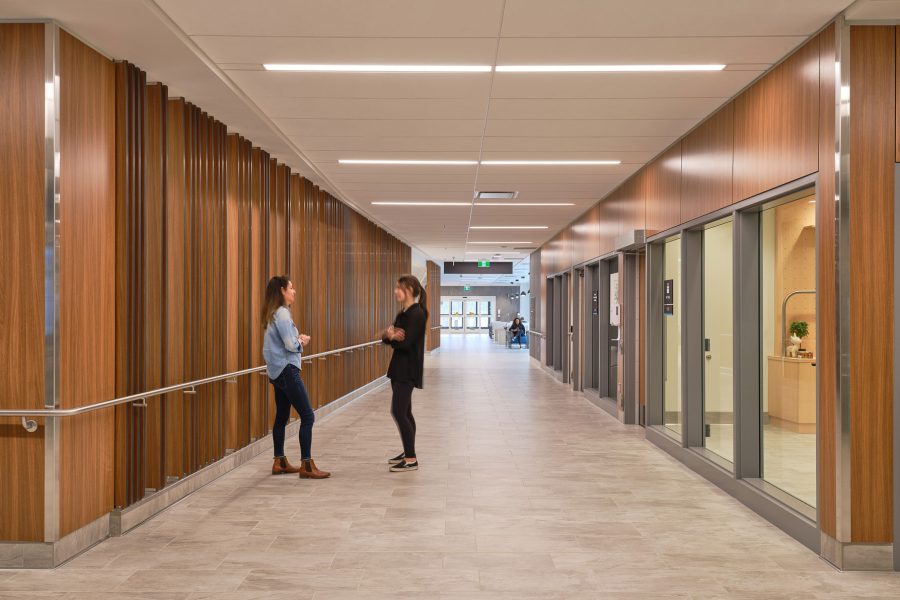
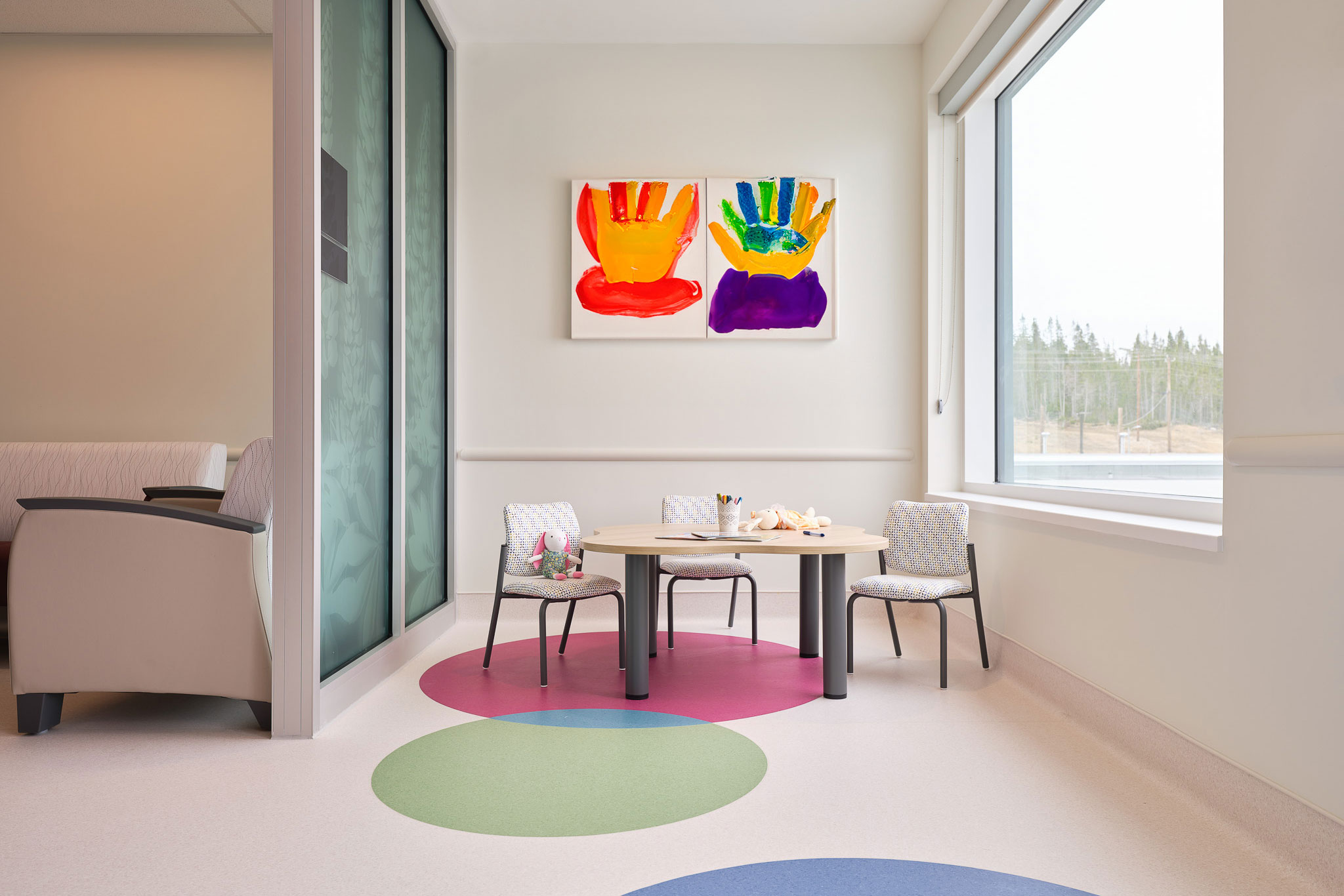
Each inpatient corridor ends in daylight with seating and a framed view out toward the outdoors. Photo by A Frame and Julian Parkinson, courtesy of Parkin
Efficiency became a defining theme—not just energy efficiency, but spatial and operational efficiency.
Newfoundland’s government needed to be fiscally responsible. There was a strong mandate to be cost-conscious with design. We were acutely aware that the building couldn’t appear extravagant or lavish. It needed to be thoughtful, dignified, and, above all, serve its users within a 186-mile catchment, all in a simple way.
We focused intensely on area efficiency. Hospitals are measured by net program area, but corridors, structure, and mechanical systems “gross up” that number quickly. Through careful stacking—we put a diagnostic and treatment podium with an inpatient tower above—we consolidated vertical circulation into a single primary core. That move reduced travel distances, construction cost, and long-term operational burden significantly, versus comparable facilities without compromising the size and quality of patient care space.
Overall I would say Western Memorial is about 10 to 15% smaller footprint compared to similar facilities in Canada. Making a facility smaller while meeting compliance is rarely discussed during sustainability initiatives. A more compact building means fewer square feet to heat, cool, clean, and maintain. It also means staff walk less over the course of a shift. Those efficiencies compound over 30 years.
Energy Performance and a Healing Environment
Because of Newfoundland’s harsh winters we needed to be conscious of the energy model. The in-patient bedroom windows are smaller than we see in comparison projects elsewhere in the country. I would roughly estimate them to be about 20 to 25% smaller than typical glazing for other in-patient rooms.
It was a deliberate trade-off: slightly smaller glazing to improve thermal performance and reduce long-term energy demand while careful consideration was given to window location to frame beautiful views of the distinctive Corner Brook landscape from the patient bedside.
Even within those constraints we ensured each inpatient corridor terminates in daylight, seating, and a framed view out toward the province’s rugged beauty. Patients taking a short walk can pause at a window, rest, and reconnect with the landscape. In a community where nature defines identity, that visual connection was vitally important.
Steel Structure in a Concrete World
Another sustainability and logistics decision was structural. Most Canadian hospitals are built in concrete for durability and inherent fire resistance. In western Newfoundland, however, skilled trades and material supply posed some serious challenges. Steel offered constructability advantages in this remote context.
The superstructure—aside from the radiation therapy vaults—was done in steel. That choice helped address labor realities and material shortages while maintaining schedule and hitting our cost targets. While a comprehensive analysis for reductions in embodied carbon was not conducted, high level review suggested a tangible reduction as a by-product of the decision.
Community Privacy & Identity
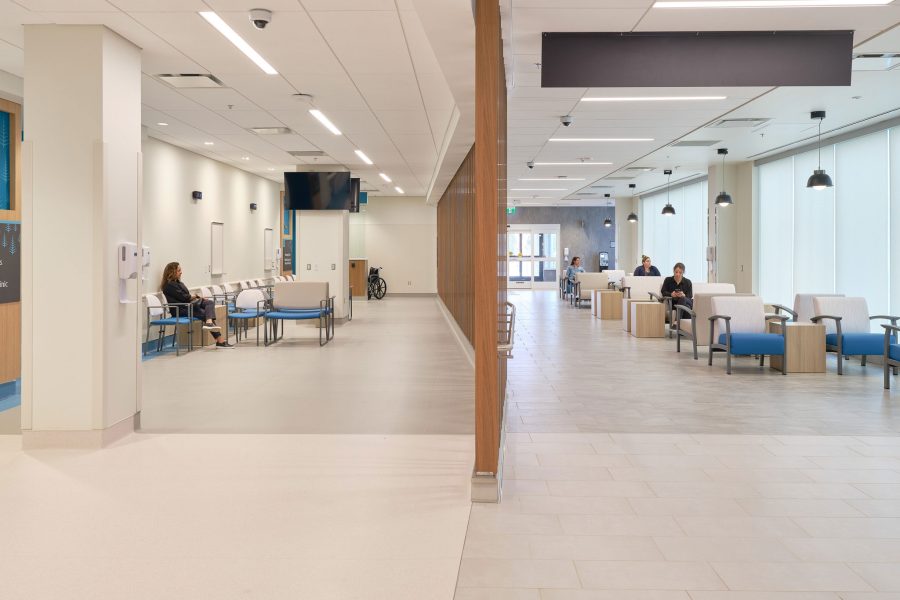
Photo by A Frame and Julian Parkinson, courtesy of Parkin
Western Memorial’s role as a regional hub meant accommodating specialized programs, including expanded cancer care and renal dialysis services. These patients visit regularly and often for extended sessions.
Using the natural slope of the site, we created a dedicated entrance and parking area for these programs. Patients can enter discreetly, access treatment spaces directly, and leave without going through the entire hospital. In a community where “everyone knows everyone,” the purposeful design made sure everyone was entitled to privacy during care.
Western Memorial also has a top floor dedicated to mental health care. By positioning the unit well above the interstitial mechanical level rather than beneath a penthouse, we reduced ambient noise and created access to secure outdoor terraces with expansive views. Those terraces offer safe access to fresh air and landscape.
We needed to maximize efficiency of the circulation system without adding excess building area to move patients discreetly to the mental health floor from the ER. That resulted in an innovative approach to corridor and elevator lockdown and “transfer in place” procedures to support patient privacy and dignity during transfers.
Wayfinding as Wellness
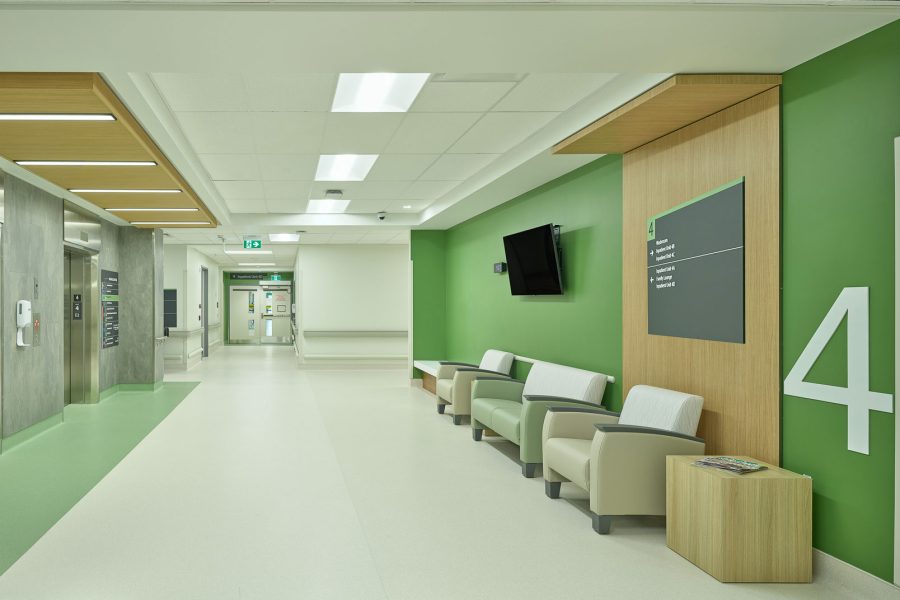
Photo by A Frame and Julian Parkinson, courtesy of Parkin
One of the aspects I’m most personally proud of isn’t a room; it’s a system.
We developed the hospital’s wayfinding and signage in-house using evidence-based design principles and grounded it deeply in local identity. Western Newfoundland’s palette differs from the brightly painted houses often associated with the province’s east coast. Here, colors are earthier, more muted. We worked with the community—more than 1,000 residents participated digitally during Covid-era outreach—to select color schemes and iconography inspired by local flora, fauna, and landscape. Extensive analysis was undertaken to test the efficacy of the wayfinding system using virtual reality and biometric data, supported by the Cornell University Design and Augmented Intelligence Lab.
For me sustainability includes emotional sustainability. If people can find their way without anxiety, if they feel grounded in a place that reflects their community, that’s part of long-term health.
The Next 30 Years
Western Memorial wasn’t designed to chase headlines. It was designed to work efficiently, responsibly, and respectfully for decades.
Because the consortium maintains the facility for 30 years, performance matters. Energy savings matter. Durability matters. Operational flow matters.
Looking ahead 20 years I hope the community sees this hospital as one that quietly serves them, reflects their landscape, protects their privacy, and operates responsibly within the province’s means.
At Parkin our values aren’t about spectacle. They’re about listening carefully, collaborating deeply with partners and making the hard, often invisible decisions that balance beauty, cost, and performance. In Corner Brook sustainability wasn’t a slogan. It was a commitment embedded in structure, systems, and stewardship.