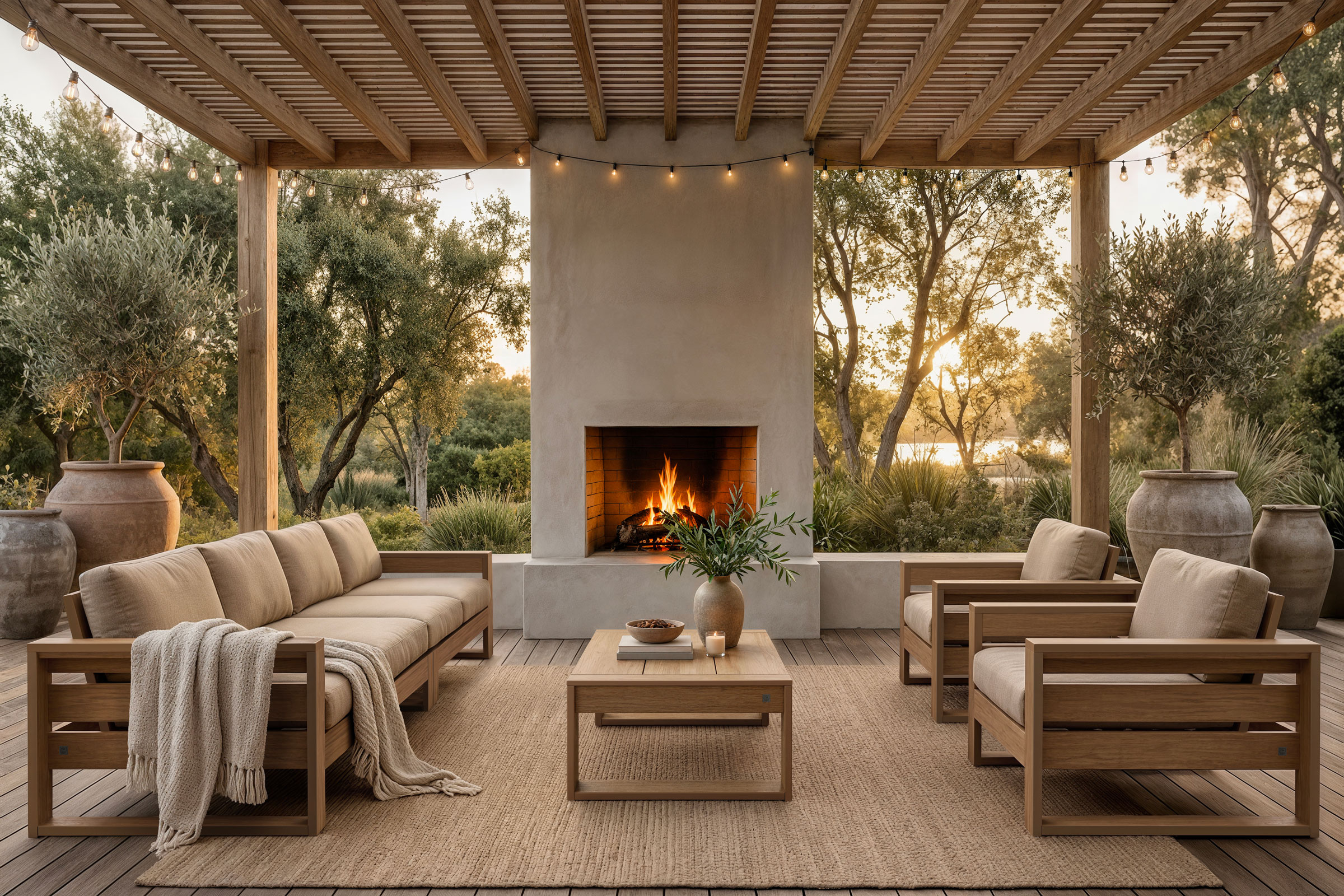
Story at a glance:
- Modern outdoor spaces demand durable, comfortable, beautiful furniture that encourages people to stay awhile.
- Public properties of all kinds are putting more focus on wellness and relaxation, with outdoor spaces in increased demand.
- Design teams are looking for outdoor furniture that can stand up to heavy use and intensifying weather conditions.
Megan Pierson spent many of her favorite vacation moments outdoors. Her family loves returning to the Opal Sands Resort in Clearwater Beach, Florida, where she remembers listening to live music with a cocktail in hand at the tiki bar, then strolling over to Pier 60 to watch the sunset. “So much of what we love about being there revolves around being outside,” she says. “There’s something about those moments when everyone slows down and is present together that sticks with you.”
Pierson is executive vice president of business development at POLYWOOD, a US-based company that transforms recycled and reusable plastics into its proprietary all-weather outdoor furniture. “I obviously notice the furniture because of what I do, but what I love most is watching people actually enjoy those spaces.”
When it comes to her family’s beloved vacation destination, Pierson says she loves seeing POLYWOOD woven into that experience. She’s delighted to notice POLYWOOD Adirondack chairs overlooking the water and POLYWOOD dining sets near Pier 60, including pieces in the vibrant turquoise “Aruba” color.
“The furniture is part of creating the setting, but ultimately it’s about the moments that happen there,” she says. “Years later you may not remember every detail of a hotel room, but you remember sitting with your family watching the sun go down over the Gulf, listening to the waves and enjoying being together.”
Outdoor spaces can shape a guest’s experience before they ever walk through the door—from the arrival experience to the pool to dining areas and gathering spaces. “There’s such an opportunity for hotels and resorts to use those outdoor spaces to create more memorable moments,” Pierson says.
Outdoor spaces are where families gather for dinner, hotel guests relax by the pool, or friends linger around a firepit for hours, long after what would have been bedtime, she says. In the past five years properties are realizing they need to pay more attention to outdoor spaces. “There was a time when the building or interior was designed first and the outdoor space came later,” Pierson says. “Today the outdoors is being considered much earlier and much more intentionally as part of the overall experience.”
As properties of all kinds focus more on wellness and relaxation, outdoor spaces continue to move up the priority list. Furniture choices can make a huge difference in creating outdoor spaces that stand up to heavy use and intensifying weather conditions while being comfortable and compelling, Pierson says. “We’ve moved from thinking about outdoor furniture to thinking about outdoor living,” she says. “People expect the same level of comfort, design, and functionality outside that they experience indoors.”
Comfort & Aesthetics
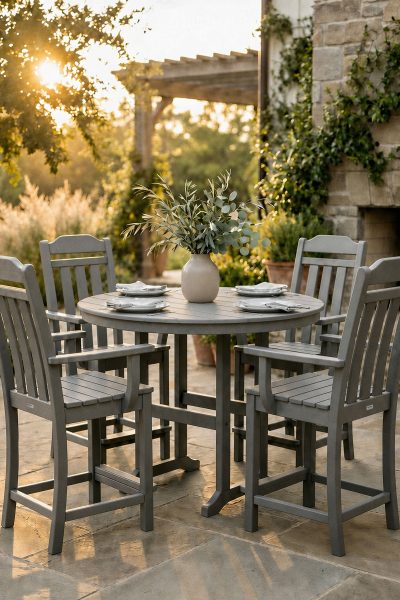
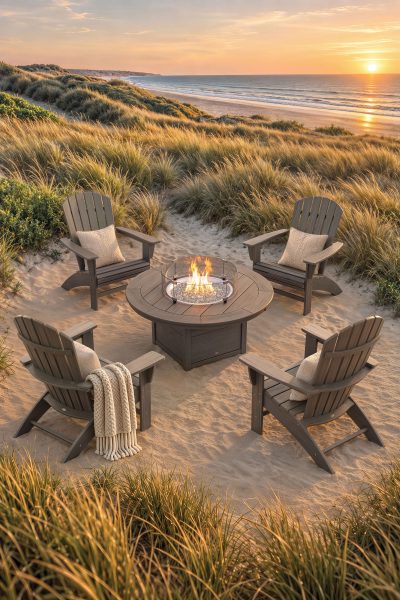
Outdoor areas across residential and commercial environments no longer function as a mere added amenity or secondary space, Pierson says. Today designers intentionally develop outdoor spaces to serve many purposes—dining, entertaining, wellness, relaxation, and human connection.
The LaPlaya Beach & Golf Resort in Naples, Florida, wanted to create spaces for guests of all ages that aesthetically reflect coastal living and Southern charm. At the same time the design team needed to account for the performance needs of a high-use space exposed to the elements in South Florida, a place with intense heat and humidity. LaPlaya wanted its furniture to meet the demands of coastal performance without undermining the space’s coastal luxury aesthetic. “That’s what’s exciting about where hospitality design is going,” Pierson says. “There doesn’t have to be a choice between beautiful design and lasting performance; you can have both.”
The LaPlaya Gulf Lawn incorporates deep seating, rocking chairs, and kids’ dining sets from the Savannah Collection, a collaboration between POLYWOOD and Southern lifestyle brand Draper James that integrates durability and performance with a soft, warm aesthetic. The deep seating set in the LaPlaya space features crisp white and sky blue colors in a cabana stripe pattern.
Pierson says the LaPlaya project is a great example of how POLYWOOD approaches hospitality spaces. “We’re not just providing furniture,” she says. “We’re helping create outdoor environments that reflect the personality of a property, stand up to the demands of hospitality, and, most importantly, become places where guests genuinely want to spend time.”
The logic is straightforward: People want to stay in spaces that make them feel comfortable. Pierson says the POLYWOOD design and engineering teams pay close attention to every detail, from the angle of the seat and back to proportions, support, ergonomics, and how each piece actually feels.
When it comes to comfort, these details are crucial. How people physically interact with furniture heavily influences comfort and functionality, according to a 2024 study published in Molecular & Cellular Biomechanics. In fact, researchers found that ergonomic features significantly improved comfort; lumbar support in particular helped alleviate muscle strain and enhanced overall comfort by 9%. “I love the idea that great furniture can actually change how you experience a space,” Pierson says. “When you’re comfortable, you stay longer. Conversations last longer. You linger over dinner.”
Of course, comfort goes beyond ergonomics. Aesthetic aspects of physical spaces, including colors, also influence neurophysiological relaxation, comfort, and emotional well-being, according to a 2025 study published in Building and Environment.
Built to Last
Pierson says the conversation has broadened far beyond questions like “What furniture should we put here?” Now designers and building managers are asking, “What experience do we want to create?”
As clients invest more in outdoor spaces, expectations for furniture grow. “Clients want great design and comfort, but they’re also asking more questions about durability, maintenance, performance, sustainability, and how the product will look and function years from now,” Pierson says.
High-use commercial environments like hotels, resorts, restaurants, cruises, and entertainment centers demand comfort and aesthetics that encourage guests to stay awhile without compromising performance. Beautiful design is crucial, but longevity also has to be part of the conversation, Pierson says. “If we’re creating products that need to be replaced every few years, we’re not delivering the best long-term value for the customer or using resources in the most responsible way.”
Pierson is quick to point out that not all HDPE is created equally. How the material is formulated, manufactured, and tested can significantly influence how it performs over time. For POLYWOOD, controlling its material and manufacturing process allows the company to maintain consistency from the lumber through the finished product, she says.
With increasingly frequent storms and intensifying heat, outdoor spaces experience more wear and tear than ever. Furniture can become faded—what was once red, now pink. When several members of the POLYWOOD team traveled to Kentucky for meetings, they visited a property owner who had about a dozen Adirondack chairs around a firepit. Six were red, and the rest were almost pink, she says. The owner said the red ones were POLYWOOD.
When the owner purchased the other chairs, they were also red, but they faded in the sun, Pierson says. “Having control over our materials and how the products are made allows us to be really intentional about the quality from the very beginning,” she says. “We understand what goes into the material, how it’s going to perform, how the finished product is built, and in hospitality where furniture’s exposed to constant use and really demanding environments, that level of consistency matters.”
POLYWOOD manufactures its lumber with high-density polyethylene (HDPE), sourced from post-industrial and post-consumer recycled materials. The company sends 99% of all scrap from its manufacturing process right back to its own recycling plant to be reground, extruded, and made into new lumber. HDPE is heavy-duty, weather-resistant, and easy to clean.
With its ColorStay technology POLYWOOD blends UV inhibitors and pigments into the HDPE material before they transform it into lumber. The UV inhibitors prevent the coloration from fading, and having the entire piece of lumber extruded in POLYWOOD’s factory means it’s the same color all the way through.
POLYWOOD tests all its furniture to guarantee it meets or exceeds ASTM and BIFMA standards. “We don’t want to simply say our furniture is durable,” Pierson says. “We want the testing behind it.”
POLYWOOD’s in-house testing capabilities span weight and durability testing, UV exposure, thermal expansion, salt spray, cycle testing, and even cushion performance. “Some of those tests simulate years of repeated use or exposure to the elements,” Pierson says. “That level of testing becomes especially important in commercial and hospitality environments, where furniture can experience significantly more use and exposure than it would in a typical residential setting.”
Natural Looks
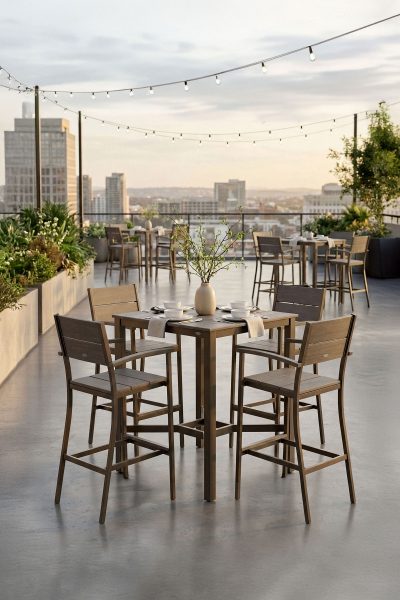
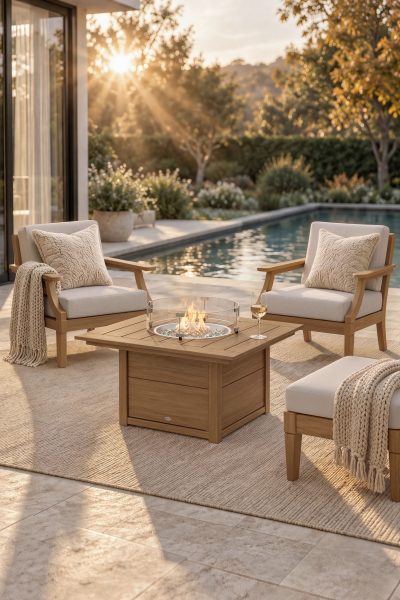
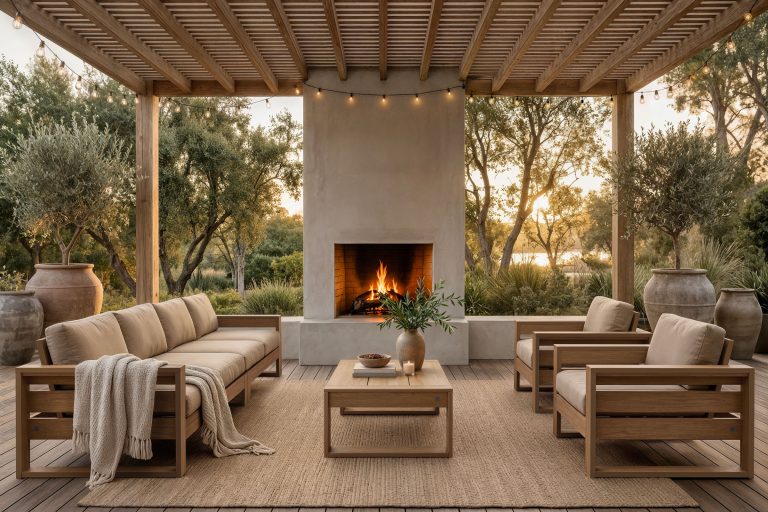
Property owners also increasingly ask for furniture with the look of natural wood without the maintenance and cleaning challenges, Pierson says. “There’s a reason people love the look of natural wood. It brings warmth and character to an outdoor space. What we’re able to offer is that elevated aesthetic with the durability and low maintenance our hospitality customers are looking for.”
POLYWOOD’s Select Series, for example, is available in Natural, Kona, and Driftwood, engineered with Microcell technology to block humidity and water vapor. “It gives designers and customers more freedom to create elevated outdoor spaces while choosing a material designed to withstand the realities of being outdoors.”
People want outdoor spaces to feel warm, natural, and elevated, but they also expect those spaces to stand up to real life. “Beautiful design and long-term performance shouldn’t be a tradeoff,” Pierson says. “Ultimately it’s about creating beautiful outdoor spaces that people want to spend time in and products that are designed to keep performing beautifully for years to come.”