Story at a glance:
- KEE membranes offer strong protection from common causes of roof failure like punctures and UV exposure—and the water damage and other issues that can result.
- Experts say KEE membranes offer better fire resistance than many other roofing options.
- Yearly maintenance costs and life cycle costs are also typically lower with a KEE membrane than other options.
Roof membranes come in many options. One is a KEE (ketone ethylene ester) roof membrane—an advanced, thermoplastic, single-ply membrane where the primary solid plasticizer component, KEE, is combined with PVC (polyvinyl chloride).
When PVC is used for pipes it’s rigid, but for a roof membrane it needs to be flexible. Standard PVC roofing membranes use a liquid plasticizer for flexibility, but that plasticizer can separate from the PVC over time and decrease the effectiveness of the roof membrane.
Why to Consider KEE
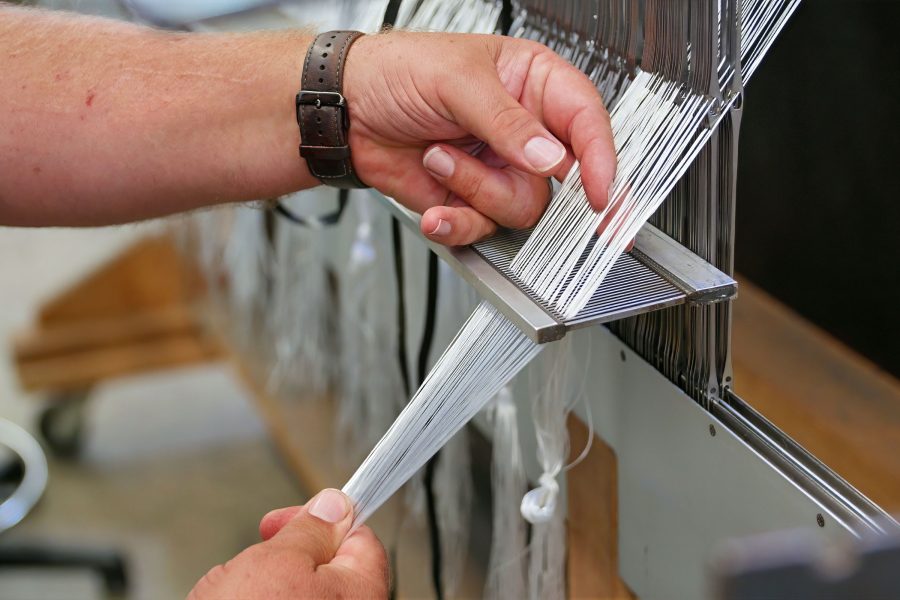
Photo by Frank Greiner, courtesy of FiberTite
Experts say KEE membranes that use a solid polymer plasticizer can offer distinct advantages when it comes to strength, durability, and longevity.
FiberTite Roof Systems, for example, use Elvaloy, a solid, high-molecular-weight KEE polymer that is similar in weight to the PVC molecule. That helps the two form a monolithic bond with the company’s tightly woven fiber reinforcement layer for greater stability. As a result, FiberTite’s KEE membranes offer strong protection from common causes of roof failure and the water damage and other issues that can result. Take punctures, for example, which can be caused by anything from a hailstorm to a careless HVAC technician.
“The more foot traffic you have up there on the roof the higher risk you have,” says Ray Makiejus, Midwest regional sales manager for Ohio-based FiberTite Roof Systems, a division of Seaman Corporation. “KEE membranes have a heavier and tighter knitted fabric, which helps for dimensional stability, strength, and puncture resistance.”
Exposure to UV radiation or chemicals can also wear down roofing membranes. Think about a vinyl car dashboard that’s developed cracking and fading by the sun. “That’s plasticizer migration,” Makiejus says. “With KEE membranes there isn’t any risk of that, because that Elvaloy polymer does not migrate out of the sheet. So you have a much better UV resistance.”
ASTM-D6754 provides a clear, technical definition of KEE membranes, Makiejus says. It requires that at least 50% of the molecular weight of the PVC portion of the coating be comprised of pure KEE. Most PVC membrane products that contain KEE in their formulations do not meet this primary condition and often provide considerably less performance, longevity and long-term cost benefits, he says. “They meet the more lenient standard of ASTM-D4434 for PVC sheet roofing used in exposed single-ply roof systems.”
Where to Consider KEE
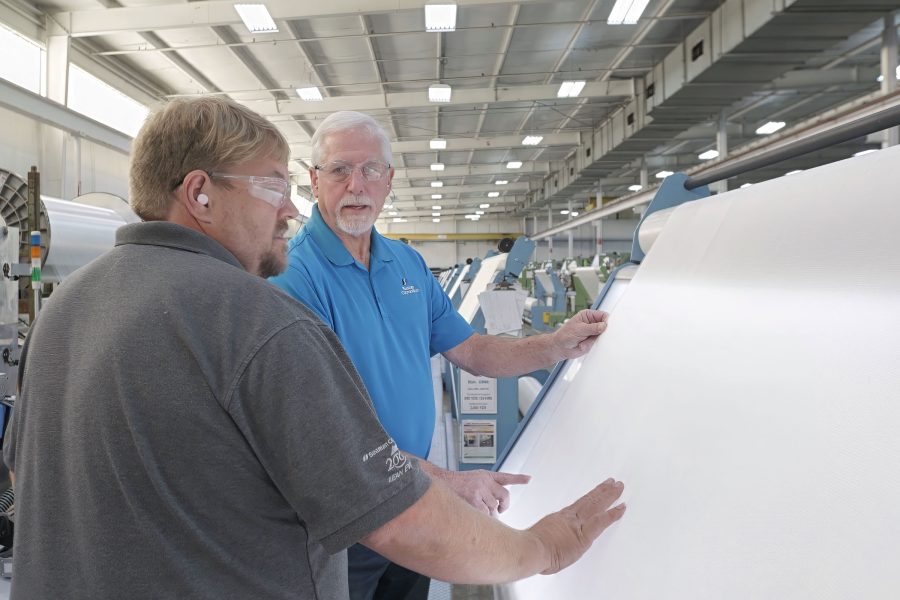
Photo by Frank Greiner, courtesy of FiberTite
The same goes for chemical resistance, which is why sites like food processing plants and airports often opt for KEE membranes. “You get these byproducts from exhaust sometimes on the roofs, and other membranes don’t do very well when exposed to that,” Makiejus says. “It begins to break them down, leading to problems.”
To showcase that to customers, FiberTite soaks a piece of PVC membrane and a piece of KEE membrane in jet fuel for 24 hours, then shows customers the difference between the two. “In just 24 hours, you can see how flexible the KEE membrane is compared to the PVC because of that plasticizer that gets sucked out of the PVC from the jet fuel,” Makiejus says.
KEE membranes also offer significant fire resistance. Makiejus says roofing options like EPDM (ethylene propylene diene monomer), TPO (thermoplastic polyolefin), and asphaltic membranes typically require chemical additives to improve fire resistance. PVC and KEE membranes offer better fire resistance, but PVC loses some of those properties as it loses its liquid plasticizers. “You can put other components within a system to help with that, but if you have a burning ember that falls on top of a membrane that doesn’t have that fire resistance, it can spread,” Makiejus says. “It may not get into the building, but it can create a lot of damage.”
Putting KEE to the Test
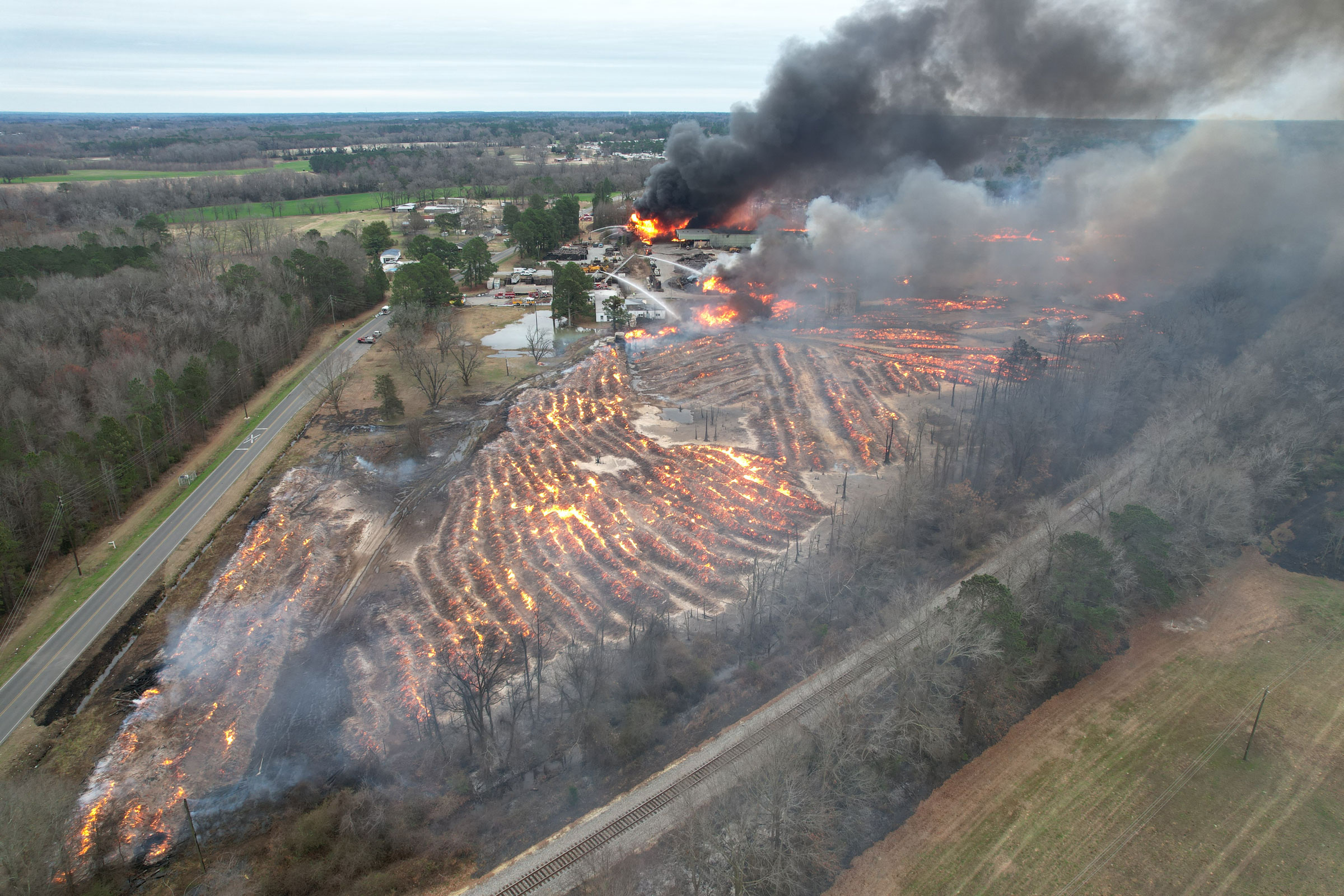
A case study conducted by FiberTite bears that out. In 2023 embers from a fire at a nearby industrial salvage yard began making their way to Prolec GE Waukesha, a power transformer manufacturer that supports critical electrical infrastructure in Goldsboro, North Carolina. With a large section of its roof covered by FiberTite’s 45-mil KEE roofing membrane and another section covered three years prior with a TPO membrane, the manufacturer became an unwitting test case that evening.
The TPO roof section suffered 160 burn spots from the embers, which burned completely through the membrane. An overnight rain compounded the problem, causing leaks in that section of the building.
The FiberTite section of the roof was not impacted by the falling embers. The 20 to 30 soot marks found there had failed to penetrate the membrane, thus preventing water entry into the facility’s critical winding department, where copper coils are hand-wound and submerged in high-grade mineral oil to form the core of the company’s transformers. “If water had leaked into the winding department it would’ve been catastrophic,” Brad Moore, the facility manager at Prolec GE Waukesha and a volunteer firefighter, said in the case study. “The expense of the copper, the time it takes to wind each coil, the delays—it could have easily cost hundreds of thousands of dollars in damages.”
When FiberTite service technicians did a full inspection of the roof section after the fire, they issued the full roof system warranty for continued assurance of future performance. The whole experience helped Moore make the decision to replace the TPO roof section on Prolec GE Waukesha’s building with FiberTite roofing membrane. “When I saw what FiberTite could do in real life and the confidence the tech team had in the product even after the fire, I knew this was the right decision.”
More Benefits
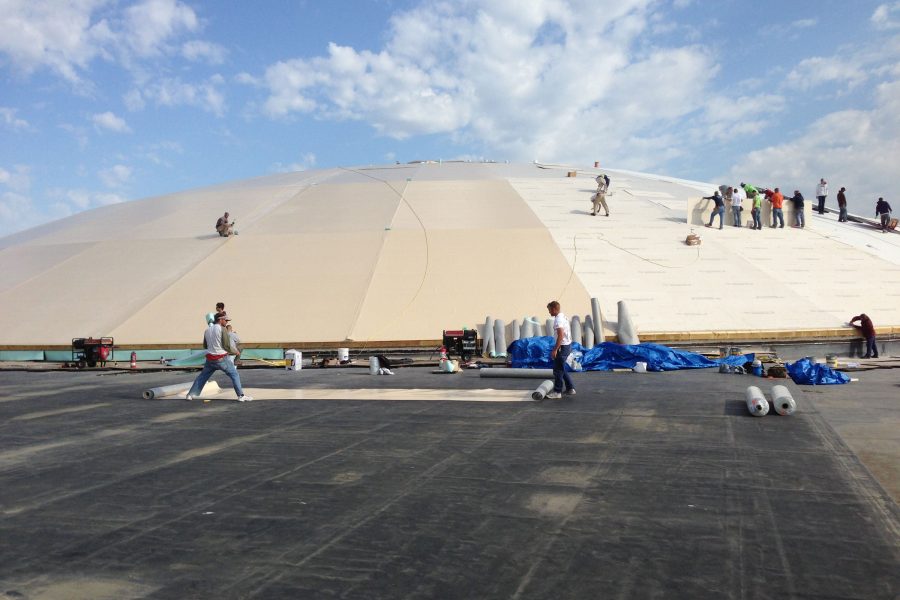
Domes at the University of Notre Dame utilize KEE roofing membranes. Photo courtesy of Notre Dame University and FiberTite
Fire resistance is one reason why KEE membranes can be a good choice for roofs with solar arrays. The longevity of a KEE membrane, which can have a 40-year service life, is also a good match for the life span of a rooftop solar array, which is often 25 to 30 years. A roof failure at year 20 means removing the solar panels to replace the roof and then reinstalling them. “That’s a cost,” Makiejus says. “The peace of mind of knowing you have a long-term membrane that’s going to last beyond the solar is something to think about.”
Another FiberTite case study examined the University of Notre Dame, which has installed approximately 2 million square feet of FiberTite membrane across its campus since 2005 and has not experienced a single system failure. Maintenance has also been minimal, unlike previous roofing systems the university had used that cracked, leaked, and failed prematurely, disrupting campus operations and requiring costly repairs. “For us the numbers tell the story,” Tony Polotto, Notre Dame’s senior director of construction and quality assurance, said in the case study. “No failures in 20 years and a system capable of lasting twice as long as the alternatives. The life cycle savings are clear.”
FiberTite has a cost calculator to help customers compare the lifetime cost of FiberTite, TPO, PVC, and EPDM roof systems. It considers the initial cost of a roof along with maintenance costs and the life cycle of the chosen roofing system. “While there’s an initial price that’s a little bit higher with a KEE membrane, it shows that over time your yearly maintenance costs and life cycle costs are much lower with a KEE membrane,” Makiejus says.