Story at a glance:
- Studio Gang and the Chicago Architecture Center partner to bring the “Flyway City: Architecture for a Flourishing Ecosystem” exhibition to life.
- The exhibit runs through January 2027 and aims to educate people about bird-friendly design strategies—both DIY and large-scale solutions.
- “Flyway City” aims to empower visitors to contact local leaders for help codifying bird-safe ordinances, as cities like San Francisco, New York, and Toronto have done.
Studio Gang is on a mission to make the city of Chicago a more welcoming place—for birds.
More than one billion birds die every year from collisions with window glass in the US. Chicago poses a particular danger to birds because of its location on the Mississippi Flyway, a major migratory path, and its prevalent use of glass as a building material.
“It’s really devastating,” says Jeanne Gang, architect and founder of Studio Gang, adding that the North American bird population has declined by 30% since 1970. “It’s really declining the biodiversity that we all need because we’re all interconnected; this is important for humans as well. Ecologically it’s very dangerous.”
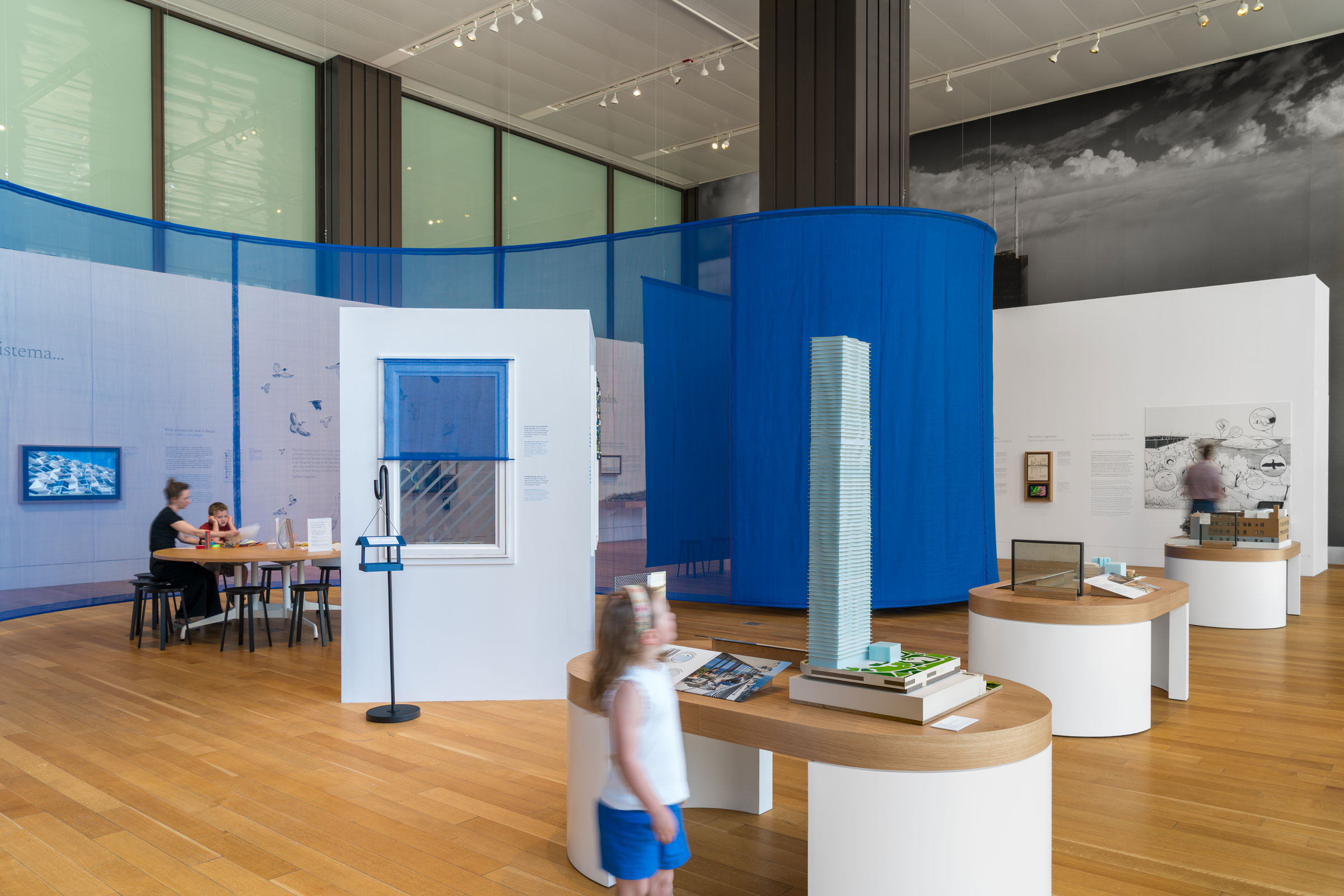
“Flyway City: Architecture for a Flourishing Ecosystem” opened June 11, 2026, and runs through January 2027 at the Chicago Architecture Center (CAC) in downtown Chicago. The exhibition designed and co-curated by Studio Gang aims to inspire change—from installing fritted, bird-safe glass on new buildings to simple bird-friendly retrofits and DIY solutions that can make cities safer and more welcoming for birds and diverse wildlife. The exhibit includes architectural models and mock-ups, original illustrations, photography, building materials, and interactive media, along with bird-related artifacts from local Chicago organizations and individuals.
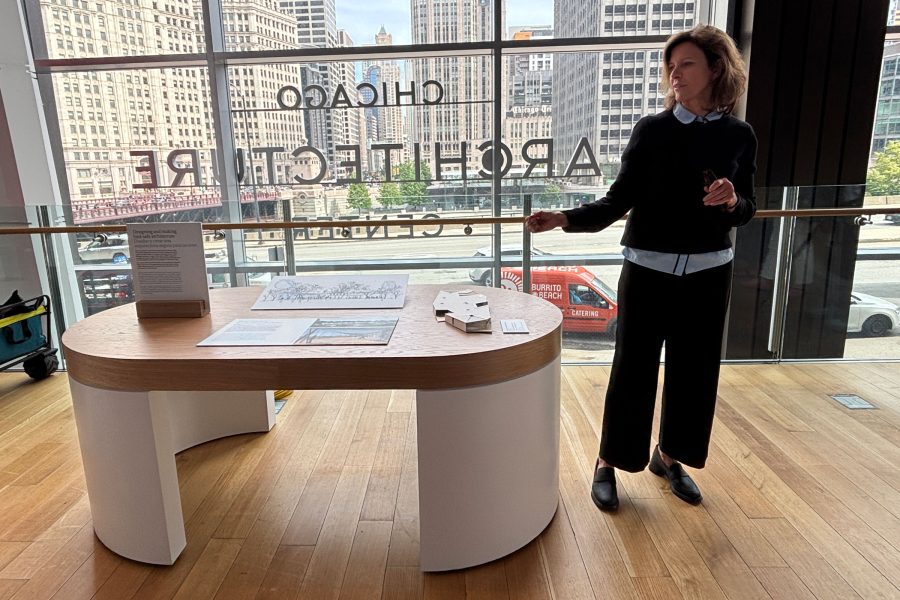
Studio Gang Founder Jeanne Gang unveils “Flyway City” at the Chicago Architecture Center. Photo by Laura Rote
“My own nests are in there that I’ve collected off the ground over the years,” Gang says, pointing to a display of artifacts from area birders during a press preview tour. “This is a community. It’s also a very big part of the economy of Chicago. There are a lot of people who come here specifically to go birding, so it’s a very important economic driver, and we want to keep the city safe for all of these birds.”
Attractions like the Chicago Piping Plovers are just one example of rare birding opportunities in the city. The Chicago region hosts millions of avian visitors each spring and fall as they fly along the Mississippi Flyway, a major migration route that spans from Canada to South America.
The Dangers
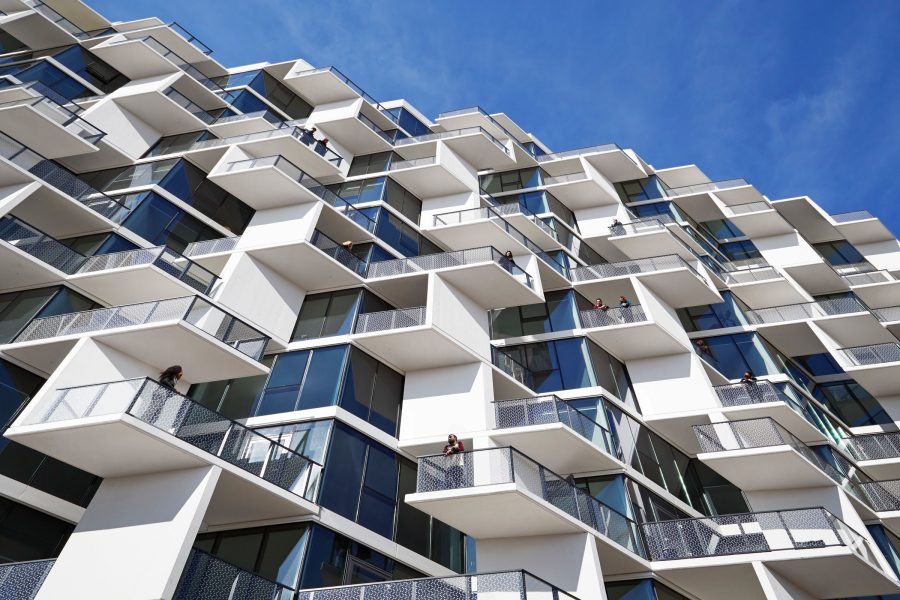
Bird-friendly design strategies are employed at the Studio Gang-designed City Hyde Park in Chicago. Photo by Steve Hall, courtesy of Studio Gang
Gang says glass is the number one architectural problem for birds. “But the thing is, we can make a difference with glass. It’s easy to solve,” she says.
The more glass a building has, the more danger, as conditions like reflections confuse birds and corners where you can see through one window to the next are dangerous, Gang says. She says glass pedestrian bridges are also very fatal to birds. The first 100 feet of any building—including single-family homes—is crucial, as that’s roughly the height of many tree canopies. That’s where birds come in to land and where they eat and live, Gang says.
The first 100 feet of any building is crucial.
A 2023 New York Times article reported nearly 1,000 birds died in a single night in Chicago after crashing into the windows of McCormick Place Lakeside Center. Gang called that article an embarrassing wakeup call. The building has since had its glass treated with a bird-friendly dot pattern that reduced the threat by 95%. “It’s super effective. A total win for that project,” she says.
The American Bird Conservancy has created a model ordinance that says 100% of new buildings should be built using 100% bird-friendly materials in the first 100 feet above grade. “It’s been done in cities—New York City, San Francisco, Toronto. We want to have that in our (Chicago) code,” Gang says.
Simple Solutions
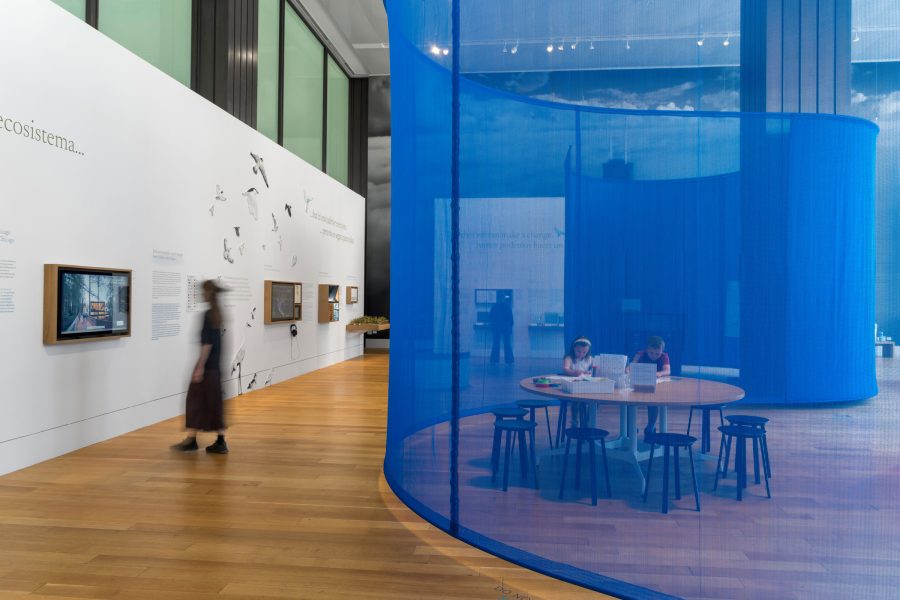
Photo by Bob, courtesy of Studio Gang
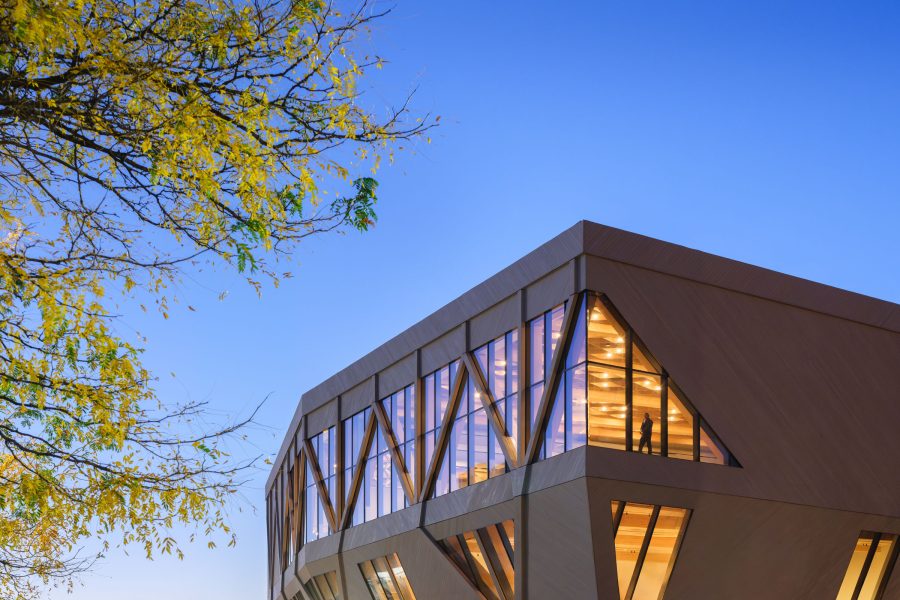
Opened in 2025, the mass timber and low-carbon concrete David Rubinstein Treehouse at Harvard University includes bird-friendly glass. Photo by Jason O’Rear, courtesy of Studio Gang
Bird collisions are an issue not just for architects and building owners but for home owners, too. This issue affects everyone who lives in a building, Gang says.
Many manufacturers now offer innovative bird-safe glass solutions, from various frits on glass to UV coatings that are nearly invisible to humans and bird-safety film. You can see one example of a bird-friendly film retrofit up-close when you look at the Chicago Architecture Center windows. “From a design standpoint, designing a new building from scratch, you can incorporate bird safety with the glass. It’s easy to do, and we’ve been doing it at Studio Gang for a long time,” Gang says.
She points to projects like the Studio Gang–designed Women’s Leadership Center at Williams Bay, designed with bird-safe glass, as another great example. The Chicago exhibition shows designs from other architects, like Gensler, to show how other teams approached bird-safe design, from new builds to retrofits.
Studio Gang’s own headquarters, a former historic bank building in Chicago, was an exercise in adaptive reuse, with bird-safe retrofitting that is ongoing. Their offices are among the many models on display at the exhibit. The studio’s rooftop prairie with native plants and solar panels is not just loved by employees; its bird-safe glass has made a tremendous difference in bird collisions, Gang says.
Flyway City also features the iconic Aqua Tower in downtown Chicago and the recently opened David Rubenstein Treehouse at Harvard University, both of which include bird-safe design strategies.
“I love nature and also cities and architecture,” Gang says. “I’ve been working on this for a long time—to understand how to make cities more attractive to wildlife and nature, but also how to make sure buildings and the built environment respond to protect them.”
What Else to Expect
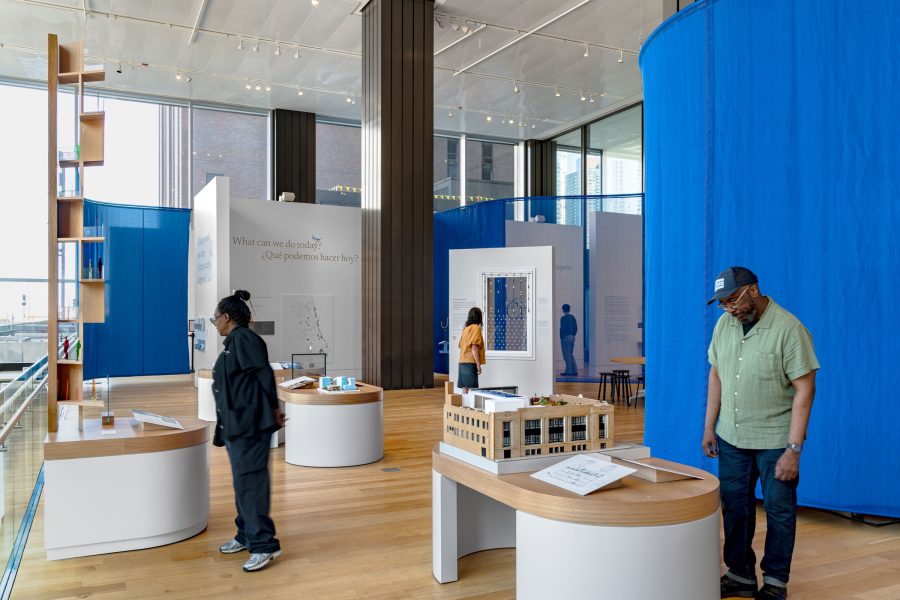
Photo by Bob, courtesy of Studio Gang
The exhibition offers compelling art, research, interactive games, and even films to educate visitors about Chicago, its wildlife, and the migratory flyway. Patrons will be reminded of the plentiful opportunities to view wildlife in the city, including at the scenic North Pond in Lincoln Park, with its 13 acres of native aquatic, wetland, and prairie habitat. The Wild Mile is another growing haven for wildlife.
The exhibit also shares DIY solutions that can easily be added to homes to help protect the first 100 feet. Solutions include decorative strings and beads or easily applied window films. Workshops will take place throughout the year to explore these strategies and offer hands-on education.
“Chicago is such an amazing place because it is on this migratory flyway,” Gang says, adding that there aren’t many cities in the world where you can enjoy so much bird diversity. “We want to turn people on to the amazing quality of birds that are in our city, and then also impress upon them that changes need to be made so it is safe for wildlife. We’re going to try to create this whole new class of advocates for bird safety in the city. We ultimately hope we can affect change and codify this change in policy, like other cities have done.”
Admission to “Flyway City” costs $15 for adults.