Story at a glance:
- Comfort-focused design can support measurable facets of health care, from mobility and safety to length of stay and patient experience.
- Research from Johns Hopkins shows what can happen when patients are helped out of bed and into motion: better mobility and, for some patients, shorter stays.
- La-Z-Boy Healthcare | Knú Comfort designs recliners, exam-lift seating, sleep products, and public-area furniture to help make comfort functional for all involved.
Comfort is often a soft word. In ordinary use it can evoke plushness, texture, luxury—things that feel nice but are not always vital. In health care, however, comfort has edge. It is the spine of whether a patient can sit upright without fear. It’s whether a caregiver can get close enough to help without hurting themselves. It’s whether a family member has somewhere to exhale. Whether the room supports the work of healing, or just—frankly—gets in the way.
Adam Stemle, president of La-Z-Boy Healthcare | Knú Comfort, is careful not to draw a direct line from any single piece of furniture to a clinical data point. The better argument, he says, is that comfort-centered furniture supports the larger conditions hospitals are already measuring: mobility, safety, caregiver strain, family presence, patient experience, and length of stay. “When you look at patient scores and metrics it ties into overall stay,” he says.
This is where comfort becomes less abstract. It’s not just a soft cushion; it’s a patient able to move from lying down to sitting upright with confidence and less pain. It’s a caregiver able to reposition someone without taking the movement in their own back and joints. It’s a family member close enough to participate rather than hover.
Connect Comfort to Mobility
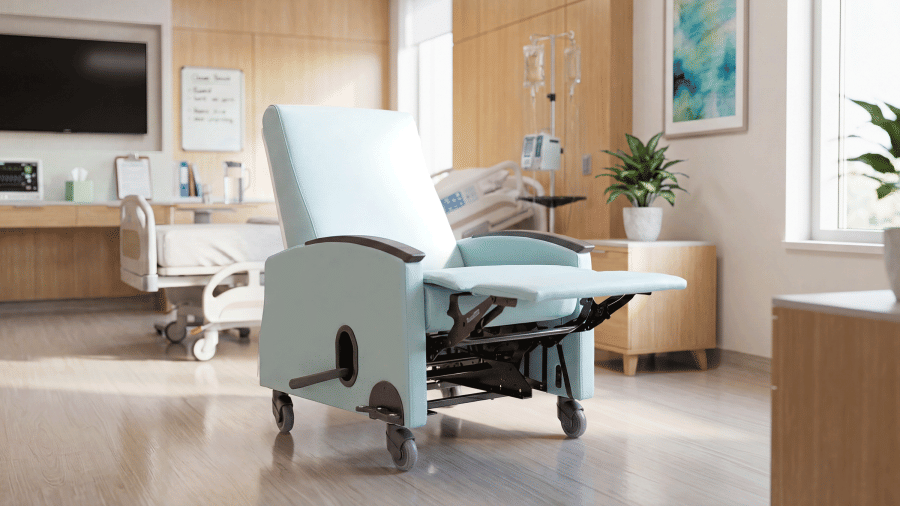
Photo courtesy of La-Z-Boy Healthcare | Knú Comfort
The Johns Hopkins Activity and Mobility Promotion program, or JH-AMP, treats mobility as a safety and quality priority. Its framework emphasizes measurement, daily mobility goals, barrier mitigation, workflow integration, and data feedback. In other words: Patients should not spend a hospital stay in bed if they are able to safely move.
Morgan Stephens, director of marketing and digital initiatives for La-Z-Boy Healthcare | Knú Comfort, points to that daily measurement as especially important. Johns Hopkins, he says, began measuring the mobility of patients as they come in, and each day their level of mobility, and then their length of stay. “Based on this study they began implementing programs to measure mobility each day, as well as set a goal for mobility,” he says. “It’s something they’re working toward.”
That matters because movement is measurable. So are length of stay, falls, discharge outcomes, staff injury, patient experience. A 2016 Johns Hopkins quality-improvement project on two general medicine units included 3,352 patients and found that patients reaching ambulation status increased from 43 to 70%. Patients whose mobility scores improved between admission and discharge increased from 32 to 45%. The project was associated with an adjusted median length-of-stay reduction of 0.4 days overall, and 1.11 days for patients expected to stay longer than seven days. Interestingly, more mobility was not associated with an increase in injurious falls.
For Stemle that kind of research helps validate the importance of what the company has long designed for—furniture that helps patients regain independence with support from confident caregivers. “The point is not only comfort for the patient but comfort for the caregiver, too,” he says.
Design for Movement, Not Stillness
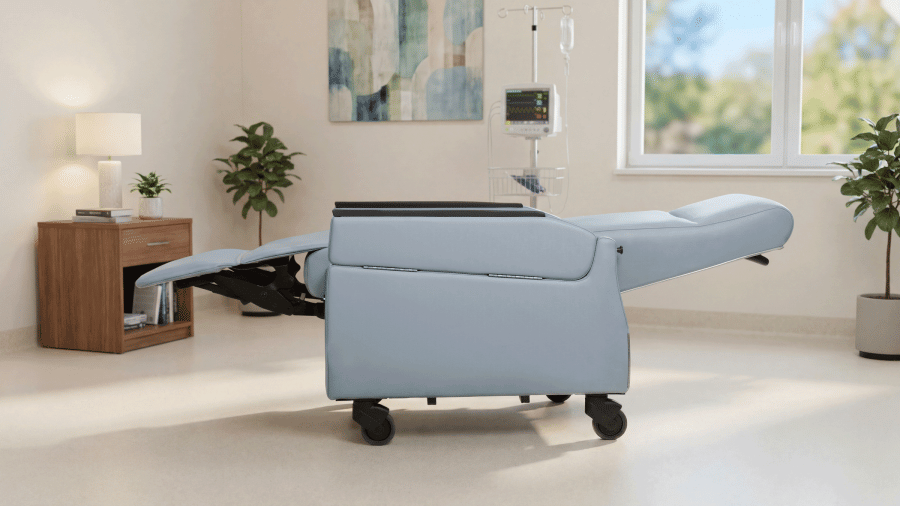
A recliner that turns into a bed matters, as a patient does not have to be moved back and forth as often then. Photo courtesy of La-Z-Boy Healthcare | Knú Comfort
Stephens says the company thinks about furniture as part of the larger environment patients and caregivers have to navigate. “We don’t have data that can say our recliners will make you get well faster,” Stephens says. “It’s more about being part of a holistic approach. It supports environments where patients can move, transfer, be independent, and progress through recovery.”
A recliner alone does not create recovery, but the right recliner can create a safer middle road between bed and hallway. It can avoid adding one more obstacle where healing is supposed to be happening.
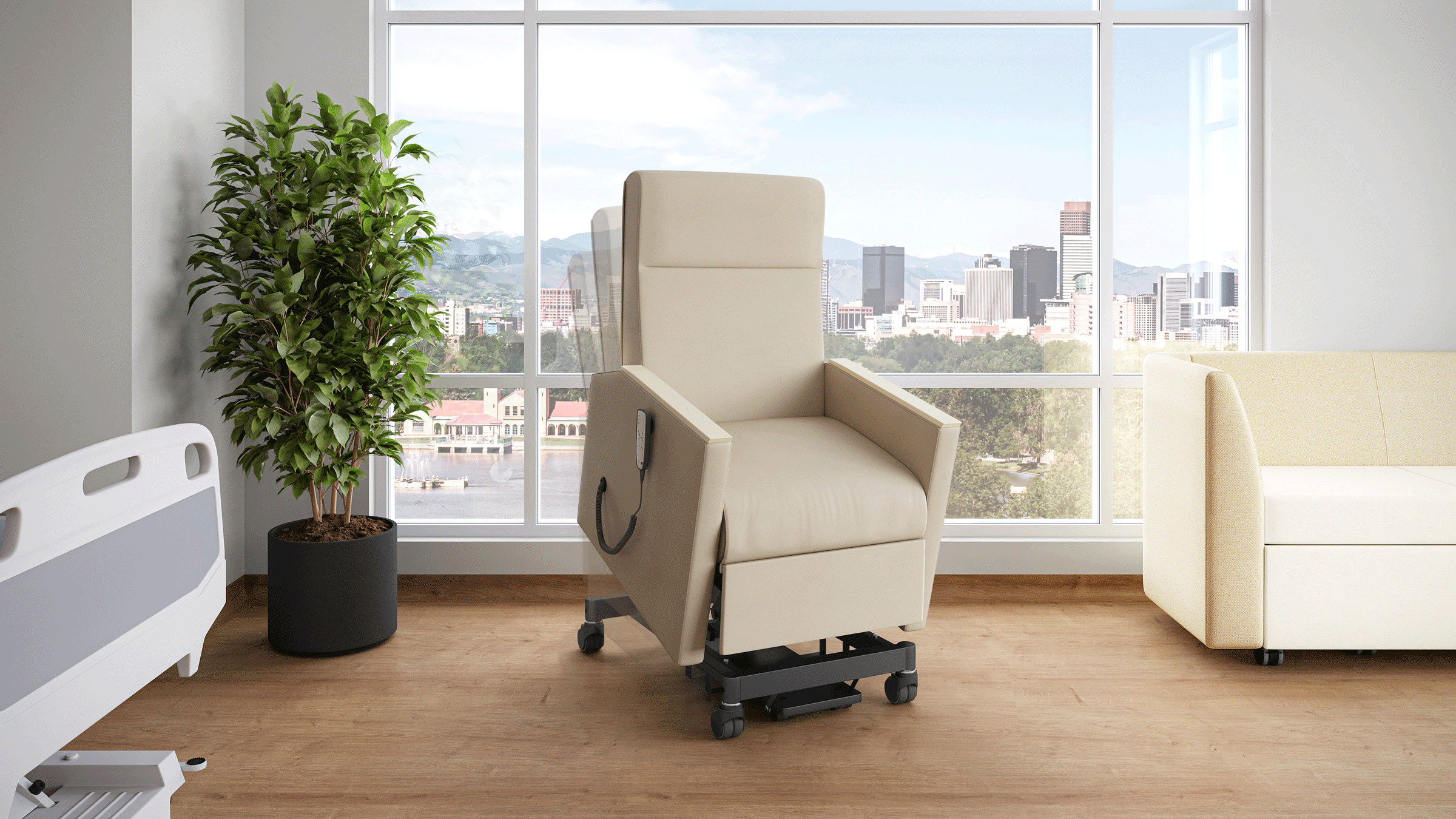
Picture a patient who is not quite ready to walk the unit but is ready to sit up. The chair supports them as they shift from lying flat to upright. A powered “sit to stand” recliner helps them move toward standing. A caregiver can get close to steady them. A lift can fit where it needs to fit. The patient does not have to make a leap from passive to fully mobile in one terrifying flail. They can try, fail, and try again. Maybe later they make it to the door. Maybe tomorrow they get to the hallway.
That middle ground is where many of La-Z-Boy Healthcare | Knú Comfort’s product decisions live. Full-flat recliners can become sleep surfaces. Patient transfer arms, caster systems, lift compatibility, and wand-controlled positioning all support the messy physical reality of healing.
Stephens says their products are intended to work with almost all the patient lift equipment out there to help patients start to get out of the chair and up walking.
Measure the Experience of Care
Photo courtesy of La-Z-Boy Healthcare | Knú Comfort
Comfort also shows up in less obvious places. Hospitals are measured on patient experience, and those measures include pieces of the stay design can touch—staff responsiveness, cleanliness, restfulness, communication, overall rating, and whether patients would recommend the hospital.
No piece of furniture can control that. The nursing team matters. The doctor communication matters. The noise in the hall at 2am matters—a lot. But the physical environment is part of the total experience, and comfort-centered furniture can remove small pain points that add up.
The ROI shows up in the patient who can sit upright a little longer and a room that feels less like a cold, uncaring obstacle course and more like a place where healing is the point. Comfort helps keep the room from preventing the best care. “Comfort is everything. Comfort is our ethos,” Stemle says.