Story at a glance:
- SmithGroup worked with Davey Tree leadership to transform an old family-owned golf course into a Science, Employee Engagement and Development Campus.
- The net zero facility hosts an arboretum, canopy walk, class three bog, riparian zone, restored barn, two acres of photovoltaics, and more.
- The site extends Davey’s 146 year history in Kent, Ohio with tailored spaces for research, training, employee education, and public engagement.
When a 191-acre golf course property in Kent, Ohio, went up for sale, its neighbors across the street saw an opportunity. Davey Tree Expert Company has called Kent home for its entire 146-year history. With its new Science, Employee Education and Development (SEED) Campus, Davey promises to stick around for generations to come. Architecture and planning firm SmithGroup helped transform the old golf course into a nearly unrecognizable ecosystem of trees, native plants, a class three bog, and a net zero facility based around a restored barn nearly as old as Davey Tree itself.
The Master Plan
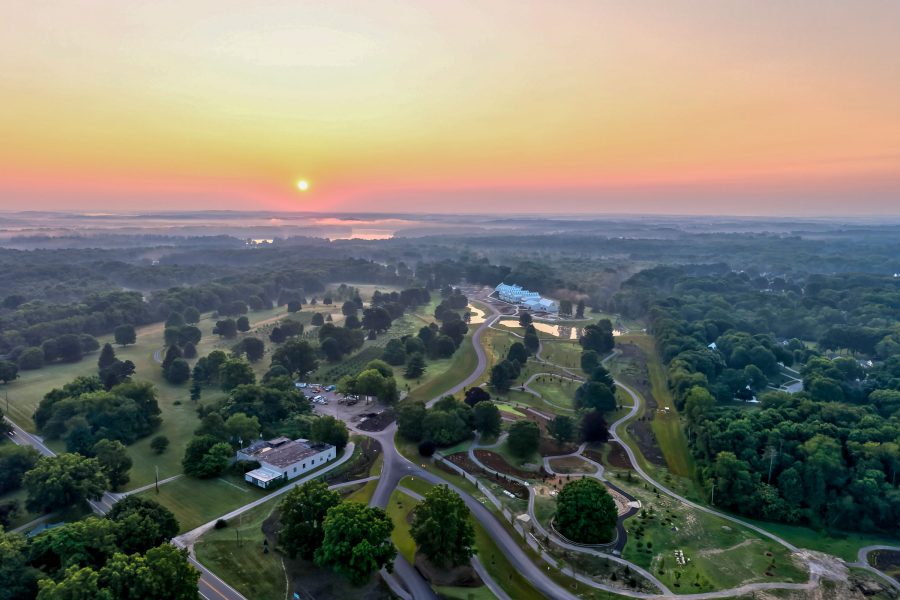
In 2018 Davey Tree began dreaming up a wishlist of features for its future campus: event space, greenhouses, laboratories, classrooms, climbing facilities, an arboretum, offices, turfgrass research plots, and more. “We spent 2.5 times more time in the planning process than we did in the construction process,” says Dan Herms, vice president and general manager of the Davey Institute.
Herms spoke with employees across Davey’s many arms of expertise—the company goes far beyond trees—to spearhead the SEED Master Plan. SmithGroup won the contract to make the plan real, focusing on four key pillars: research, training, sustainability, and public engagement. “It felt like such a great opportunity to rewrite what was possible, particularly because of the history of this site with the golf course but also the ecological opportunity of this region and its history,” says SmithGroup’s Marilyn Specht, director of sustainability integration.
From the Ground Up
The golf course was a family-owned public course with no cart paths. It drained naturally and effectively with no manmade water hazards, and its topography had never been significantly changed. It lay fallow from 2017 to 2023 until only slight variations in weeds distinguished green from fairway. The site was an open canvas for SmithGroup to plot everything on Davey’s wishlist. “We wanted to ensure the new space felt natural and nested in the regional context, so we did a lot of planning to distance from the footprint of the golf course by being intentional about layout and planting,” Specht says.
The team looked at the site’s natural features, identifying from a conservation standpoint where buildings could go versus where they could preserve the natural bog, old growth trees, and a large riparian area along the Cuyahoga River that connects to Portage County parks and a large network of public trails to the north.
Once the plan was made, the team bulldozed tee boxes and got rid of much of the turfgrass. “Even native grass is such a stark contrast from a golf course lawn. Incorporating as many native species as we can allows so much of the ecology to take place, from the soil to the pollinators to the seasonal foliage and change,” Specht says.
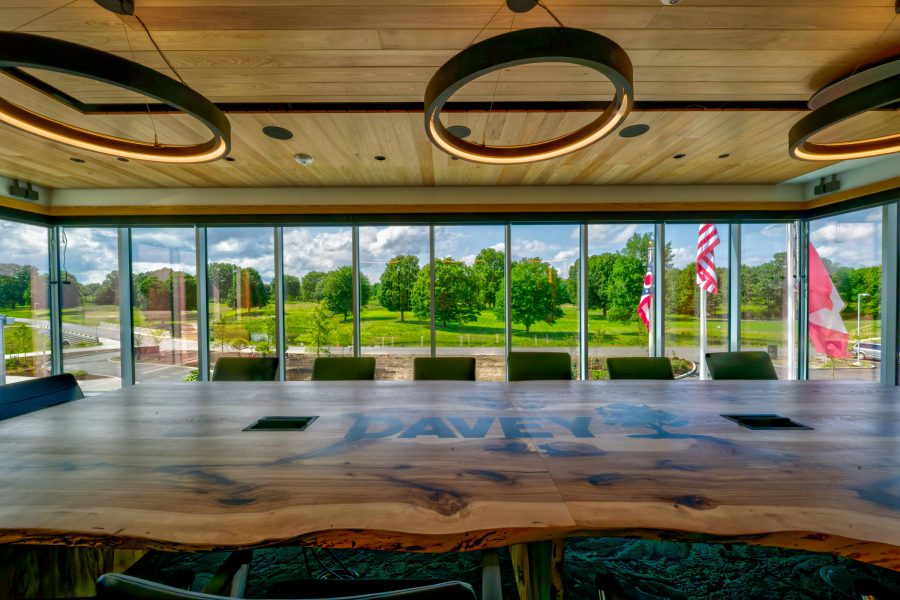
Davey removed younger, non-native trees from the property where necessary—a perfect training exercise for its arborists. The trees, along with other specimens from Davey’s wood lot, found new life on the campus as trim, butcher block steps, and beautiful live edge tables.
The team dug out a large pond for stormwater management but otherwise left the topography more or less alone.
A Grand Entrance
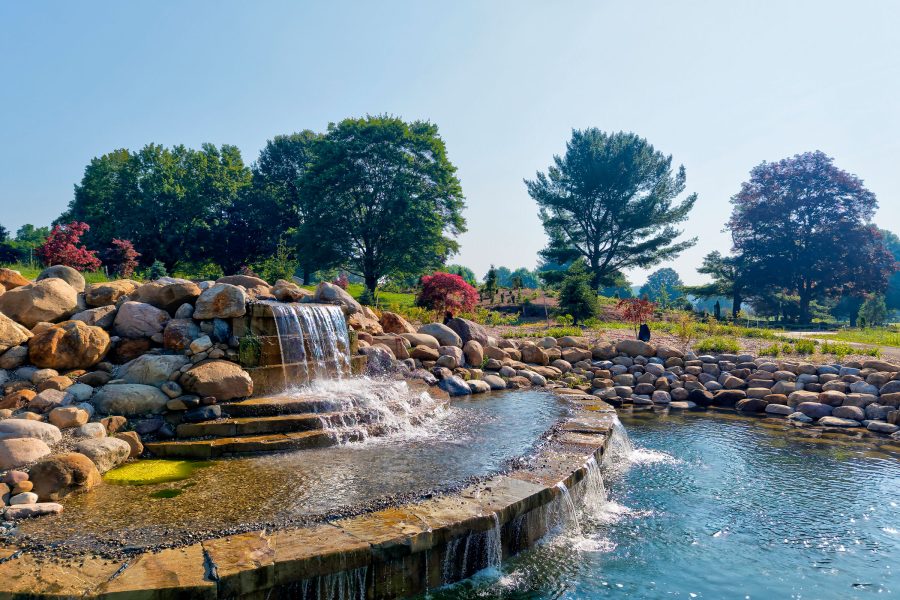
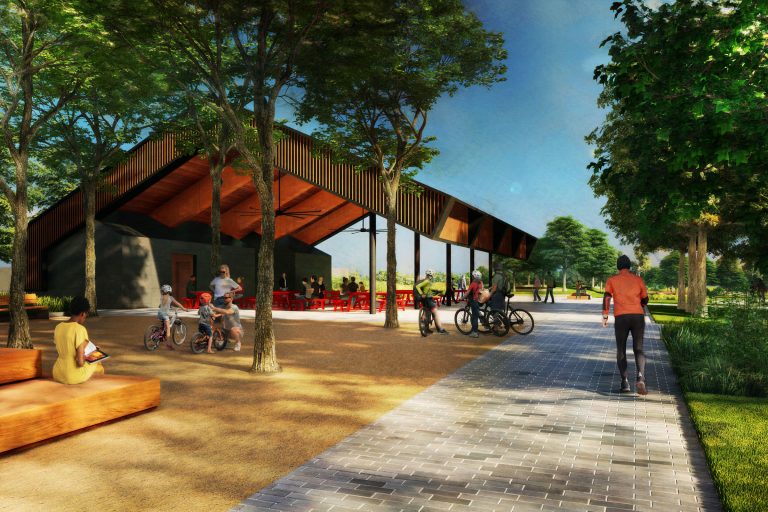
“At a foundational level we wanted to leverage the terrain as an arrival sequence that celebrates the biodiversity in the site and gives you that intrigue and a welcoming front door,” Specht says. Upon entering the SEED Campus, a 38-acre arboretum greets visitors with more than 500 different woody plant species.
The road meanders past gardens and around old growth trees, eventually reaching the highest point on the property, where the Davey facility and the Cuyahoga River are visible, offering a dramatic sense of place. “We situated the training center and the building very intentionally, not only for views to the river but also in understanding the watershed and the flow of water across the property,” Specht says.
Farm Style
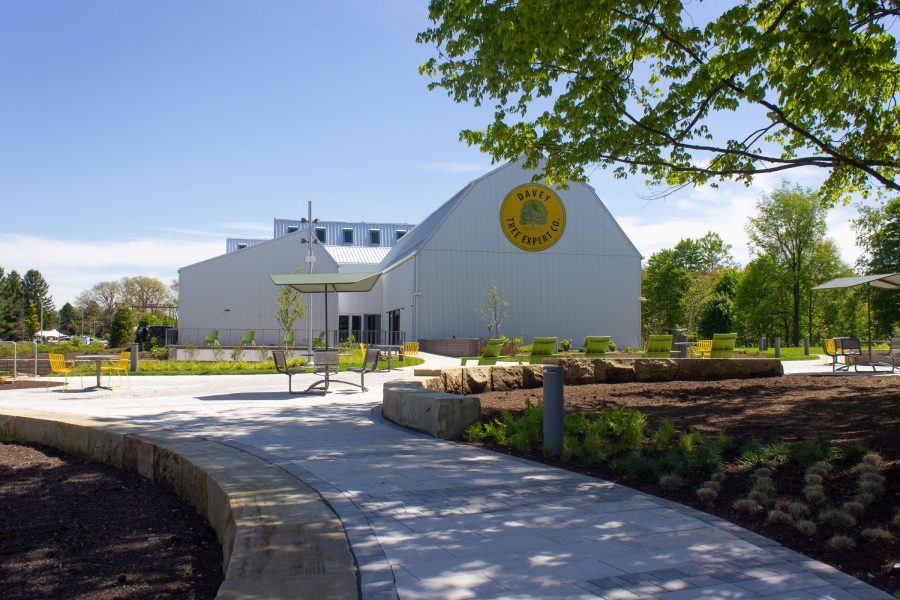
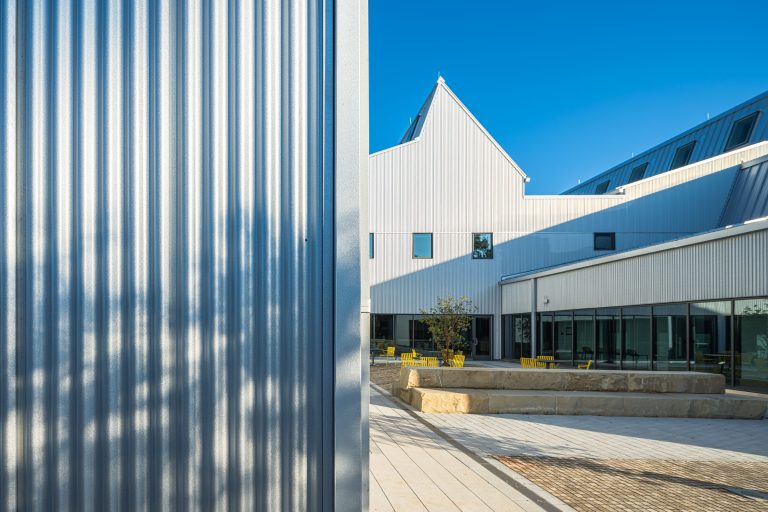
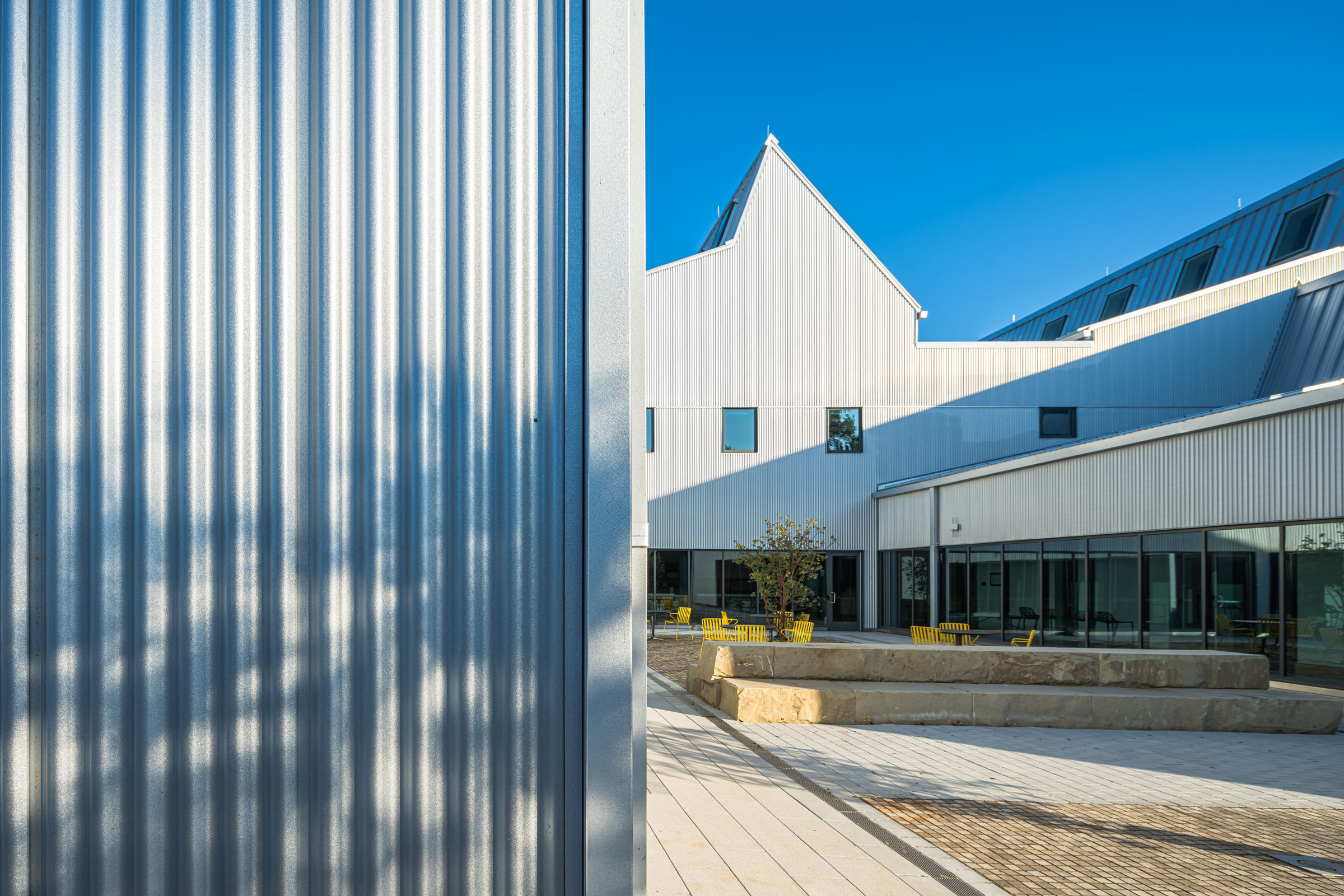
A barn that dates to 1890, older than the golf course, anchors the SEED building. “It could have been from a dairy farm. Turns out that one of our skilled climbing trainers’ father is an expert in old barns. He looked at it and said, ‘You have to preserve that,’” Herms says. Davey’s team disassembled the barn, stored it, and then faithfully reconstructed it. Now it’s an event space, with old trucks and machinery on display calling back to the history of Davey. “The whole design of the building itself evokes a collection of farm buildings or a grain silo feel, intentionally with the materials but also in the layout,” Specht says.
The facility holds laboratories, workspaces, conference rooms, and an indoor climbing training space, with shades of green and a varied wood palette throughout. Its three-structure layout with connecting breezeways allowed SmithGroup to reduce scale and massing to the greatest extent on the landscape, while also incorporating plenty of views and daylight.
Beyond LEED & Net Zero
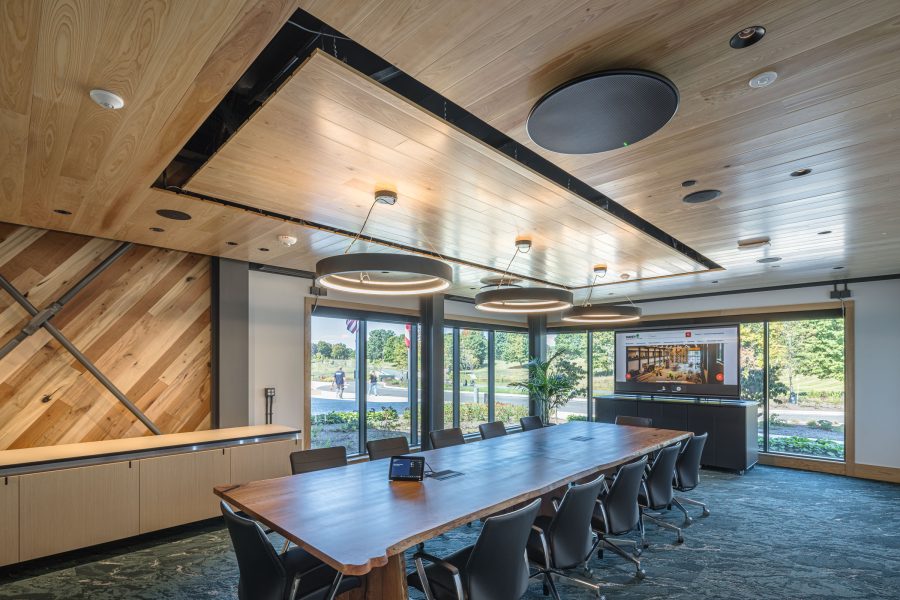
“It was clear from the beginning that sustainability had to be a key part of the project because of the ecological opportunity of this location and because of the company and their mission,” Specht says.
Optimizing for carbon neutrality is SmithGroup’s bread and butter. The team studied all of the materials used on the project to ensure low embodied carbon, resulting in a 40% reduction in embodied carbon in structural materials and a 21% reduction in the hardscape materials.
“Incorporating modeling and analytics to support the early design decisions was really key,” Specht says. Even plantings were analyzed for carbon sequestration. Skylights by Velux bring in natural light, and structural insulated panels from Insulspan throughout the building ensure an ultratight envelope.
Meanwhile, a two-acre photovoltaic array generates power for the campus. The numbers are just getting back to SmithGroup, but they’re tracking to zero. The facility has also applied for LEED Gold status. Salvaged and local materials, beyond wood, include Berea sandstone from a quarry less than 100 miles away in the gathering areas.
Living Laboratory
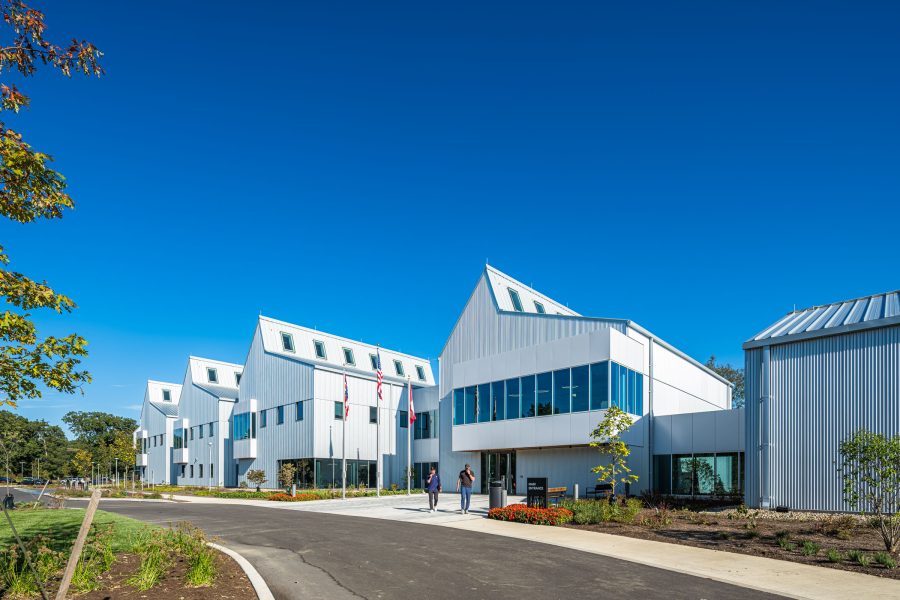
Perhaps the SEED Campus’ most sustainable element is its foreseeable impact on and engagement with the community. Areas like the canopy walk, constructed among the old growth White Oaks that were preserved on the property, offer critical training space for future Davey employees. Plus, the canopy walk engages non-arborists by inviting them to experience the height of trees. A three-hole golf course accommodates Davey’s turfgrass research and golf sectors but is also open to staff. Herms plays with a group every Monday.
“Thinking about how this building will sustain, support, and inspire the next generation of scientists, researchers, and arborists is exciting,” Specht says. The facility offers public engagement in the arboretum and riparian zone and through Davey Tree’s partnerships with nearby high schools and the local community. Long-term experiments also offer valuable early-career experience to graduate students.
“People come to the campus and see it’s very tangible evidence of Davey’s commitment to training, employee development, research, science-based solutions, industry, and leadership,” Herms says. “We’ve never left Kent. We’re extending a legacy of science-based tree care for the next century, for the next 140 years.”