Story at a glance:
- The fifth annual Design for Freedom Summit 2026 took place in Connecticut in March 2026.
- The event brought together more than 550 leaders across architecture, construction, manufacturing, policy, and academia.
- Ethical sourcing is beginning to move from the margins into mainstream practice.
Construction material supply chains are among the most complex and least understood systems in the built environment. Spanning multiple tiers, geographies, and intermediaries, they are typically opaque; obscuring where materials come from, how they are processed, and under what labor conditions.
While carbon and environmental performance have become increasingly measurable over the past two decades, ethical sourcing remains comparatively underdeveloped, lagging well behind in terms of data, standards, and market maturity.
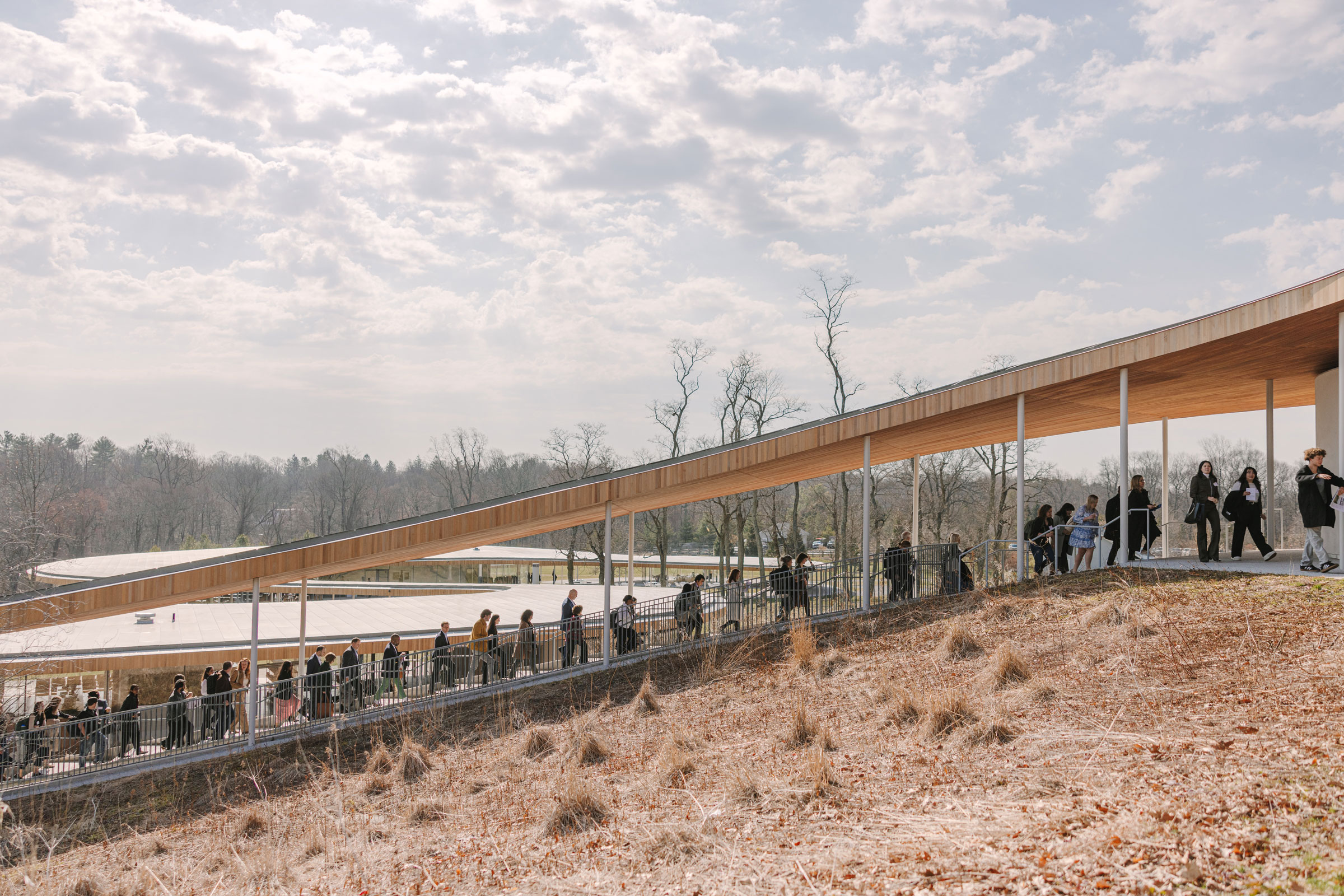
This was the backdrop to the fifth annual Design for Freedom Summit at Grace Farms in Connecticut in March, where the focus was not on defining the problem, but on advancing solutions. Bringing together more than 550 leaders across architecture, construction, manufacturing, policy, and academia, the summit reflected a movement gaining traction. One that is beginning to translate awareness into action.
Over five years Design for Freedom has helped establish a shared language around forced labor in building materials while creating practical entry points for the industry—from research and pilot projects to cross-sector collaboration. What emerged this year was a clear sense of momentum: Ethical sourcing is beginning to move from the margins into mainstream practice.
Scaling Ethics: From Materials to Data Centers
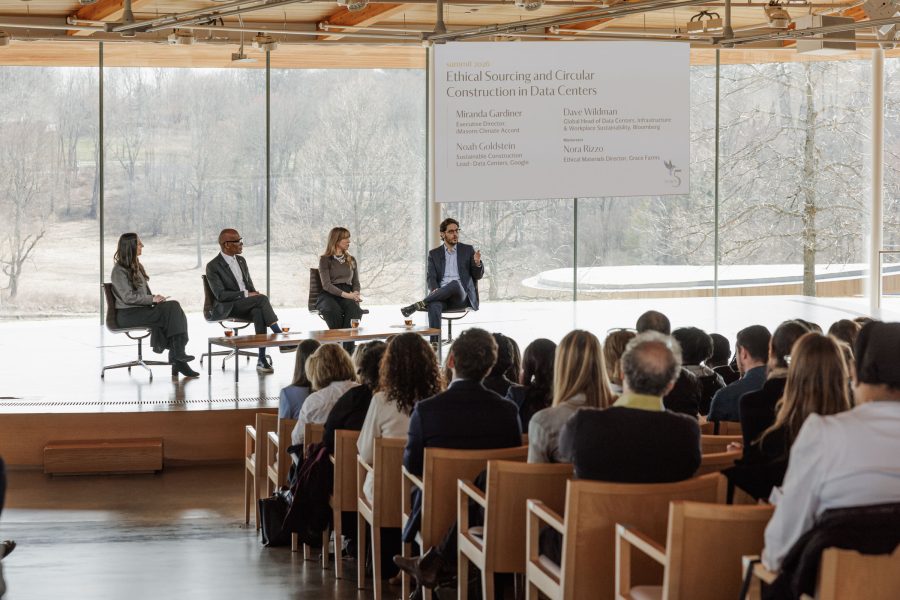
Photo by Melani Lust, courtesy of Design for Freedom Summit
A defining theme was scale. As the rapid expansion of AI and digital infrastructure accelerates demand for materials, the complexity (and risk) embedded within global supply chains is intensifying. A panel on data centers explored how one of the fastest-growing sectors in the built environment can reconcile performance demands with responsible sourcing.
Initiatives like the iMasons Climate Accord point to how quickly this space is organizing, aligning owners, operators, and suppliers around carbon measurement and reduction. What is becoming clear is that the systems being developed to track embodied carbon and procurement can also serve as a foundation for greater supply chain transparency and accountability.
This shift is beginning to register across adjacent frameworks. Updates to the IWBI’s WELL Building Standard reflect a move toward a more flexible, performance-driven platform, emphasizing continuous monitoring and outcomes. In parallel, the International Living Future Institute is advancing this agenda through the development of Declare Equity; a new product-level label focused on human rights, fair labor, and social impact, bringing these considerations directly into material specification.
Together these developments signal a recalibration of building performance, expanding beyond operational and embodied carbon to include the supply chains and labor conditions embedded within materials.
Materials as Leverage
The “With Every Fiber” exhibition, a long-term installation at Grace Farms dedicated to material supply chains, grounds these conversations in physical form. Designed as both an exhibition and a research platform, it brings together artists, designers, and engineers to explore the origins, impacts, and future of building materials.
This year’s focus on pigment, glass, and stone pointed to a deeper question: What does it take for a material to be both low carbon and ethically sourced at scale? A thread running through Steve Webb’s work on tensioned structural stone suggests a possible answer, but with a caveat. Advances in engineering and fabrication are making stone newly viable as a structural building system, raising the prospect of a broader resurgence in its use. But its environmental and ethical credibility is closely tied to proximity. When sourced locally, through shorter, more legible supply chains, stone can offer lower embodied carbon and greater transparency around extraction and labor conditions.
Circular Glass and Collective Agency
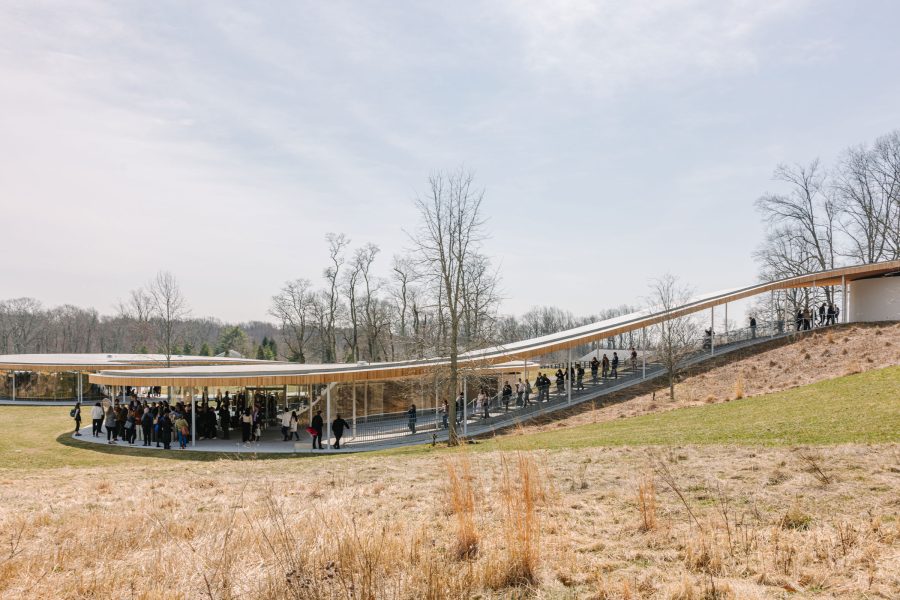
Photo by Melani Lust, courtesy of Design for Freedom Summit
Breakout sessions reinforced a shift toward practical, solutions-oriented dialogue. A workshop on circular solutions for the glass supply chain highlighted real progress in recycling infrastructure and closed-loop systems, while also surfacing the fragmentation that continues to limit scale.
Participants were invited to engage directly, mapping barriers and identifying leverage points across the value chain. The tone was notably collaborative. As one participant reflected, “If every one of us saw our role as the most critical one—imagine what we could get done.”
Forests, Culture, and Risk
The day closed with a broader reflection on cultural context and risk in global material supply chains, particularly timber. Toshiko Mori spoke to the need to understand forests not simply as resources, but as living systems embedded within cultural, ecological, and economic contexts.
The discussion reframed timber supply chains as sites of both opportunity and vulnerability, where questions of stewardship, indigenous knowledge, and long-term ecological health intersect with global demand.
Taken together, the summit reflected a field in transition. Ethical sourcing is beginning to move from the margins toward the mainstream, but the systems required to support it are still emerging. The direction is clear. The work now is to scale it.