Story at a glance:
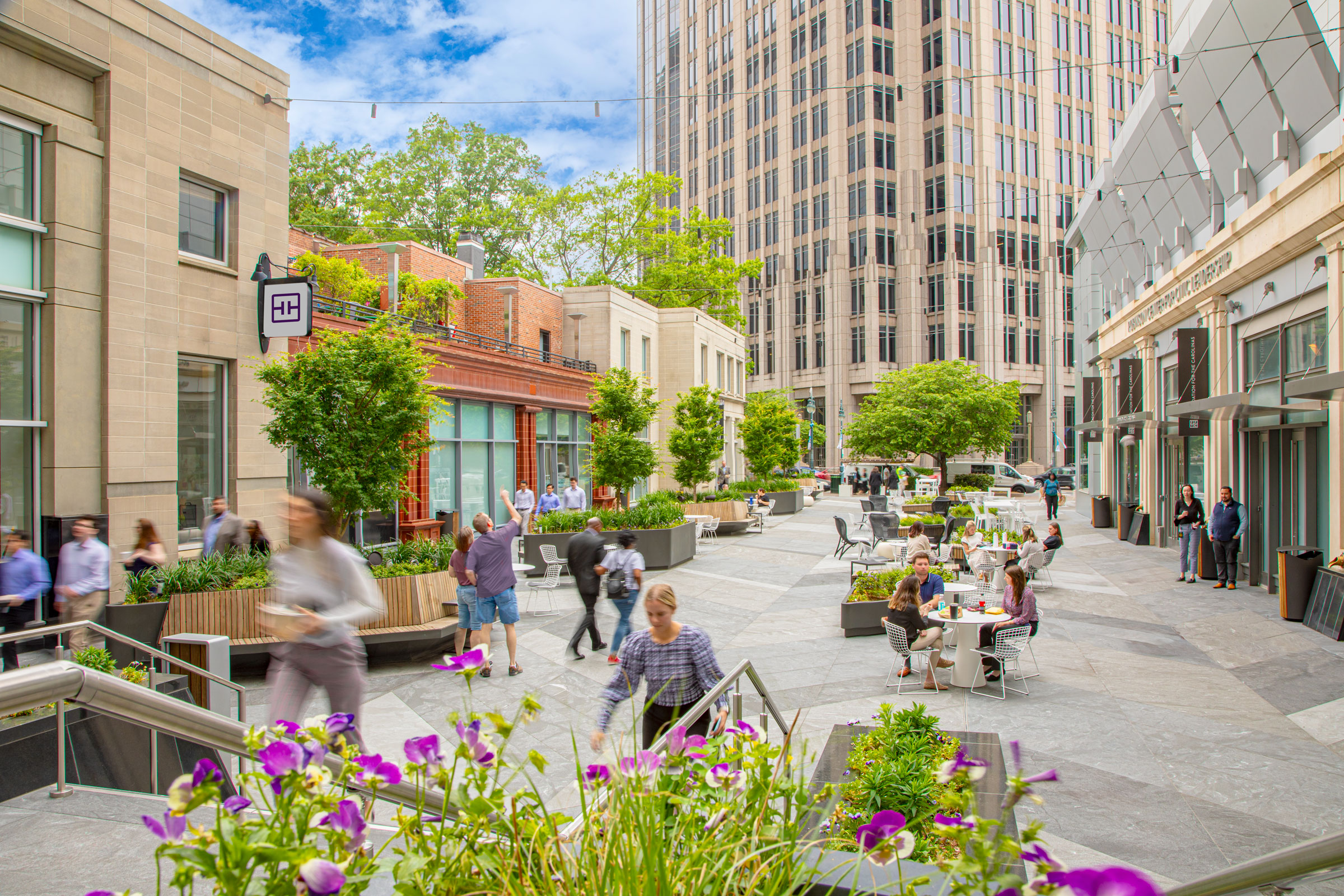
- Little Architecture turned a maintenance proposal into an opportunity to create active gathering space at the foot of Truist’s tower.
- Adaptable infrastructure, biophilic design, and integrated artwork are key to the success of the plaza and lobby renovation.
- A strong material palette focused on warmth and texture collaborates with the iconic art deco style to bring the eye to the human level, making the space approachable and navigable to visitors.
In 2019 when SunTrust Banks and BB&T Corporation merged to become Truist, the bank found a new home in an art deco tower on bustling Tryon Street, in the heart of Uptown Charlotte, North Carolina. With its height and grandeur, the tower is a landmark of Charlotte’s business district. Yet despite the hustle and bustle of the neighborhood, Truist’s new plaza was mostly void of people, and the lobby of the tower lacked logical wayfinding despite connecting two major streets and Charlotte’s Overstreet Mall skywalk.
“Building better lives and communities was very important to Truist as they were building a culture here,” says Jim Thompson, a design partner at the Charlotte-based architecture firm Little. Together with Truist, the Little team saw the plaza as a key chance for engagement. They reimagined the unwelcoming concrete void as a useful, beautiful, adaptable space, generating activity and engagement in alignment with Charlotte’s people-first Center City 2040 Vision Plan for development.
Creating an environment for connection at a human scale became the cornerstone of Little’s winning proposal for the new Truist Center, complete with adaptable infrastructure, biophilic design, and integrated artwork.
Subtle Solutions
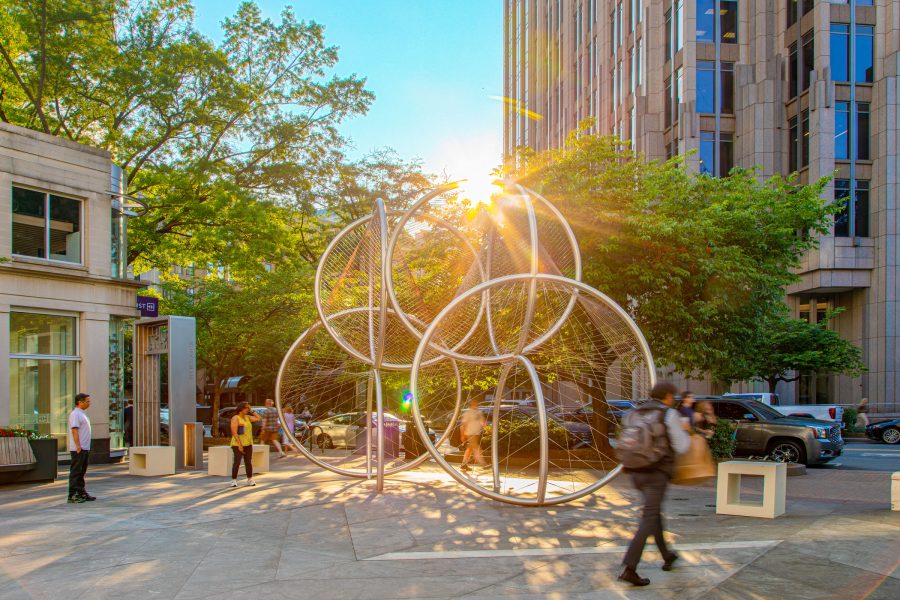
Photo by Sean Busher, courtesy of Little
Truist’s initial RFP stemmed from a necessary repair: The plaza sits atop a “nerve center,” a big vault containing all the electrical switch gear equipment and pumps for the building and several of its neighbors. “The proposal started with the maintenance solution, to replace the rubber membrane that keeps water from basically falling into and corrupting this system,” Thompson says. “With that opportunity to tear up the whole plaza came the opportunity to reposition the space and make it community-centric, a place that drives activity.”
The technical challenges of building atop an electrical vault critically impacted every design decision made from the get-go, particularly since any interruptions in service would not be tolerated. “The active electrical vault below the plaza established nonnegotiable parameters,” Thompson says.
Structural load limits governed soil depths, weights, and anchoring strategies for plantings in the plaza, which also is essentially a ceiling to the control room below. Drainage became an architectural exercise, according to Thompson, with integrated slot drains and subsurface systems sneakily integrated into the granite paving. “Early alignment between structural, civil, MEP, waterproofing consultants, and the architectural team ensured the limitations would not reduce creativity but elevate and shape it.”
Strategic Reuse & Sustainability
As the architects and structural engineers kneaded the problem of landscaping the plaza with load limits, they identified an opportunity to increase the adaptability of the space by utilizing movable planters and lightweight soil. Each planter has a designated space on the plaza but can be moved to create wide open space for public events and gatherings. Day to day the native plantings require no irrigation while supporting biodiversity, attracting local pollinators, and offering shade to mitigate heat island effect.
“Sustainability began with adaptive reuse. By preserving the existing structural deck of the plaza, the project reduced embodied carbon and extended the life cycle of a significant urban asset,” Thompson says. Meanwhile underfoot, regionally quarried North Carolina granite pavers guarantee durability, performance, and contextual continuity.
Taking Art Deco Down a Notch
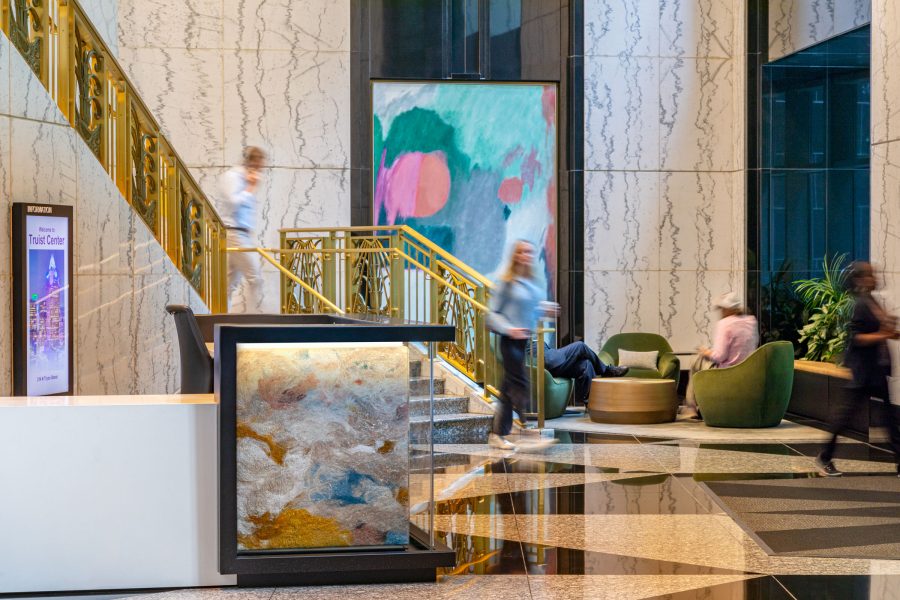
Little worked with Charlotte’s Hodges Taylor Gallery to find artists to commission for the Truist Center artworks. Photo by Sean Busher, courtesy of Little
Truist’s lobby spans three distinct levels to connect Uptown Charlotte’s main drag, Tryon street, with College Ave on the other side of the tower, with the Overstreet Mall system of skywalks above, making the challenges of placemaking and wayfinding critical. Simple graphic signage is integrated throughout the plaza and lobby. Symbolic gates along Tryon street welcome pedestrians while sculptural, abstracted security bollards keep vehicles out.
The grandeur of Truist’s art deco tower makes it a notable feature of Charlotte’s skyline but also an intimidating one. Rather than fight the iconic style, the team worked to complement its flair and scale with a strong architectural palette and warmth in artistic touches at the human level. Texture, natural materials, and artwork bring a welcoming sense of hospitality to the lobby, felt particularly at the check-in and security desks. Here, a woolen work by textile artist Claudy Jongstra inside the desks enhances the visual warmth of the lobby through texture and materiality. Seating and integrated technology support casual meetings and community events alike, while discreet security makes building entry safe and seamless.
Outside on the plaza, “Threshold,” a large installation by local artist Bryony Roberts, brings interactivity and cultural depth. “It’s reminiscent of the art deco style and the mathematics of banking, but ultimately it’s a piece of the community in the space, to move through and walk under,” Thompson says.
A Plaza for People
-
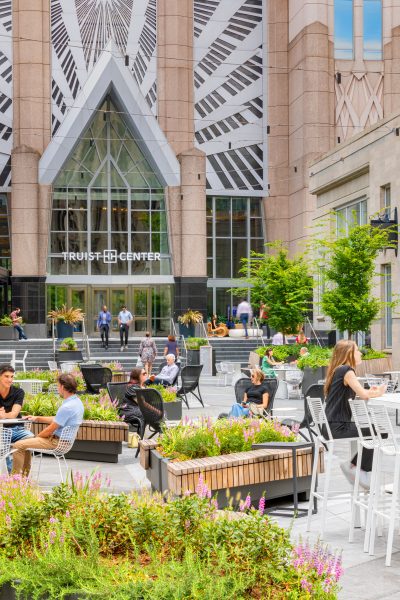
- Flexible space achieved with movable planters and conscious leveling decisions allows for community events and gatherings like Fifth Street Live, a happy hour celebration hosted during the summer months. Photo by Sean Busher, courtesy of Little
-
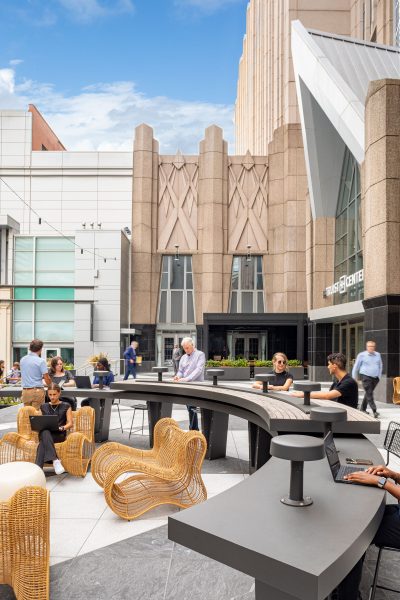
- Charlotte’s Center City 2040 Vision Plan was instrumental in planning and grading the plaza to be a truly accessible, inclusive, and positive space for the community. Photo by Sean Busher, courtesy of Little
Each Thursday in summer Truist Plaza hosts Fifth Street Live, a block party–style happy hour celebration with live music, food, drinks, and good times all around. People groove and chat on the granite pavers, enjoying golden hour under the dramatically lit entrance to Truist tower. In many ways the event exemplifies the efficacy of the Little team’s vision for the plaza, creating useful community space for Truist and its retail neighbors. “The renewed plaza demonstrates that strategic reuse can do more than preserve what exists. It can unlock new energy, extend relevance, and recalibrate how a landmark participates in the life of the city,” Thompson says.