Story at a glance:
- A demand for net zero designs is transforming how energy firms approach their operations.
- Gensler shares a multiphase approach for creating interiors that align with a net zero future.
As the global push toward net zero intensifies, energy companies find themselves at the heart of a transformative journey from suppliers of power to architects of a sustainable future. This shift is not only about reducing emissions, but it is also about reimagining the workplace to align with climate goals, innovation, and stakeholder expectations. To meet these objectives leading organizations in the energy sector should focus on decarbonizing the workplace, designing for inclusivity, and prioritizing health, wellness, and biophilia.
Net zero, the commitment to balance greenhouse gas emissions with removal or offsetting, is transforming how energy firms operate. From upstream exploration to downstream distribution, every facet of the business is under scrutiny.
The Workplace is Changing
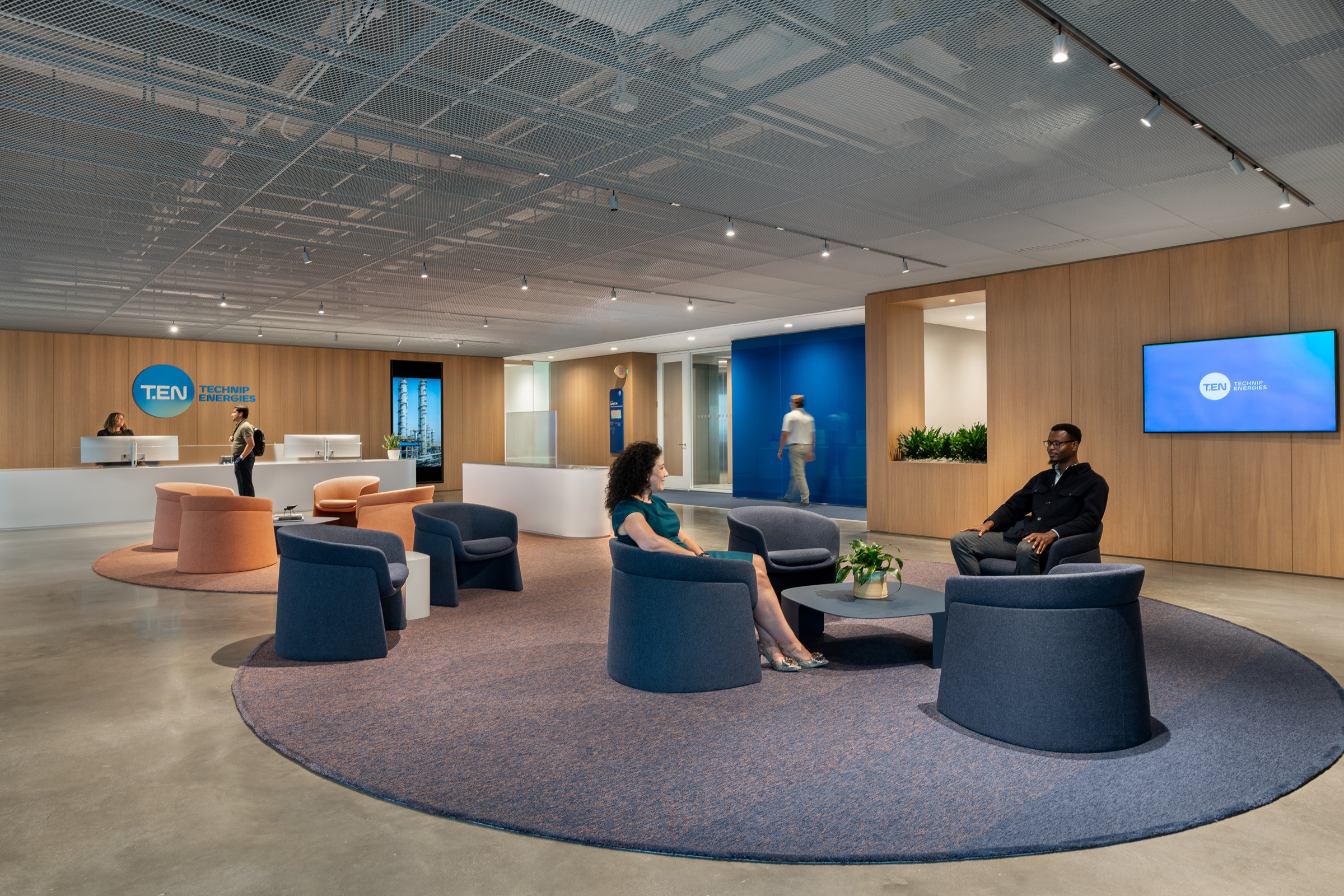
Technip Energies is committed to Carbon Reduction for Operations by implementing protocols aligned with ISO 50001 standards. These measures create a strong framework for sustainable performance and reinforce the company’s mission to significantly reduce its carbon footprint. Photo by Grant Gay, courtesy of Gensler
Beyond operations, the workplace itself is evolving into a hub for sustainability-driven culture and collaboration. Energy clients are investing in green buildings, renewable-powered campuses, and smart technologies that reduce energy consumption. Offices are being retrofitted with efficient HVAC systems, alternative power sources, and intelligent lighting. Remote work policies, once a response to the pandemic, are now part of a broader strategy to reduce commuting emissions and optimize space usage.
To achieve these goals design strategies must go beyond aesthetics and address performance at every level. Creating interiors that align with a net-zero future requires a multiphase approach:
• Benchmark energy use with tools like ENERGY STAR for tenants to reduce consumption and costs.
• Retrofit systems with efficient lighting, HVAC controls, and ENERGY STAR-rated equipment.
• Select low-carbon materials with EPDs or recycled content to cut embodied carbon by up to 30%.
• Leverage Gensler’s Product Sustainability Standards (GPS) for vetted product options.
• Optimize space through dematerialization strategies like modular furniture and multi-functional elements.
• Maximize daylight using simulations, reflective surfaces, and automated dimming systems.
• Monitor performance post-occupancy with sensors and real-time dashboards.
• Engage in 100% renewable energy contracts aligned with lease terms.
The workplace is also becoming a center for climate innovation. Cross-functional teams are being formed to tackle decarbonization challenges, blending engineering, data science, and policy expertise. These collaborative environments foster creativity and accelerate the development of low-carbon solutions, ranging from carbon capture technologies to digital platforms that monitor and optimize energy use.
Employees are Changing
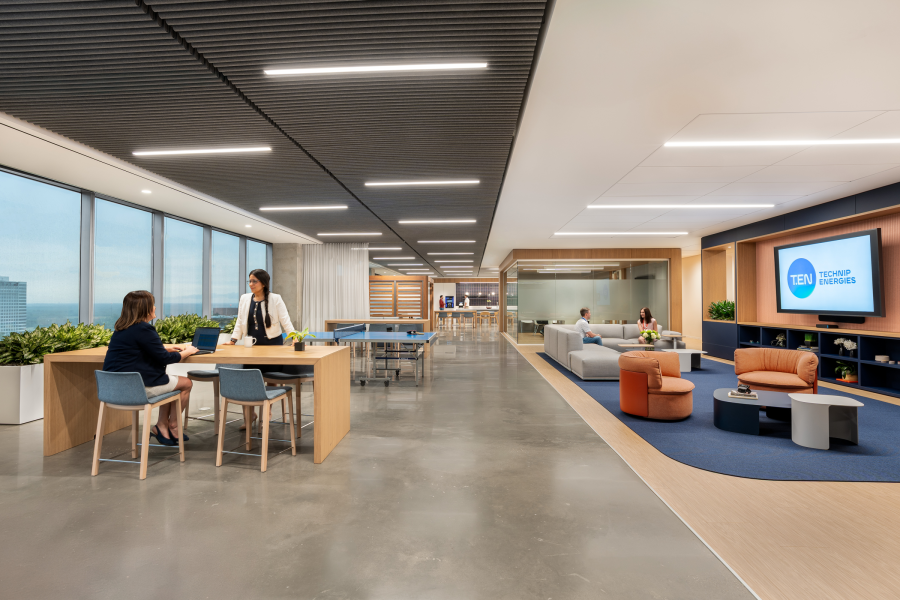
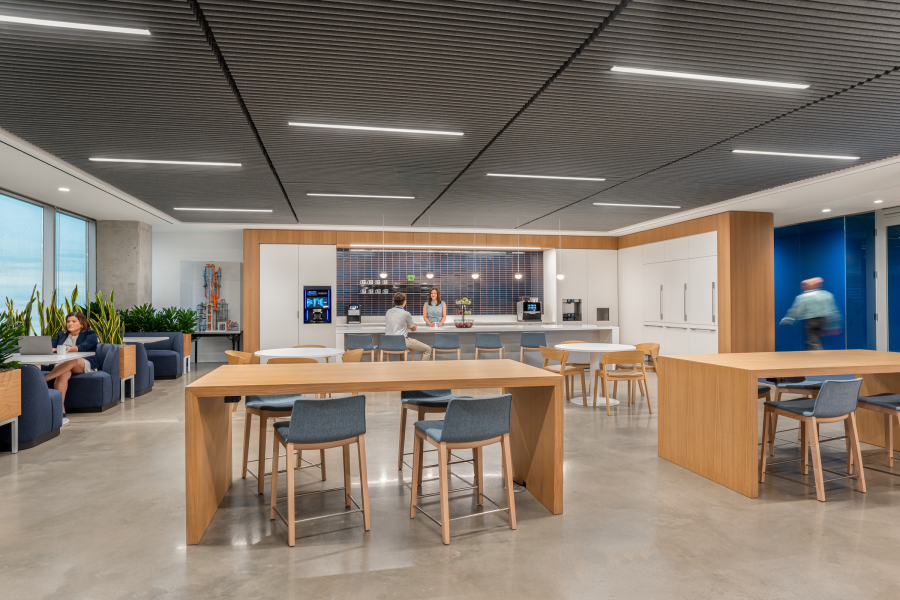
Technip Energies’ new US headquarters advances sustainability goals and top-tier sustainability standards by targeting certifications like LEED EB-O&M: Platinum, LEED CI: Platinum, LEED Zero, ENERGY STAR for Tenants, and ISO 50001 accreditation. After the project’s completion the space achieved ENERGY STAR Tenant Space recognition, highlighting the company’s commitment to saving energy and reducing greenhouse gas emissions. Photo by Grant Gay, courtesy of Gensler
In the new energy workplace the employee experience is also being redefined. Workers are increasingly motivated by purpose, and companies that embed sustainability and inclusiveness into their culture attract top talent. Training programs on climate literacy, ESG principles, and sustainable practices are becoming standard. Employees are not just contributors; they’re ambassadors of the net zero mission. As they embrace their role, the physical workplace must evolve to reflect these values. Creating inclusive and adaptable environments empowers every individual to contribute meaningfully.
Inclusive workplace design creates environments where all employees can thrive by addressing diverse physical, sensory, cognitive, and cultural needs. A successful approach begins with universal design principles, step-free circulation, intuitive hardware, clear paths of travel, and ergonomically adaptable furniture that works for a wide range of users.
Sensory considerations are equally important: quiet rooms, focus areas, acoustic treatments, glare-free lighting, and low-stimulation zones support neurodiverse employees and reduce stress for everyone. Providing a variety of work settings, collaboration rooms, private phone booths, wellness spaces, and height-adjustable workstations gives employees meaningful choice in how and where they work.
Inclusive design also strengthens navigation through accessible signage, tactile cues, and consistent wayfinding strategies. Culturally inclusive spaces, including private restrooms and flexible rooms for meditation or prayer, foster belonging.
Finally, having accessible technology like simple interfaces and equitable hybrid meeting tools ensures everyone can participate fully. When combined with thoughtful policies and employee engagement, inclusive design becomes a foundation for wellbeing, equity, and high performance across the workplace.
Design for Equity
Net-zero goals and inclusive design are deeply interconnected, shaping workplaces that are both environmentally responsible and universally supportive. Achieving net zero without inclusivity risks creating spaces that are environmentally sound but socially inequitable. By integrating low-carbon strategies with adaptable, sensory-aware and culturally inclusive design, organizations can reduce emissions, promote equity, and empower every employee to participate fully in the transition to a net zero future.
Workplaces that actively support physical and mental well-being are often energy-efficient and human-centric. To create these spaces energy companies are moving beyond technical upgrades to embrace holistic design principles that enhance comfort, reduce stress, and foster productivity. When health-focused features are integrated with low-carbon strategies, the result is a workplace that performs better for both people and the planet. Key considerations include:
• Providing biophilic elements like plants, natural materials, and organic patterns that help reduce stress and increase cognitive performance.
• Minimizing pollutants with low-emitting materials.
• Promoting comfort, temperature control, improved lighting and acoustics—allowing employees control over their environments.
• Reducing strain through proper ergonomics, including adjustable-height desks, supportive seating, and varied postures throughout the day.
• Incorporating wellness-oriented layouts that encourage movement and restoration with walking paths, informal collaboration zones, quiet rooms, and dedicated wellness spaces.
• Offering healthy amenities, including hydration stations, fitness areas, nutritious food options, and onsite well-being programs to reinforce a culture of health.
For energy clients achieving net zero is not a distant goal; it’s a daily commitment reflected in every decision, project, and workspace. The workplace is no longer just where business happens; it’s where the future is built.
As we move forward the synergy between net zero ambitions and workplace transformation will be critical. Energy companies that embrace this dual challenge will not only meet regulatory and investor expectations, but they’ll also lead the way in shaping a healthier and more resilient low-carbon economy.
Maria Perez, director of sustainability at Gensler, contributed to this article.