Story at a glance:
- After construction is complete, a data center’s operational life begins and uptime is the primary goal and responsibility.
- The Fastenal onsite program places staff, customized inventory, and point-of-use technology in data centers to maximize uptime and reduce waste.
- Data accumulation, a byproduct of long-term partnerships, proactively prevents downtime and informs decisions regarding new products and technologies.
When the general contractor hands over the keys to a new data center, the building is finished, but it isn’t maintenance-free. The work of Fastenal, the industrial and construction supply distributor, is never complete either. Every hour of a building’s life depends on technicians having the right part, tool, and protective gear within reach.
“The biggest challenge in any facility is the transition from construction to operations,” says Mike Lizzi, business development manager at Fastenal. “The general contractor’s job is to deliver the complete building to the facility team who is responsible for operating it for however long it’s in operations. That often creates an information gap.”
Data center structures built today can expect 20 to 30 years of service, while their contents (power, cooling, servers, switch gear, batteries, etc.) have a useful life of three to 20 years, according to Stream Data Centers, a developer of colocation and build-to-suit facilities.
From Construction to Operations
Fastenal gets involved before commissioning. The first task is creating what Lizzi calls a day one readiness catalog: the consumables and goods a facility needs to start operating. Some are one-time outfitting items like bins and forklifts.
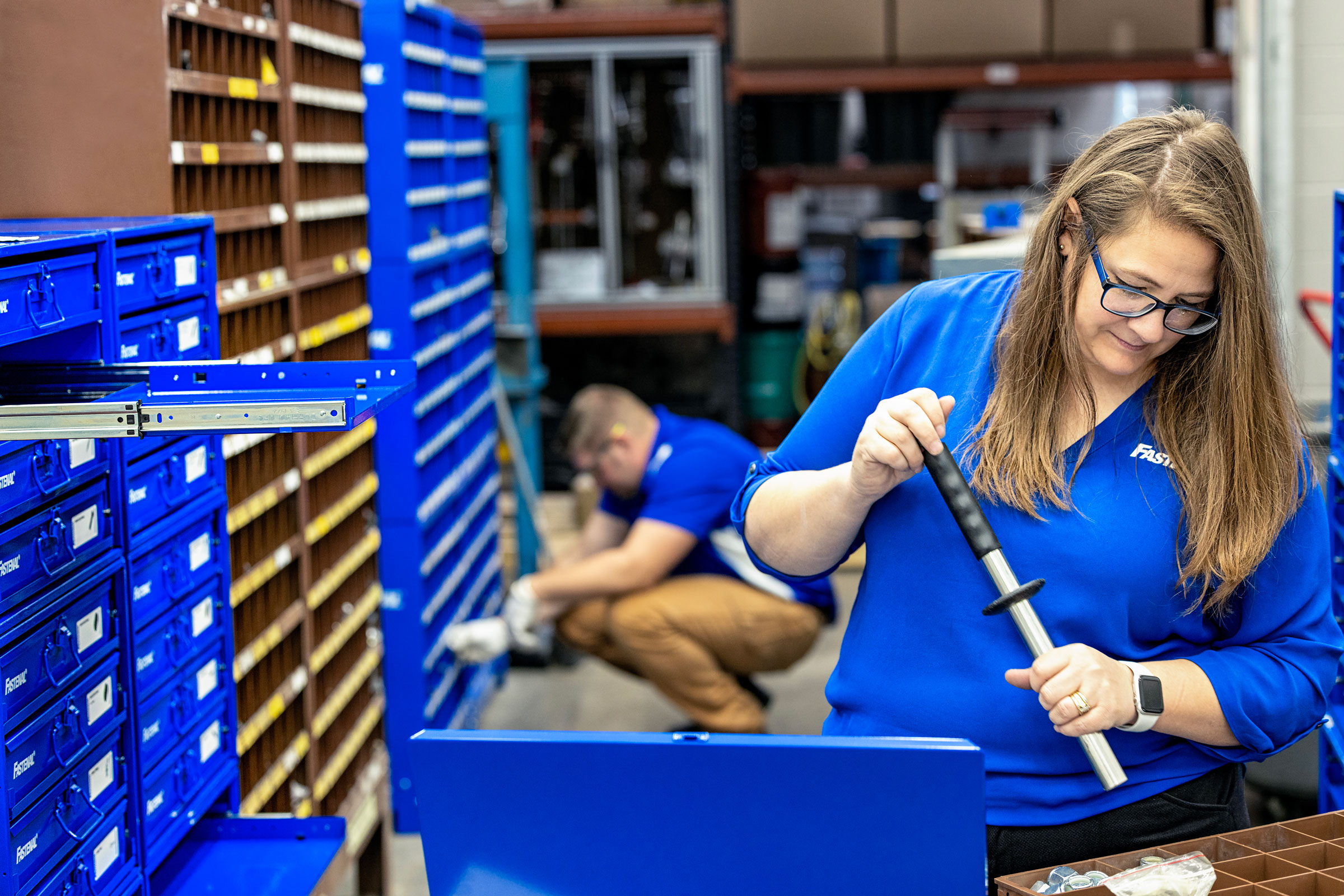
Next Fastenal studies the building’s systems and maintenance requirements, sets stocking plans, and sources strategically “so the operations team isn’t starting from scratch on day one,” Lizzi says. This falls under the Fastenal Onsite Program, which embeds dedicated personnel, customized inventory, and point of use technology inside the facility. Inventory may be managed through vending machines, vendor-managed inventory, or Fastenal Managed Inventory (FMI), which uses automated reordering and FAST 360 analytics to cut stockouts.
Experienced operations teams typically arrive with roughly 80% of that readiness list defined, Lizzi says. Fastenal fills in the rest with what other facilities are doing and what’s new, while accommodating local conditions like climate. The arc-rated garments needed for electrical work on an Arizona rooftop differ from those needed in a snowy northern climate, for example.
The Goals
Construction supply is dominated by fasteners, tools, electrical material, and jobsite consumables. Once the servers go live the priority becomes uptime, or the percentage of time that facilities, power, cooling networks, and IT systems remain operational without interruption. Facility teams then need MRO (maintenance, repair, and operations), products that support power distribution, cooling infrastructure, backup generators, mechanical equipment, and safety programs.
“A facility manager worries about things a general contractor typically doesn’t,” Lizzi says, like preventive maintenance schedules, emergency repairs, and compliance. “Every part has a direct connection to reliability.”
That connection shows up in the metrics operators track, from PPE compliance and lockout/tagout compliance to generator test compliance and uninterruptible power supply (UPS) inspections. Fastenal safety specialists help with assessments. “Data centers live and die on uptime,” Lizzi says.
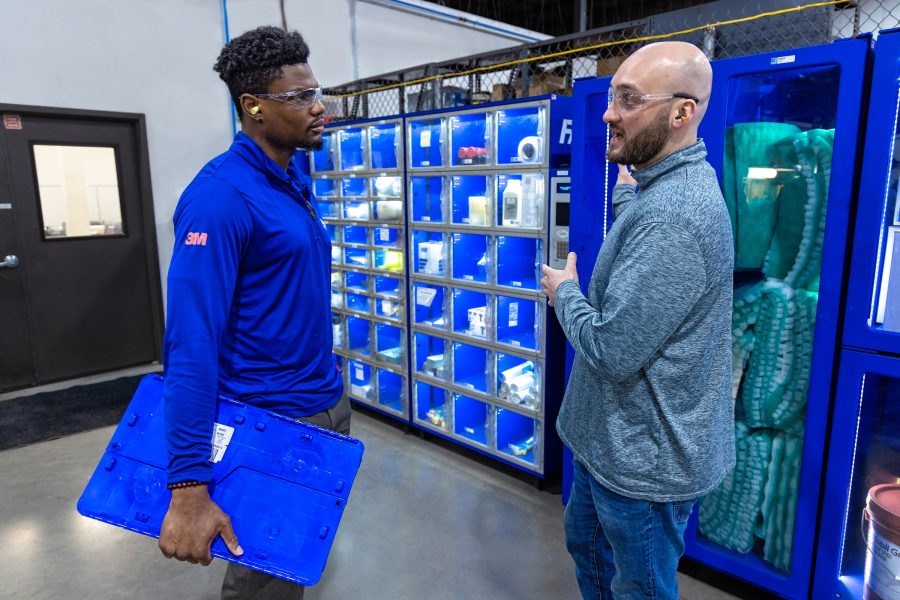
A 24/7 data center can have maintenance needs at any hour, and Fastenal meets them without staffing three shifts. Its service model rests on vending machines with access controls that let identified users get consumables at, say, 3am, backed by local support, onsite inventory, regional stocking, and rapid replenishment.
“For a facility operating around the clock, supply chain resiliency is measured by whether technicians can access the right product immediately, not whether it can be delivered next week,” Lizzi says.
Failures & Fixes

Maintenance teams have historically restocked after something broke. FMI programs combine inventory monitoring, automated replenishment, and usage analytics so facility teams can see consumption patterns, seasonal demand, maintenance cycles, and critical spare levels.
A large operator might use inventory data to identify parts whose usage consistently rises during scheduled maintenance, for example. With automated replenishment those materials are stocked before a shortage occurs, meaning fewer stockouts and fewer delayed tasks.
These inventories can involve thousands of SKUs and many suppliers. Fastenal simplifies them by standardizing product categories where appropriate. “The objective is not to force standardization where specialized products are required,” Lizzi says. “It’s to reduce unnecessary complexity while ensuring the right products remain available for the right application. The customer ends up with fewer suppliers, fewer transactions, and better spend control without compromising reliability.”
Lizzi says supply chain decisions directly affect operational sustainability. Usage data often reveal duplicate SKUs, overstocked categories, unnecessary carrying costs, and carbon-intensive emergency freight. When equipment goes down, technicians “needed it yesterday,” and rushing a part to the site often means expedited shipping. “The less waste and redundancy in the system, the more efficient the overall facility becomes,” he says.
One of the biggest benefits of a long relationship, Lizzi says, is data accumulation. Over time usage patterns reveal ways to refine stocking, anticipate demand, and support maintenance planning. The customer still sets maintenance schedules and asset replacement plans, but Fastenal’s supply chain data informs them. “Fastenal’s goal is to help the customer move from reacting to problems toward proactively managing their operations,” he says.
Fastenal also brings to customers new products and technologies through frequent site meetings and monthly quarterly reviews.
That partnership matters more as AI adoption pushes operators to bring capacity online faster. “The building may be finished when construction ends, but the operational journey is just beginning,” Lizzi says. “In a data center uptime isn’t achieved through infrastructure alone. It’s achieved through the people, process, inventory, and supply chain systems that support the infrastructure every day.”